Engine Mount Genesis OEM Supplier: Sourcing Guide
Procurement teams looking for an engine mount genesis oem supplier usually need more than a competitive quote. They need OE-level fitment data, dependable rubber-to-metal bonding, and a factory system that can stand up to audits, replenishment planning, and batch traceability. For Genesis applications, the mount has to control powertrain roll, isolate idle and road-load vibration, and keep bracket geometry aligned with the engine, subframe, and transmission interfaces. Even small deviations in rubber hardness, installed height, stud position, coating thickness, or bond coverage can affect NVH behavior and service life. Driventus is an independent aftermarket manufacturer; Genesis and other brand names are referenced for fitment identification only. We manufacture engine and powertrain components in Taizhou, Zhejiang, and export to 60+ countries under IATF 16949:2016 and ISO 9001:2015 systems. This guide outlines what B2B buyers should check before placing a production or replenishment order, from fitment data and validation records to MOQ planning, packaging control, and supplier audit points.
What buyers should verify before sourcing
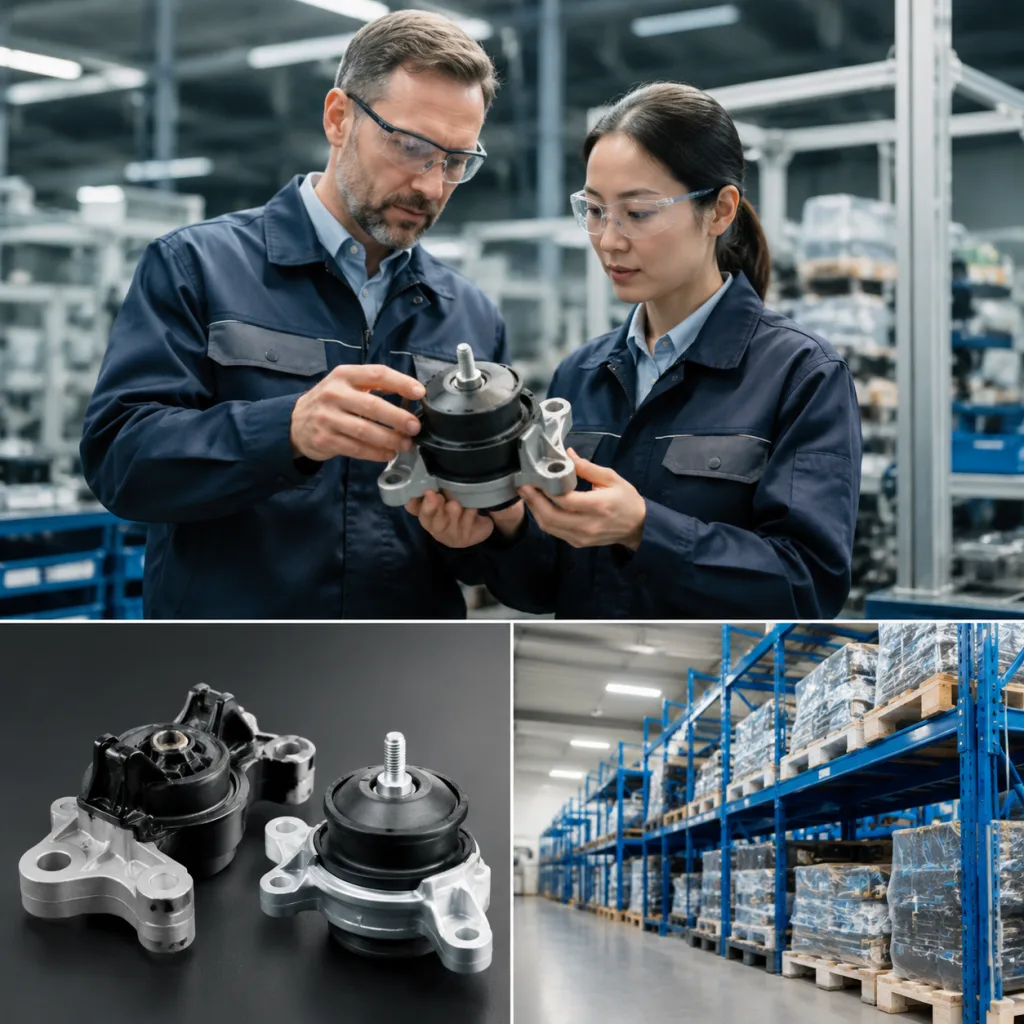
When evaluating an engine mount Genesis OEM supplier, start with fitment certainty rather than the lowest unit price. An engine mount is a load-bearing vibration isolator, and the correct application depends on far more than the vehicle nameplate. Buyers should confirm the Genesis platform, model year range, engine displacement or engine code, transmission type, drivetrain layout, and exact mount position: right, left, front torque mount, rear roll restrictor, or transmission-side mount. Parts that look nearly identical can still differ in bracket offset, stud thread, locating pin position, bushing sleeve length, rubber void geometry, or installed height. Those differences can lead to assembly interference, changed torque paths, or early NVH complaints.
A disciplined sourcing review should include:
- OE number, aftermarket cross-reference, or customer drawing number
- Vehicle model, production year range, engine variant, transmission, and drivetrain
- Mount location and handedness, including right-hand, left-hand, front, rear, or transmission position
- Rubber specification, including compound family, target Shore A hardness, heat resistance, and compression-set requirement
- Metal specification, including steel grade, bracket thickness, weld standard, and coating requirement
- Critical-to-quality dimensions such as bolt-hole center distance, stud thread, sleeve ID/OD, installed height, and bracket angle
- Packaging, label, barcode, carton strength, palletization, and private-label requirements
It is also worth asking whether the supplier can compare the requested part against an existing catalog reference, OE sample, 2D drawing, or 3D scan data. For Genesis engine mounts, that extra check helps prevent a buyer from ordering a part that follows the rough outline but misses the original torque path, chassis clearance, or engine-side bracket interface. Driventus can support fitment checks across our catalog and related powertrain lines. See our catalog and engine components for adjacent product families.
Manufacturing controls that matter for engine mounts
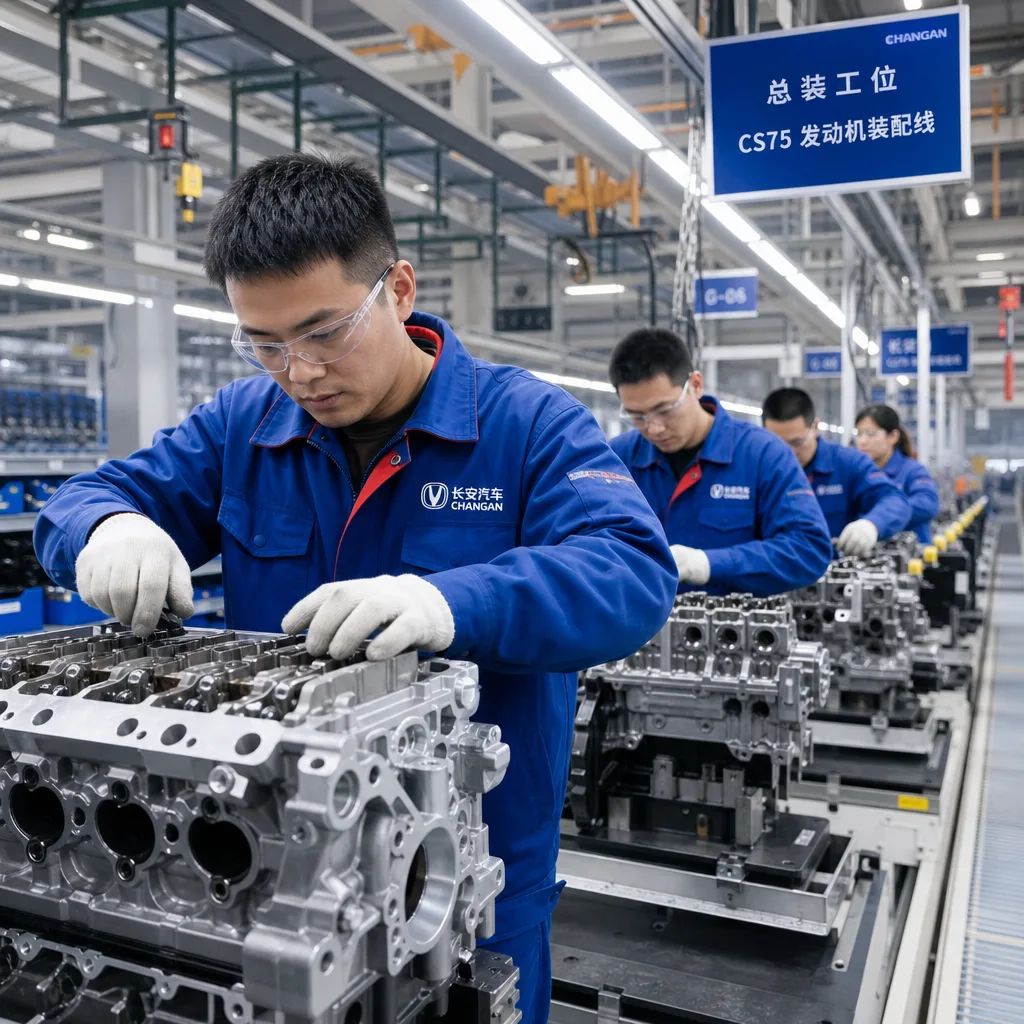
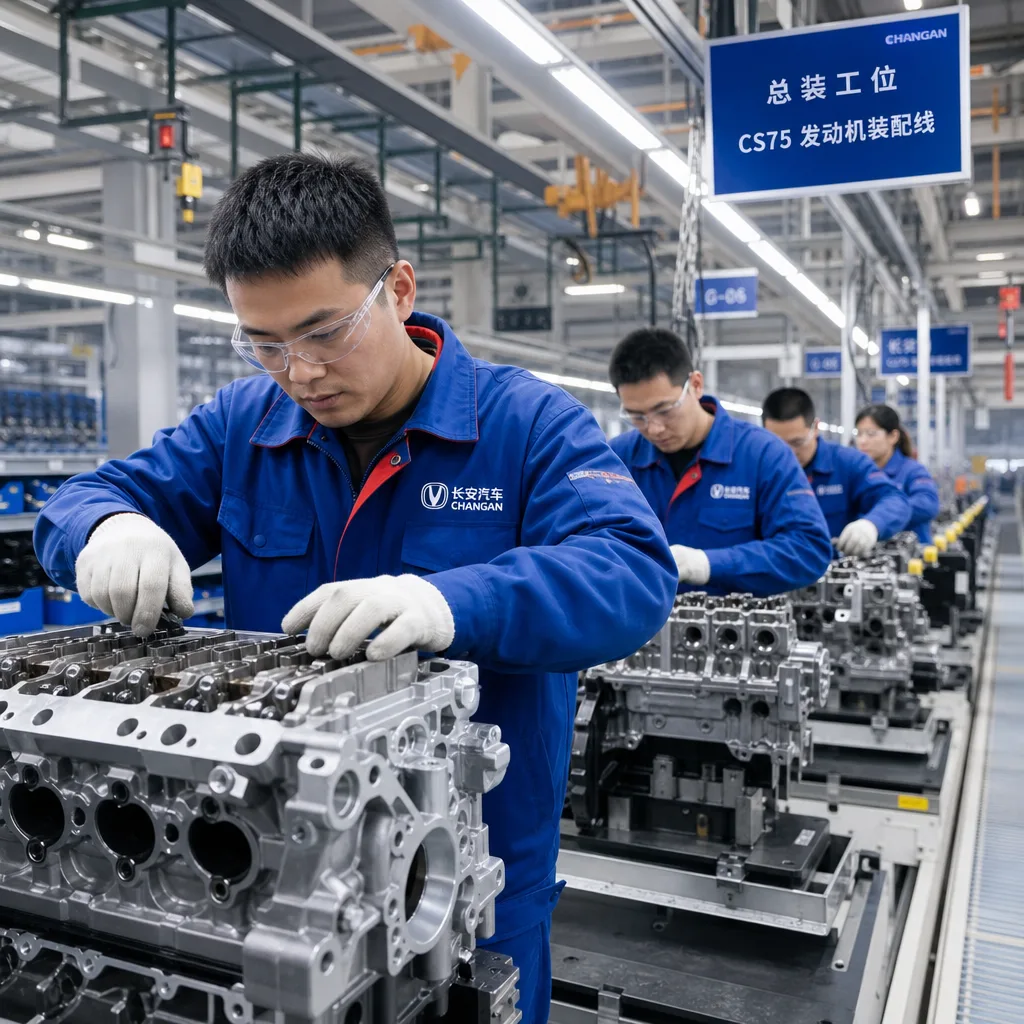
Engine mounts bring together rubber mixing, metal stamping or casting, surface preparation, adhesive application, vulcanization, finishing, and final inspection. Because the part is a multi-material, safety-relevant component, process control is just as important as the final drawing. When reviewing an engine mount Genesis OEM supplier, buyers should look closely at how the plant manages each stage, from incoming material approval through final carton release.
The most important manufacturing controls include:
- Rubber compound consistency: batch formulation, Mooney viscosity where applicable, Shore A hardness, tensile strength, elongation, compression set, heat aging, and lot traceability
- Steel bracket accuracy: material certificate, bracket thickness, stamping tolerance, hole position, weld penetration, thread quality, burr control, and corrosion protection
- Surface preparation: degreasing, shot blasting or phosphating, coating cleanliness, and controlled handling before adhesive application
- Bonding process control: primer/topcoat selection, adhesive film coverage, flash-off time, mold temperature, cure time, pressure, and post-cure conditions
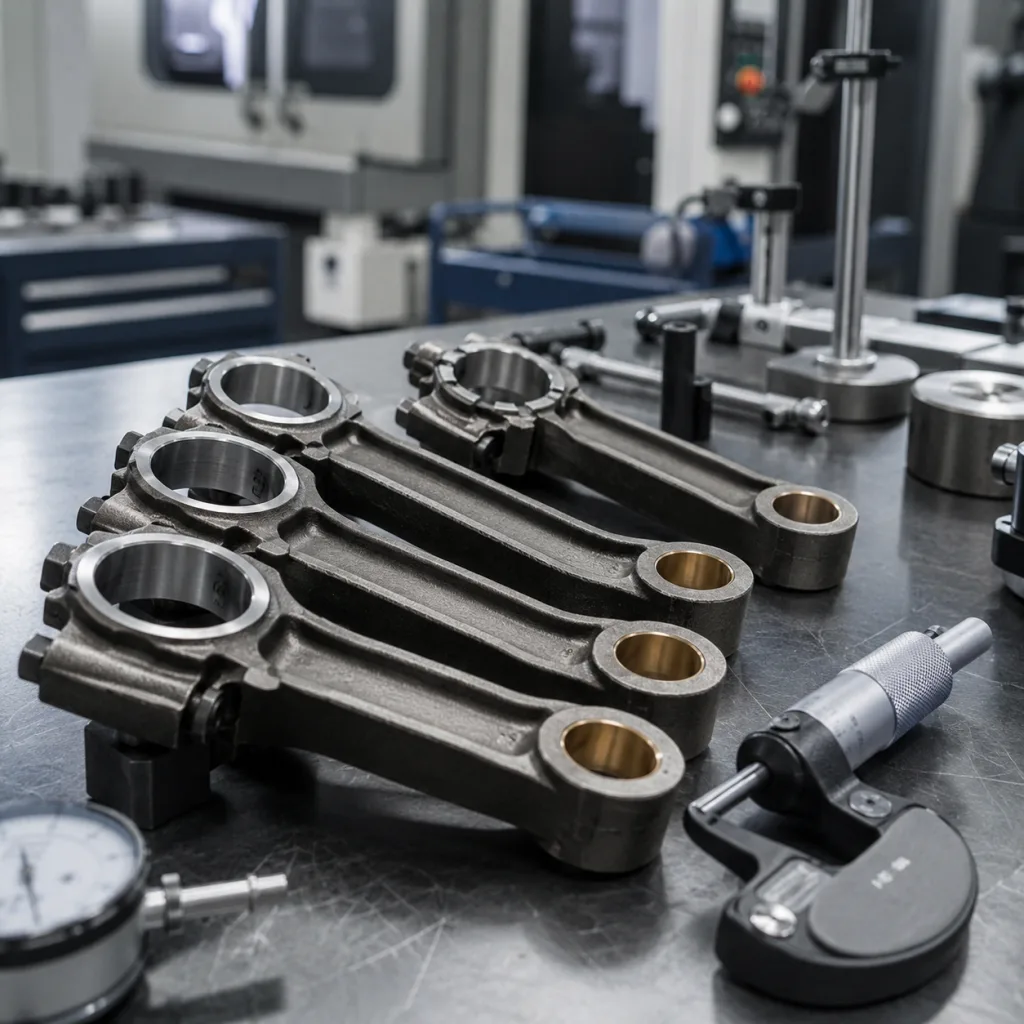
- Dimensional inspection: installed height, bracket parallelism, bolt-hole center distance, sleeve alignment, stud thread, and locating feature position
- Load and durability screening: static compression or shear load verification, rubber-metal adhesion checks, fatigue sampling, and visual inspection after test cycling
- Packaging protection: separator use, rust prevention, deformation control, carton drop resistance, and part-number traceability on inner and outer labels
For Genesis applications, stable NVH performance relies heavily on compound control. If hardness drifts beyond the specified Shore A window, the mount may transmit too much vibration into the cabin. If it becomes too soft, it can allow excessive engine roll during acceleration, braking, or gear changes. Metal consistency matters just as much. Bracket distortion, hole mislocation, or heavy coating build-up can change how the mount seats against the cradle, engine bracket, or transmission case.
Buyers should request process evidence that proves repeatability, not just a one-time sample approval. Useful records include control plans, incoming inspection criteria, in-process inspection sheets, adhesive batch records, mold-cavity traceability, and final inspection reports. Review our quality system for certification scope, inspection controls, and traceability structure.
Comparison of sourcing models for Genesis programmes
A Genesis programme can be sourced through several B2B supply models. The right choice depends on volume, service expectations, documentation needs, and whether the buyer supports OE replacement, export distribution, fleet maintenance, or private-label aftermarket sales. Defining the model early helps avoid wrong packaging, incomplete approval records, and replenishment gaps later in the programme.
The most common sourcing models are:
1. Direct OEM-style supply - Best for buyers needing controlled specifications, recurring replenishment, and formal approval records - Usually requires fixed drawings, control plans, traceability, agreed inspection criteria, and change-notification discipline - Works well when the buyer has forecast volumes, annual demand by part number, and stable launch timing
2. Aftermarket catalog sourcing - Suitable for distributors and wholesalers serving repair channels - Typically relies on OE cross-reference data, application tables, and broad coverage by model year and engine variant - Requires strong packaging, label accuracy, carton durability, and fitment indexing to reduce returns
3. Private-label sourcing - Useful when the buyer wants branded cartons, SKU labels, barcode formats, and region-specific commercial presentation - May include EAN/UPC labels, country-of-origin marks, multilingual descriptions, pallet labels, and customer artwork control - Often depends on catalog matching plus flexible MOQ planning for mixed part-number shipments
4. Custom or engineered supply - Chosen when an exact replacement is unavailable or the buyer needs a revised rubber compound, bracket design, coating, or packaging specification - May involve sample measurement, drawing review, tooling development, trial production, and validation testing - Best for customers with fleet support, regional durability requirements, or superseded OE references
For Genesis programmes, the correct model often comes down to how the part will be sold and what the buyer’s approval process requires. A distributor may care most about cross-reference accuracy and fill rate. A regional importer may need private-label cartons, customs-ready documentation, and mixed-SKU consolidation. A service programme may focus on OE-matching stiffness and lower warranty exposure, while an export buyer may place more weight on stable lead times, traceable batches, and consistent carton configuration. A capable engine mount Genesis OEM supplier should support more than one sourcing model without relaxing the rubber-metal process controls behind the product.
Validation tests and documents to request
Validation is one of the most important areas to confirm before placing a production order. A credible engine mount Genesis OEM supplier should be able to explain what is tested, how it is tested, and which records are available for buyer approval. The goal is not simply to receive a sample that bolts on once. Buyers need confidence that production parts will keep dimensional fit, bond integrity, and NVH-related stiffness within the agreed range across batches.
Key documents buyers should request include:
- Dimensional report showing critical dimensions, nominal values, measured values, and tolerances
- Material declaration for rubber compound, steel, adhesive system, coating, and any restricted substances where required
- First article inspection report or sample approval record
- Control plan or inspection plan for incoming material, in-process checks, and final inspection
- Photos of the part, molded markings, labels, inner packing, master carton, and pallet configuration
- Traceability record showing batch number, production date, mold or cavity reference, and inspection status
- Shipment documents, packing list, and carton quantity breakdown for audit trails
Recommended validation questions include:
- Which static compression, shear, or pull-out tests are applied to samples?
- Is rubber-metal bond strength verified after vulcanization and curing, and is failure mode recorded?
- Are samples checked for flash, voids, cracks, exposed metal, coating damage, thread defects, and bracket deformation?
- Are hardness and key dimensions checked by batch, shift, or production lot?
- Can the supplier provide long-run consistency data for repeat production, not only launch samples?
- Are corrosion protection, salt-spray exposure, carton drop testing, or special label requirements available for specific markets?
For buyers supplying multiple markets, documentation should fit internal approval workflows. Some customers need a basic dimension sheet and inspection report. Others require PPAP-style files, material declarations, retained samples, and change-control records for supplier onboarding. It is also useful to confirm how long production records are retained and whether lot codes can be linked back to rubber, adhesive, metal, and inspection batches. Driventus can align documentation and production control for export programmes that require repeatable supply and audit readiness.
MOQ, lead time, and factory audit questions
Commercial planning is closely tied to technical sourcing. Before selecting an engine mount Genesis OEM supplier, buyers should understand how minimum order quantity, production lead time, tooling status, packaging type, and audit access affect the full procurement plan. A low piece price has limited value if the supplier cannot maintain batch consistency, meet replenishment schedules, or respond clearly when demand changes.
Questions to ask about MOQ and lead time:
- What is the MOQ by part number, and does it change for standard cartons, private-label cartons, or custom labels?
- Are samples or pilot lots available before a full production commitment?
- Is tooling already available, or is new tooling required for the bracket, rubber mold, or assembly fixture?
- What is the normal production lead time for repeat orders after deposit and packaging confirmation?
- Can lead times be shortened for urgent replenishment, seasonal demand, or consolidated container shipments?
- Are cartons packed by part number, customer SKU, vehicle application, or mixed order plan?
- What is the standard export packing method, including inner box, master carton, pallet, and moisture protection?
Factory audit questions should focus on operational stability rather than broad marketing claims. Buyers should ask:
- Is the plant certified to IATF 16949:2016 and ISO 9001:2015, and does the scope cover relevant rubber-metal or powertrain components?
- How are incoming rubber, steel, adhesive, coatings, and fasteners checked and released?
- Is traceability maintained through batch, lot, production date, mold, operator, or inspection coding?
- What inspection equipment is used for hardness, dimensions, thread checks, coating condition, and appearance inspection?
- How are nonconforming products contained, recorded, corrected, and prevented from reaching shipment?
- Are engineering changes, material substitutions, and packaging revisions controlled by written approval?
- Can the supplier support customer audits, third-party audits, or remote document reviews when required?
For engine mounts, buyers should confirm that the supplier has proven experience with rubber-metal bonding, cure control, and bracket dimensional control. This capability is often a stronger indicator of supply reliability than broad catalog coverage alone. Buyers should also verify that the factory can sustain the approved standard across mass production, not only during sample approval. That point is especially important for Genesis applications, where small changes in stiffness, bond quality, or bracket position can create noticeable noise, vibration, harshness, or installation complaints.
How Driventus supports aftermarket and OEM buyers
Driventus supports buyers who need a practical source for engine mounts, powertrain rubber parts, and related components, with emphasis on fitment accuracy, controlled production, and repeatable export supply. Because Genesis applications can vary by platform, engine variant, transmission layout, and mount position, our process begins with part matching and specification review before quotation. This gives procurement teams a clearer risk picture before they commit to replenishment, a private-label launch, or a new sales programme.
What buyers can expect from Driventus includes:
- OE reference, aftermarket number, or catalog cross-check support for fitment verification
- Engineering review of installed height, bracket geometry, mounting interfaces, stud threads, sleeves, and locating features
- Production under IATF 16949:2016 and ISO 9001:2015 systems
- Rubber-metal process control covering compound, bonding, vulcanization, dimensional inspection, and batch traceability
- Export-ready documentation for commercial shipments, inspection records, packing lists, and customs files
- Private-label and custom packaging support, including carton artwork, barcode labels, and market-specific label formats
- Production planning for repeat orders, mixed-SKU replenishment, and long-term distributor programmes
We manufacture in Taizhou, Zhejiang, with supply experience across 60+ export markets. That background matters for B2B buyers because engine mount sourcing is not only about producing one approved sample. It is about repeating the same result across multiple production lots, label requirements, carton formats, and shipping lanes. If your programme requires branded packaging, barcode labels, retained samples, or market-specific carton artwork, we can include those requirements in the supply plan.
Driventus is an independent aftermarket manufacturer; brand names are referenced for fitment identification only. Start with request a quote if you need pricing, samples, fitment review, or supplier qualification support for your next procurement cycle.
Frequently asked questions
Yes. Provide the OE reference, aftermarket cross-reference if available, vehicle platform, model year, engine code or displacement, transmission, drivetrain, and mount position. We verify catalog data, dimensions, and mounting interfaces before quotation. Brand names are referenced for fitment identification only.
We can provide dimensional reports, material declarations, sample inspection records, production traceability, packing details, and shipment documents. PPAP-style or programme-specific testing can be discussed based on the buyer’s approval workflow and market requirements.
Yes. We support private-label supply, carton artwork, barcode labels, customer SKU labels, multilingual packaging, and market-specific carton formats. Custom manufacturing is available for special specifications, tooling projects, and replenishment programmes.
If you are qualifying a new source or refreshing an existing supply line, send your OE references, application list, mount positions, packaging requirements, and target volume for a practical quotation and technical review at /contact.html
Request a Quote