Valve cover gasket replacement is a high-volume service category for repair chains, engine rebuilders, and aftermarket distributors. For sourcing teams, the decision cannot rest on unit price alone. The gasket must match the valve cover groove, bolt-hole pattern, spark-plug tube seals, cam carrier details, and oil-sealing requirements of the target engine family. Minor dimensional errors can lead to oil mist, repeat labour claims, technician complaints, and packaging returns across multiple branches.
In B2B programmes, the goal is OE-equivalent fit and repeatable sealing performance across varied climates, oil formulations, engine temperatures, and service intervals. That requires controlled materials, accurate tooling, documented inspection, and clear fitment data.
Driventus manufactures valve cover gaskets and related engine sealing components in Taizhou, Zhejiang, under IATF 16949:2016 and ISO 9001:2015 controls. This guide explains what buyers should verify before placing replacement gasket orders, how validation should be documented, and which specifications reduce warranty exposure. Driventus is an independent aftermarket manufacturer; brand names and OE-style numbers are referenced only for fitment identification.
Replacement Intent: What Buyers Need to Control
A valve cover gasket seals the joint between the cylinder head or cam carrier and the valve cover. The function sounds simple, but the service environment is demanding. The gasket is exposed to oil splash, crankcase vapour, heat cycling, bolt compression, and movement from plastic or aluminium covers.
For distributors and repair networks, the replacement part must be managed around three commercial risks:
Fitment risk: incorrect perimeter shape, plug-well profile, bolt-hole position, breather-channel detail, or half-moon seal geometry.
Leakage risk: weak compression set resistance, poor corner sealing, unsuitable compound choice, or swelling after hot-oil exposure.
Claim risk: inconsistent batch quality that creates repeat workshop labour, credit notes, and avoidable returns.
A useful sourcing file should include drawings or verified samples, material data, inspection reports, shelf-life rules, and packaging identification. Buyers can review applicable valve cover items in our catalog and related engine sealing products under engine components.
Although search demand for valve cover gasket replacement is often consumer-led, the sourcing requirement is operational and B2B: parts must install cleanly without trimming, stretching, forcing into the groove, or relying on excess sealant to compensate for poor geometry. Treat the gasket as a precision moulded component, not a generic rubber strip.
OE-Equivalent Fit: Critical Dimensions and Interfaces
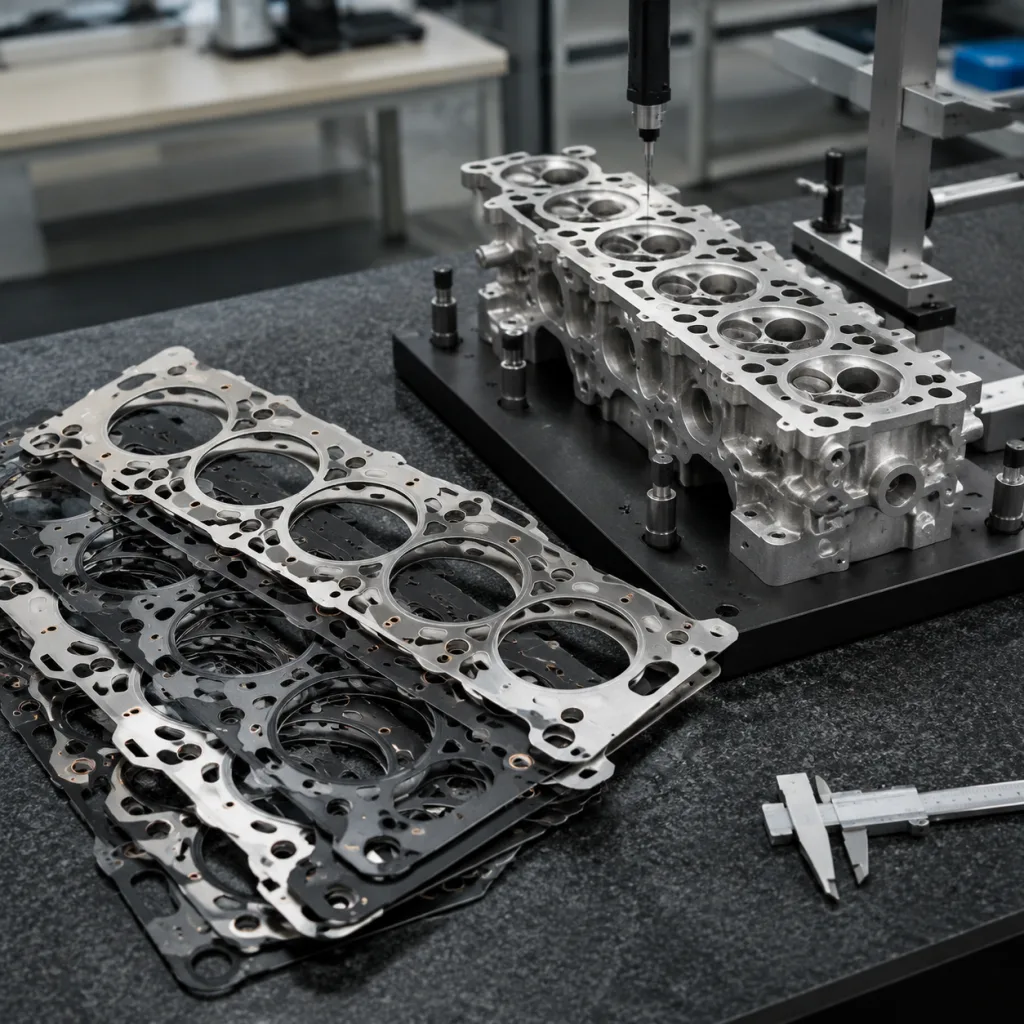
OE-equivalent means the aftermarket gasket is engineered to match the functional interface of the original application. It does not mean approval, endorsement, or supply status from a vehicle manufacturer. For valve cover gasket replacement programmes, buyers should request evidence that the supplier has checked the part against sample covers, cylinder heads, engine assemblies, or verified drawings.
Interface point
What to verify
Typical procurement risk
Perimeter length and profile
Continuous seating in the cover groove
Gasket stretches, lifts, or buckles during installation
Bolt-hole alignment
Hole centre position, clearance, and moulded reinforcement
Bolt drag, tearing, or uneven compression
Spark plug tube seals
Inner diameter, height, lip profile, and seating pressure
Oil ingress into plug wells
Cam cap and corner zones
Local bead height, radius, and half-moon detail
Seepage at high-stress corners
Material hardness
Batch-controlled Shore A range
Over-compression or poor sealing recovery
Cover material compatibility
Fit checks on plastic and aluminium covers
Distortion, rocking, or local loss of compression after torque-down
</tr></thead><tbody> </tbody></table>When a catalogue record uses an OE-style reference such as OE 11251… or OE 06A…, treat it as a fitment cross-reference rather than a brand approval claim. The buyer should confirm engine code coverage, production-year range, regional variations, and included accessories before purchase.
Dimensional validation is especially important where one visual gasket shape appears to cover several engines. Small differences around breather channels, plug wells, cam caps, or cover ribs may not show clearly in a catalogue image. A 1–2 mm mismatch can still create leakage after heat cycling, even if the part seems acceptable during a quick bench inspection.
Material Selection for Replacement Gaskets
Modern valve cover gaskets are usually moulded from elastomer compounds selected for oil resistance, compression recovery, temperature stability, and manufacturability. The right material depends on engine design, cover stiffness, installation torque, operating temperature, and expected service environment.
Material
Common use case
Strengths
Buyer checks
NBR
Older and cost-sensitive engine platforms
Good mineral oil resistance and economical production
Heat-ageing limit and compression set performance
ACM
Higher-temperature oil environments
Better hot-oil and oxidation resistance than basic NBR
Low-temperature flexibility and application suitability
FKM
Turbocharged, high-heat, or chemically demanding applications
High temperature and chemical resistance
Cost, availability, and genuine compound traceability
Silicone rubber
Selected sealing profiles and low-temperature requirements
Flexibility and broad temperature range
Oil-resistance suitability for the specific engine application
</tr></thead><tbody> </tbody></table>Procurement specifications should not rely on gasket colour. Colour is not a material standard and can vary by supplier, pigment, or customer request. A stronger specification includes:
compound family and approved formulation reference;
Shore A hardness target and tolerance;
tensile strength and elongation targets;
compression set test condition;
hot-oil ageing result;
visual acceptance criteria for flash, short moulding, contamination, and surface defects;
shelf-life and storage conditions.
For EU and UK distribution, buyers may also need supplier declarations related to REACH (EC) No 1907/2006. If the order includes private-brand cartons, multilingual labels, or market-specific warnings, confirm marking rules before artwork approval so compliance changes do not delay shipment.
Validation Testing and Quality Documentation
A reliable valve cover gasket replacement programme needs both production control and application validation. For B2B supply, the supplier should be able to explain how parts move from incoming raw material through compounding control, moulding, trimming, inspection, packing, and batch release.
Driventus operates under IATF 16949:2016 and ISO 9001:2015. Buyers can review the quality system when preparing supplier approval files or factory audit questions.
Recommended validation evidence includes:
First article inspection: key dimensions checked against the approved drawing or reference sample.
Material certificate: compound batch, hardness, and physical property results.
Compression set testing: evidence that the gasket recovers after load and heat exposure.
Oil resistance testing: mass, volume, and hardness change after oil immersion where specified.
Thermal cycling: checks for cracking, shrinkage, bead deformation, or loss of sealing load.
Installation trial: fitment on representative valve covers, cylinder heads, and included plug-tube seals or grommets.
Traceability: batch code linking raw material, moulding date, inspection record, operator or line data, and carton label.
For OEM and Tier-1 sourcing, buyers may also request APQP-style documentation, PPAP elements where contractually required, control plans, process flow diagrams, and MSA evidence. These requirements should be agreed before tooling approval or production release, not after the first shipment is ready.
Driventus can also support custom manufacturing where buyers need a new gasket profile, alternative compound, private tooling, application consolidation, or packaging aligned with a distributor range.
Procurement Checklist Before Ordering
Before placing a blanket order or launching a private-label range, import managers and category buyers should confirm both technical and commercial details. A gasket can pass a visual check and still fail in the field if fitment data is incomplete, the compound is not controlled, or warehouse packaging damages the part before installation.
Use this checklist during sourcing review:
Area
Buyer question
Required evidence
Fitment
Which engine codes, model years, and regional variants are covered?
Application list and cross-reference table
Geometry
Are groove, bolt-hole, tube-seal, and corner dimensions verified?
Drawing, reference sample record, or first article inspection report
Material
Which compound is supplied and how is it controlled?
Material data, formulation reference, and batch test certificate
Quality
Is production managed under recognised systems?
IATF 16949:2016 and ISO 9001:2015 certificates
Packaging
Can cartons support warehouse scanning, storage, and returns handling?
Label sample, barcode format, inner bag, and carton specification
Compliance
Are restricted substances controlled for target markets?
REACH (EC) No 1907/2006 declaration where applicable
Logistics
What MOQ, lead time, and shipment plan apply by SKU?
Quotation sheet and production schedule
</tr></thead><tbody> </tbody></table>For repair chains, the technical file should also include installation notes. These should state whether sealant is required only at specified joints, such as cam cap corners, and whether the gasket is supplied with spark-plug tube seals, bolt grommets, or isolators. Excess RTV can contaminate oil passages, interfere with seating, or trigger technician disputes, so instructions need to be precise.
For distributors, carton durability is part of quality control. Gaskets can be damaged by folding, compression, heat, or long storage under load. Inner bags, flat packing, part-number visibility, and readable batch coding help reduce avoidable returns and speed up claim investigation.
Common Failure Modes After Installation
When a replacement gasket leaks shortly after installation, the gasket is not always the root cause. A structured claim review protects both buyer and supplier and helps prevent the same issue from repeating across multiple branches or workshops.
Common causes include:
warped plastic valve covers that no longer apply uniform compression;
old sealant left in corners, groove channels, or half-moon areas;
incorrect torque sequence or over-tightened fasteners;
missing bolt grommets, hardened isolators, or reused tube seals;
wrong engine variant supplied under a broad catalogue listing;
gasket stored folded, compressed, or exposed to heat before installation.
A supplier should support claim analysis with batch traceability, retained samples, and inspection history. The buyer should collect installation photos, engine code, mileage, oil type, torque process, leak location, and packaging label details. This evidence helps distinguish material failure from application mismatch, cover distortion, storage damage, or installation error.
For high-volume SKUs, Driventus recommends a pre-launch fitment review using physical samples from the buyer’s target market. Regional engine variants can differ, and catalogue interchange data should be validated before large shipments are released.
Frequently asked questions
Confirm engine coverage, OE-style cross-references, groove profile, bolt-hole alignment, spark-plug tube seal design, compound type, hardness range, installation accessories, packaging method, and batch traceability. For regulated markets, request relevant compliance declarations such as REACH (EC) No 1907/2006 where applicable.
No. OE-equivalent means the replacement part is designed to match the functional fit and sealing requirements of the original application. It does not imply approval, endorsement, or a supply relationship with any vehicle manufacturer.
Yes. Driventus supports aftermarket and OEM-service projects including private packaging, catalogue cross-reference support, new tooling, compound adjustment, and validation planning. Requirements should be confirmed through drawings, samples, target annual volume, target markets, and documentation expectations.
For SKU review, samples, or programme pricing, send your application list and target volumes to Driventus and [request a quote](/contact.html).