Engine Mount Cadillac Manufacturer China: Sourcing Guide
For procurement teams evaluating an `engine mount cadillac manufacturer china` supply line, the decision comes down to fit, repeatability, and risk control. A typical passenger-vehicle engine mount must carry static engine mass, control torque roll during acceleration and gear shifts, and isolate vibration across idle-to-cruise frequency ranges. It also has to survive heat, oil mist, water splash, road salt, and repeated compression/shear cycles without losing installed height or bond integrity. Even a 2–3 mm height error, a 5–8 Shore A hardness shift, or an incorrect stud offset can create idle shake, exhaust misalignment, driveline noise, or premature bushing collapse. Driventus supplies aftermarket engine mounts for B2B customers who need documented manufacturing control, stable lead times, and cross-reference support for OE `06A107065` and similar fitment-led programmes. Driventus is an independent aftermarket manufacturer; brand names are referenced for fitment only. We build to `IATF 16949:2016` and `ISO 9001:2015` systems, with material controls that support export programmes in the EU, UK, US, Canada, Australia, and Brazil.
Start with fitment risk, not price
When sourcing an engine mount, verify the application data before negotiating price. For Cadillac programmes and mixed aftermarket catalogues, the buying team should confirm the fitment and engineering limits in measurable terms, not only by photo comparison:
OE reference, aftermarket interchange number, and platform code
Engine family, displacement, transmission layout, and left/right/upper/lower position
Overall height, installed height, width, offset, and centre-to-centre distances
Rubber hardness target, typically `55–75 Shore A` depending on location and load path
Static load rating or compression curve at defined displacement, for example load at `2 mm`, `5 mm`, and `10 mm`
Metal finish, such as e-coat, zinc-nickel, or phosphate plus paint, with salt-spray target such as `240 h`, `480 h`, or `720 h`
Pack count, label format, barcode type, pallet height, and country-of-origin requirements
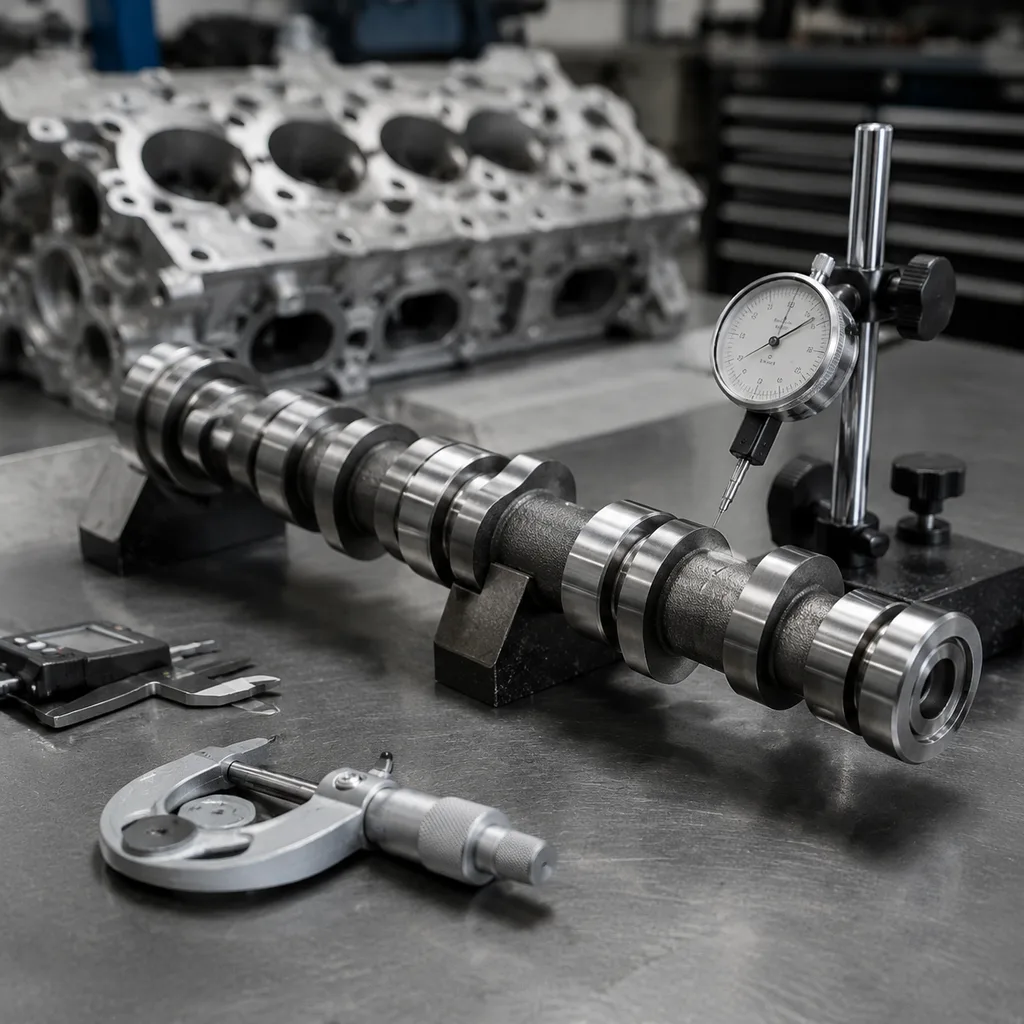
Dimensional tolerances should be agreed before sampling. For many rubber-to-metal mounts, practical control targets are `±0.20–0.50 mm` on machined or stamped hole positions, `±1.0 mm` on non-critical formed brackets, `±2 mm` on free rubber profile, and `±3 Shore A` on rubber hardness. If your assembly has tight clearance to a subframe, exhaust, heat shield, or hydraulic line, mark these as critical-to-fit dimensions on the drawing.
A supplier should provide dimensional drawings, material declarations, inspection records, and production traceability. If the mount interfaces with heat shields or a hydraulic insert, request assembly photos, exploded views, oil-fill or leak-check criteria, and the torque specification used during fixture verification. For catalog sourcing, start with our catalog and, where relevant, the broader engine components range.
What the factory must prove
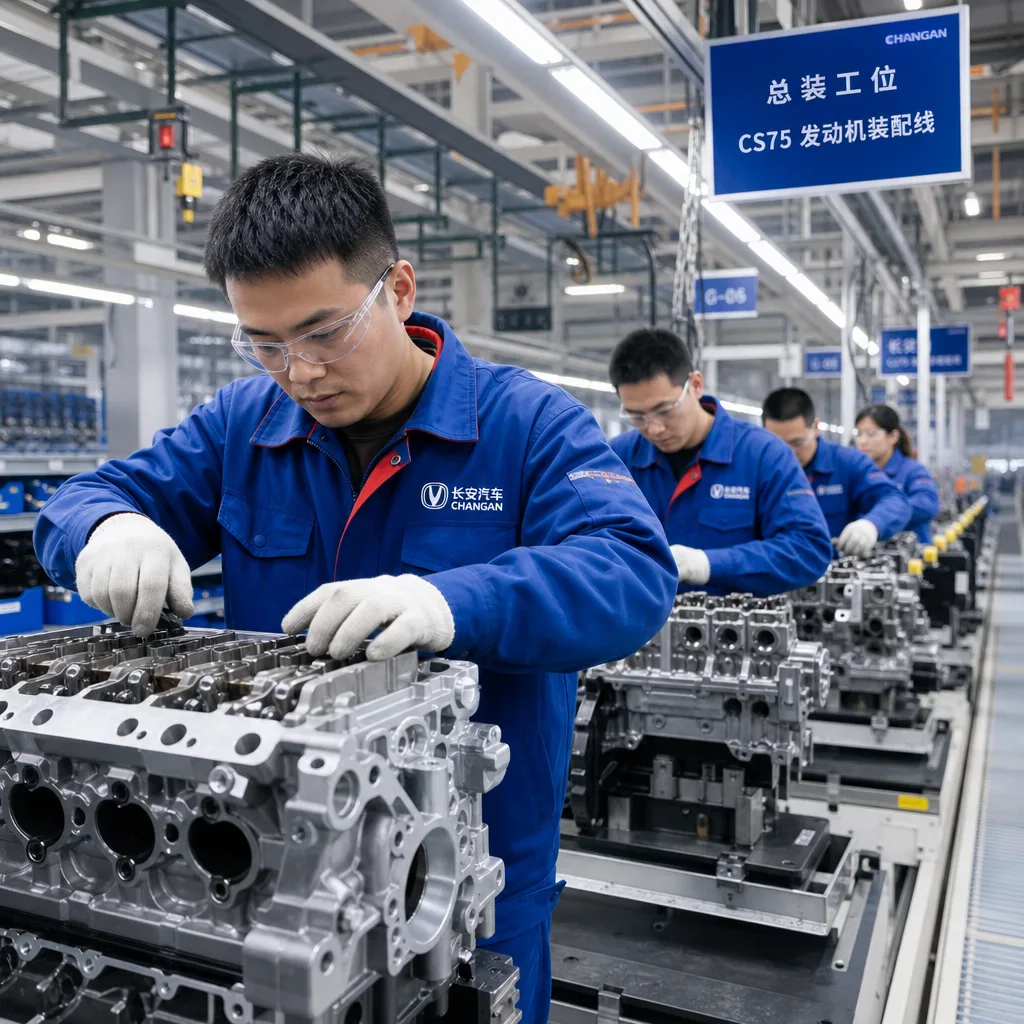
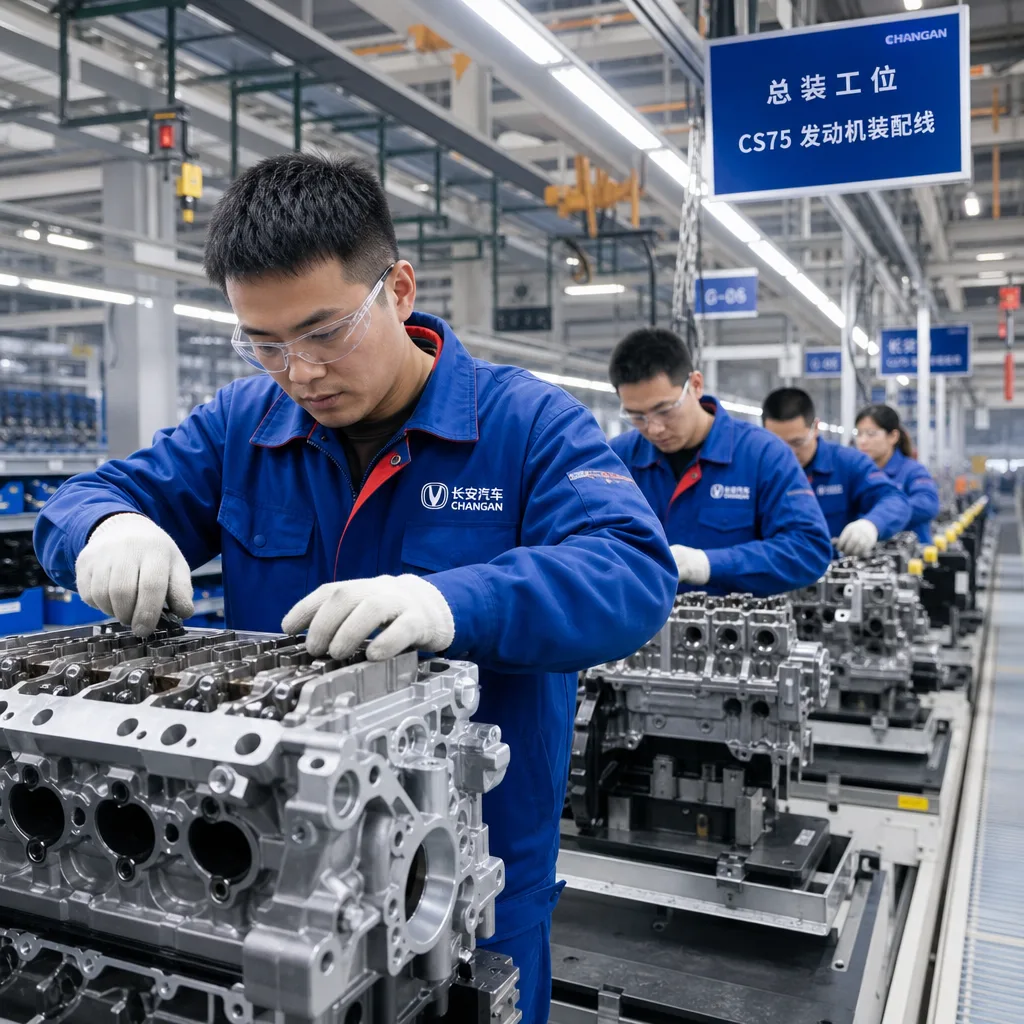
A compliant supply base matters more than a low unit price. Driventus operates under `IATF 16949:2016` and `ISO 9001:2015`, with incoming inspection, in-process checks, final audit records, and lot traceability. For export buyers, the practical question is whether the factory can hold the same part over time without drifting in material, dimensions, bonding, or finish.
E-coat, zinc plating, zinc-nickel, powder coat, or other specified finish with agreed salt-spray hours
Traceability
Lot code, date code, operator or line code, compound batch, metal batch, and retained sample period
Packaging
Rubber deformation prevention, bracket edge protection, barcode labelling, carton drop resistance, and palletisation
</tr></thead><tbody> </tbody></table>Incoming raw material control normally includes compound batch verification, hardness check, specific gravity or rheometer data where required, and certificate matching. In production, key checks should include first-piece inspection after tool change, periodic hole-position measurement using a fixture or CMM, bond-line visual review, torque check on studs or inserts, and coating thickness checks where corrosion performance is specified. Common audit frequencies are first-off, patrol inspection every `1–2 hours`, and final AQL inspection such as `AQL 1.0` for major defects and `AQL 2.5` for minor visual issues, unless the buyer specifies a different plan.
If your specification includes chemical compliance, ask for `REACH (EC) No 1907/2006`, `RoHS` where applicable, PAH limits for rubber parts entering certain European channels, and material safety documentation. For road-use programmes, engineering teams often also request validation aligned to vibration, heat, salt, and durability expectations used in vehicle-component testing.
Failure modes to test before launch
Engine mounts usually fail in three ways: cracked rubber, separated bonding, or collapsed height. A buyer should compare the replacement part to the original across three dimensions: static geometry, load path, and damping response. Dimensional match is necessary, but it is not enough; a mount can look correct and still transmit too much vibration if the rubber compound, void geometry, hydraulic chamber, or bonding area is wrong.
A credible validation pack usually includes:
Static compression or load-deflection data with force and displacement plotted, not only pass/fail notes
Dynamic stiffness or vibration response at defined frequency and amplitude when NVH is critical
Heat ageing evidence, for example `70–100°C` exposure for `70–168 h` followed by hardness and crack review
Oil-resistance review when the mount sits near leakage risk, with volume change, hardness change, and visual swelling limits
Fatigue durability records, such as vertical and fore-aft cycling at defined load, displacement, and cycle count
Bond-strength evidence showing rubber tear rather than clean metal separation on critical bonded areas
Visual acceptance limits for flash, voids, sink marks, weld spatter, coating runs, thread damage, and bond-line defects
For sample approval, request at least `3–5 pcs` for dimensional review and `2–3 pcs` for destructive or functional checks. Measure the OE sample and supplier sample on the same datum scheme, especially centre height, mounting face parallelism, hole centres, stud angle, sleeve length, and bracket-to-rubber offset. If the mount includes a hydraulic element, add leak testing and damping comparison; uncontrolled fluid fill level can change idle isolation and create clunk complaints.
For some programmes, customers request road-simulation or endurance data referenced against internal methods or published test frameworks such as `SAE J2527` for exposure-related durability work. If the mount is part of a noise-control package, ask for idle and road-load observations from the development sample stage, ideally with vehicle condition, engine speed, and temperature recorded. That helps avoid solving one NVH issue while creating another.
How to sequence MOQ, samples, and lead time
Supplier selection is often decided by availability, not technical data alone. For aftermarket and distributor programmes, the most useful commercial questions are:
What is the MOQ per part number and per shipment?
What is the standard lead time for repeat orders and first production after PPAP or sample approval?
Can the factory support mixed-line packing across slow-moving Cadillac references?
Is private label, neutral box, UPC/EAN label, or carton customisation available?
Can urgent replenishment be arranged for stock-outs, and what premium applies?
Are prices quoted `EXW`, `FOB`, `CIF`, or `DDP`, and what carton/pallet assumptions are included?
As a practical planning model, catalogued rubber-to-metal engine mounts usually require lower tooling risk than custom mounts. Existing-tool repeat orders may run at MOQs such as `100–300 pcs` per part number, while new-tool or low-volume references may require `300–1,000 pcs` depending on mould cavities, metal stamping MOQ, coating batch minimums, and packaging requirements. Sampling from an existing tool can often be planned in `7–15 days`; new tooling and first samples commonly require `30–45 days`; mass production after approval is typically planned at `30–60 days`, subject to metal components, rubber compound scheduling, and export booking.
Price should be evaluated by landed cost, not only unit cost. A mount with heavier brackets and protective packaging may have lower damage rates but higher carton volume. Ask for net weight, gross weight, carton dimensions, pieces per carton, cartons per pallet, HS code support, and annual price-break logic. For example, quotations may differ materially at `300 pcs`, `1,000 pcs`, and `5,000 pcs` annual volume because rubber mixing, stamping, coating, and final assembly all have batch economics.
Driventus supports B2B supply for distributors, OEM / Tier-1 customers, and multi-location repair chains. Where a programme needs a non-catalog form, custom manufacturing can be used to align dimensions, mounting points, stiffness targets, or packaging to the target market. Buyers should still plan for sample approval, dimensional sign-off, packaging approval, and first-article review before release to mass production.
Compare suppliers on evidence, not claims
Use a scored comparison rather than a verbal promise. The best supplier is the one that can document repeatability, not just quote quickly. A useful scorecard gives more weight to fitment control, validation, and delivery reliability than to the first price offered.
Score each candidate on:
1. Application coverage and OE cross-reference quality 2. Drawing control, revision control, and sample conformity to critical dimensions 3. Process certification and audit readiness under `IATF 16949:2016` or `ISO 9001:2015` 4. Rubber compound disclosure, bonding control, and chemical compliance support 5. Salt-spray target, coating thickness control, and metal-component traceability 6. Packaging, labelling, barcode accuracy, and export handling 7. Responsiveness on 8D reports, deviation requests, warranty claims, and corrective actions 8. MOQ flexibility, lead-time stability, and ability to support mixed-SKU containers
A practical weighting could be `30%` technical conformity, `20%` quality-system evidence, `15%` validation data, `15%` delivery and capacity, `10%` landed cost, and `10%` after-sales response. During supplier comparison, ask each factory to quote the same specification: OE reference, annual volume, order batch size, packaging type, inspection level, required documents, incoterm, and destination port. Without a common RFQ basis, a cheaper offer may simply exclude coating hours, private-label packaging, dimensional reports, or sample testing.
For many buyers, the decision comes down to whether the factory can support a stable global replenishment programme. Driventus publishes its quality system information for procurement review, and the team can align quotations to target markets, carton requirements, first-article documentation, and annual volume forecasts. If you need pricing, sample availability, or a technical review for an `engine mount cadillac manufacturer china` enquiry, use request a quote to start the discussion.
Frequently asked questions
Yes. We work from OE cross-reference data, vehicle application, engine and transmission details, then confirm dimensions, bracket orientation, and application notes before quotation. Brand names are referenced for fitment only.
Typical requests include dimensional drawings, material data, certificate of conformity, batch traceability, inspection report, packaging specification, and quality-system evidence under `IATF 16949:2016` or `ISO 9001:2015`.
Yes. Packaging, barcode labels, carton format, pallet plan, country-of-origin marking, and programme-specific branding can be reviewed during quotation and sample approval.
If you are qualifying a new supplier or consolidating part numbers, send your OE reference, photos, critical dimensions, annual volume, MOQ target, packaging needs, and destination market through `/contact.html`.