Engine Mount Audi Wholesale Sourcing for B2B Buyers
Engine mount Audi wholesale sourcing is a procurement exercise where small spec differences create large downstream costs. A mount can look right and still fail on rubber hardness, bracket geometry, bonding quality, or hydraulic damping, which means more returns, more downtime, and more warranty noise. This article gives B2B buyers a decision-focused way to qualify suppliers, compare commercial structures, and validate Audi-fit engine mounts before volume release. Driventus manufactures engine and powertrain components in Taizhou, Zhejiang, under IATF 16949:2016 and ISO 9001:2015 systems. Driventus is an independent aftermarket manufacturer; brand names are referenced for fitment only.
Which Audi Mount Program Are You Buying?
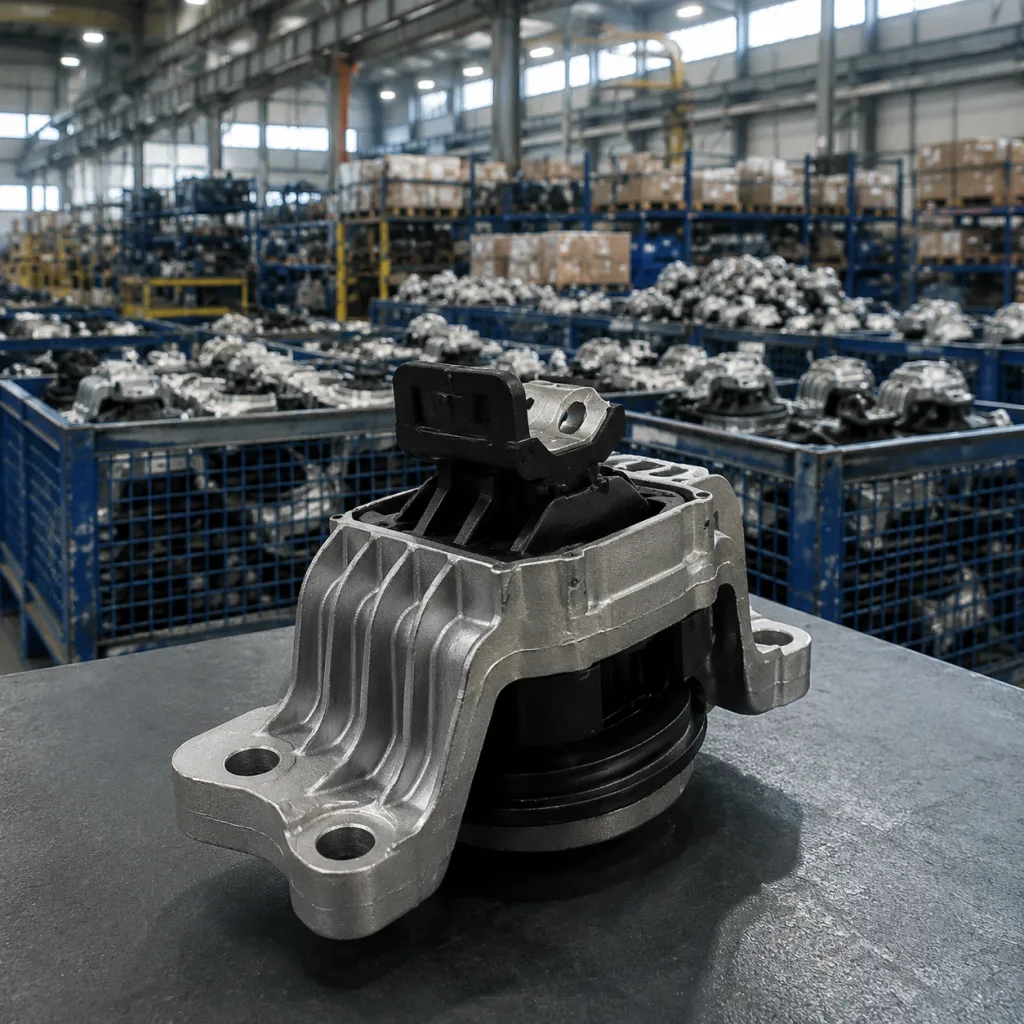
Audi-fit engine mounts are not one generic part family. The buying decision changes depending on whether you need rubber-metal mounts, hydro mounts, torque struts, or transmission-side supports. It also changes by platform, engine code, drivetrain layout, and production year.
For engine mount Audi wholesale sourcing, start by defining the program shape before asking for a price. A supplier can only quote cleanly if it knows whether the order is a stocked aftermarket SKU, a mixed-SKU consolidation, a private-label launch, or a long-term replacement program with stable call-offs.
Use an RFQ that forces apples-to-apples comparison:
- Target application range, platform split, and engine family
- Left/right position and transmission type, if applicable
- Annual volume by SKU, plus quarterly forecast
- MOQ target by SKU and by mixed carton or pallet
- Packaging format: neutral, branded, or bulk
- Sample quantity, validation timing, and approval deadline
- Region-specific labeling, language, and compliance needs
- Buyer-supplied cross-reference structure, where used
If the supplier cannot explain whether price is driven by mold availability, rubber batch size, or packaging minimums, the quote is incomplete. The same part can price very differently at 300 units, 1,000 units, and 5,000 units because setup and packaging costs are spread differently at each tier.
Driventus supplies independent aftermarket and custom programs only. Brand names should be used for fitment identification, not as evidence of vehicle manufacturer approval.
What Fails First in Wholesale Supply?
The fastest way to lose money on Audi-fit mounts is to treat them like simple rubber parts. The failures that matter are usually geometric, material, or process-related.
Common failure modes include:
- Wrong bracket geometry, causing installation interference
- Rubber hardness outside the expected range, changing NVH behavior
- Weak rubber-to-metal bonding, leading to early separation
- Poor hydraulic fill control on hydro mounts, causing leakage or damping drift
- Inconsistent coating or plating, creating corrosion complaints
- Packaging that survives the factory but fails in export transit
A supplier audit should therefore test process control, not just finished appearance. Ask for the manufacturing route: compounding, stamping or casting, surface treatment, bonding, curing, assembly, and final inspection. If the factory cannot show where variation is controlled, volume risk is high.
Useful audit evidence includes:
- Valid IATF 16949:2016 and ISO 9001:2015 certificates
- Control plan and process flow
- Rubber batch traceability and metal material records
- Adhesion or peel test records where relevant
- Dimensional reports for stud angle, hole spacing, and datum alignment
- Packaging validation for drop and stack handling
- Written change-control procedure
A credible supplier should also be able to discuss Cp/Cpk or at least provide measured samples for critical dimensions. For mounts, a few millimeters can be the difference between clean fitment and a customer complaint.
How Should MOQ and Lead Time Be Structured?
MOQ is usually a consequence of production reality, not a sales tactic. For a mature aftermarket SKU, a supplier may support lower mixed quantities. For new tooling, custom rubber hardness, or private-label packaging, MOQ rises because the factory must recover setup, compound, and print-run costs.
The cleanest buying structure is a three-step process:
1. Sample order for dimensional confirmation and installation trial. 2. Pilot order for packaging, labeling, and field feedback. 3. Volume order for container or consolidated shipment with stable release timing.
Each step should have its own price. Sample pricing is usually highest. Pilot pricing sits in the middle. Volume pricing should reflect repeat production and forecast stability.
Lead time should also be broken into pieces instead of presented as one number:
- Tool status: available, repair needed, or new tool required
- Production time: regular stock production versus new tooling and private-label runs
- Export preparation: carton print, palletization, documents, and booking
- Transit time: ocean or air, by destination
For bonded mounts, the schedule matters. Rubber compounding, controlled curing, and post-process inspection can become the true bottleneck even when assembly capacity looks available. Buyers should ask what actually drives the promised ship date.
If you are consolidating a wider powertrain program, Driventus can combine engine mounts with related items to improve container and pallet efficiency.
What Specs Should Be Locked Before Approval?
This is the section that protects you from a part that looks correct but behaves wrong. Engine mounts are load-bearing support components, so procurement specs need measurements, not just photos or interchange references.
A practical buyer spec should define:
- Rubber hardness, usually in Shore A with an agreed tolerance
- Bracket geometry, including hole position, stud angle, and thread spec
- Critical dimensions such as height, width, and mounting center distance
- Bond integrity checks for rubber-to-metal separation
- Surface protection, including plating or coating expectations
- Hydraulic damping criteria, if the design is fluid-filled
- Load or deflection targets where NVH sensitivity matters
- Marking and traceability requirements
The inspection plan should match the risk:
- First article inspection on the initial sample set
- In-process checks at defined intervals
- Final AQL sampling before shipment
- Torque verification for studs or inserts, where relevant
- Measured comparison against an approved reference sample
Do not mix up product testing and general compliance language. IATF 16949:2016 and ISO 9001:2015 are quality system standards. REACH matters for chemical substance compliance in the EU supply chain. ECE R-83 is an emissions-related regulation, not an engine mount approval standard.
If a supplier only offers pass/fail language and no measured values, that is a warning sign. For Audi-fit mounts, clearance can be tight enough that the actual numbers matter more than the drawing thumbnail.
How Do You Validate and Protect the Program?
Validation should happen before the purchase order turns into recurring volume. Fitment, NVH behavior, packaging survival, and traceability all need to be proven in the real buying context.
A practical approval sequence is:
- First article: inspect against buyer drawings or approved samples
- Pilot run: install on representative vehicle applications
- Field check: review workshop feedback and early returns
- Release decision: move to volume only after the failure window is understood
For higher-risk programs, buyers often want at least 30 to 50 field units before full launch. That is not always necessary for every SKU, but it is useful when the mount is geometry-sensitive or warranty exposure is high.
Warranty control depends on traceability. Each shipment should link to the production batch, rubber compound batch, metal lot, and inspection record. Without that chain, containment becomes guesswork if field claims rise.
Private-label buyers should lock these details before pilot release:
- Carton strength and print format
- Barcode structure and label placement
- Country-of-origin marking
- Pallet height and stack pattern
- Replacement and claim-response terms
Driventus supports buyer-specified packaging and custom manufacturing for importers, distributors, and repair networks that need controlled fitment coverage or exclusive SKU structures.
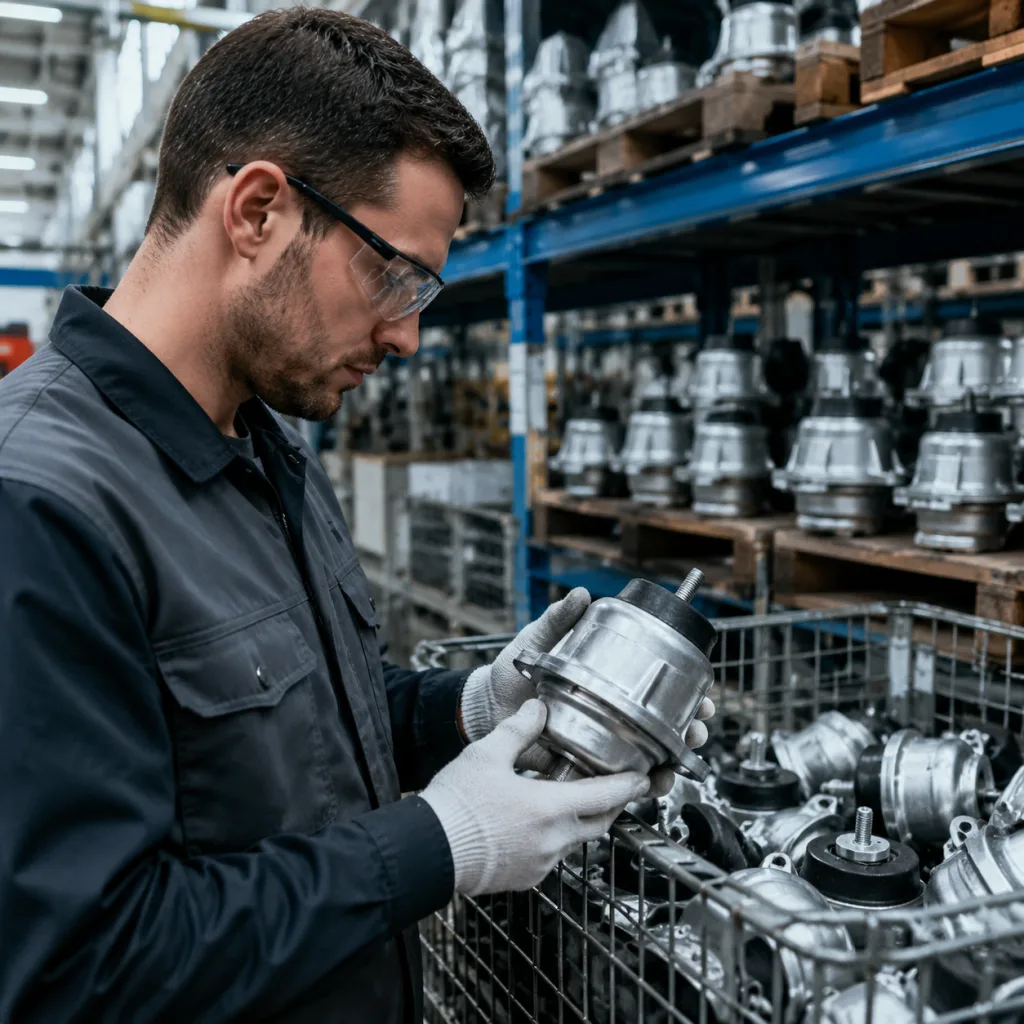
What Does a Strong Supplier Compare On?
A good comparison is not just unit price versus unit price. For engine mount Audi wholesale programs, the real comparison includes fitment control, documentation depth, packaging readiness, and response discipline.
Compare suppliers on these points:
- Fitment coverage and how clearly the SKU map is defined
- Material and dimensional evidence, not just product photos
- MOQ flexibility at sample, pilot, and volume tiers
- Lead-time credibility by process stage, not one blanket promise
- Packaging quality for export handling
- Change-control discipline for mold, material, or label revisions
- Warranty response time and evidence requirements
This is where commercial offers often diverge. One supplier may look cheaper on the unit price and then add friction through large MOQ, long lead time, weak traceability, or poor packaging. Another may appear slightly higher but save money through fewer claims and cleaner receiving.
Driventus is a vertically integrated manufacturer based in Taizhou, Zhejiang, and exports to more than 60 countries. For wholesale enquiries, the most efficient RFQ includes target SKUs, annual demand, destination market, sample expectations, and documentation requirements. Buyers can send drawings, samples, target references, or fitment lists when they request a quote.
Frequently asked questions
Send the target application range, position, annual volume, packaging requirements, destination market, sample needs, and any buyer-supplied cross-references such as OE 06A… where applicable. Photos help, but dimensional and fitment data are more useful for supplier confirmation. If you already have target pricing, MOQ, or lead-time limits, include those too so the quote is comparable across suppliers.
Yes. Driventus can support neutral packaging, customer-brand packaging, barcode labels, carton specifications, and pallet requirements. Packaging details should be approved during the sample or pilot stage to avoid export handling damage and receiving errors. Buyers should also confirm carton count per master case, pallet height limit, and label language before mass production.
No. IATF 16949:2016 is an automotive quality management system standard. It does not mean a specific engine mount has vehicle manufacturer approval. Driventus is an independent aftermarket manufacturer; brand names are referenced for fitment only.
If you are building a wholesale engine mount program, share your SKU list, target volumes, and documentation requirements with Driventus. Our team will review fitment and supply options at /contact.html
Request a Quote