Engine Block Wholesale: Sourcing Guide for B2B Buyers
Engine block wholesale sourcing is a technical purchase, not a simple commodity buy. Buyers need dimensional consistency, stable metallurgy, machining repeatability, and documented quality control before they can place volume orders with confidence. For distributors, repair chains, and OEM programmes, the commercial terms matter only after the block meets specification and passes validation. Driventus manufactures engine and powertrain components in Taizhou, Zhejiang, and exports to more than 60 countries. We work to IATF 16949:2016 and ISO 9001:2015 controls, with export documentation for cross-border supply. Driventus is an independent aftermarket manufacturer; brand names are referenced for fitment only. This article explains what procurement teams should verify when comparing suppliers, how to assess lead time and MOQ, and which documents belong in a proper sourcing file before you approve a trial order.
What a wholesale engine block supply offer should include
A credible wholesale quotation should define the casting material, machining scope, bore size, deck finish, thread specification, and inspection basis. Buyers should not accept a vague offer that only lists the engine family. The supplier should state whether the block is supplied as a bare casting, semi-finished block, or fully machined assembly.
Minimum data to request:
- Material grade and casting route
- Bore diameter, cylinder spacing, deck height, and main bearing tunnel dimensions
- Surface roughness on machined faces
- Heat treatment status, if applicable
- Pressure test and crack inspection method
- Packaging method and corrosion protection
- MOQ, sample lead time, and mass-production lead time
If the block is intended for replacement use, ask for OE 06A107065-style cross-reference formatting only where the fitment data already supports it. Do not rely on part-name similarity alone. A practical offer should also identify applicable emissions or installation constraints, such as compatibility with ECE R-83-linked applications where relevant to the vehicle platform.
Materials, machining, and dimensional control
Most passenger-vehicle blocks are produced in cast iron or aluminium alloy, depending on engine design, mass targets, and thermal load. The commercial issue is not the material alone. It is the consistency of the cast structure, core placement, and final machining.
Key technical points to check
- Bore geometry: roundness, taper, and surface finish after honing
- Deck flatness: important for head gasket sealing
- Main bearing alignment: tunnel concentricity and line-bore repeatability
- Thread quality: spark plug, head bolt, oil gallery, and sensor ports
- Crack integrity: especially around water jackets and main webs
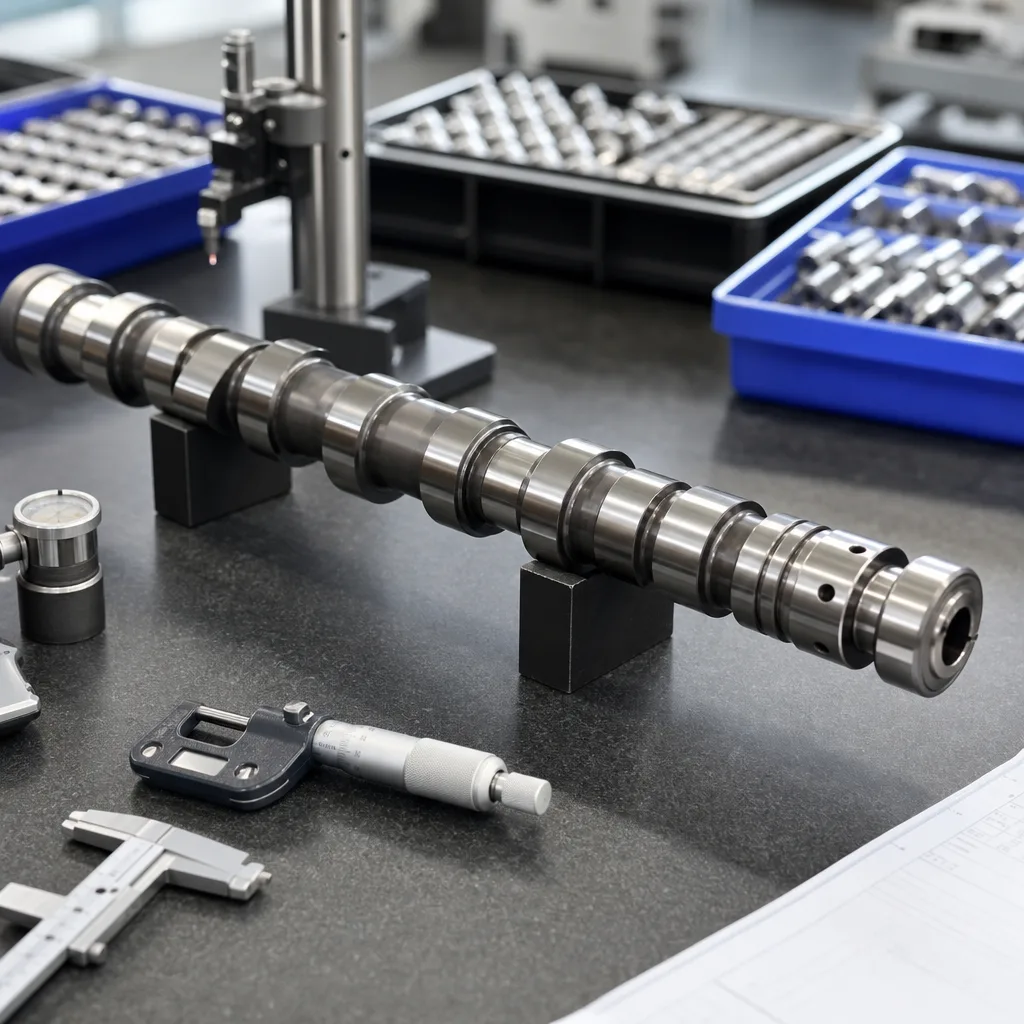
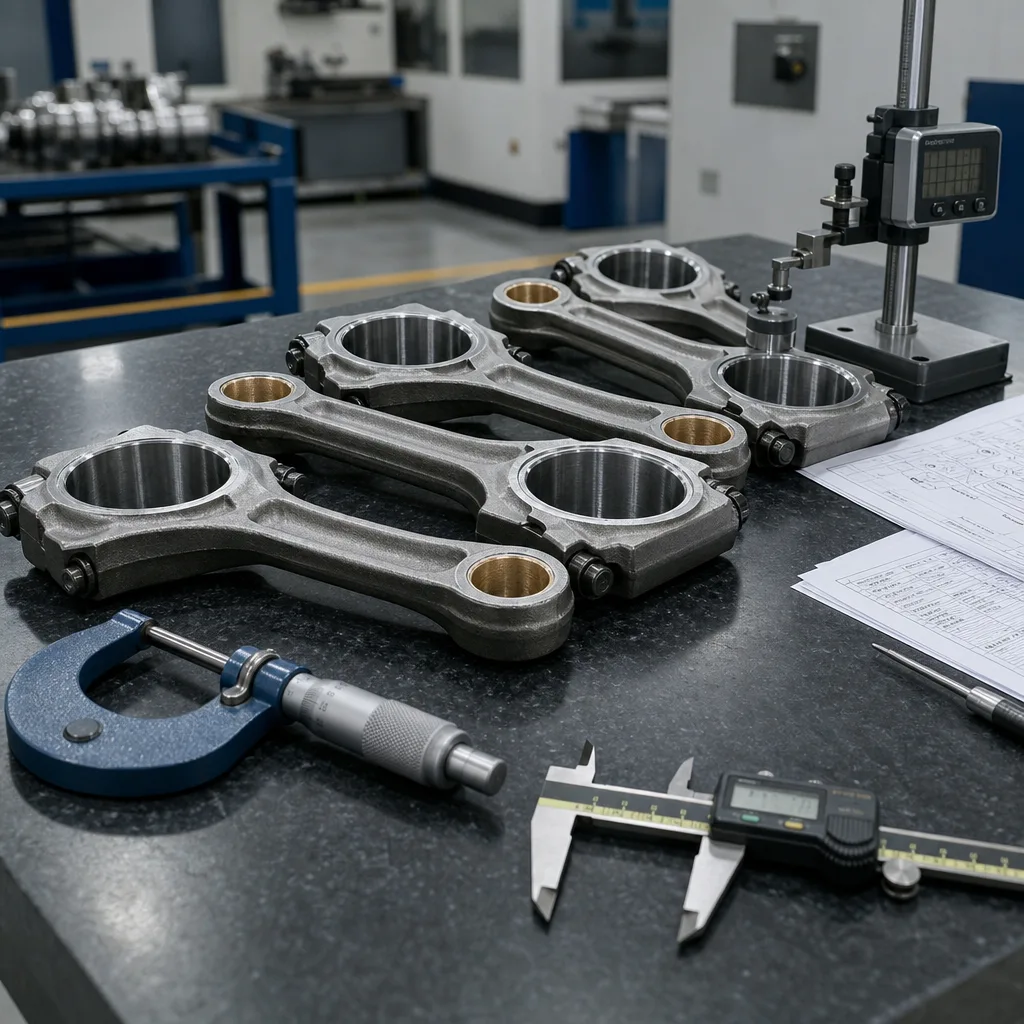
For high-volume programs, ask for process capability data where available, including Cp/Cpk on critical dimensions. If the supplier cannot provide statistical control data, request a pilot lot with dimensional reports from measuring equipment such as CMM, bore gauge, and surface profilometer. A reliable supplier should be able to explain which dimensions are 100% inspected and which are sampled.
Driventus can also support custom manufacturing when a buyer needs a modified casting, machining change, or packaging spec for regional distribution.
Quality documents procurement teams should demand
A wholesale engine block purchase should be supported by documents, not verbal assurances. Buyers in the EU, UK, US, Canada, Australia, and Brazil usually need a traceable file for internal approval and import review.
| Document | Why it matters |
|---|---|
| IATF 16949:2016 certificate | Confirms automotive quality-system control |
| ISO 9001:2015 certificate | Baseline quality-management certification |
| Material certificate / heat analysis | Verifies chemistry and batch traceability |
| Inspection report | Shows dimensional and visual results |
| Pressure test record | Confirms water-jacket integrity where applicable |
| PPAP-style file, if requested | Supports OEM or Tier-1 sourcing review |
| REACH (EC) No 1907/2006 declaration | Important for EU chemical compliance reviews |