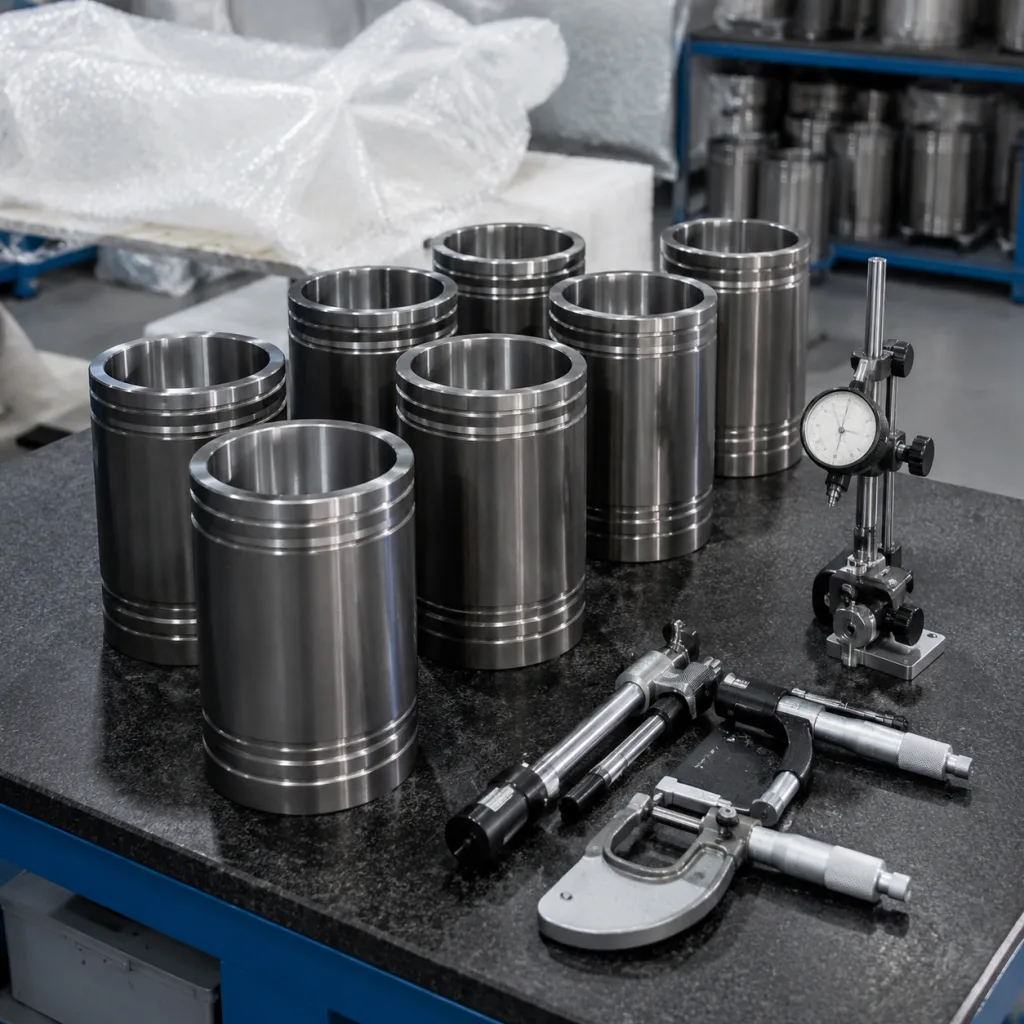
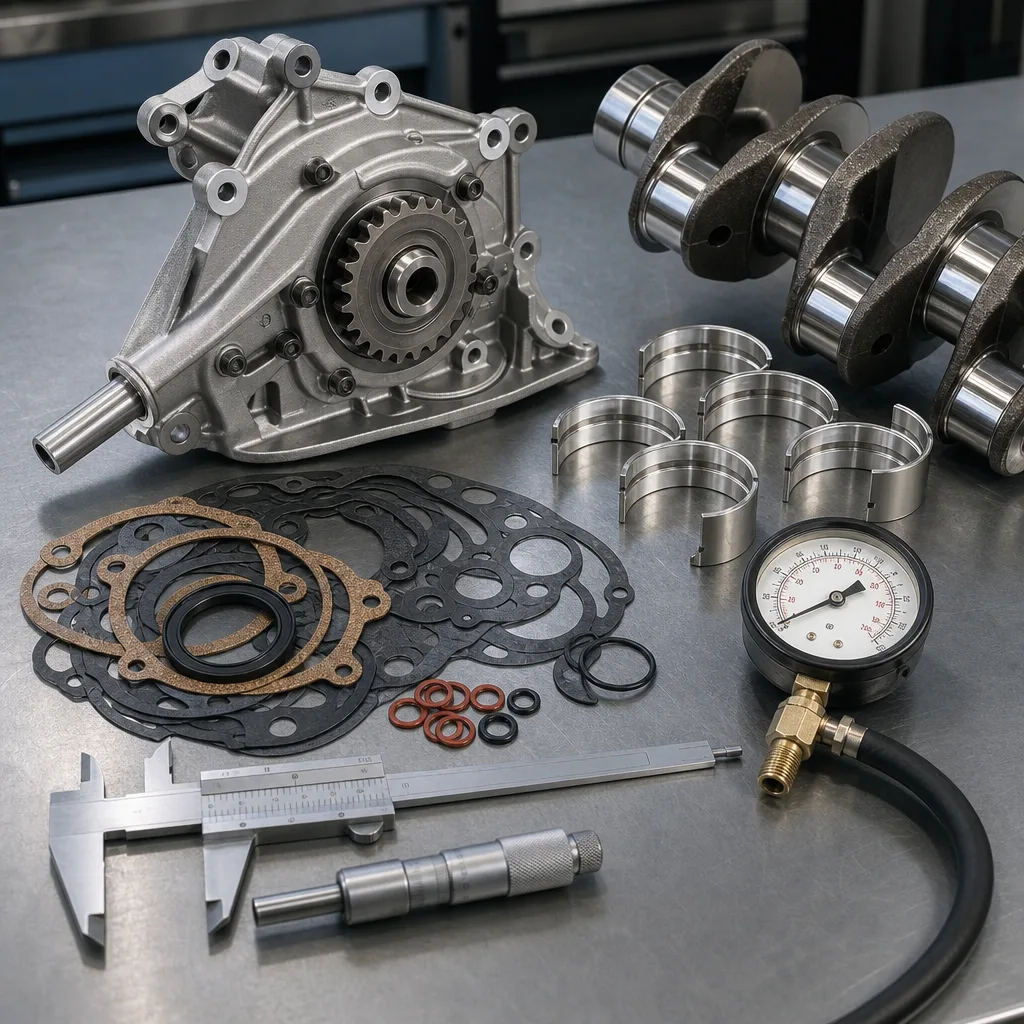
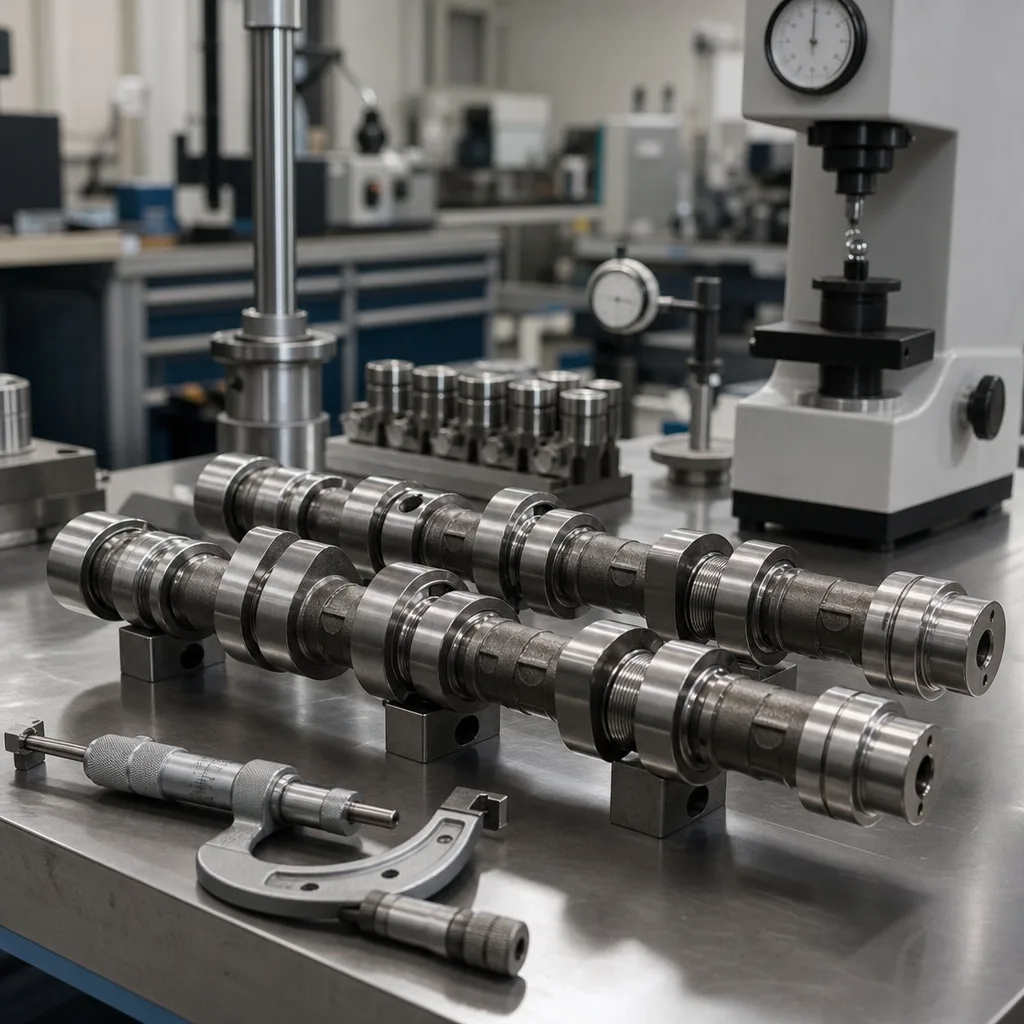
Engine blocks are high-risk procurement items because minor dimensional or material deviations can affect compression, oil control, cooling performance, bearing life and long-term serviceability. For distributors, OEM programmes and repair-chain buyers, a quotation should define far more than displacement and vehicle fitment. It should cover casting material, bore geometry, deck flatness, main bearing alignment, threaded-hole quality, pressure-test criteria, cleanliness and export packaging controls. This guide outlines the engine block specifications purchasing teams should request before supplier approval, incoming inspection or private-label development. Driventus manufactures engine and powertrain components in Taizhou, Zhejiang, and exports to more than 60 countries. Production is managed under IATF 16949:2016 and ISO 9001:2015. Driventus is an independent aftermarket manufacturer; brand names are referenced for fitment only.
Core Data to Include in an RFQ
A complete RFQ should identify the engine family, displacement, cylinder count, fuel type, aspiration type, emission-generation context where relevant, and intended market. It should also state the supply condition: bare casting, semi-finished block, fully machined block, or assembly supplied with liners, core plugs, oil gallery plugs, dowels and other fitted parts.
For aftermarket sourcing, buyers should provide OE cross-reference families where available, such as OE 06A… or OE 11251…, without implying approval by the vehicle manufacturer. Cross-references are useful for confirming application scope, but they cannot replace dimensional drawings, inspection criteria or approved sample data.
Useful RFQ attachments include:
2D drawing with critical-to-quality dimensions and datum structure
3D model for casting and machining feasibility review
Material grade, hardness range and heat-treatment requirement where applicable
Cylinder bore, deck, main tunnel and cam tunnel tolerance limits
Thread standard, tapped-hole depth and insert requirements if used
Pressure-test requirement for coolant jackets and oil passages
Cleanliness requirement for machined galleries and internal cavities
Annual forecast, batch size, destination market and packaging method
Procurement teams can review related engine-component families in our catalog and specify whether the project requires standard aftermarket supply or custom manufacturing.
Typical Materials and Casting Requirements
Most replacement engine blocks are produced from grey cast iron, compacted graphite iron, or aluminium alloy with cast-in, press-fit or otherwise integrated liners. Material choice depends on engine load, thermal management, weight target, machining strategy and the original engine architecture. The supplier should state the material grade, heat treatment where applicable, and control method for porosity, inclusions, shrinkage and wall-thickness variation.
Material route
Common procurement reason
Key control points
Typical risk if uncontrolled
Grey cast iron
Durability, wear resistance, cost control
Graphite structure, hardness, wall thickness
Bore distortion, local cracking
Compacted graphite iron
Higher-load diesel or turbo applications
Nodularity range, tensile strength, machinability
Tool wear, inconsistent main tunnel geometry
Aluminium alloy with liners
Lower weight, faster heat transfer
Liner seating, porosity, deck stability
Coolant leakage, liner movement
Aluminium alloy with coated bores
Weight and friction reduction
Coating thickness, adhesion, surface finish
Oil consumption, early bore wear
</tr></thead><tbody> </tbody></table>Casting documentation should include melt records, chemical composition checks, hardness records, traceability to casting batches and non-destructive inspection where required by the programme. ISO 9001:2015 supports document control and traceability; IATF 16949:2016 adds automotive-specific process discipline such as defect prevention, change control and production part approval practices. For export to the European market, chemical and material declarations may also need to support REACH (EC) No 1907/2006 obligations.
Machining Dimensions and Tolerances
The most important engine block specifications are usually geometric rather than cosmetic. A block can appear clean and well finished but still fail during assembly if the deck, bore axis, main bearing tunnel or threaded features are outside tolerance. Buyers should ask for a control plan that separates functional characteristics from general machining dimensions.
Example inspection points for a machined block:
Cylinder bore diameter: defined by engine design and piston-to-wall clearance target
Bore roundness and cylindricity: measured at multiple depths, not only near the top edge
Bore spacing and perpendicularity to the deck or agreed datum system
Deck flatness: verified across the full gasket sealing surface
Main bearing tunnel diameter, roundness and alignment
Crankshaft centreline to deck height: controlled from agreed datum points
Camshaft tunnel alignment, where applicable
Head-bolt and main-cap thread depth, pitch and perpendicularity
Oil gallery and coolant passage cleanliness after machining
A practical supplier drawing should mark datum A, B and C clearly and define inspection frequency by feature. For example, a launch batch may require 100% measurement of bore diameter, deck flatness and main tunnel diameter, while mature production can move selected dimensions to statistically controlled sampling if capability data supports the change.
Surface finish should also be specified. Cylinder bores require a controlled hone pattern compatible with ring seating, oil retention and the intended piston-ring material. Deck surfaces must match the gasket type, especially for multi-layer steel gaskets that are sensitive to roughness and waviness. If a procurement file only says “standard finish”, incoming inspection teams may not have enough information to judge conformity or dispute borderline parts.
Validation and Quality Records Buyers Should Request
Engine block sourcing should include both part-level inspection and process-level evidence. Driventus manages production through a documented quality system, including incoming material control, casting review, machining inspection, pressure testing and final release checks. For new tooling, drawing-controlled supply or a supplier-transfer project, procurement teams should review records before the first shipment leaves the factory.
Recommended record package:
Dimensional inspection report for the first production batch
Material composition and hardness report
Coolant jacket and oil gallery pressure-test result
Cleanliness inspection method and acceptance criteria
Thread gauge and plug gauge records for critical holes
Flatness and surface roughness measurements for gasket surfaces
Casting defect disposition process and rework limits
Change-control procedure for tooling, machining fixtures and approved sub-suppliers
Packaging drop or handling review for export shipments
Pressure testing is especially important because a casting leak may not be visible during routine dimensional inspection. Coolant jackets and oil galleries should be tested to an agreed pressure and hold time that reflects engine design, test medium and customer risk tolerance. The record should identify whether air, water or another medium is used, how leakage is detected, and what acceptance limit applies.
For OEM or Tier-1 programmes, buyers may also require APQP-style planning, control plans, process flow diagrams, failure mode and effects analysis, measurement system analysis and production part approval documentation. These are commercial and programme requirements rather than evidence of vehicle-maker endorsement.
Import, Compliance and Packaging Considerations
Heavy cast components require export packaging that protects machined faces, threaded features and internal passages. A block may pass factory inspection but become unusable if the deck face is scratched, dowel bores are damaged, rust forms on machined iron surfaces, or moisture enters oil galleries during transit.
A sourcing specification should define:
Rust prevention method for machined iron surfaces
Caps or plugs for oil galleries, coolant openings and exposed threads
Protection for deck faces, main tunnels and machined locating surfaces
Separation between parts inside the crate or pallet
Desiccant and barrier-bag requirements for long ocean transit
Label format, batch number, country of origin and carton or crate markings
Acceptable pallet height, gross weight, forklift access and handling points
For multi-country distribution, import managers should align documentation requirements with the destination market before shipment. This can include commercial invoice descriptions, harmonised tariff classification support, packing lists, material declarations and traceability labels. Where the product is supplied to regulated repair networks, internal customer specifications may require additional evidence even when no emissions or vehicle safety regulation applies directly to the bare engine block.
Regulations such as ECE R-83 relate to vehicle emissions type approval, not a stand-alone replacement block by itself. Buyers should avoid asking suppliers to claim compliance with standards that do not directly apply to the purchased component; the stronger approach is to request accurate material, inspection, traceability and fitment documentation.
How Driventus Supports Specification-Based Sourcing
Driventus supplies engine and powertrain components for aftermarket distributors, wholesalers, OEM and Tier-1 customers, and multi-location repair chains. For engine block projects, the sourcing process normally starts with fitment data, OE cross-reference families, target annual volume, supply condition and required delivery market. The engineering team then reviews casting feasibility, machining datum strategy, inspection requirements, validation records and packaging constraints.
For standard aftermarket programmes, buyers can select applicable items from our catalog. For private-label or drawing-controlled projects, custom manufacturing can include dimensional review, tooling development, sample inspection, controlled batch production and release documentation. Typical commercial data includes minimum order quantity, lead time by tooling status, carton or crate dimensions, pallet configuration and Incoterms requested by the buyer.
Driventus does not claim approval or endorsement by any vehicle manufacturer for independent aftermarket parts. Brand names and OE references are used only to identify application and fitment. When buyers need a documented comparison against engine block specifications, the recommended starting point is a drawing review and sample inspection plan before price finalisation.
Frequently asked questions
Cylinder bore diameter and geometry, deck flatness, main bearing tunnel alignment, crankshaft centreline to deck height, threaded-hole quality and oil or coolant passage integrity are usually the highest-risk dimensions. The exact list should come from the drawing, datum scheme and control plan.
No. OE references such as OE 06A… or OE 11251… help identify fitment scope, but they do not define all functional dimensions, materials, tolerances or inspection methods. A drawing, approved sample or agreed inspection standard is still needed for controlled sourcing.
For automotive components, IATF 16949:2016 and ISO 9001:2015 certificates are common starting points. Buyers should also request product-specific inspection reports, material records, pressure-test data, cleanliness criteria and traceability information for the relevant production batch.
If you are comparing engine block specifications for a sourcing programme, share your drawing, OE reference family and annual forecast to [request a quote](/contact.html)