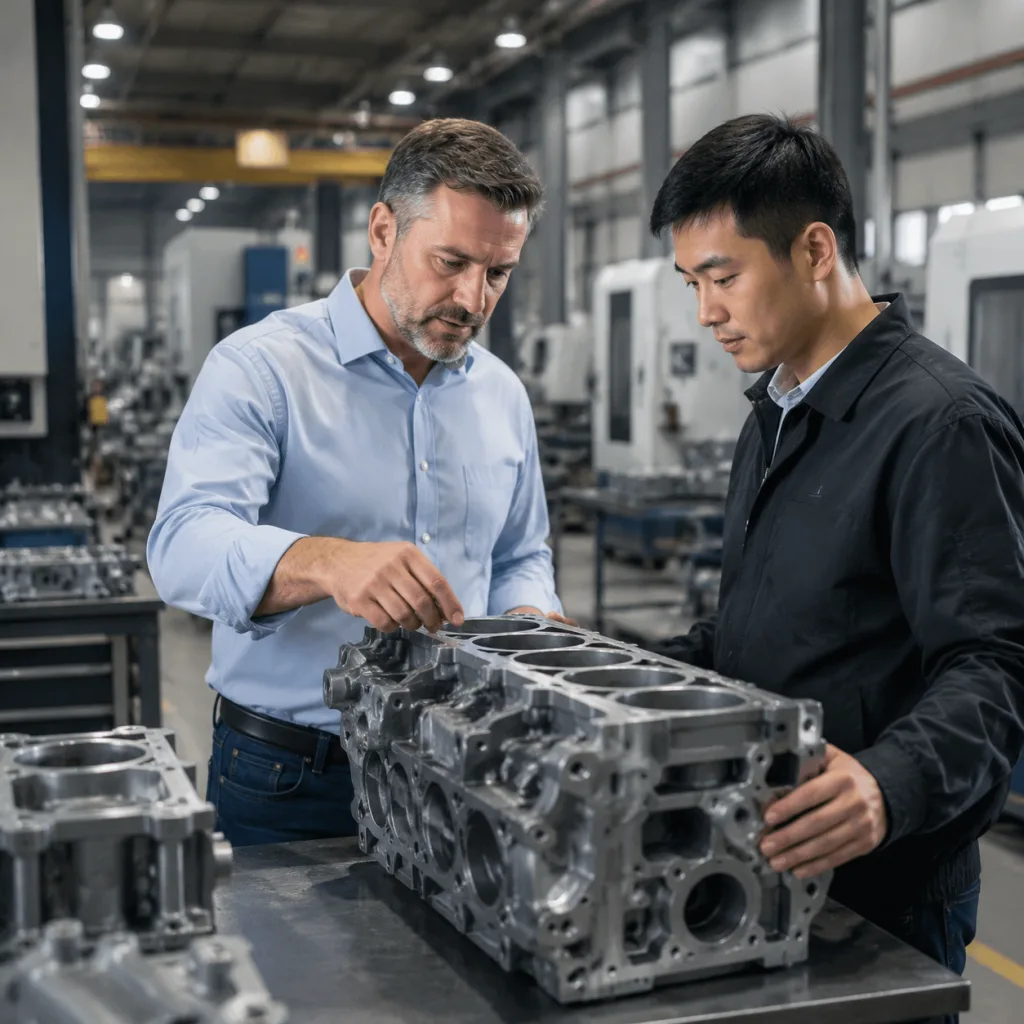
If you are evaluating an engine block RAM manufacturer in China, the main questions are usually not about price first. Procurement teams normally need dimensional control, repeatable machining, traceable metallurgy, and a supplier that can support validation and export paperwork. For aftermarket and remanufacturing channels, the engine block must match the intended bore size, deck height, main tunnel geometry, and sealing surfaces within the agreed drawing limits. For OEM and Tier-1 use, auditability and process control matter just as much as unit cost. Driventus is an independent aftermarket manufacturer; brand names are referenced for fitment only. We manufacture in Taizhou, Zhejiang and export to 60+ countries under IATF 16949:2016 and ISO 9001:2015 systems. This article explains what buyers should check before placing a trial order, how to compare suppliers, and what technical documents to request before approval.
What buyers should verify in an engine block supplier
Procurement teams should verify the supplier’s ability to control casting quality, machining accuracy, and batch traceability. For an engine block, the key checks are straightforward:
Alloy and casting route, including material grade declaration and melt traceability
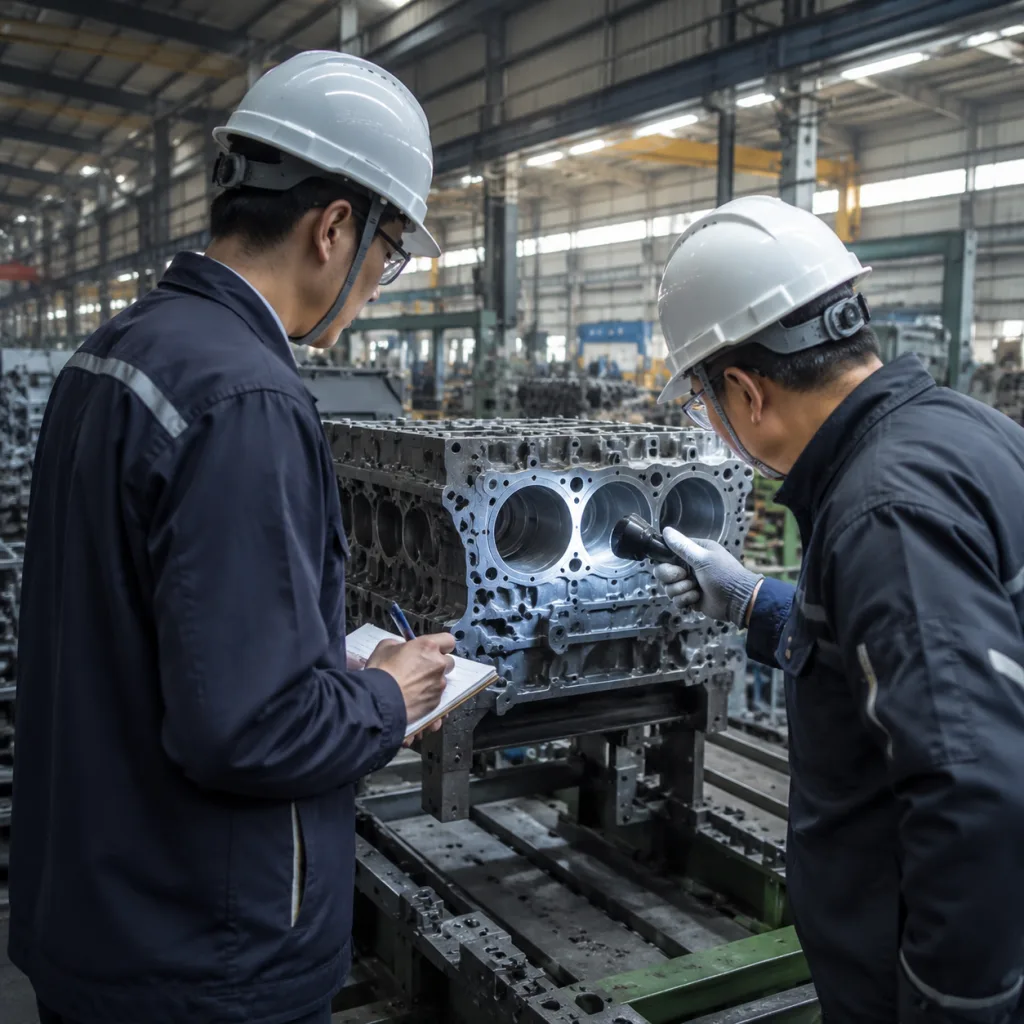
Rough casting inspection, including porosity control and visual acceptance criteria
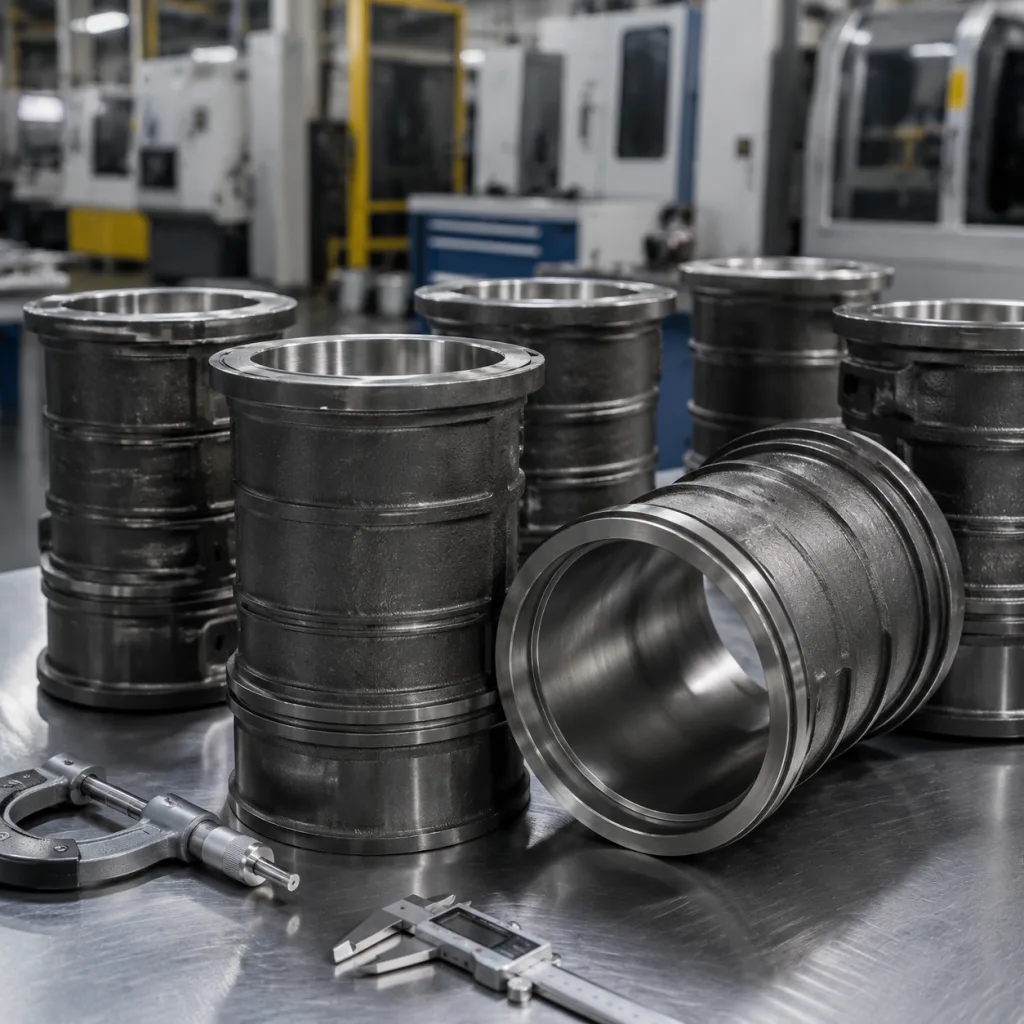
CNC machining capability for deck surface, main bearing saddles, cylinder bores, and locating faces
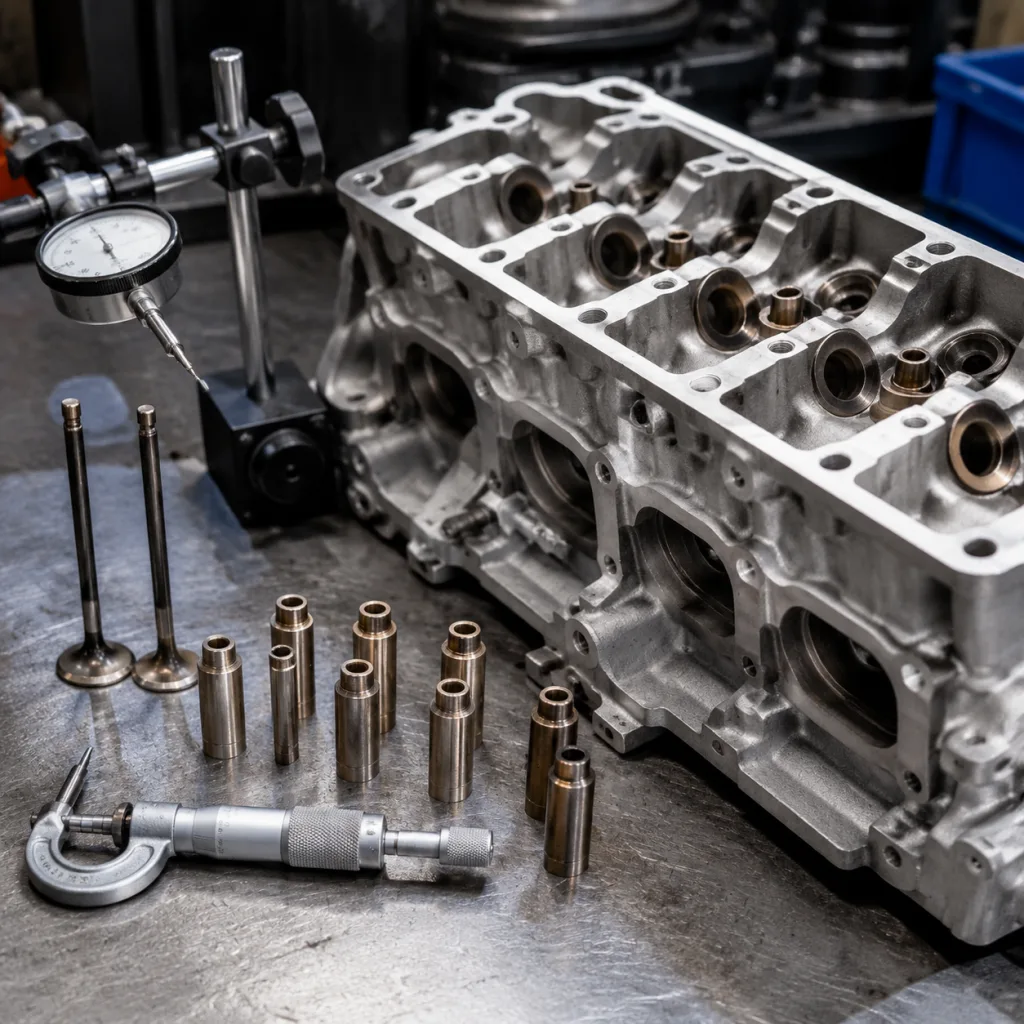
Dimensional inspection records with bore size, roundness, and perpendicularity data
Packaging method for rust prevention and transit damage control
Export documents, including commercial invoice, packing list, and certificate of origin where required
If the sourcing target includes OE cross-reference work, confirm that the supplier can work from the drawing, sample, or OE 06A107065-style reference only where the OE number is already part of your internal specification. Driventus does not claim vehicle manufacturer approval or endorsement.
Technical specifications procurement teams should request
A good RFQ should ask for measurable data, not general statements. For engine blocks, request the following documents and tolerances where applicable:
Item
What to request
Why it matters
Material
Alloy designation and melt traceability
Confirms casting consistency
Cylinder bore
Nominal bore, finish size, and allowable variation
Supports piston fit and ring seal
Deck surface
Flatness and surface finish target
Affects head gasket sealing
Main tunnel
Alignment and bore geometry report
Protects crankshaft support
Weight
Finished unit weight range
Useful for logistics and validation
Coating / rust protection
Anti-corrosion treatment spec
Reduces storage risk
</tr></thead><tbody> </tbody></table>Where the end application is emissions-sensitive or subject to test protocols, ask whether the part is validated against relevant methods such as SAE J2527 for corrosion or customer-specific endurance cycles. For European-facing compliance, confirm material and chemical declaration support for REACH (EC) No 1907/2006 where applicable.
How we support sourcing, audit, and trial orders
For B2B buyers, the practical value of a supplier is usually in the way the factory handles first samples, process control, and communication during ramp-up. At Driventus, we support sourcing programmes with documented inspection, production traceability, and export packaging suited to mixed freight or full container loads.
Typical sourcing workflow
1. Receive drawing, sample, or dimensional target. 2. Confirm application, OE cross-reference, and annual volume. 3. Review tooling or machining requirements. 4. Issue quotation with MOQ, lead time, and packing method. 5. Produce pilot samples for dimensional approval. 6. Run batch production after sign-off.
For buyers comparing factories, ask whether the supplier can show control plans, inspection records, and internal nonconformance handling. You can review our catalog and the related engine components overview before sending an RFQ.
MOQ, lead time, and export terms for China sourcing
MOQ and lead time depend on casting route, machining complexity, and whether new tooling is needed. Buyers should expect different commercial terms for standard replacement parts versus customised programmes.
Standard catalogue items: lower MOQ, faster repeat lead times
New engine block programmes: higher initial MOQ, longer sample and tooling lead time
Special packaging or private label: additional setup time
Multi-SKU orders: better freight efficiency, but require tighter forecasting
A supplier should state whether lead time is counted from drawing approval, sample approval, or deposit receipt. That detail matters in procurement planning. If your organisation needs a private specification, our custom manufacturing page explains the type of information we need to quote accurately. Driventus is an independent aftermarket manufacturer; brand names are referenced for fitment only.
Quality system and factory audit checkpoints
A factory audit for engine blocks should focus on process control rather than only finished goods inspection. Buyers should confirm the supplier operates under IATF 16949:2016 and ISO 9001:2015, with documented calibration, incoming material control, in-process checks, and final inspection.
Audit checklist:
Casting and machining process flow is documented
Measuring equipment is calibrated and traceable
First article inspection is retained by lot
Nonconforming product is segregated and recorded
Packaging and warehouse conditions reduce corrosion risk
Production records can be linked to batch and shipment numbers
If you need supplier background before an onsite visit, review our quality system and request supporting inspection reports with your quote request. For many buyers, this is the difference between a one-time purchase and a repeatable supply programme.
When to choose a China manufacturer for engine blocks
A China-based manufacturer is usually a practical option when you need a balance of machining capacity, export readiness, and controlled unit cost. It is especially relevant for:
Repair chains needing stable replenishment for high-turn applications
Importers consolidating multiple powertrain SKUs into one supply base
The key is to compare technical evidence, not just sample appearance. A block that looks clean can still fail on bore geometry, deck flatness, or main tunnel alignment. For that reason, sourcing should include sample inspection, documentation review, and a clear agreement on acceptance criteria before mass production. If your team is ready to price a programme, request a quote with the drawing, target annual volume, and required testing standard.
Frequently asked questions
Yes, provided the request includes a drawing, sample, or an internal OE cross-reference such as OE 06A107065 where already specified by the buyer. We do not claim manufacturer approval or endorsement.
Ask for material declaration, dimensional inspection data, packing specification, lead time, MOQ, and batch traceability details. For regulated markets, also request REACH-related declarations where relevant.
Yes. We support custom manufacturing for drawings, samples, and special packaging requirements. Share the application, annual volume, and target tolerances so we can quote accurately.
If you are qualifying a new engine block supply source, send your drawing, target volume, and inspection requirements through /contact.html and we will review the programme with you.