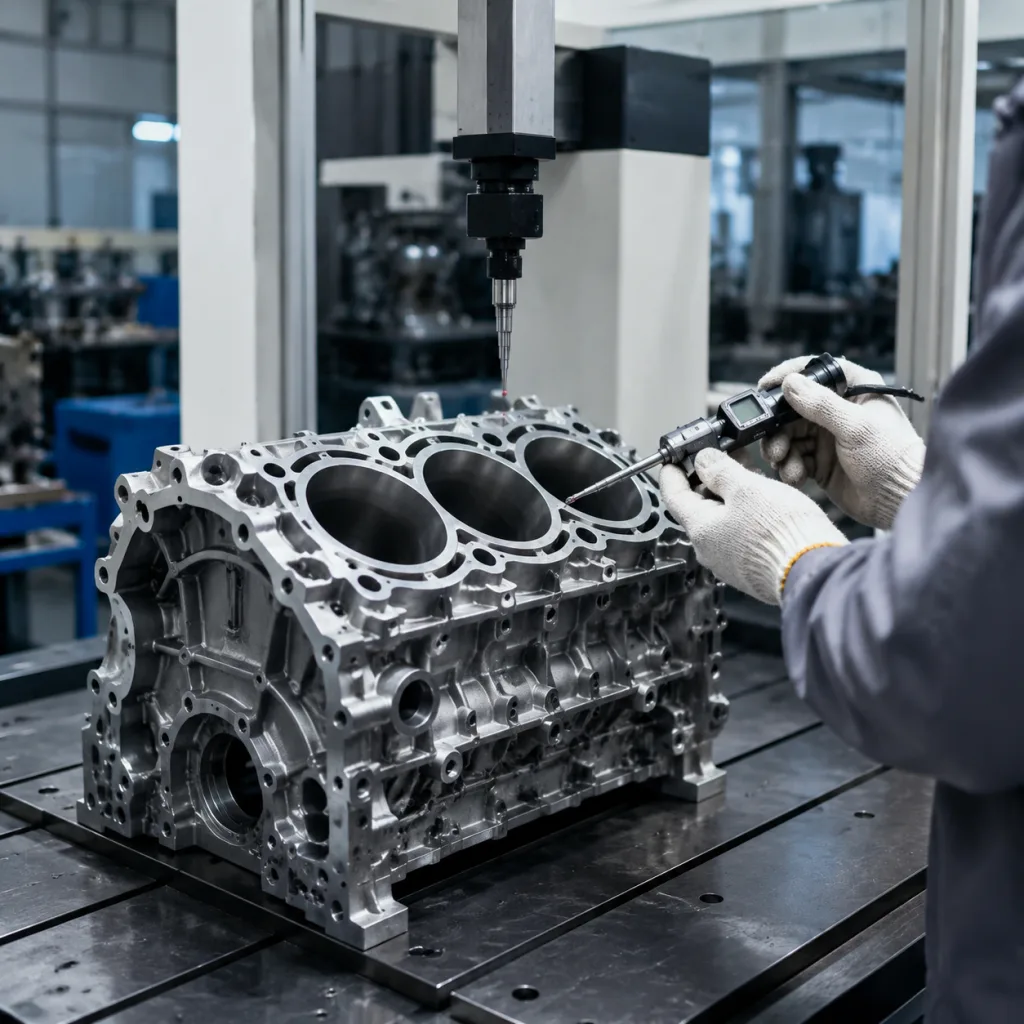
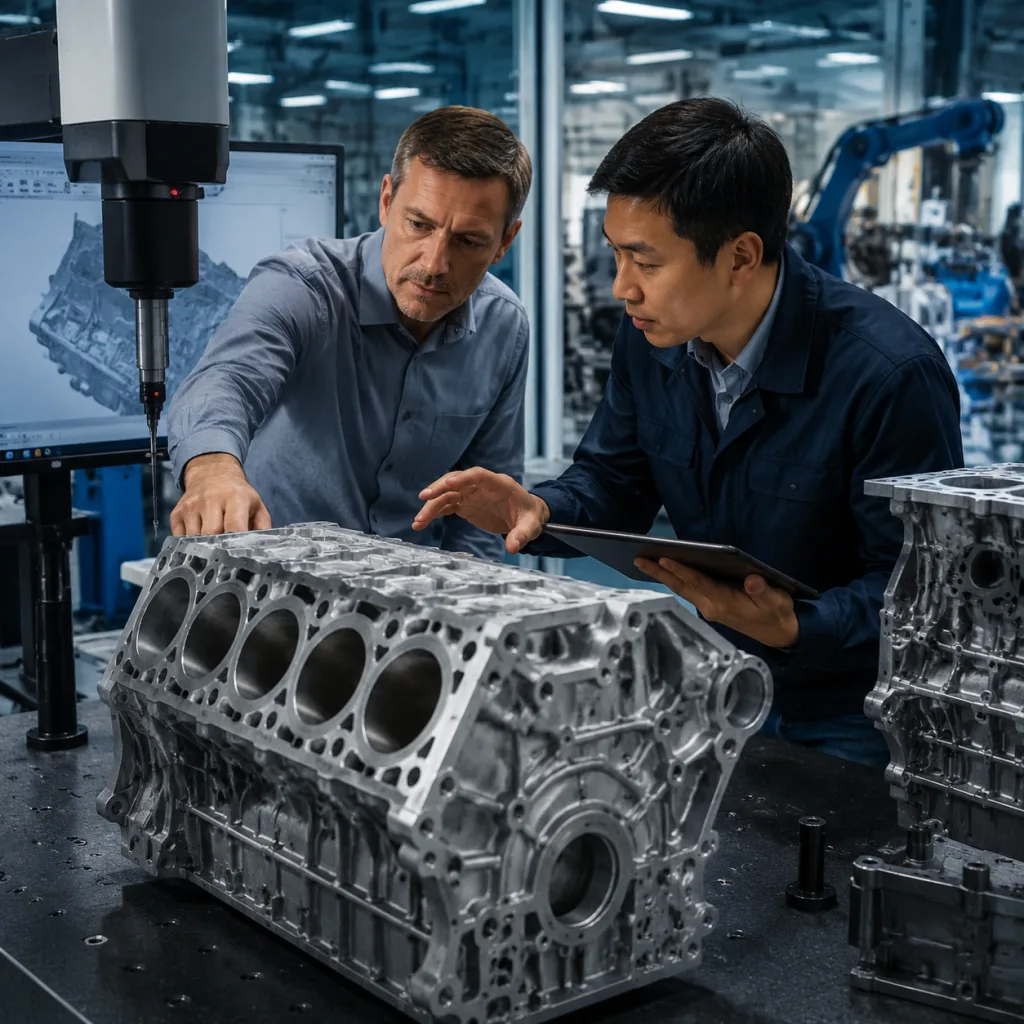
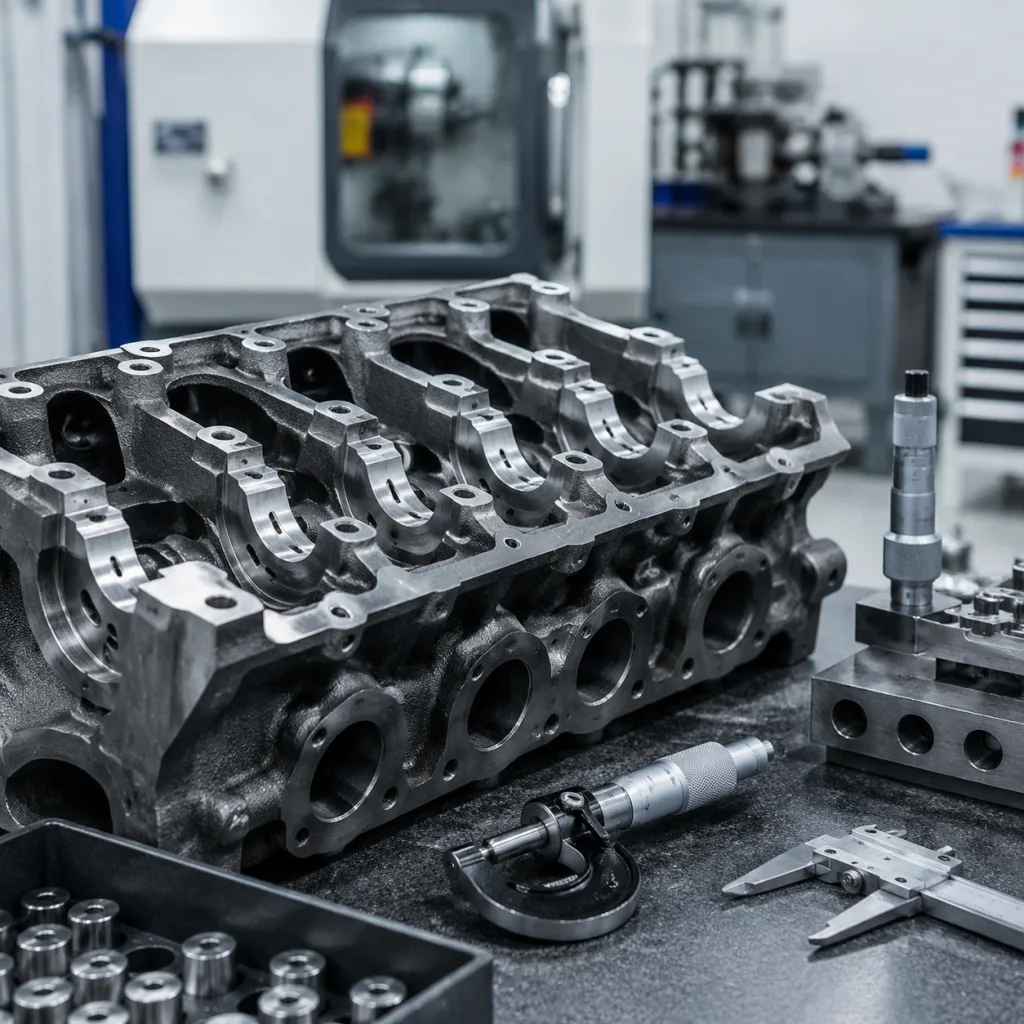
Buying an engine block for Lexus applications is a sourcing exercise, not a consumer parts search. Procurement teams need dimensional consistency, verified metallurgy, machining control, and a supplier that can support documentation across regions. For a Lexus programme, that usually means matching the original casting architecture, bore spacing, deck flatness, main bore alignment, and machining finish required by the engine family. It also means checking whether the block is supplied as a bare casting, semi-finished casting, or fully machined assembly. Driventus is an independent aftermarket manufacturer; brand names are referenced for fitment only. This guide explains what buyers should verify when qualifying an engine block Lexus OEM supplier, how to compare suppliers on technical and commercial terms, and which standards and process controls matter most for B2B sourcing in the EU, UK, US, Canada, Australia, and Brazil.
What buyers should verify first
Before comparing suppliers, define the exact engine family, model year range, and block configuration. A Lexus engine block programme can vary by displacement, cylinder count, aluminium versus cast iron construction, and whether the block is supplied with liners, caps, or pre-machined surfaces.
Key procurement checks:
OE cross-reference and engine code confirmation
Casting material specification and heat treatment route
Bore diameter, bore spacing, and deck height
Main bearing tunnel size, cap style, and alignment method
Surface finish, flatness, and cleanliness limits
Packaging standard for export and warehouse handling
If the source data is incomplete, ask for sample dimensional reports, metallurgical certificates, and machining inspection records before moving to price negotiation.
Sourcing model: casting, semi-machined, or finished block
The right sourcing model depends on your downstream operation. Distributors often want a finished block ready for warehouse sale, while OEM and Tier-1 buyers may prefer a semi-machined block for local final processing.
Supply format
Typical use case
Main buyer benefit
Main buyer risk
Bare casting
Heavy remanufacturing or local machining
Lowest unit cost
Highest local process burden
Semi-machined block
Regional finishing
Better control of final dimensions
Requires process alignment
Fully machined block
Direct aftermarket supply
Faster release to market
Higher supplier qualification need
</tr></thead><tbody> </tbody></table>For Lexus applications, fully machined supply reduces the chance of variation at the assembler. Semi-machined supply can work when your plant has stable metrology and validated finish-machining capability.
Quality controls that matter in audit
A credible supplier should be able to show a stable quality system and traceable process control. For export programmes, the minimum expectation is IATF 16949:2016 and ISO 9001:2015, with documented inspection at incoming, in-process, and final stages. Driventus publishes its quality system documents for buyer review.
Typical control points for an engine block include:
Chemical composition verification for the casting batch
X-ray or other non-destructive inspection for porosity and shrinkage
CNC machining parameter control
Bore geometry and alignment measurement
Deck flatness and surface roughness checks
Pressure test or leak test where applicable
For buyers running supplier audits, ask for calibration records, gage R&R data, and lot traceability back to heat number or casting batch. If the supplier cannot tie inspection results to a specific lot, the programme carries avoidable risk.
Commercial terms: MOQ, lead time, and export readiness
The best supplier is not always the cheapest unit price. Procurement teams should compare minimum order quantity, standard lead time, tooling responsibility, and freight packaging alongside the part price.
A practical comparison list:
MOQ: small enough to support your demand curve
Lead time: stable enough to protect inventory turns
Incoterms: clarity on FCA, FOB, or CIF responsibility
Documentation: commercial invoice, packing list, and material declarations
For Europe and the UK, buyers often also check REACH (EC) No 1907/2006 declarations. For Australia and Brazil, import documentation and customs classification should be confirmed early, not after the first production order.
When custom manufacturing is the better route
If your target block is for a discontinued application, a performance derivative, or a remanufacturing line with modified cooling or head-bolt patterns, custom manufacturing may be more efficient than trying to source an off-the-shelf match. Driventus supports custom manufacturing when buyers need controlled changes to casting geometry, machining sequence, or packaging format.
Custom work is justified when:
OE inventory is unavailable or unstable
A regional market needs a localised specification
The current block needs material or process upgrades
Your assembly line requires a controlled machining allowance
Keep the engineering scope tight. Any dimensional change must be documented against the target engine family, validated with sample inspections, and approved through your internal release process before volume order placement.
How Driventus supports procurement teams
Driventus supplies engine and powertrain components from Taizhou, Zhejiang, with export experience in more than 60 countries. For buyers sourcing an engine block Lexus OEM supplier candidate, the practical value is in process control, export readiness, and clear communication on part fitment and validation.
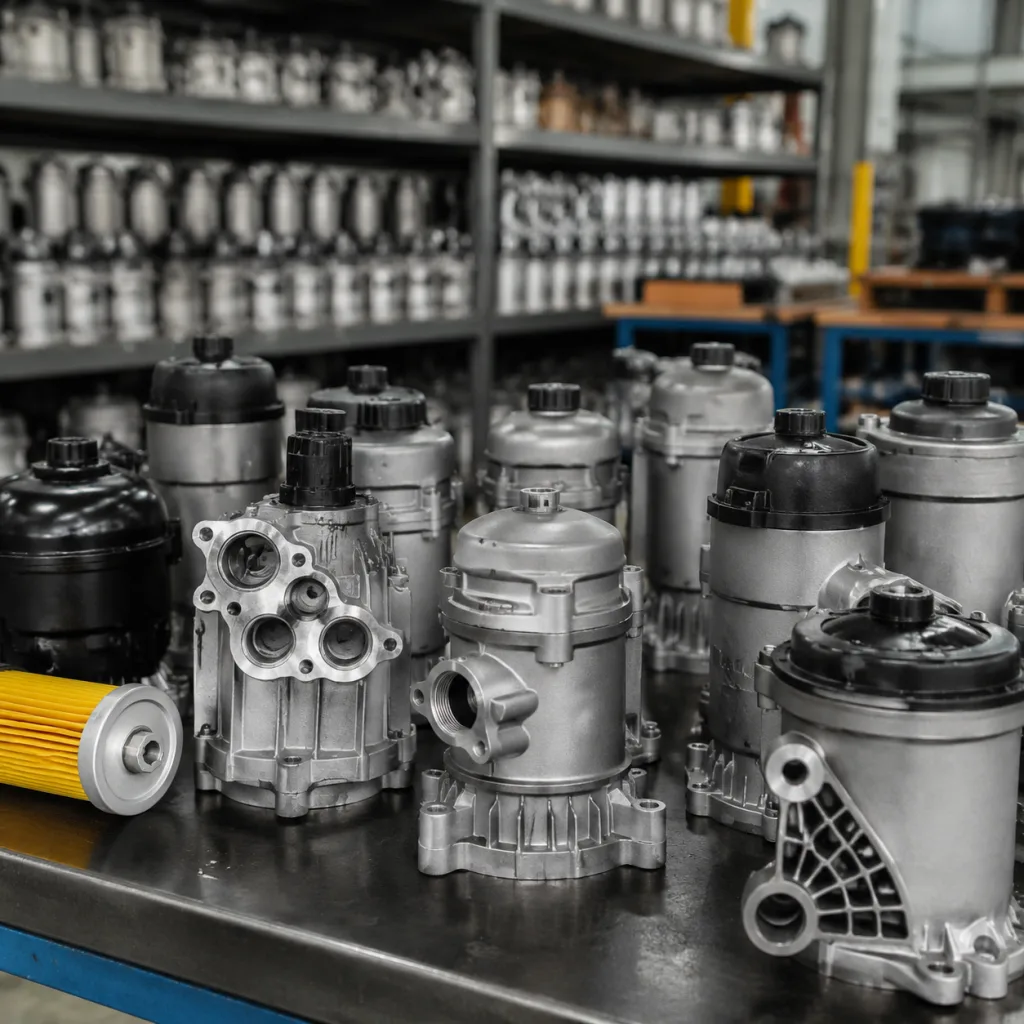
Use our catalog to review adjacent engine-component families, and the engine components section when your programme needs matched parts across the block, gasket, water pump, or rotating assembly.
What procurement teams can expect:
Documentation aligned to IATF 16949:2016 and ISO 9001:2015
OE part-number cross-reference support where fitment data is available
Sample submission for dimensional verification
Stable commercial terms for repeat orders
Direct factory communication for audit and launch planning
Driventus is an independent aftermarket manufacturer; brand names are referenced for fitment only.
Frequently asked questions
Yes, where fitment data is available we can quote against OE references such as OE 06A107065 without claiming manufacturer endorsement. We verify engine family, dimensions, and application before release.
Request dimensional reports, material declarations, inspection records, packing details, and a sample certificate of conformity. For EU and UK shipments, also confirm REACH declarations where relevant.
Yes. Custom manufacturing is available for controlled changes to geometry, machining, or packaging when the project justifies it and the technical scope is clearly defined.
If you are qualifying a new source, compare specifications, commercial terms, and audit readiness before you place volume orders. Start with a quote request at /contact.html.