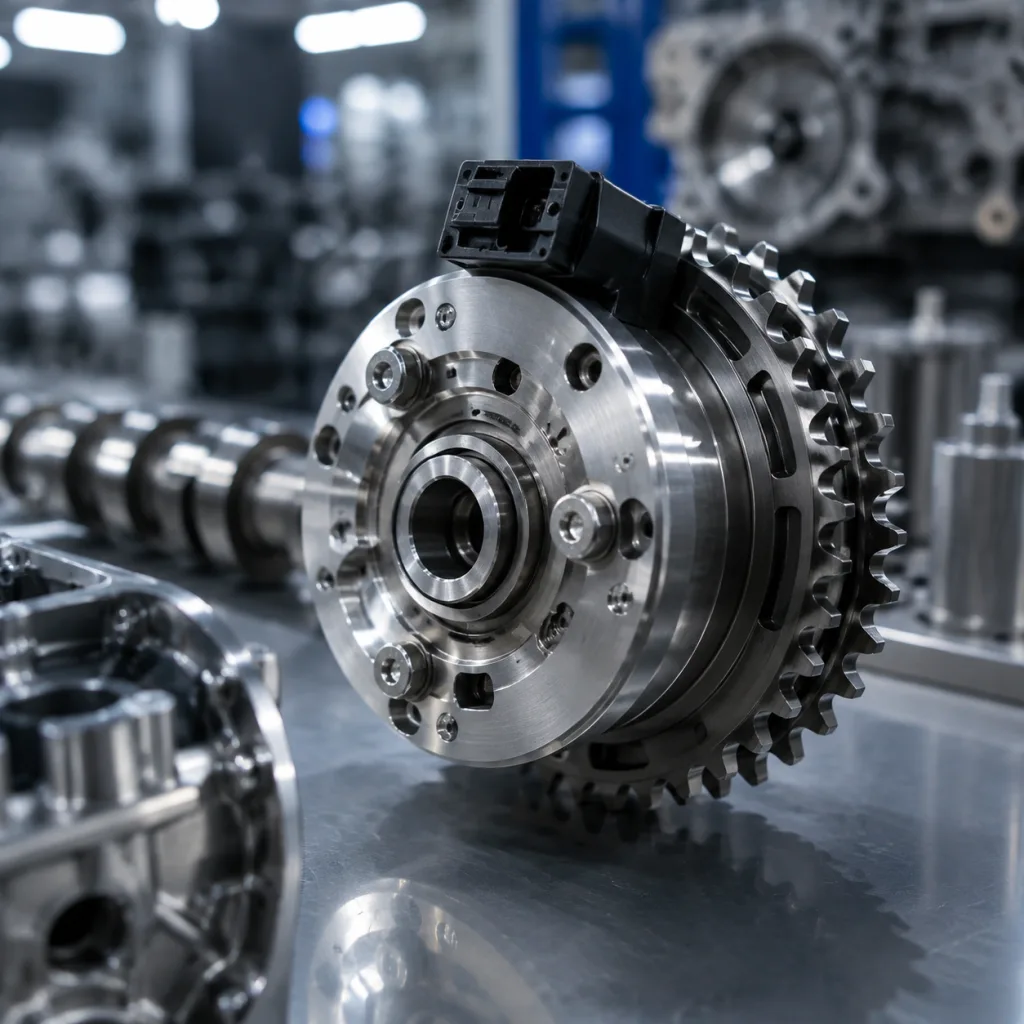
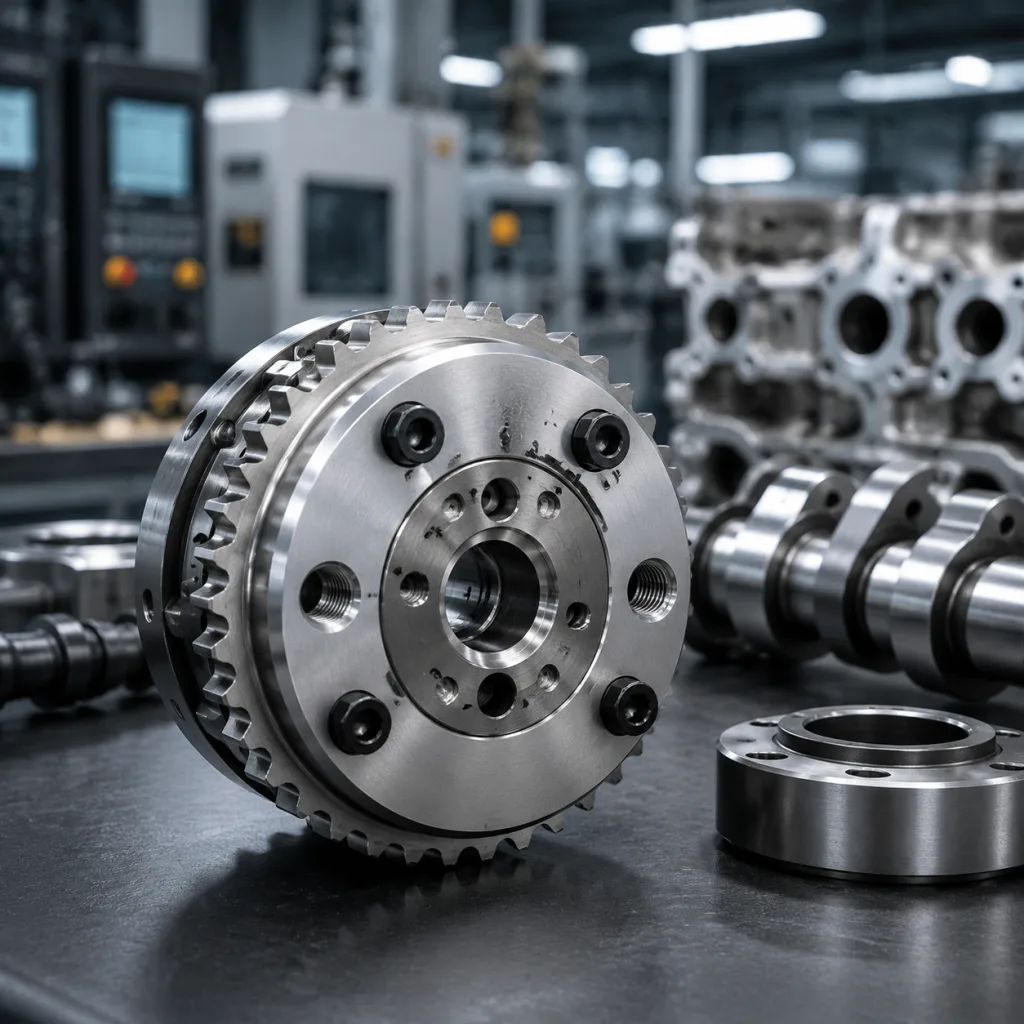
If you are sourcing an engine block Iveco supplier, the real question is not only who can quote the part. It is who can hold the geometry, documentation, and batch consistency that keep an engine build on spec. A block can look right and still fail on bore spacing, deck flatness, main bore alignment, or repeatability across lots. For aftermarket and OEM-adjacent buyers, the risk sits in the details: fitment, machinability, traceability, and commercial control all have to line up. Driventus is an independent aftermarket manufacturer; brand names are referenced for fitment only.
Driventus manufactures engine and powertrain components in Taizhou, Zhejiang, with IATF 16949:2016 and ISO 9001:2015 systems in place. For procurement teams in the EU, UK, US, Canada, Australia, and Brazil, the smarter review starts with evidence: can the supplier prove dimensional stability, support repeat orders, and document what shipped? This article shows what to check, where sourcing failures usually start, and how to separate a capable factory from a generic reseller.
What can go wrong before you buy
The cheapest quote is often the most expensive mistake. With an engine block, the early failures are usually invisible in the brochure: the bore centre distance is off by a fraction, the deck is not flat enough for gasket sealing, the main bores are not aligned, or the supplier cannot repeat the same result on the next batch.
Start with the failure modes that matter most:
Bore size, roundness, and finish drift outside drawing limits
Deck flatness that creates sealing risk after torque load
Main bore misalignment that affects crank support and bearing life
Oil and coolant passage mismatch that changes engine behaviour
Porosity, shrinkage, or cracking in stressed casting zones
Packaging that allows rust, impact damage, or transit movement
If a supplier cannot answer those points with measured data, the conversation is already behind. A serious first review should ask for a dimensional report tied to actual lot numbers, not just a sales sheet. Three to five samples from the same batch is enough to expose whether the process is controlled or merely lucky.
Specification map: the numbers that matter
A useful way to compare suppliers is to look at the block as a set of controlled features, not as one part number. Each feature has a tolerance, a measurement method, and a consequence if it drifts. That is what buyers should request in writing.
Item
Buyer should confirm
Typical concern
Material
Grade, chemistry, hardness
Strength, machinability, thermal stability
Main bore
Diameter, alignment, finish
Crank support and bearing life
Cylinder bores
Size, taper, ovality, finish
Ring sealing and oil control
Deck surface
Flatness and roughness
Head gasket sealing
Threads and plugs
Size, depth, torque window
Assembly reliability
Water jacket / oil gallery
Position and cleanliness
Cooling and lubrication performance
Inspection plan
CMM, pressure test, NDT, visual criteria
Lot-to-lot repeatability
</tr></thead><tbody> </tbody></table>Ask the supplier whether each value is measured before or after final machining. That detail changes the comparison completely. Also ask for the drawing revision used, the fixture or reference plane, and the sample size behind the reported result. Without that context, the numbers are hard to trust and impossible to audit later.
How to compare suppliers without guessing
This is where sourcing gets practical. You are not comparing catalogue claims; you are comparing the factory’s ability to release usable blocks on time, in the right volume, with paperwork that survives receiving inspection.
Use a simple decision frame: 1. Confirm application coverage and OE cross-reference. 2. Separate raw casting, semi-machined, and fully machined offers. 3. Compare the same document set from each supplier: drawing revision, sample report, material certificate, inspection plan, and packaging spec. 4. Check whether machining is in-house or subcontracted. 5. Ask how the supplier handles engineering changes and batch traceability. 6. Compare landed and approved-unit cost, not just ex-works price.
A quote that is a little lower but adds delay, rework, or higher rejection rates is not a better deal. If the factory cannot explain where capacity is constrained—casting, machining, heat treatment, cleaning, or final inspection—assume the supply chain will be fragile. For multi-location distributors and repair networks, repeatability usually matters more than a one-time price break.
Lead time, MOQ, and batch discipline
Once the part looks technically acceptable, the commercial terms decide whether the program is manageable. Lead time, MOQ, and batch control often matter more than the headline unit price.
Typical questions to ask:
What is the MOQ for a new casting or machined block?
Does MOQ change for bare, semi-finished, or fully machined supply?
How long for sample, pilot, and repeat production?
Can stock be held for repeat orders?
Is traceability maintained by lot, serial, or packaging unit?
Which operations are done in-house, and which are outsourced?
A common launch pattern is sample order, pilot order, then release order. For many block programs, sample lead time is 15–30 days on an existing tool and 45–90 days if tooling, fixtures, or validation still need to be completed. Pilot quantities often sit around 20–100 units, while repeat MOQs may fall in the 50–200 unit range once the program is stable. Those numbers move with complexity, but they give buyers a realistic benchmark.
Price should also be read as a landed and approved-unit cost. Raw casting, machining, scrap allowance, inspection burden, packaging, and freight all belong in the comparison. If a supplier cannot break those out, the quote is not yet procurement-ready.
Audit points and documents to ask for
A credible engine block Iveco supplier should be ready for document review and factory audit. Driventus operates under a documented quality system and can support export-oriented programs with controlled inspection records.
Request these before approval:
IATF 16949:2016 certificate scope, including the site and process coverage
ISO 9001:2015 certificate scope, validity dates, and issuing body
Incoming material inspection records with heat number traceability
In-process and final inspection sheets with sampling criteria
Pressure-test or leak-test procedure, where applicable
Packaging and corrosion-prevention method, including VCI and pallet limits
REACH (EC) No 1907/2006 compliance statement, where relevant
During an audit, focus on calibration, operator training, rejected-part segregation, sample retention, and change control. Ask how often critical gauges are calibrated, how nonconformance is recorded, and whether engineering changes are tied to revision numbers. Those controls tell you whether the factory can repeat a result or only produce one acceptable batch.
When custom work makes sense
Not every program needs a custom block. In many cases, a standard replacement is faster to qualify and easier to import because the geometry is already established. Custom manufacturing is worth it when the platform is aging out of supply, the regional build needs a different configuration, or the buyer must support a private-label or repair program with specific packaging or inspection rules.
Driventus supports custom manufacturing for controlled changes to castings, machining, or packaging. That can include:
OE-equivalent dimensional matching for aftermarket replacement programs
Machining updates such as oversize bores or revised plug locations
Logo-free export packaging for distributor programs
Customer-specific inspection formats and batch traceability tables
Supersession from a legacy part number to a current build
If you are still narrowing the program, review our catalog and engine components first. A custom route should be justified by annual demand, margin, or shortage risk. If volume is low, a standard approved part usually wins on speed and total cost.
A safer first-order sequence
The first order should feel like a controlled trial, not a leap of faith. The goal is to prove the supplier can hold the same result twice.
A practical sequence is: 1. Confirm OE cross-reference, application, and supply level. 2. Mark the critical dimensions: bore size, deck flatness, main alignment, and threaded holes. 3. Request sample units with inspection data, material evidence, and packaging photos. 4. Validate fitment, machining allowance, seal surfaces, and clearances against your build standard. 5. Approve pilot quantity only after test results and corrective actions are documented. 6. Move to repeat orders with agreed packaging, traceability, claim handling, and lead-time commitments.
It also helps to set acceptance before purchase. Define allowable dimensional deviation, cosmetic criteria, rework limits, and replacement terms for defects on arrival. For higher-volume buyers, a replenishment trigger of four to six weeks keeps the supplier alert and reduces the risk of stockouts. That is usually the difference between a technically capable supplier and one that only looks good on paper.
Frequently asked questions
Yes, subject to the specific engine family, drawing data, and sample approval. Driventus supports export B2B supply and can review fitment requirements before quotation, including whether the part is supplied as a raw casting, semi-machined block, or fully machined unit.
Ask for dimensional reports, material confirmation, inspection records, certificate scope, and packaging details. For regulated markets, also request a REACH compliance statement where relevant. For a first order, it is also sensible to ask for sample photos, batch traceability, and a clear list of inspection gauges used on the lot.
Yes. Driventus can support controlled custom manufacturing for machining, packaging, or application-specific requirements, subject to technical review and sample approval. Buyers should expect a formal drawing review, a confirmed revision level, and pilot validation before mass release.
If you are qualifying an engine block Iveco supplier, send the part number, target volume, critical dimensions, and inspection requirements. Request a quote at `/contact.html`.