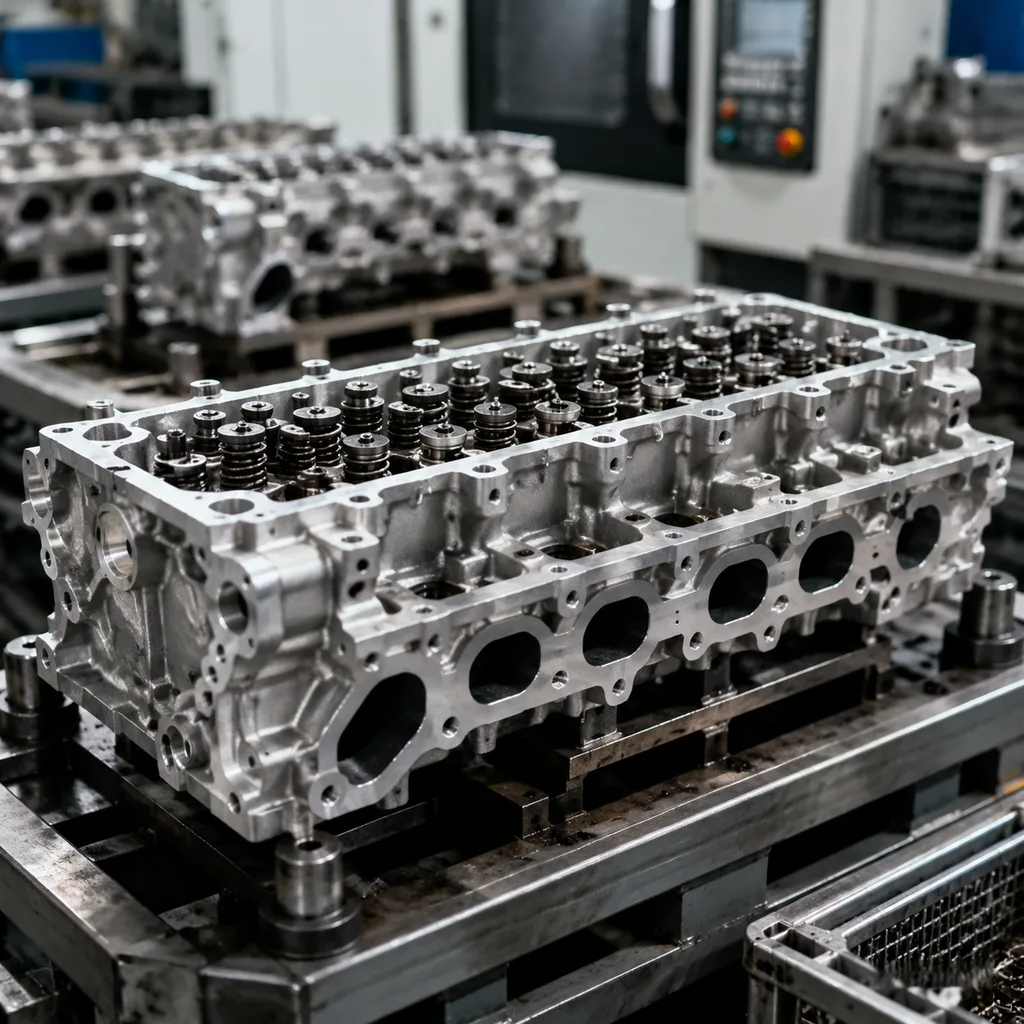
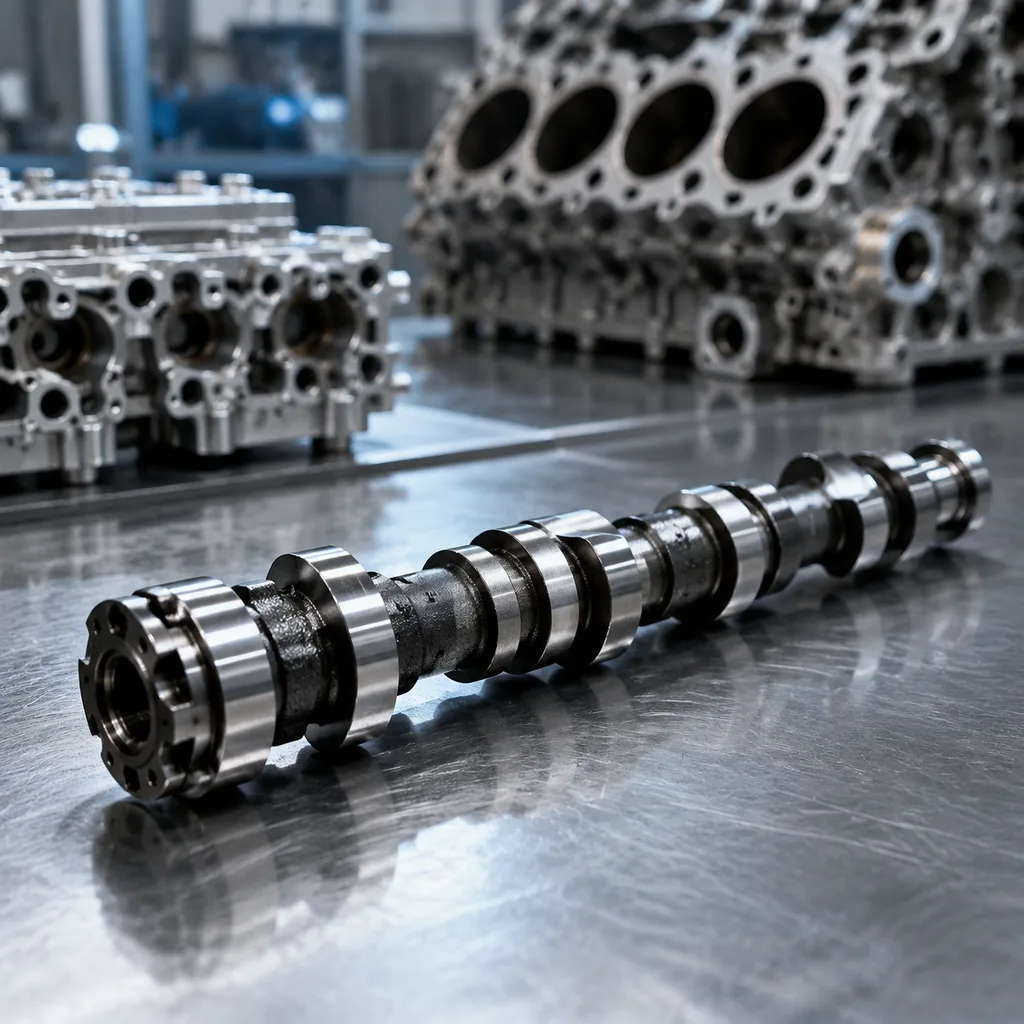
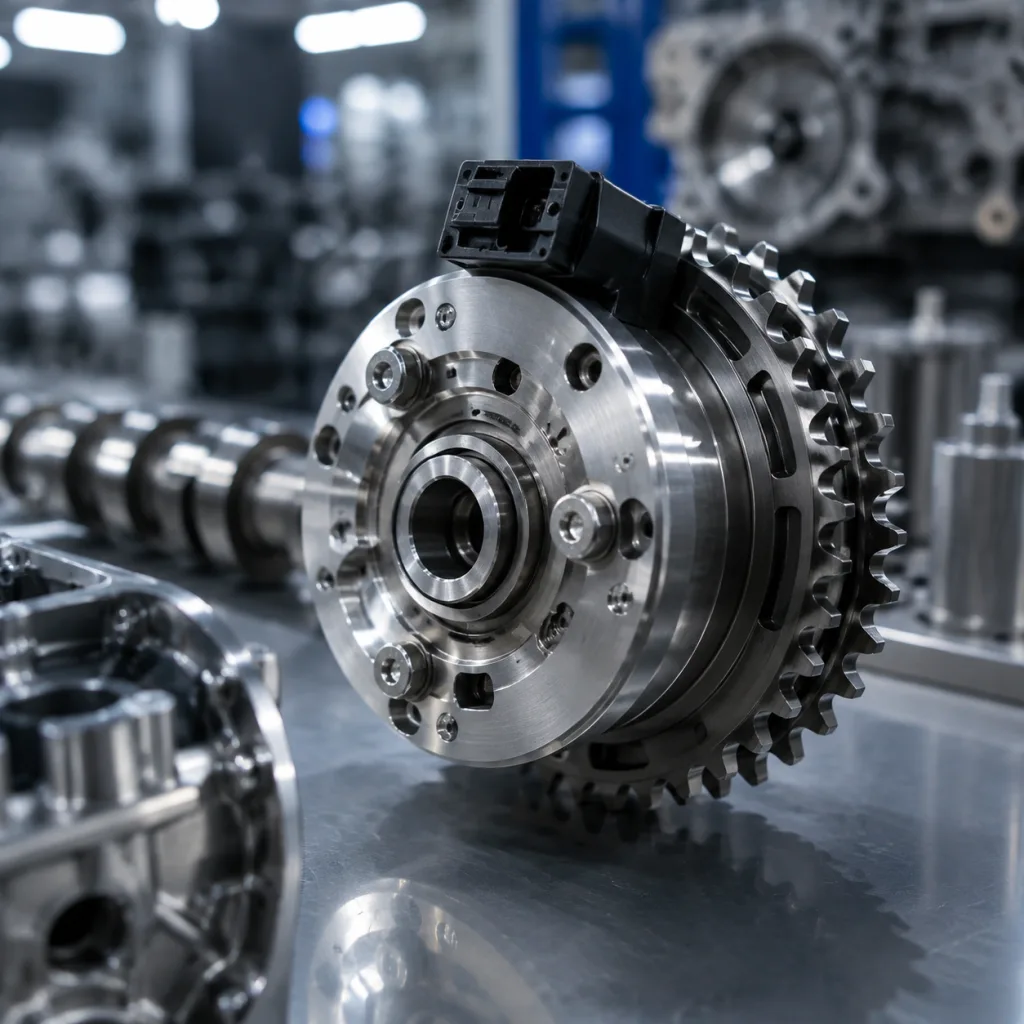
Procurement teams sourcing a camshaft phaser for Nissan applications usually need three things at once: fitment accuracy, stable lead time, and documented quality control. For aftermarket distributors, OEM and Tier-1 buyers, and multi-location repair networks, the supplier question is not only who can make the part, but who can maintain dimensional consistency across batches. Driventus manufactures engine and powertrain components in Taizhou, Zhejiang, and exports to more than 60 countries. We operate under IATF 16949:2016 and ISO 9001:2015 systems, and we support B2B sourcing with OE part-number cross-references where fitment data is available. Driventus is an independent aftermarket manufacturer; brand names are referenced for fitment only. This article explains what to verify when buying camshaft phasers from China, how to compare offers, and what documentation to request before placing a production order.
Start with fitment, not price
For this part family, the first screen is application match. A camshaft phaser has to align with the OEM control strategy, chain or gear interface, oil gallery layout, and actuator geometry. For Nissan applications, buyers should confirm:
OE reference and engine code, if supplied by the buyer
Intake or exhaust application
Number of teeth, spline form, and locking pin arrangement
Nominal outer diameter, face width, and mounting depth
Oil passage position and check-valve behaviour
Packaging and corrosion protection for export transport
If an RFQ uses an OE number, ask the supplier to show the cross-reference basis, measurement report, and application list. Do not rely on catalogue photos alone. Small differences in phaser indexing or vane angle can create idle instability, timing fault codes, or start-up noise after installation. A practical buyer-side target is to require critical dimensions held to the drawing with a stated tolerance of ±0.02 mm on locating features, ±0.05 mm on non-functional housing diameters, and angular indexing verified within ±0.5°. Ask the supplier to confirm whether these are measured on CMM, fixture gauge, or functional assembly test, because the inspection method should match the risk on the control surface.
When a China manufacturer is the right fit
A qualified China manufacturer can support both aftermarket and OE-linked programs when the process is controlled. The sourcing advantage is usually in scale, machining integration, and batch traceability rather than unit price alone. Driventus combines in-house manufacturing with controlled inspection points for machining, cleaning, and assembly.
Buyer requirement
What to ask for
Lead time
Standard production cycle, material availability, and packing schedule
MOQ
Minimum order quantity by part number and by mixed shipment
Quality control
Incoming, in-process, and final inspection records
Traceability
Batch code, date code, and inspection lot history
Export readiness
Carton drop test, moisture protection, and palletisation
Programme support
Dimensional PPAP-style submission or sample approval
</tr></thead><tbody> </tbody></table>For import managers, this is where supplier discipline matters. A low quote with weak process control often creates hidden cost through returns, rework, and delayed launches. If you are building a long-term supply base, request sample approval before production release and align on packaging, labelling, and inspection criteria in writing. For planning purposes, many B2B buyers use a starting MOQ of 50 to 100 pieces per part number for sample-to-trial orders and 300 to 500 pieces for regular replenishment, with mixed-model cartons accepted only after the supplier confirms component segregation. A realistic lead-time structure is 7 to 15 days for existing stock, 25 to 35 days for standard production after deposit and drawing confirmation, and 45 to 60 days for first-order programs that require new tooling, sample sign-off, or private-label packaging approval. Price should be compared on landed terms, not ex-works only: ask for the unit price at 100, 300, and 1,000 pieces, the carton quantity, and whether price breaks change after sample approval or annual volume commitment.
Check the material and test spec
A camshaft phaser is a hydraulic and mechanical assembly, so material choice and cleanliness affect performance. Buyers should ask for the exact material spec on the housing, rotor, and related locking elements, plus any heat treatment or surface-hardening data. A practical procurement spec list includes:
Housing and rotor material grade
Hardness range after heat treatment
Concentricity and runout control
End-float and axial clearance limits
Cleanliness standard after washing and assembly
Seal compatibility with engine oil and operating temperature
Corrosion resistance of exposed steel surfaces
Published standards remain relevant to sourcing discipline even when the part itself is application-specific. Documentation aligned to IATF 16949:2016 and ISO 9001:2015 supports process control. For market access, buyers in the EU may also ask about REACH (EC) No 1907/2006 material declarations. If the part is used in emissions-related systems, request evidence that the application fitment does not conflict with the vehicle’s calibrated control logic. On the manufacturing side, a buyer-ready spec should call out rotor/housing hardness in the 42 to 55 HRC range if induction-hardened steel is used, with functional end-float typically controlled at 0.03 to 0.10 mm depending on application. Concentricity between rotor and housing should be stated explicitly, and a final wash target of no visible chips plus filtered oil-flush verification is preferable to a generic “cleaned” declaration. Ask the supplier whether torque retention, solenoid response, or vane travel is verified on a fixture; for hydraulic phasers, an assembly leak or hold test is often more meaningful than a visual-only checkpoint.
Compare suppliers on evidence
A sourcing comparison should focus on proof, not claims. The table below is a simple way to rank offers from multiple camshaft phaser suppliers.
Evaluation item
Strong answer
Weak answer
Fitment data
OE cross-reference plus dimensional drawing
Generic model name only
Inspection
Measured critical features on report
Visual inspection only
Quality system
IATF 16949:2016 / ISO 9001:2015
No documented system
Sample support
Pre-production sample and sign-off
No sample or no traceability
Capacity
Stable monthly output and backup tooling
One-off batch only
Communication
Clear response on revision control
Unclear or delayed replies
</tr></thead><tbody> </tbody></table>For high-volume buyers, ask whether the factory can support custom manufacturing through your drawing, label, and packaging requirements. Driventus offers this through our custom manufacturing process, which is useful when a customer needs non-catalog variants or controlled private-label supply. To make the comparison usable in procurement review, require each supplier to quote the same commercial structure: sample cost, mass-production unit price, tooling if any, packing cost, and freight basis. A good rule is to compare at three volume points and to calculate total cost over a 12-month forecast, because a supplier that is 8% cheaper at 100 pieces may be 3% more expensive at 1,000 pieces once packaging, lead time, and rejection risk are included. Also ask for a warranty or claim-response window, such as 12 months from delivery or 20,000 km equivalent for aftermarket programs, and make sure the supplier states the replacement process for verified defects.
Use a short audit before the PO
Before issue of purchase order, use a short factory audit checklist:
1. Confirm the production route from raw material to final assembly. 2. Verify gauge calibration status for critical measuring tools. 3. Check traceability from lot number to inspection record. 4. Review packing method for oil-sensitive or machined surfaces. 5. Confirm replacement policy for nonconforming batches. 6. Ask for a signed control plan covering the part revision.
If you need a broader product view, review our catalog and the engine product range in engine components. You can also compare the supplier’s documented process against your internal quality system requirements. For volume programs, the right partner should be able to explain capacity, test coverage, and revision management without evasive language. A buyer can make this audit more actionable by asking for specific records: calibration certificates for gauges used on the last lot, the last three inspection reports for the same part number, incoming material certificates, and a sample control plan that shows critical-to-quality characteristics, reaction plan, and re-inspection frequency. If the program is first article or new-to-supplier, request 3 to 5 pre-production samples, a written approval gate, and a defect threshold such as zero critical defects and no more than 1 major nonconformance before release. For export shipments, define box quantity, moisture barrier method, pallet height, and label format in the PO so that the supplier’s packing line does not improvise after approval.
Frequently asked questions
Yes, subject to fitment data, OE reference, and application confirmation. We support B2B sourcing with dimensional control, batch traceability, and export packing for aftermarket and programme customers.
Ask for a dimensional drawing, material declaration, inspection report, sample approval record, and quality-system evidence. For regulated markets, request REACH-related material information where relevant.
Yes. We support custom manufacturing for approved B2B programmes, including label, packing, and revision control aligned to the buyer’s specification.
If you are sourcing a camshaft phaser supply programme, send your OE reference, target quantity, and packaging requirements, and we will review fitment and lead time. Start here: /contact.html