Buying an engine block for Isuzu applications at wholesale level is a procurement decision, not a simple catalogue match. The block is central to compression sealing, crankshaft alignment, coolant flow, oil control, and rebuild life. That puts dimensional consistency, traceable material records, controlled machining, and repeatable supply at the top of the sourcing checklist. Buyers also need confidence that the same specification can be maintained across model families and future batches, without quiet changes to material route or machining sequence. Driventus supplies engine and powertrain components from Taizhou, Zhejiang, with production controlled under IATF 16949:2016 and ISO 9001:2015. For export programmes, we also align documentation with REACH (EC) No 1907/2006 where applicable and maintain lot traceability for inspection records. Driventus is an independent aftermarket manufacturer; brand names are referenced for fitment only. When you evaluate engine block Isuzu wholesale offers, focus on practical proof: whether the supplier controls casting, machining, cleaning, corrosion protection, and inspection; whether it can support buyer-supplied OE cross-references and drawing revisions; and whether MOQ and lead-time targets can be met while keeping the same inspection standard from one batch to the next.
What procurement teams should verify first
For an engine block programme, price should not be the first filter. Fitment control, metallurgy, machining repeatability, and the supplier’s ability to reproduce the same part after the trial order matter more. A low unit cost quickly loses its appeal if the block needs local correction, slows assembly, or creates warranty exposure after installation.
Material route: cast iron or aluminium alloy, with declared chemical composition, hardness targets, heat-treatment status where applicable, and material certificate format
Machining control: cylinder bore size, bore taper and cylindricity, main bearing tunnel alignment, deck flatness, thread quality, dowel location, oil-feed drilling, and surface finish
Cleaning and protection: chip removal, oil gallery cleanliness, rust-prevention method, and protection of machined faces during sea freight
Packaging and traceability: batch number, heat number, production date, inspection release documents, carton or crate marking, and pallet identification
Compliance files: IATF 16949:2016, ISO 9001:2015, and material declarations where required by the destination market or customer file
For buyers comparing engine block Isuzu wholesale suppliers, a written dimensional report carries far more weight than a sales sheet. Ask for first-article inspection data, the sample retention policy, gauge calibration status, and the inspection method used for critical features. A strong RFQ also asks for the actual acceptance criteria. Deck flatness, bore size, and main tunnel alignment should be stated on the drawing or inspection report, not reduced to a vague “within tolerance.” It is also worth confirming whether the supplier controls machining in-house or subcontracts key operations. Outsourced operations can be managed well, but they are harder to trace and may weaken lot-to-lot control if the process is not tightly documented. If the supplier cannot provide stable records for the same block across repeat lots, it is not suitable for wholesale supply.
Engine block supply options for Isuzu programmes
Wholesale buyers usually choose from three supply types: bare block, machined block, or fully prepared block with plugs, sleeves, and selected hardware installed. The best option depends on your downstream assembly process, local machining capability, warranty model, and the speed at which inventory must move through distributor or repair-network channels.
Supply type
Typical use
Buyer advantage
Buyer risk
Bare casting
High-volume remanufacturing or in-house machining
Lowest initial cost and maximum local processing control
Highest machining burden, longer local cycle time, and more inspection responsibility
Machined block
Distributor, rebuild, and repair-chain supply
Faster turnover, lower local labour, and more predictable assembly preparation
Requires tighter dimensional control, better packing, and clear acceptance criteria
Fully prepared block
Turnkey rebuild kits and service programmes
Simplifies installation planning and reduces workshop preparation time
Higher unit price, more installed-part verification, and stricter packaging control needed
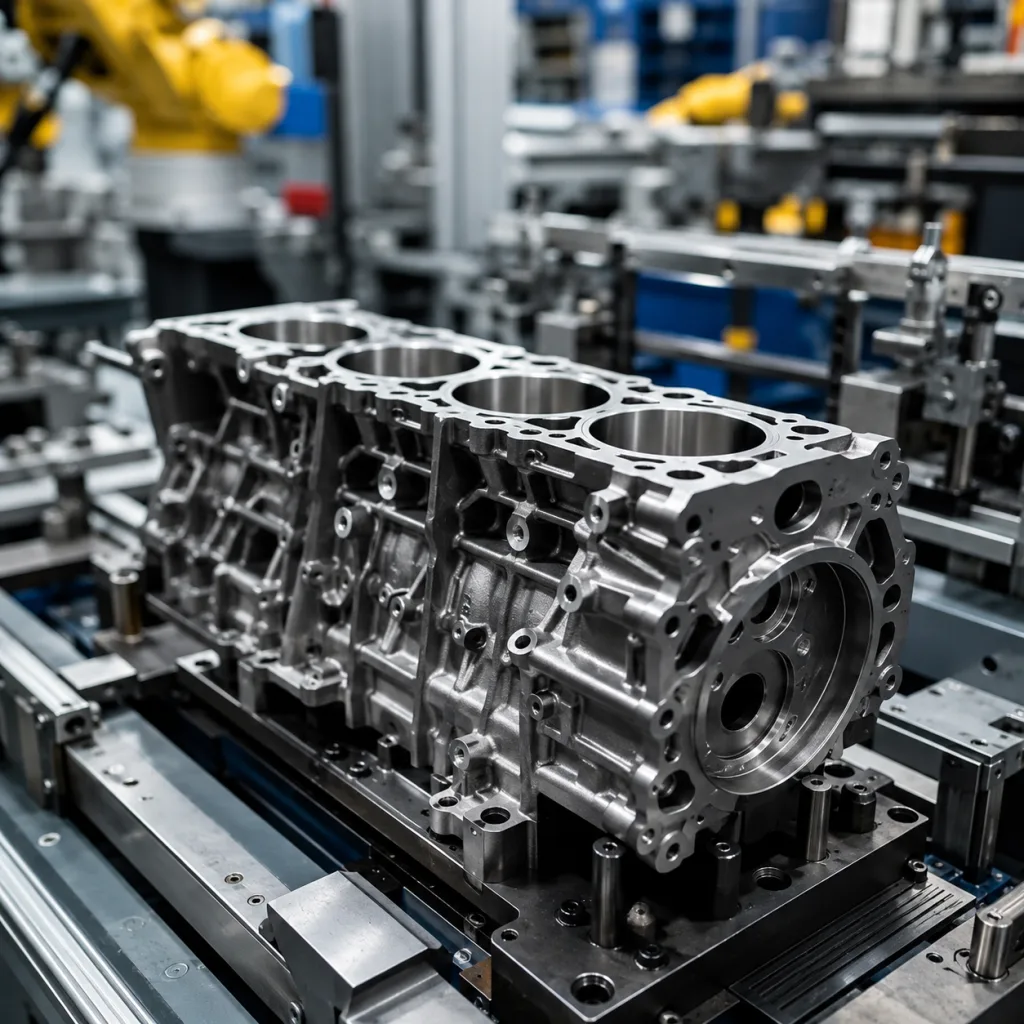
</tr></thead><tbody> </tbody></table>For engine block Isuzu wholesale orders, most importers prefer machined blocks. They reduce local processing time, ease the inspection load for warehouse teams, and make landed-cost calculations clearer because the buyer is not separately estimating boring, decking, thread repair, cleaning, and local rework. Even so, the RFQ must define what “machined” means. It may refer to a rough-machined casting, semi-finished block, finished bore, honed bore, sleeved block, or a block prepared to a customer drawing.
If your market requires OE cross-reference management, confirm the part-number structure before sampling. A single engine family can include variants with different sensor ports, oil gallery plugs, coolant passages, or deck features, and those differences may not be obvious in a product photo. When a buyer provides an OE code, we can verify application mapping and production feasibility without claiming manufacturer approval. Brand names and OE references are used only to identify fitment requirements.
Technical controls that affect fitment and warranty
Block failures are usually dimensional, metallurgical, or cleanliness-related rather than cosmetic. Core shift, distorted bores, poor deck machining, contaminated oil galleries, and misaligned main bearing tunnels can all create warranty exposure even when the part looks acceptable in a quick visual check. The inspection plan should therefore concentrate on the features that affect sealing, rotating assembly alignment, lubrication, cooling, and installation.
Critical characteristics to control
Cylinder bore diameter, taper, cylindricity, and position relative to the crankshaft centreline
Roundness and surface finish after honing or finish machining
Main bearing bore alignment, size, and cap fitment where applicable
Deck flatness, surface finish, and parallelism to the crankshaft centreline
Thread engagement at head bolts, oil gallery plugs, engine mounts, brackets, and sensor ports
Dowel pin location and mating-face accuracy for cylinder head, timing cover, oil pan, and transmission interface
Water jacket integrity, oil passage continuity, and plug sealing
Corrosion protection on machined surfaces during export packing
Internal cleanliness after machining, especially in blind holes and oil galleries
For export buyers, published test methods and clear acceptance criteria matter. Surface corrosion checks may reference ISO salt-spray methods or customer-specific validation, while coating durability can be evaluated against SAE J2527 where relevant to the assembly programme. Pressure or leak checks may also be required when the casting design or buyer specification calls for additional validation. A practical RFQ should define the measurement system as well: bore gauges for cylinder size, CMM or height gauge for deck and face geometry, thread gauges for tapped holes, roughness testers for sealing surfaces, and hardness testing where the material route requires it. Typical control targets are written on the drawing. For example, a buyer may specify deck flatness in hundredths of a millimeter, bore cylindricity in the same range, and main tunnel alignment within the bearing supplier’s limit. If the tolerance is not written, it is not truly controlled.
The supplier should state which measuring equipment is used, the sample size per lot, how calibration is controlled, and what rules apply to rework or rejection. If rejection criteria are not agreed before production, quality disputes are likely to become commercial disputes after the container arrives.
MOQ, lead time, and commercial terms for wholesale buyers
Wholesale sourcing works only when the commercial terms match the production plan. Many buyers protect the unit price but lose margin elsewhere: in minimum order quantity, packing method, replenishment timing, documentation fees, or slow-moving variants. A stronger RFQ connects the technical specification to a realistic order rhythm.
Typical questions to settle in the RFQ stage:
MOQ by reference number, block family, casting family, or machining family
Sample lead time, first production lead time, and repeat-order lead time
Order split between trial stock, launch quantity, and rolling forecast volume
Incoterms, export packing standard, palletisation, carton marking, and crate strength
Spare allowance for transit damage, destructive testing, or quality sorting
Payment terms, inspection timing, documentation requirements, and shipment consolidation options
Whether multiple Isuzu-related references can share one production run or require separate setup
For an engine block Isuzu wholesale programme, MOQ can vary significantly. An existing casting is very different from a block that needs dedicated machining fixtures, special sleeves, or a buyer-specific drawing. Lead time is shaped by foundry scheduling, machining capacity, inspection load, export packing, and vessel availability. Buyers should separate sample approval from volume release so drawings, dimensions, packaging, and labels are frozen before replenishment begins. A workable commercial offer should also define how much stock is held for replenishment, whether the supplier can reserve capacity against forecast demand, and what change-control process applies if the buyer updates the drawing or packing specification.
Driventus supports volume planning for aftermarket distributors, OEM and Tier-1 supply chains, and multi-location repair networks. If your programme needs a non-standard water jacket, deck height revision, sleeve configuration, plug set, or special finish machining, our custom manufacturing route can be used for validated changes under agreed drawings and samples. For standard references and adjacent components, review our catalog and engine components to align the block with the rest of the powertrain BOM.
Factory audit points and quality documentation
A supplier audit should show that the process is stable from incoming material to final pack-out. For engine blocks, the most useful evidence is process control, not promotional material. Follow the real production path: casting receipt or casting production, heat or material verification where applicable, rough machining, finish machining, cleaning, inspection, rust prevention, packing, and release.
Request these documents during audit or pre-qualification:
Certificate copies for IATF 16949:2016 and ISO 9001:2015
Process flow, control plan, and PFMEA summary
Incoming material inspection records and material certificate format
In-process dimensional reports for bore, deck, bearing tunnel, thread, and mating-face features
Final inspection and traceability records by lot
Gauge calibration records for critical measuring equipment
Packaging specification, drop or handling assumptions, and corrosion-protection method
Corrective action procedure for non-conforming parts, including containment and root-cause response
During the audit, watch how non-conforming parts are identified and separated. A good system should prevent mixed stock, unapproved rework, and undocumented substitution of castings or machining routes. Traceability should connect the finished block to the production lot, inspection result, and material record. For wholesale buyers serving several destination markets, this documentation often allows a distributor to answer customer questions quickly after delivery.
You can review our quality system to see how inspection, traceability, and corrective action are handled for export programmes. For many procurement teams, the real test is whether the supplier can reproduce the same result after six months, a second replenishment order, and a changed shipping schedule. Stable documentation is usually the clearest sign of stable manufacturing.
How Driventus supports repeat wholesale supply
Driventus manufactures engine and powertrain components in Taizhou, Zhejiang, with controlled machining and export packaging for repeat B2B programmes. We support buyers who need consistent supply across aftermarket, OEM-aligned, remanufacturing, and repair-network channels. For engine block Isuzu wholesale projects, that means connecting application review, production control, inspection records, and logistics planning before the buyer commits to repeat orders.
What buyers typically receive:
Lot-traceable production records tied to batch identification
Dimensional inspection reports on critical features such as bore, deck, bearing tunnel, threads, and mating faces
Material and conformity documentation for export files where applicable
Packing options for distributor warehousing, sea freight, and retail-network distribution
Application review against buyer-supplied OE references, drawings, photos, or samples
Support for sampling, approval feedback, and controlled changes before volume release
When a programme requires a specific block variant, we can review drawings, samples, OE references, photos of critical interfaces, and forecast volumes before production release. This review lowers the risk of a mismatch between the sourced block and the local rebuild specification, especially in markets where several related engine variants are sold under similar commercial descriptions. We can also discuss whether the order should be structured as a trial batch, a forecast-backed production run, or a scheduled replenishment programme.
For a formal commercial offer, use request a quote to send the OE reference, annual volume, target market, destination port, preferred Incoterm, and any special machining notes. The more complete the application and inspection requirements are at RFQ stage, the easier it is to quote a stable engine block supply plan instead of a one-time spot offer.
Frequently asked questions
Yes, when the buyer provides the OE reference, engine application, and any available drawings or sample details, we can review fitment and production feasibility. We do not claim vehicle manufacturer approval. Brand names are referenced for fitment only.
Ask for IATF 16949:2016 and ISO 9001:2015 certificates, dimensional inspection reports, material records, lot traceability, gauge control evidence, and packing details. These documents support supplier qualification, customs files where applicable, and repeat ordering.
MOQ depends on the block family, machining scope, casting availability, packaging requirements, and whether the order uses an existing reference or a custom specification. Send the application, target volume, and lead-time target, and we can confirm a commercial offer for your programme.
If you are sourcing an engine block programme and need a controlled supply plan, send your OE reference, target quantity, destination market, and machining requirements. Use /contact.html to request a quote.