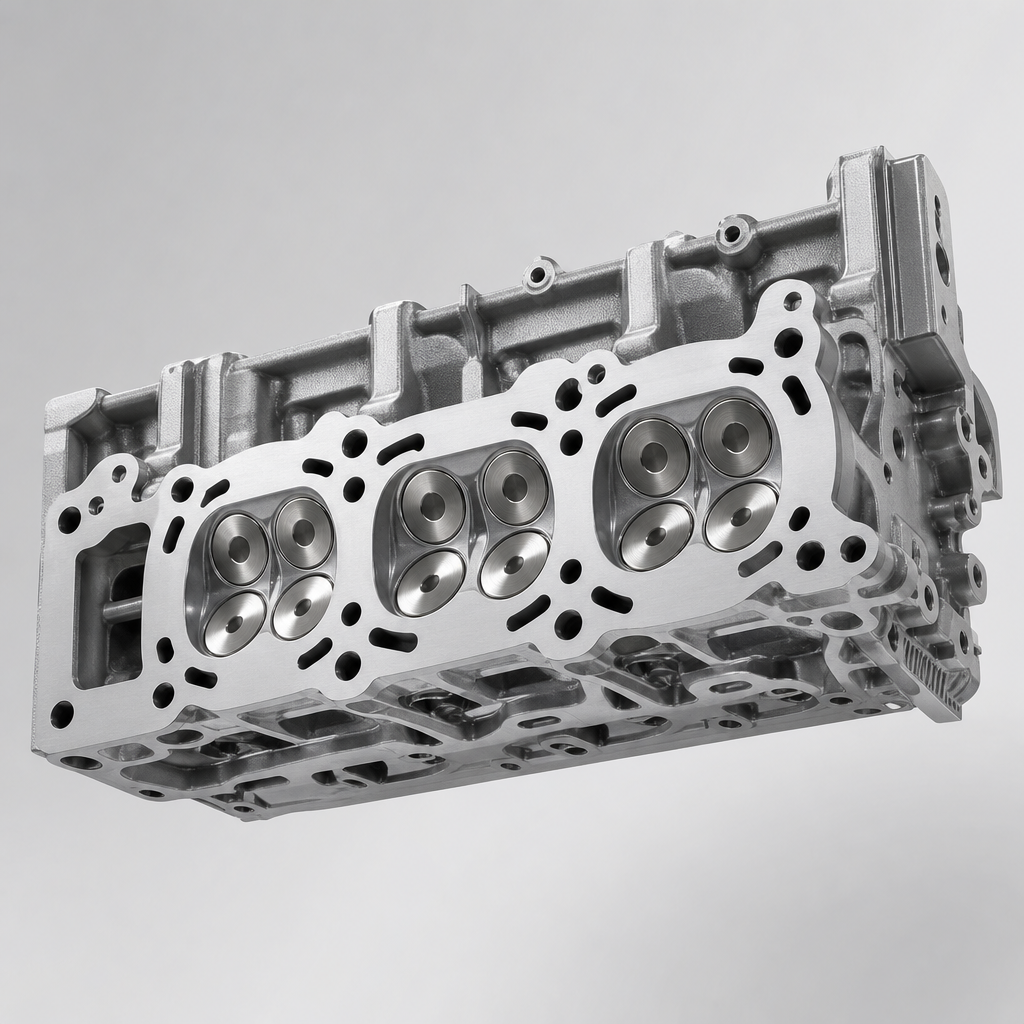
Engine Block Fiat Wholesale: Sourcing Guide for Buyers
An engine block Fiat wholesale order should be treated as a controlled production purchase. The risk is not only whether a supplier has stock. The risk is whether the block matches the engine code, arrives at the expected machining stage, passes dimensional checks, and can be repeated across replenishment orders without surprises. For distributors, importers, rebuilders, and repair networks, that means fixing the OE cross-reference, casting material, bore and deck requirements, main bearing geometry, inspection plan, MOQ, packing method, landed-cost target, and delivery window before the purchase order is released. Driventus supplies engine and powertrain components from Taizhou, Zhejiang, with production aligned to IATF 16949:2016 and ISO 9001:2015. Driventus is an independent aftermarket manufacturer; brand names are used only to identify fitment. Use this guide to turn a Fiat engine block enquiry into a controlled RFQ, with enough technical detail to reduce mismatch, rework, transit damage, and documentation delays.
Start With the Buying Decision, Not the Part Number
A Fiat engine block may look like a simple catalogue item, but the wholesale decision depends on repeatability. One acceptable sample is not enough if later batches vary in deck height, bore finish, main bearing alignment, thread quality, or packaging protection. Those variations turn into returns, machine-shop rework, delayed repairs, and warranty disputes.
Before asking for price, define the commercial and technical frame:
The useful question is not “Can you supply it?” It is “Can you supply the same specification again, with the same measurement control and export packing?” A practical RFQ for engine block Fiat wholesale sourcing should state whether the buyer will complete final honing locally, whether the block must be ready for assembly, and which inspection records must travel with each lot.
Fitment Control: Where Similar Fiat Blocks Go Wrong
Fitment mistakes usually start with overconfidence in a single cross-reference. Fiat engine blocks can vary by engine family, model year, emissions era, market specification, sensor position, mounting boss, coolant routing, oil-gallery layout, and machining depth. A correct OE reference is necessary, but it should not be the only check.
Ask the supplier to confirm:
1. OE reference used for fitment matching 2. Engine code and displacement 3. Nominal bore diameter, oversize options, and service allowance 4. Main bearing cap arrangement, bolt pattern, and line-bore status 5. Deck height, deck flatness target, and gasket interface data 6. Included plugs, sleeves, dowels, thread inserts, or core plugs
If the application is tied to a known OE reference such as OE 06A107065, ask how the replacement is matched and which machining steps are included. Visually similar blocks can differ in coolant passages, mounting bosses, sensor ports, oil galleries, or unfinished faces. To reduce ambiguity, attach six-side photos, a marked drawing or sample report, and the engine-code plate reference to the RFQ. If several OE numbers supersede to one service item, require a written list of covered versions and exclusions.
Spec Deep-Dive: Material, Casting Route, and Machining Stage
The block’s price only makes sense when the material and machining stage are clear. Cast iron and aluminium alloy blocks behave differently in weight, heat transfer, machining, thread repair, and damage risk. The casting route and any heat-treatment or ageing process also affect dimensional stability and rejection rates.
Item
What to confirm
Buyer impact
Base material
Grey cast iron, alloy cast iron, or aluminium alloy, with grade declared on the material record
Strength, weight, thermal behaviour, and machining parameters
Casting route
Sand casting, gravity casting, or pressure casting, with process route fixed by part number
Internal soundness, tooling cost, and unit-cost profile
Bore finish
Rough bore, semi-finished, or honed, with nominal diameter and oversize allowance stated
Machine-shop work required before assembly
Deck face
Machined or unmachined, with flatness and roughness target declared
Head-gasket sealing risk and preparation time
Main saddles
Rough cast, machined, or line-bored, with cap-matching control
Bearing alignment and assembly reliability
Thread inserts
Present, absent, or fitted on request, with thread size and depth confirmed
Repairability and installation quality
</tr></thead><tbody> </tbody></table>Do not compare quotes until each supplier is pricing the same scope. A lower block price can disappear once the buyer adds local boring, honing, surfacing, cleaning, pressure testing, rejected pieces, and workshop delay. For clean comparison, request separate prices for bare casting, semi-machined block, and final-machined block. Then add the local cost of completing each version to the required assembly standard.
Inspection Plan: What to Measure Before Stock Acceptance
The best time to find a block problem is before it enters stock. For distribution, rebuild operations, or direct workshop supply, the inspection plan should state which features are checked 100%, which are sampled, and which are confirmed during first-article approval only.
Core checks include:
Visual inspection for porosity, flash, cracks, core shift, burrs, bruised machined faces, and transit damage
Bore diameter, roundness, taper, spacing, and perpendicularity
Deck flatness and surface finish on the head-gasket interface
Main bearing bore alignment, cap fit, cap numbering, and fastener-seat condition
Thread gauge checks on oil, coolant, sensor, mount, and transmission points
Plug, gallery, coolant passage, and oil passage completeness, with cleaning confirmation
Surface finish at head, seal, sump, pump, and gasket interfaces
Request measured values, not only a pass/fail result. A useful inspection report lists drawing dimension, tolerance, actual measured value, gauge or machine used, inspector, date, and lot number. If the block is intended for direct fitment without local machining, ask whether bore, deck, and main bore tolerances are verified by CMM, dedicated gauges, air gauges, bore gauges, surface-roughness testing, pressure or leak testing, or an equivalent setup. For a first shipment, many buyers inspect 5 to 10 pieces or 10% of the lot, then adjust sampling once incoming quality is stable.
Commercial Scenario: MOQ, Lead Time, and Landed Cost
Engine block supply is usually batch-driven. Tooling availability, casting yield, machining capacity, inspection workload, packing time, and export booking all affect the real delivery date. Treating each order as an isolated spot buy makes pricing and timing harder to control.
Agree these points before award:
MOQ by part number, casting family, or engine family, with mixed-SKU pallet rules if available
Standard and expedited lead time, separated into casting, machining, inspection, packing, and export booking
First-article sampling time, which is often longer than repeat replenishment
Packing format, pallet loading density, gross weight, carton protection, VCI or oil protection, and fumigation requirement
Label format for SKU, lot, engine code, quantity, destination market, barcode, and private-label reference
Spare ratio, credit process, or replacement handling for transit damage and inspection rejection
A common route is a small sample or pilot order for fitment and inspection approval, followed by an MOQ that matches a casting or machining batch. Unit price often improves when the order fills production capacity, reduces setup changes, or allows consolidated sea freight. But the lowest unit price is not always the lowest landed cost. Excess inventory, slow-moving variants, weak pallet loading, moisture damage, and poor lot separation can offset any saving. For importers, predictable container loading and clean warehouse labels matter almost as much as the quoted FOB price.
Document Check: What Must Match the Shipment
Documentation should be tied to the part number, revision, and shipment lot. Generic certificates and sample reports are not enough for a controlled powertrain purchase. Driventus operates under an IATF 16949:2016 and ISO 9001:2015 quality framework, and buyers should request the document set before shipment, not after customs clearance or a warehouse dispute.
Useful documents include:
Certificate copies for IATF 16949:2016 and ISO 9001:2015, with valid dates and issuing body visible
Inspection report with dimensional results, drawing reference, tolerance, actual value, and lot number
Material declaration and traceability record, including casting lot or heat/batch reference where applicable
Packing list with SKU, quantity, gross weight, net weight, carton count, pallet count, and lot identification
Country-of-origin documentation for customs and importer records
REACH (EC) No 1907/2006 declaration where applicable
For markets with stricter customs, environmental, or importer record requirements, confirm support early. Test data should reference the actual block revision, not another engine family. For repeat engine block Fiat wholesale programmes, keep a control file with the approved drawing, sample approval record, latest inspection report, packaging specification, label template, and change-history log. More detail is available in our quality system.
When Custom Manufacturing Makes Sense
Custom manufacturing is not required for every replacement block. It becomes useful when the buyer has stable volume, a defined rebuild process, a fleet requirement, or a private-label distribution programme that needs repeatable geometry and packaging. The business case should cover tooling, fixtures, gauge setup, packaging design, and first-article validation.
Common customisation requests include:
Alternate machining stage, such as semi-finished bores for local honing or final-machined dimensions for direct assembly
Specific plug, dowel, sleeve, core plug, or thread-insert configuration
Packaging and barcode requirements for distributor warehouse systems
Private-label carton artwork, neutral cartons, or destination-market labelling
Batch marking for warehouse traceability, warranty review, and recall isolation
Fitment for local emissions, service, fleet, or rebuild variants
Define the geometry and acceptance criteria before pilot production. Drawings, samples, tolerance sheets, packing diagrams, label files, inspection targets, and acceptance limits should be agreed before volume release. A normal process is RFQ review, technical confirmation, sample or first article, dimensional report, trial assembly or fitment check, pilot order, then repeat production under the approved specification. Driventus can support custom manufacturing for controlled volume programmes where technical requirements and commercial forecasts are clear.
Supplier Award: Questions That Expose Real Capability
Price belongs in the award decision, but it should not lead the whole discussion. A weak supplier can turn a low EXW or FOB price into higher landed cost through inconsistent machining, broken packaging, poor traceability, unclear revision control, or slow technical replies. For engine block Fiat wholesale sourcing, compare total landed cost and supply risk.
Use a supplier scorecard built around evidence:
Dimensional consistency on sample and repeat order, including bore, deck, main bore, threads, and gasket faces
Response time on technical questions, drawing requests, and cross-reference disputes
Ability to provide drawings, measurement sheets, inspection photos, or first-article reports
Packing quality, pallet stability, corrosion protection, and damage rate after inland and sea transport
Lead-time stability across quarters, including peak-season casting and machining capacity
Support for inspection, audit requests, corrective actions, and controlled engineering changes
During a factory audit, focus on casting control, machining capability, inspection equipment, gauge calibration, storage conditions, nonconforming-material handling, rework control, and traceability discipline. Ask how the supplier manages drawing revisions, casting-lot segregation, cap matching, rejected pieces, and packaging changes. Clear batch records and audit cooperation reduce sourcing risk. Buyers can review our catalog and engine components to map adjacent part families for broader sourcing consolidation.
Frequently asked questions
Confirm the engine code, OE reference, material, machining stage, included hardware, and dimensional tolerances. Ask for measured inspection data, lot traceability, packing details, MOQ, lead time, and sample approval requirements before releasing the order.
Both options may be available depending on the programme. Buyers should specify whether they need a bare casting, semi-finished block, or a block machined to defined fitment requirements, including bore, deck, main bore, thread, and included-hardware expectations.
Yes. Typical documents include quality certificates, inspection records, packing lists, traceability data, country-of-origin documents, and compliance statements such as REACH where applicable. Documents should be linked to the correct part number, revision, and shipment lot.
Send the OE cross-reference, engine code, target market, annual volume, required machining level, sample quantity, target MOQ, packaging expectations, and destination port or delivery term. Then [request a quote](/contact.html) with your specification sheet.
For sourcing support, technical confirmation, or a volume quotation, [request a quote](/contact.html) and send your engine code, OE reference, required machining level, annual forecast, target order quantity, destination market, and packaging requirements.