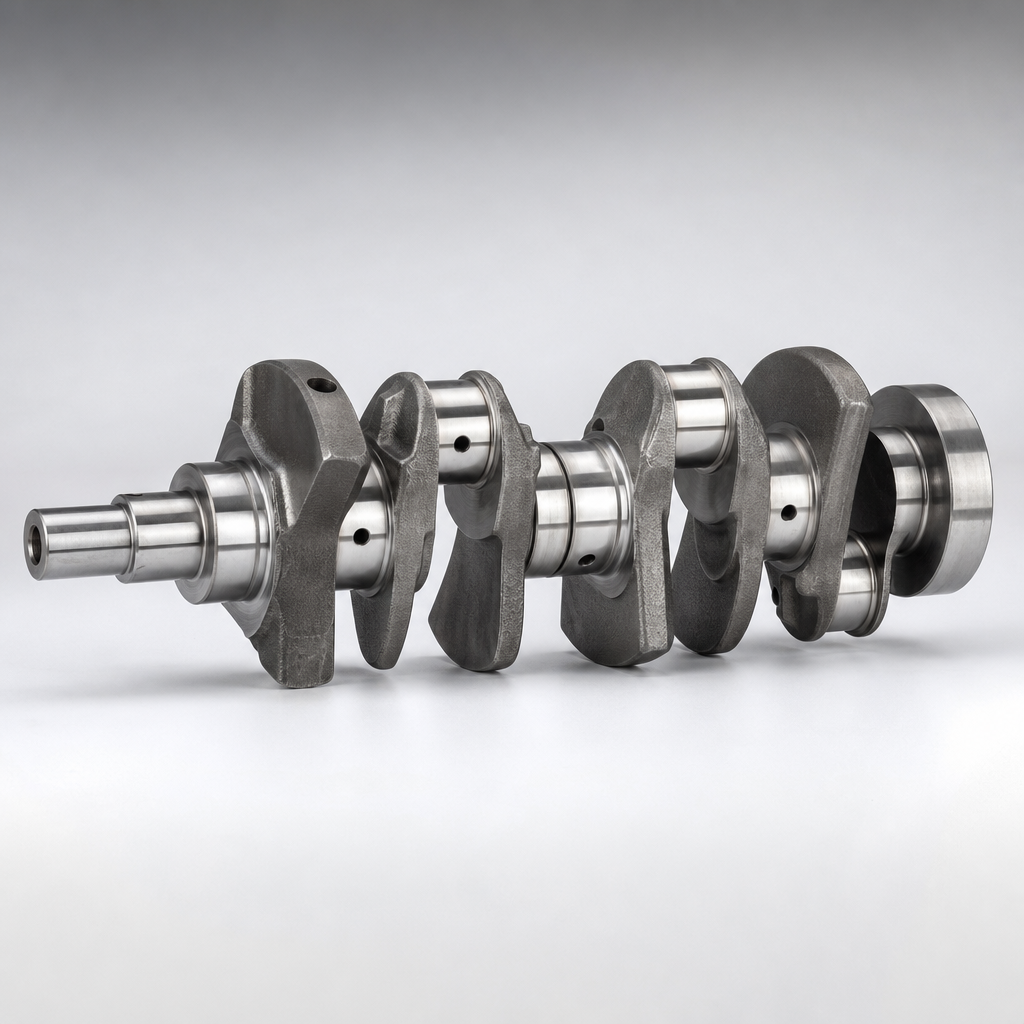
Engine bearing Citroen wholesale sourcing should not start with a catalogue number alone. It starts with a controlled supply file: engine code, crankshaft journal size, housing bore, oil clearance, shell thickness, repair size, bearing position, set quantity, inspection records, carton rules, and reorder controls. If any one of those items drifts, the problem may not appear until the bearing reaches a rebuilder's bench.
Driventus is an independent aftermarket manufacturer; Citroen and other vehicle brand names are referenced only for fitment identification. We manufacture engine bearings in China for B2B export under IATF 16949:2016 and ISO 9001:2015 quality controls. For EU shipments, material declarations and packaging planning should also consider REACH (EC) No 1907/2006. This guide gives wholesale buyers a more practical sourcing framework: how to define the application, where failures usually enter the order process, how to compare supply paths, what to ask before shipment, and when custom manufacturing is worth the extra approval work. The same process applies across main bearings, connecting rod bearings, flange bearings, and thrust washers.
Decision point: are you buying a part number or a repeatable bearing programme?
A one-time service order can survive with a part number and a quick stock check. A wholesale programme cannot. Buyers are managing catalogue records, warehouse labels, production lots, customer claims, replenishment timing, and mixed repair sizes. The real question is whether the supplier can keep the same technical file active from first sample to repeat container shipment.
For Citroen engine bearing supply, anchor the programme around four controls:
Fitment control: engine code, displacement, model range, production year, bearing position, and set quantity must match the application record
Dimensional control: journal diameter, housing bore, wall thickness, width, arc height, crush, spread, locating tang position, and oil-hole alignment must follow the approved drawing
Lot control: heat, strip lot, coating lot, production date, inspection record, and carton label code should be traceable after delivery
Packing control: STD, 0.25 mm, 0.50 mm, and other repair sizes must stay separated, readable, and protected during export transport
The lowest ex-factory price is not always the best buy. Mis-shipped sizes, catalogue corrections, mixed cartons, missing labels, or inconsistent repeat batches can consume margin quickly. A stronger supplier is the one that can hold specification, label format, barcode structure, carton count, and documentation discipline across repeat orders.
Failure mode: approving Citroen bearing fitment from the model name
Many sourcing errors begin with a familiar model name. That is not enough. Citroen engine programmes can share platforms and marketing names while using different engine codes, crankshafts, rods, thrust layouts, or repair sizes. Before issuing a purchase order, compare the quotation against vehicle data, engine data sheets, and any machining records from the rebuilder.
Check item
What to verify
What goes wrong if skipped
Engine code
Exact code, displacement, fuel type, and production range
The same vehicle range may use different crankshafts, rods, and bearing dimensions
Bearing type
Main bearing, connecting rod bearing, thrust washer, or flange bearing
Set geometry, load path, and quantity per engine may be wrong
Journal size
STD, 0.25 mm undersize, 0.50 mm undersize, or another repair condition
Ground crankshafts receive the wrong shell size
Housing bore
Block bore or rod big-end bore after machining
Crush, seating force, and final oil clearance fall outside target
Oil clearance
Target clearance verified with bore gauge and micrometer
Too tight can seize; too loose can reduce oil pressure and service life
Material pairing
Steel-backed tri-metal, aluminium alloy, or bi-metal construction
Load capacity, embedability, seizure resistance, and cost no longer match the duty
</tr></thead><tbody> </tbody></table>If your line card uses OE cross-reference data, attach the reference to the exact application record. Use a format such as OE 06A107065 only when the reference has been confirmed for that application. Do not carry a reference across unrelated engines because the mistake often stays hidden until workshop installation.
Spec deep-dive: construction choices behind the shell
Engine bearings are small parts with very different jobs. A main bearing, a rod bearing, and a thrust washer do not fail in the same way, and they should not be specified with vague terms such as "standard quality" or "heavy duty" without dimensional and material backing. Ask the supplier to state the layer structure, nominal wall thickness, repair sizes, and inspection method in the quotation or technical sheet.
Common constructions
Bi-metal bearings: steel backing with an aluminium alloy lining. Often selected where cost control, corrosion resistance, and moderate load capacity are the main priorities.
Tri-metal bearings: steel backing, copper-lead intermediate layer, nickel barrier where specified, and a thin overlay. Used where higher load capacity, fatigue resistance, and conformability are important.
Thrust washers / flange bearings: control crankshaft end play. Fitment depends on crankshaft axial-load design, thrust face width, and block geometry.
Main bearings: support the crankshaft in the engine block. Bore alignment, crush, shell thickness, oil groove design, and cap position are critical.
Connecting rod bearings: support the rod big ends. They see heavy cyclic loading, so dimensional checks, parting-face condition, and surface inspection are especially important.
A complete purchasing specification names the construction, backing material, lining or overlay material, surface treatment if applicable, and available repair sizes such as STD, 0.25 mm, 0.50 mm, and 0.75 mm where the engine programme supports them. For EU and UK buyers, the documented material declaration should align with REACH (EC) No 1907/2006 where relevant. For factory audit purposes, ask how incoming material, layer thickness, surface condition, oil-hole position, and final dimensional stability are verified before lot release.
Quality records that matter after the shipment arrives
Final visual sorting is not a quality system. It is a last gate. Engine bearing sourcing should be supported by traceable controls from incoming material to packed carton. Driventus works under quality system controls aligned with IATF 16949:2016 and ISO 9001:2015.
The inspection stack typically includes:
1. Incoming steel strip, lining material, and coating material verification against approved supplier records 2. Dimensional checks for wall thickness, width, arc height, free spread, and profile geometry using calibrated gauges 3. Surface examination for porosity, scoring, burrs, contamination, flaking, dents, or coating defects 4. Crush, spread, and interference-fit verification against the approved drawing before lot release 5. Oil hole, groove, notch, relief, chamfer, and locating tang inspection where applicable 6. Packaging audit for corrosion protection, part separation, label accuracy, carton strength, and mixed-size prevention 7. Lot traceability, retention sample control, final release records, and nonconforming-product segregation
For procurement teams, the useful question is simple: can the supplier prove the same controls were applied to the lot you received? Ask for incoming inspection criteria, in-process control charts, final lot release records, gauge calibration evidence, and a clear nonconformity process. These records reduce argument during claims review and make seasonal demand changes easier to manage.
Step-by-step: build MOQ, lead time, and packaging around reorder behavior
Do not design the first order as if it exists alone. Wholesale engine bearing programmes should be planned around replenishment cadence, SKU spread, and repair-size demand. A common approach is to separate fast-moving STD sizes from slower 0.25 mm and 0.50 mm repair sizes so stock cash is not trapped in low-turn variants.
Use this buying sequence:
1. Segment the SKUs: give new Citroen coverage and repair-size tests lower MOQ; use higher MOQ only for repeat STD sizes with sales history. 2. Compare price breaks properly: review sample order, trial carton, production MOQ, pallet, and container levels. Include private-label setup, barcode printing, inspection, and inner packaging. 3. Define the lead-time clock: confirm whether timing starts after drawing approval, sample approval, deposit, or production release. Add inspection, carton build, and export booking windows. 4. Freeze the packing format: define individual sets, engine-family cartons, master cartons, pallet pattern, carton dimensions, and target carton weight before mass shipment. 5. Lock label data: apply buyer SKU, part number, application data, bearing position, repair size, quantity per set, and batch code consistently. 6. Choose corrosion protection: confirm oil paper, VCI paper, sealed pouch, desiccant, or other sea-freight protection based on route and warehouse dwell time. 7. Review before release: request carton photos, label samples, packing list format, sample set layout, and random-open carton evidence before the first shipment.
For large distributors, hidden cost often appears in receiving time and picking errors. Clear position labelling, stable inner packaging, and consistent carton structure help warehouse teams and repair customers identify the correct parts quickly. For mixed programmes, lock the packing list format early so future replenishment orders can be checked without rebuilding the process.
Scenario: when catalogue supply is not enough
A catalogue match works when the buyer accepts the standard construction, standard packing, and existing set composition. Some programmes need more control: a specific wall thickness, revised overlay, controlled set content, private-label documentation, or packaging adapted to a regional distribution model. That is where custom manufacturing becomes relevant.
Typical custom requests include:
Private-label cartons for distributor networks and repair chains, including buyer SKU, barcode, country-of-sale language, and batch code
Application-specific set composition for defined Citroen engine families, including main set, rod set, thrust washer set, or complete rebuild kit packing
Standard and repair-size programmes for reconditioned blocks and crankshafts, commonly separated as STD, 0.25 mm, 0.50 mm, and other agreed sizes
Material, lining, or overlay adjustments for load, duty cycle, oil quality, or market-position targets
Barcoding, multilingual labels, carton marking, pallet labels, and packing-list formats for export markets
Technical sheets, first-article sample approval records, dimensional reports, and batch documents aligned with buyer procedures
Custom work should still begin with dimensional control, sample approval, and a signed technical sheet. Confirm whether the part is intended as a direct OE-equivalent aftermarket fit or as a controlled replacement for a specific rebuild scenario. A practical custom timeline allows for drawing confirmation, sample production, inspection, buyer approval, packaging proofing, and mass production. Driventus does not claim vehicle manufacturer approval or endorsement. Driventus is an independent aftermarket manufacturer; brand names are referenced for fitment only.
Comparison: local distributor, trader, or direct manufacturer?
Wholesale buyers usually have three supply paths. The right choice depends on order volume, technical risk, required documentation, private-label needs, and target margin. The cheapest quoted unit price is not always the lowest landed cost once claims handling, catalogue maintenance, warehousing, and urgent replenishment are included.
Sourcing path
Strengths
Trade-offs
Best use case
Local distributor
Fast replenishment, simple communication, low freight complexity
Higher unit cost, limited control over private label, repair-size range, and factory documents
Emergency stock, urgent backorders, and small-volume demand
Trading company
Broad catalogue access, flexible ordering, useful mixed-SKU support
Factory traceability, inspection depth, and drawing control can vary by item
Early market testing, low-commitment orders, and broad catalogue sampling
Direct manufacturer
Better control over drawings, materials, packaging, traceability, MOQ planning, and cost structure
Requires stronger buyer specifications, clearer forecasts, and earlier approval decisions
Regular wholesale programmes, private-label supply, and repeat export orders
</tr></thead><tbody> </tbody></table>For Citroen engine bearing programmes, direct manufacturing is usually the cleaner route when the buyer needs consistent fitment data, repeatable lead time, and factory-level documentation. The buyer must define the technical standard clearly enough to prevent application drift over time. A complete purchase file should include application data, size range, material construction, packing rules, label content, inspection expectations, document requirements, target annual volume, and acceptable shipment split.
Pre-shipment Q-and-A for engine bearing Citroen wholesale orders
Use these questions before approving first production, repeat orders, or a new repair-size range. They are especially useful when buying engine bearing Citroen wholesale across several SKUs and repair sizes in one mixed shipment.
Which application is approved? Confirm engine code, vehicle range, engine family, fuel type, production range, and bearing position.
What is in the set? Confirm main bearing, connecting rod bearing, thrust washer, or flange-bearing set composition and quantity per engine.
Which size is packed? Confirm standard size, undersize, oversize, or other repair-size requirement, with size marking on each inner pack.
Which dimensions are controlled? Confirm housing bore, journal diameter, shell width, wall thickness, crush, spread, and target oil clearance.
Which material is supplied? Confirm construction, lining or overlay type, surface treatment, and any restricted-substance declaration required by the buyer.
What are the commercial limits? Confirm MOQ by SKU, price breaks, sample cost, private-label cost, payment terms, and whether partial shipment is allowed.
When does lead time start? Confirm timing from drawing approval, sample approval, deposit, production start, inspection, and export booking.
How will the lot be identified? Confirm lot traceability format, buyer SKU, barcode rules, label position, carton numbering, and master-carton labelling.
Will the packing survive the route? Confirm corrosion resistance, part separation, sea freight protection, pallet stacking, and warehouse receiving needs.
What proof is available before shipment? Confirm label samples, carton photos, packing list, inspection summary, and random carton check.
Which documents ship with the order? Confirm commercial invoice, packing list, certificate of analysis if required, and test or inspection records.
Which standards are referenced? Confirm IATF 16949:2016, ISO 9001:2015, and REACH (EC) No 1907/2006 where relevant.
For buyers managing multiple Citroen SKUs, one disciplined technical sheet can reduce errors across reorder cycles. The sheet should travel with the purchase order and the approved sample record. Purchasing, quality, warehouse, and claims teams then work from the same reference when the programme scales.
Frequently asked questions
Confirm engine code, bearing position, standard or repair size, journal diameter, housing bore, shell dimensions, target oil clearance, material construction, and set quantity. Also check MOQ, lead time, packaging, batch traceability, label format, and the supplier's quality records before approval.
Yes. Private-label packaging, barcode formats, multilingual labels, carton marking, and packing-list formats can be defined for wholesale programmes. Final approval should still follow sample checks, dimensional verification, packaging proofing, and a signed technical sheet.
Yes, where the customer provides confirmed application data. OE references should be used only for fitment mapping, not as a claim of vehicle manufacturer approval or endorsement. Example format: OE 06A107065.
We manufacture under IATF 16949:2016 and ISO 9001:2015 quality controls. For export programmes, REACH (EC) No 1907/2006 may also be relevant depending on destination, material disclosure needs, restricted-substance checks, and buyer documentation requirements.
Review your Citroen bearing list against engine codes, repair sizes, MOQ, lead time, packaging needs, and volume plan, then [request a quote](/contact.html).