Engine Block Chevrolet OEM Supplier: Sourcing Guide
Buying a Chevrolet engine block is a sourcing decision, not a catalog selection. Procurement teams need an engine block Chevrolet OEM supplier that can hold dimensional consistency across castings, machine to drawing, document material traceability, and ship to export standards without creating rework at receiving or assembly. Driventus is an independent aftermarket manufacturer; brand names are referenced for fitment only. For buyers, the core checks are straightforward: does the block match the intended engine family, are the machining datums controlled, and can the supplier support stable volumes with inspection records and change control? Driventus operates under IATF 16949:2016 and ISO 9001:2015, and we screen export-facing materials and processes for REACH (EC) No 1907/2006 concerns. If you are qualifying a Chevrolet engine block source for aftermarket, OEM, or Tier-1 supply, the sections below outline what to verify before you release a purchase order.
What buyers should confirm before sourcing
A Chevrolet block program fails when the drawing is incomplete, the revision history is unclear, or the supplier treats fitment as a generic part. Start with the technical basics and lock them down in writing:
- Engine family, application year range, and revision level
- Casting material and heat-treatment requirement, if specified
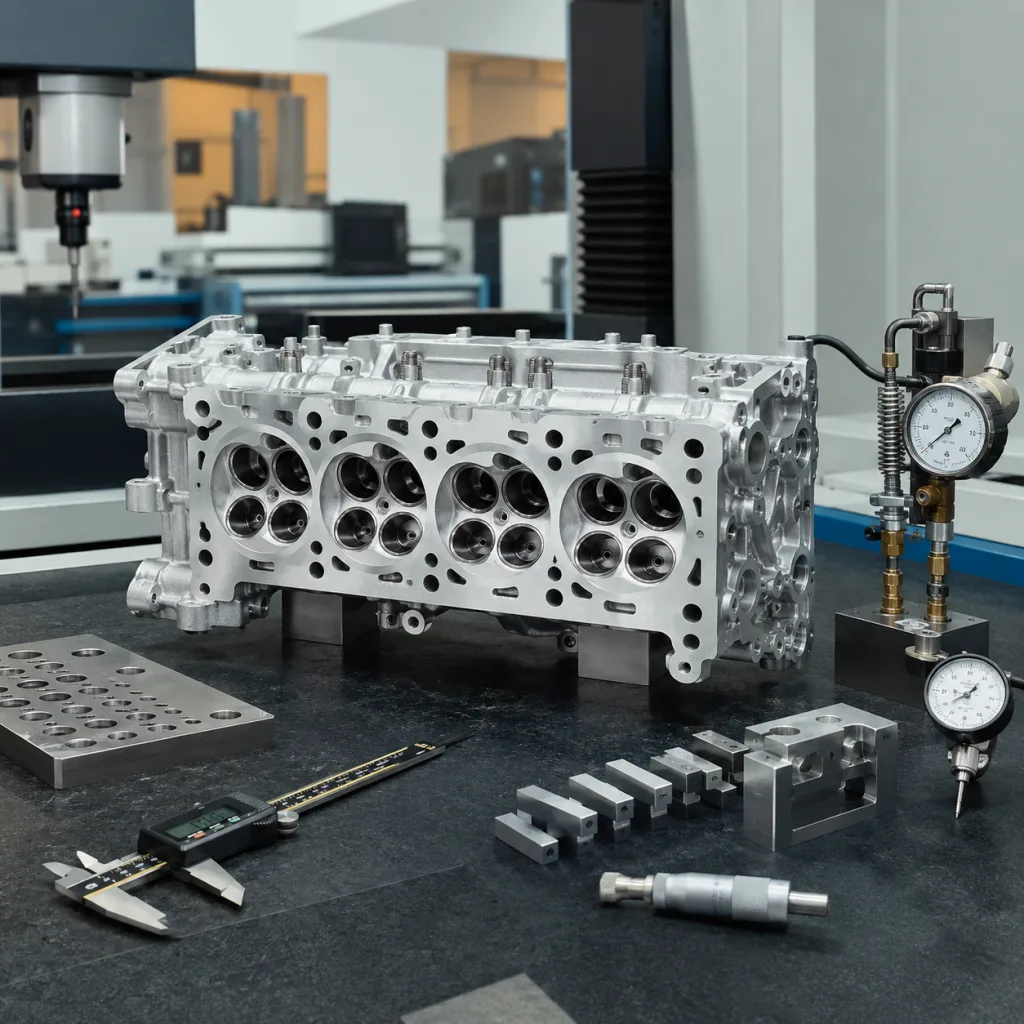
- Machining scope: raw casting, semi-machined, or fully machined block
- Critical datums for bore, deck, main bearing line, and accessory faces
- Thread specification, plug style, and gallery configuration
- Cleaning, preservation, and packaging standard for export
For higher-risk programs, ask for a first article package that includes dimensional records, material certificates, and photos of critical features. That is the fastest way to distinguish a controllable supply chain from a part that only appears correct in a catalog.
Material and machining controls that matter
An engine block is a structural casting with tight functional requirements. Material selection affects stiffness, thermal growth, machinability, and long-term durability. Machining quality affects sealing, bearing support, and assembly time.
| Supply format | What the buyer receives | Best use case | Main trade-off |
|---|---|---|---|
| Raw casting | Unmachined block casting | In-house machining programs | Highest internal processing cost |
| Semi-machined block | Critical faces and bores partially machined | Regional distributors and rebuild channels | Some local finishing still required |
| Fully machined block | Finished, cleaned, and preserved for assembly | Fast-turn replacement supply | Higher unit price, lower shop time |