engine block · 2026-07-08

Engine Block Cadillac OEM Supplier: Sourcing Guide

An engine block Cadillac OEM supplier search should not start with price. It should start with the part evidence: application data, casting route, machining controls, inspection records, leakage criteria, traceability, and commercial terms that match the buyer's channel. A repair-chain buyer may care most about repeat replenishment and claim handling. A fleet programme may need fast lot isolation. A distributor may need export packaging that survives warehouse moves. A Tier-1 or engineering-led buyer will usually push harder on capability data, PPAP-style records, and change control.

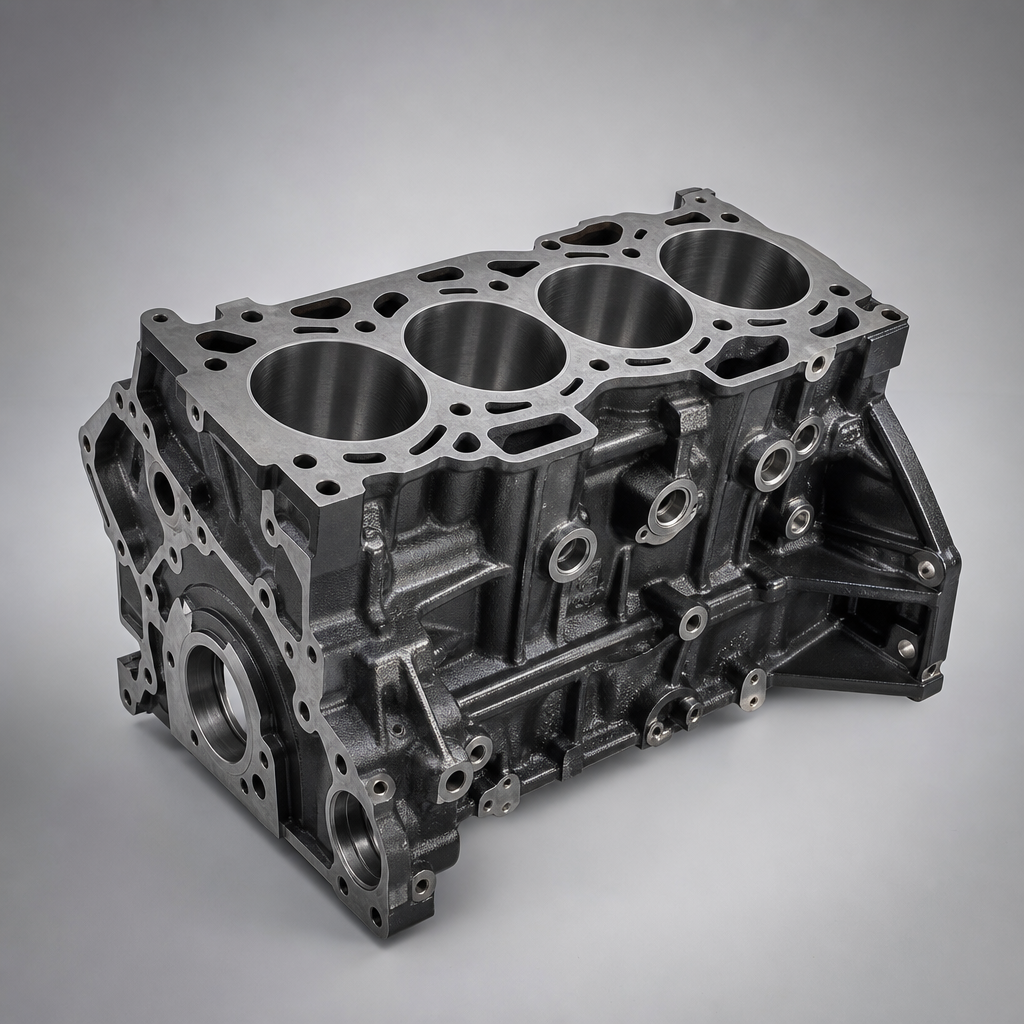
For Cadillac-fit applications, verify the features that can create real warranty exposure: bore size and cylindricity, deck flatness, main bearing tunnel alignment, thread and dowel position, material grade, coolant and oil leakage limits, residual debris, and corrosion protection. Also make the language clear. Driventus is an independent aftermarket manufacturer; brand names are used only to identify fitment and do not imply vehicle-maker approval.

Driventus supplies engine and powertrain components from Taizhou, Zhejiang, under IATF 16949:2016 and ISO 9001:2015 quality systems. This guide gives procurement teams a sharper way to qualify an engine block programme: what to define before RFQ, where weak offers fail, which documents matter, how to compare MOQ and lead time, and how to prepare a quote package. Buyers can also review our catalog, our quality system, and custom manufacturing before they request a quote.

Start with the claim: what 'OEM supplier' can and cannot mean

In B2B sourcing, an engine block Cadillac OEM supplier is usually a manufacturer or supply partner capable of producing Cadillac-fit engine blocks against agreed fitment, material, machining, inspection, and traceability requirements. It is not automatically a dealership source, an authorised Cadillac supplier, or proof of vehicle-maker approval. That distinction belongs in the RFQ file, purchase order, catalog copy, and customer-facing documentation.

A buyer should define the supply claim in operational terms:

  • Which OE part number, supersession, engine family, VIN range, or reference sample is being reviewed
  • Which drawing, sample master, datum scheme, or inspection standard controls acceptance
  • Which material is required, such as grey cast iron, compacted graphite iron, aluminium alloy, or a customer-specified grade
  • Which machined features are critical to function: main bearing tunnels, cylinder bores, deck faces, threaded holes, dowel holes, oil galleries, coolant jackets, and gasket interfaces
  • Which leakage limits apply to coolant and oil circuits, including pressure, medium, hold time, and permitted pressure drop or bubble criteria
  • Which cleaning, rust prevention, and export packaging rules apply to heavy machined castings
  • Which lot codes link finished parts to material, pressure-test, dimensional inspection, packing, and shipment records

For EU, UK, US, Canadian, Australian, and Brazilian buyers, the same supplier file should also cover restricted-substance obligations where applicable, including REACH (EC) No 1907/2006, plus customer-specific declarations or IMDS-style material data when requested. Driventus can review OE references supplied by the buyer, but brand names are used only to identify fitment.

Decision gate before RFQ award: define the features that can stop assembly

Engine blocks do not fail procurement teams because the casting looks heavy and complex. They fail when a few uncontrolled details create assembly rejection, leakage, rework, or warranty claims. Before awarding an RFQ, turn each critical feature into a measurable requirement and an inspection method. If there is no released drawing, quote against a controlled sample, agreed datum scheme, and written inspection plan.

</tr></thead><tbody> </tbody></table>For repeat volume, ask for the control plan before the first purchase order. It should state sampling frequency, gauge type, calibration status, and the reaction plan for nonconforming parts. For CTQ dimensions, request Cp/Cpk after pilot production. A report is only useful if the supplier can explain how the readings were taken and what happens when the process moves.

Where Driventus fits in the programme, from sample review to export packing

Driventus is most useful when the sourcing problem is wider than a one-time part search. Engine block programmes often need engineering review, manufacturing planning, inspection evidence, packaging design, and repeat-order communication in the same workflow. A vertically integrated structure reduces handoffs between casting, machining, inspection, and packing, which gives buyers a clearer path for controlling process drift.

Typical programme support includes:

  • Engineering review against supplied drawings, samples, OE cross-reference data, photos, 3D files, or application requirements
  • Manufacturability review covering casting allowance, machining datums, fixture strategy, bore finishing, oil-gallery drilling, washing, and plugging operations
  • Process planning for casting, heat treatment where applicable, rough machining, finish machining, deburring, washing, inspection, rust prevention, and packing
  • Lot traceability by casting batch, machining batch, inspection record, pressure-test record, and shipment documentation
  • Export documentation support for multi-country shipments, including packing lists, commercial invoices, and customer-specific declarations
  • Programme communication for repeat orders, forecast changes, engineering revisions, and controlled deviation requests
  • Packaging review for sea freight, air freight, warehouse handling, pallet size, crate strength, part separation, and moisture protection

When comparing sources, look past the quotation total. Response time, sample discipline, change-control behaviour, and inspection evidence often predict the real cost of ownership. A supplier that cannot hold bore, deck, and main tunnel consistency may look cheaper on paper and become expensive through sorting, rework, air-freight recovery, or field claims.

Document pack: the evidence that makes the supplier file audit-ready

A serious engine block supplier should be able to support the RFQ with records, not just assurances. The document pack does not have to be identical for every buyer, but it should prove the same four things: the quality system is controlled, the material is traceable, the machining is measured, and leakage is screened against defined limits.

Request these documents during RFQ or sample approval:

  • Certificate to IATF 16949:2016, where the product and process scope cover automotive supply
  • Certificate to ISO 9001:2015
  • Material test report or chemistry record for the casting batch, including grade, heat or melt number, and key element ranges
  • Hardness record where the casting specification requires a defined HB or HRB window
  • Dimensional inspection report with measurement points, tolerance references, datum scheme, and equipment identified
  • Bore, deck, main bore, thread, dowel, and gasket-interface inspection results on sample and pilot lots
  • Pressure test record for coolant and oil circuits, with test pressure, hold time, acceptance criteria, and operator or station ID stated
  • Gauge calibration evidence for CMM, bore gauges, torque tools, pressure-test equipment, and surface-finish instruments
  • PPAP-style submission elements where required by the buyer, such as process flow, control plan, PFMEA, MSA, capability study, and sample submission warrant
  • Packaging specification, corrosion prevention method, pallet or crate details, gross weight, and stacking limits
  • REACH (EC) No 1907/2006 declaration when applicable to the supply chain

For fleet, distributor, or repair-chain buyers, add claim handling to the file. Define lot segregation, quarantine timing, 8D response expectations, and serial or batch traceability before a problem occurs. These controls shorten investigation time when receiving inspection finds damage or a field complaint points back to a shipment lot.

Review our quality system for the certification and control structure used on production programmes.

Comparison table: acceptable offer or hidden risk?

The best engine block Cadillac OEM supplier quote is rarely the lowest line item. It is the offer that exposes assumptions clearly enough for procurement, engineering, and quality teams to judge the real cost. Tooling, sample cost, series production price, inspection burden, packaging, and freight should be visible. If they are bundled into one number, ask for the breakdown.

Item Buyer decision What to define in the RFQ
MaterialIs the grade suitable for the application and machining route?Grade, chemistry range, hardness window, heat number, and treatment condition
Bore diameterWill piston clearance and ring sealing be protected across lots?Size at top, middle, and bottom positions; tolerance often held within hundredths of a millimetre on finished bores
Bore roundness and taperCan the supplier control shape, not just nominal diameter?Roundness, taper, and cylindricity limits tied to piston clearance and ring sealing
Deck flatnessWill the head gasket seal under the selected gasket system?Full-surface flatness, local waviness, and Ra finish for MLS or composite gasket use
Main bore alignmentWill bearing geometry remain stable across all stations?Tunnel size, straightness, and station-to-station alignment using CMM, air gauge, or line-bore gauge
Surface finishAre sealing and rotating interfaces controlled?Deck, bore, main bore, gasket, and oil-seal surfaces measured with calibrated equipment
Thread and dowel featuresWill assembly hardware locate and clamp correctly?Bolt-hole depth, thread engagement, dowel fit, and datum-to-hole location
Pressure testCan coolant and oil circuits hold the agreed limit?Test pressure, medium, hold time, permitted pressure drop, and retest rule
CleanlinessCould debris damage the assembled engine?Maximum particle size, mass per part, or verified wash-and-blow process
TraceabilityCan affected lots be isolated quickly?Lot code visible on label and linked to inspection and shipment records

</tr></thead><tbody> </tbody></table>For Cadillac-fit applications, repeatability is the test. A first sample that measures correctly is useful, but it does not prove the next lot will match. Ask for pilot-lot data, review the spread in actual measurements, and confirm how the supplier reacts when a CTQ feature trends toward the limit.

Commercial scenario: when MOQ, lead time, and landed cost pull in different directions

A buyer may find a technically qualified supplier and still have a poor sourcing outcome if the commercial structure does not fit demand. Engine blocks are heavy, bulky, and expensive to hold. A low unit price can be offset by high MOQ, weak packaging density, long replenishment time, or too much cash tied up in inventory. Separate three numbers early: unit price at a stated MOQ, one-time tooling or fixture cost, and logistics cost per usable part at the destination warehouse.

When discussing supply terms, ask for:

  • MOQ by casting family, finished part number, machining variant, and packaging configuration
  • Price breaks at practical volumes, such as sample quantity, pilot lot, first production lot, and repeat-order volume
  • Sample lead time, tooling lead time where applicable, production lead time, inspection time, and vessel or air-freight transit as separate items
  • Incoterms available for export orders, such as EXW, FOB, CIF, or DAP, with the named port or destination stated
  • Packaging count per pallet or crate, including net weight, gross weight, dimensions, stackability, and moisture-control method
  • Spare capacity for urgent replenishment, forecast upside, or annual programme growth
  • Forecast requirements for repeat orders, including frozen period, rolling forecast horizon, and safety-stock discussion
  • Payment terms, inspection hold points, pre-shipment inspection rules, and claim-response process

A catalog or existing-family block may support lower MOQ and shorter lead time than a custom block requiring new tooling, fixture design, machining validation, and PPAP-style submission. Samples are often quoted separately because low-volume machining, inspection, and export packing do not reflect series-production cost. Repeat pricing should be reviewed after the pilot lot confirms scrap rate, cycle time, packaging density, and inspection burden.

If the application uses a legacy OE cross-reference, confirm whether tooling and machining fixtures already exist or whether custom manufacturing is required. Review custom manufacturing for this type of programme support.

Failure modes to validate before the first production shipment

Validation should be built around what can actually go wrong in assembly, operation, storage, and transport. For engine blocks, the high-risk areas are dimensional geometry, material condition, leakage, cleanliness, and freight damage. Each check needs an acceptance criterion. A test name without sample size, method, and limit is weak evidence.

Recommended checks include:

1. Coordinate measuring inspection on critical interfaces, using the agreed datum scheme and reporting actual values, not only pass/fail status 2. Cylinder bore measurement at multiple depths and angular positions, including diameter, roundness, taper, and cylindricity where specified 3. Deck flatness and surface finish verification, with Ra/Rz values where the gasket system requires them 4. Main bearing bore alignment and diameter measurement across all bearing stations, with the inspection method identified 5. Pressure test of coolant and oil passages, stating pressure, medium, hold time, temperature where relevant, and acceptance criteria 6. Visual inspection for porosity, flash, cracks, blocked passages, casting sand, machining burrs, and damaged sealing surfaces 7. Thread, dowel, plug, and gasket-interface verification using go/no-go gauges, depth checks, and positional inspection where required 8. Cleaning and residual debris confirmation where required by the buyer, including particle size or mass limits for high-risk programmes 9. Hardness, microstructure, or heat-treatment checks where the material specification requires them 10. Packaging damage inspection after transit simulation or trial shipment, including edge protection, crate integrity, and corrosion condition after arrival

For broader durability requirements, the supplier may reference environmental or powertrain-level standards, but the reference must connect to the part, test condition, sample size, and acceptance criteria. Do not treat a standard name by itself as proof of validation.

RFQ workflow: how to brief Driventus for a Cadillac-fit block

A strong RFQ starts with the application. Send the OE cross-reference if available, engine family, displacement, model-year range, sample photos, casting marks, critical dimensions, target annual volume, destination market, packaging preference, and required inspection format. If the block must match an existing service part, provide an old sample or controlled drawing whenever possible. Driventus can then confirm whether the request matches an existing catalog item, a current production family, or a custom programme.

A complete RFQ package should include:

  • Required part number or cross-reference and any supersession notes
  • Engine family, displacement, fuel type, and application market
  • Drawing, 3D file, sample master, or clearly marked photos of critical features
  • Annual volume, first order quantity, target MOQ, and expected reorder pattern
  • Required tolerances for bores, deck, main bore, threads, dowels, and gasket interfaces
  • Validation requirements, including pressure test, cleanliness, material records, and PPAP-style elements if needed
  • Required Incoterm, destination port or warehouse, packaging limits, and preferred shipment mode
  • Target price range or landed-cost objective, if the buyer can share it

Use our catalog for adjacent engine and powertrain families, and our engine components overview when comparing blocks with related parts such as pistons, gaskets, pumps, and other engine service components. Keeping related parts in one supplier file can simplify documentation, communication, and repeat-order management.

The goal is not just to find a seller. It is to build a sourcing file that can withstand engineering review, receiving inspection, customer audit, and long-term replenishment. Driventus can support buyers that need repeat supply, batch traceability, inspection documentation, and export packaging control.

Frequently asked questions

No. In this sourcing context, it means a supplier capable of meeting the stated fitment, dimensional, and quality requirements. Driventus is an independent aftermarket manufacturer; brand names are used only to identify fitment.

Start with IATF 16949:2016 and ISO 9001:2015 certificates, a dimensional inspection report, material data, and a pressure test record. For engine blocks, also ask for bore, deck, main bore, thread, cleanliness, packaging, and traceability evidence before approving samples.

Yes, where the buyer provides the application data, sample, drawing, or an existing verified reference. We do not invent brand-owned numbers, and we do not claim vehicle-maker endorsement.

The main risks are bore variation, deck flatness issues, main bore misalignment, leakage, porosity, residual debris, thread errors, transit damage, and weak traceability. Procurement should verify these items before award.

For current availability, validation support, MOQ review, lead-time planning, or a programme-specific quote, send your specification through /contact.html and we will review the fitment, documentation needs, price drivers, and supply terms.

Request a Quote
Supplier capability Acceptable Hidden risk
Technical responseGives specific answers on bore, deck, main bore, material, leakage, cleanliness, and test dataUses generic sales language with few measurable details
Audit readinessShares certificates, process flow, control plan, PFMEA summary, calibration list, and inspection examplesDelays records or provides incomplete files
Sample supportDelivers pilot parts with material, dimensional, pressure-test, and packaging reportsSends samples without data or acceptance criteria
Tolerance controlExplains datums, gauges, sampling frequency, and reaction plans for CTQ featuresCannot state how bore, deck, or main tunnel variation is controlled
Change controlNotifies tooling, process, material, fixture, gauge, or sub-supplier changes before implementationMakes changes without buyer visibility
Export packingUses corrosion protection, stable pallets or crates, labels, separators, and handling protectionRelies on basic boxing for heavy machined parts
Lead-time controlSeparates tooling, sample, production, inspection, and shipment timingMakes vague availability claims
TraceabilityLinks shipment lots to casting batch, machining batch, pressure test, and inspection recordsCannot isolate affected lots quickly
Commercial clarityStates MOQ, price breaks, payment terms, Incoterms, and validity periodQuotes a unit price without assumptions or expiry