engine bearing · 2026-07-02

Engine Bearing Vauxhall Manufacturer China Guide

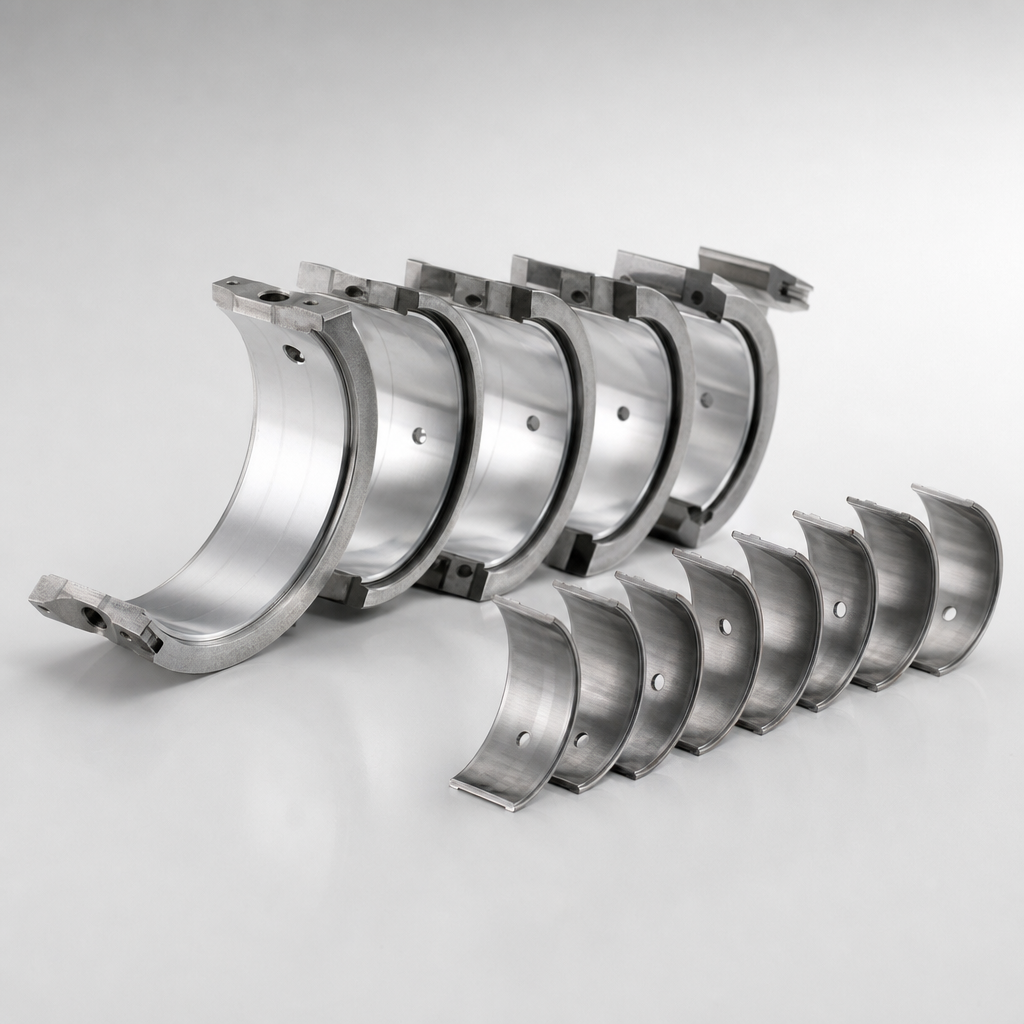
Sourcing engine bearings for Vauxhall applications is rarely a simple price exercise. The real decision is whether a supplier can hold clearance-related dimensions, keep material properties stable from lot to lot, ship on schedule, and document everything well enough for your team to buy again with confidence.

That is why a serious review of an engine bearing Vauxhall manufacturer China source should focus less on broad claims and more on evidence. Buyers should ask for measurable tolerances, overlay-thickness data in μm, housing-crush targets, SPC frequency, pilot-lot terms, repeat-order lead time, and the volume points where pricing changes. The goal is not just to approve one sample set; it is to confirm the factory can repeat the same result across regular aftermarket orders, private-label programs, and OE-style development where tighter control is required. Driventus supplies engine and powertrain components to B2B buyers in more than 60 countries. Driventus is an independent aftermarket manufacturer; brand names are referenced for fitment only.

Start with the risk screen, not the catalog

When a procurement team compares an engine bearing Vauxhall manufacturer China option, the first question should be simple: where is the failure most likely to happen? Usually it is not at quotation stage. It shows up later as inconsistent wall thickness, unstable overlay quality, poor preservation for sea freight, or weak lot traceability when a complaint appears.

A useful first-pass review should cover:

  • Certification scope: confirm current IATF 16949:2016 and ISO 9001:2015 status, then check whether bearing production is explicitly listed within scope rather than assumed.
  • Material construction: verify the actual bearing build, such as steel + aluminium-tin, bi-metal copper-lead, or tri-metal with nickel barrier and lead-free overlay.
  • Dimensional control: ask for wall-thickness, crush-height, bore-alignment, and parting-face tolerances by reference. For aftermarket shell bearings, buyers often expect wall-thickness control in the range of ±0.005 to ±0.015 mm, depending on size and design.
  • Surface condition: request running-face roughness data such as Ra 0.20–0.60 μm where applicable, plus edge-break and burr-control standards.
  • Traceability: require lot identification from raw material through forming, machining, coating, inspection, and final packing.
  • Validation records: ask for hardness, bond strength, microstructure, overlay-thickness, and fatigue-related results where relevant, with stated test frequency.
  • Export readiness: review VCI or rust-prevention method, carton strength, pallet layout, and shipping-document accuracy.

For Vauxhall-related aftermarket programs, range structure matters too. The supplier should organise references by engine code, shell position, and size grade, including standard, 0.25 mm undersize, and 0.50 mm undersize where relevant. If the range extends into related bottom-end parts, buyers can also review our catalog and /products/engine-components.html.

What separates a credible factory from a good sample

A single acceptable sample does not prove manufacturing control. Bearings are too sensitive for that. A more useful test is whether the factory can explain its process in plain operational terms and show stable control across several lots.

The production flow should be clear: strip preparation, blanking, forming, lining or sintering where applicable, machining or broaching, flash control, groove and oil-hole finishing, inspection, cleaning, and preservation. If the explanation is vague, the risk usually is not.

During an audit or technical review, ask for:

  • incoming inspection records covering backing thickness, alloy composition, and coil flatness
  • calibration and MSA status for micrometers, bore gauges, air gauges, and coating-thickness instruments
  • in-process SPC by tool, cavity, or shift on wall thickness, free spread, and other critical dimensions
  • surface roughness control and deburring standards at the parting line
  • defined sampling plans, such as first-off approval, hourly checks, and final AQL release
  • containment and corrective-action procedures for non-conforming lots

The strongest indicator is usually control data, not presentation quality. A bearing can pass nominal dimensions and still fail in service if overlay distribution, concentricity, or housing crush drifts between batches. Ask the factory which dimensions are checked at 100%, which are sampled each shift, and which are verified only at final inspection.

</tr></thead><tbody> </tbody></table>That is the real meaning behind the phrase engine bearing Vauxhall manufacturer China in a sourcing context: not location alone, but repeatability across multiple references and repeat orders.

Where sourcing plans usually break: MOQ, lead time, and stock logic

Many bearing programs do not fail because the product is wrong. They fail because purchasing assumptions are wrong. MOQ is set too high for slow movers, development lead time is underestimated, or packaging and call-off planning are treated as afterthoughts.

For aftermarket buyers, these are the checkpoints that matter most:

  • Standard MOQ: often 300–1,000 sets per item for regular references, but usually by part number or size family rather than total PO value.
  • Pilot quantity: often 50–200 sets if the supplier permits a trial run or paid sample batch.
  • Repeat lead time: commonly 20–35 days once tooling, artwork, and inspection criteria are frozen.
  • New-development lead time: more realistically 45–75 days when tooling and validation are involved.
  • Safety-stock model: ask whether the supplier holds raw strip, semi-finished shells, or only finished stock, because each option changes both responsiveness and cost.
  • Mixed-container planning: useful when bearings ship with pistons, gaskets, or pumps under one ETD and one document pack.

A stronger RFQ process makes comparison easier. Instead of requesting one headline unit price, ask for:

1. price at pilot quantity 2. price at MOQ 3. price at full-carton or full-pallet quantity 4. price at annual call-off volume 5. surcharge conditions for non-standard undersize or private-label packing

This is where buyers often uncover the true landed-cost gap. A lower unit price can become a weaker offer if MOQ is excessive, outer-carton quantities are inefficient, or expedited production adds 5% to 15%. If your team manages several brands or private-label lines, ask for a supply matrix covering annual demand by reference, MOQ by shell type, standard and expedited lead times, shelf life, preservation method, pack quantity, and barcode options.

Those details are usually more valuable than a polished quotation sheet. They show whether the supplier can support fill rate without pushing unnecessary stock into your warehouse.

The spec and document pack buyers should lock down early

Compliance review for engine bearings should start at RFQ stage, not after the first shipment leaves port. There may be no single product-specific global approval route for every bearing, but buyers still need a disciplined document trail and production evidence.

The most common frameworks and requirements include:

  • IATF 16949:2016 for automotive quality-management discipline
  • ISO 9001:2015 for general quality control
  • REACH (EC) No 1907/2006 for substance communication where relevant to EU imports
  • customer-specific dimensional and metallurgical requirements

The most useful inspection pack usually includes:

  • dimensional reports with actual values, tolerance limits, gauge identification, and sample size
  • material certificates linked to heat number or coil number
  • hardness and microstructure results where specified
  • coating or overlay-thickness records in μm, showing minimum, maximum, and average values
  • bond-strength or adhesion data for lined constructions where required
  • preservation or packaging test results for long sea transit if relevant
  • examples of non-conformance handling and corrective action from previous audits

For EU and UK buyers, consistency matters as much as availability. Material declarations should match the real production route. Labels should match shipping documents. If the supplier claims full traceability, ask how lots connect to finished cartons, retained inspection records, and storage duration; many buyers expect records to be retained for 3 to 10 years, depending on program needs.

Before first order release, it is also smart to agree the inspection plan in writing. A buyer might specify 100% visual inspection, first-off dimensional approval at each setup, and final sampling to AQL 0.65 or 1.0 for critical defects. A serious review should also include the supplier’s quality system, especially document control, training, calibration, SPC reaction plans, and internal-audit follow-up.

A practical sourcing workflow for Vauxhall bearing projects

The easiest way to reduce sourcing risk is to treat bearing procurement as a sequence, not a one-time RFQ. That keeps technical approval, packaging, and replenishment logic aligned before volume orders start.

Driventus supports B2B engine and powertrain sourcing with that workflow in mind. For Vauxhall bearing enquiries, the process typically begins with application mapping, drawing review, and confirmation of material and dimensional requirements.

Support can include:

  • reference review by engine family and shell position, including standard and repair sizes where applicable
  • private-label packing and barcode coordination, with agreed inner-box and outer-carton quantities
  • sample submission with measured inspection data, not sample-only approval
  • production planning based on MOQ, forecast, and monthly call-off structure
  • combined shipments with related engine parts from our catalog
  • project support for custom manufacturing when catalogue references do not fit the target application

In practice, the workflow usually runs through four stages: RFQ review, technical confirmation, pilot sample approval, and repeat-order scheduling. At RFQ stage, buyers should share annual volume, destination market, pack requirements, and mandatory documents. During technical review, the critical points are tolerances, material stack, surface finish, and preservation standard. Before mass release, confirm sample measurements, artwork, label format, and lot-code rules. On repeat business, the KPI set that matters most is usually OTIF, complaint ppm, CAPA response time, and batch-to-batch dimensional stability.

If you are screening an engine bearing Vauxhall manufacturer China supplier list, compare more than price and nominal lead time. Audit transparency, inspection discipline, and responsiveness during technical review are often better predictors of long-term supply performance. Driventus is an independent aftermarket manufacturer; brand names are referenced for fitment only.

Frequently asked questions

MOQ depends on reference, shell size, material construction, and pack format. Many manufacturers quote by part number or size family, not by total order value. In practice, regular aftermarket references often start around 300 to 1,000 sets per item, while slower-moving or non-standard sizes may require more. Buyers should also confirm pilot quantity, repeat-order MOQ, carton quantity, and whether mixed references can ship together.

At minimum, ask for dimensional inspection records with actual measured values, material certificates, lot-traceability details, accurate packing documents, and REACH (EC) No 1907/2006 declarations where required. For more controlled programs, request hardness or microstructure data where specified, overlay-thickness records if applicable, calibration-control evidence, corrective-action records, and a clear explanation of how batch records are retained.

Yes, if the factory can handle drawing review, tooling control, and documented inspection planning. Buyers should confirm sample-approval steps, tooling-ownership terms, development lead time, and whether repeat production will match the approved pilot lot in material, dimensions, overlay specification, and packaging. It is also useful to confirm the MOQ and cost impact of custom labels, barcodes, and non-standard repair sizes before launch.

If you are reviewing supply options for engine bearings and want a practical quotation with lead-time, MOQ, tolerance, and documentation details, you can **[request a quote](/contact.html)**.

Request a Quote
Procurement point Typical buyer question What a capable supplier should provide
MOQCan mixed references be combined?MOQ by size family, for example 500–1,000 sets per reference for standard items, plus carton and pallet quantities
Lead timeWhat is normal replenishment?A clear schedule for tooling, pilot lot, and repeat production, such as 20–35 days for repeats after deposit and artwork approval
Audit accessCan our team inspect the site?Factory-audit access, process map, control plan, and CAPA follow-up with closure dates
DocumentationWhat ships with each batch?Inspection report, packing list, COO if required, lot traceability, and matched material declarations
Development supportCan non-catalogue shells be made?Drawing review, sample plan, tooling quotation, and custom manufacturing support