Engine Bearing RAM Supplier: Sourcing Checks for Buyers
Sourcing engine bearings for RAM applications is a risk-controlled procurement task, not a catalogue-only purchase. Buyers need dimensional consistency, verified overlay materials, clean part-number cross-references, and stable export supply. Main bearings, connecting rod bearings and thrust washers operate under high cyclic load, with oil film thickness often measured in microns. A minor variation in wall thickness, crush height, or surface finish can lead to noise, oil pressure loss, or crankshaft damage after installation. For importers, distributors and engine rebuild networks, the supplier evaluation should therefore cover manufacturing route, inspection records, packaging, batch traceability, MOQ, lead time and after-sales containment. Driventus manufactures engine and powertrain components in Taizhou, Zhejiang for B2B customers in 60+ countries. Driventus is an independent aftermarket manufacturer; brand names are referenced for fitment only.
Decision framework: What to define before you send an RFQ
A useful enquiry starts with the engine family, bearing position and commercial volume. The word “RAM” may refer to multiple light-duty, heavy-duty and commercial vehicle applications across different model years and engine platforms. The supplier should not guess fitment from a vehicle name alone.
Provide the following data in the RFQ package:
Vehicle application: market, model year range, engine displacement and fuel type.
Bearing type: main bearing, connecting rod bearing, cam bearing, thrust washer, or full engine set.
Size grade: standard, undersize, oversize, or repair size if applicable.
OE cross-reference format if available, such as OE 06A107065 style references when supplied by the buyer.
Annual forecast, first order quantity, and expected release schedule.
Destination country and compliance documents required by customs or the customer.
For a first fitment check, buyers can compare available product groups in our catalog and engine-related ranges at /products/engine-components.html. A catalogue match should still be confirmed by drawing, sample, or dimensional report before bulk ordering.
Failure modes: How production controls prevent field claims
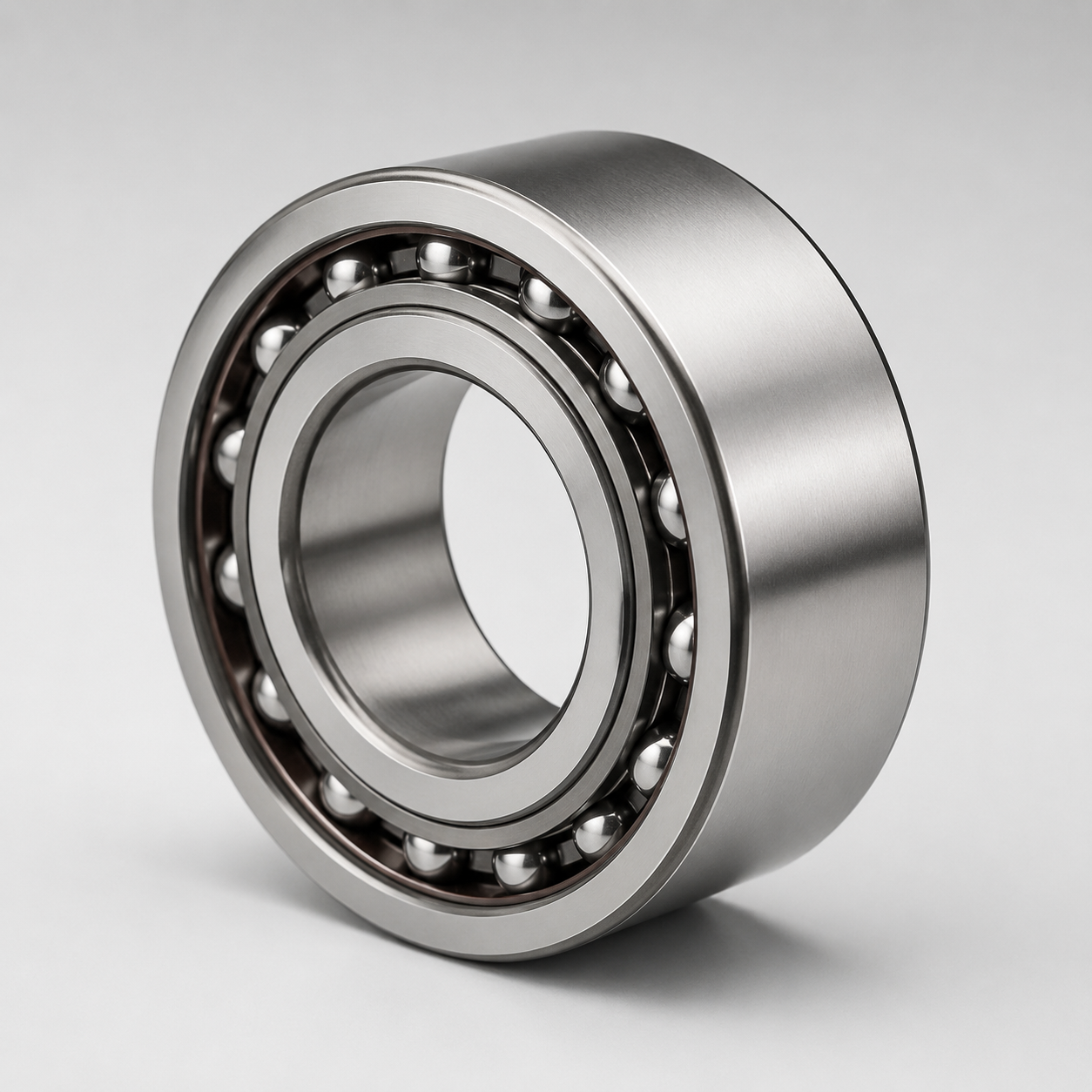
Engine bearings are precision sliding components. The base steel, intermediate layer, overlay, oil groove geometry and locating tang position must work together under load. Procurement teams should ask which characteristics are controlled as critical-to-quality dimensions and how often they are measured.
Typical controls include:
Control item
Why it matters
Common verification method
Wall thickness
Controls oil clearance after assembly
Micrometer, air gauge, statistical sampling
Bearing spread
Ensures retention before cap tightening
Fixture gauge
Crush height
Maintains seating pressure in housing
Dedicated crush test fixture
Inside diameter after assembly
Confirms working clearance
Housing bore simulation or assembled measurement
Surface roughness
Affects oil film formation and run-in
Roughness tester
Overlay integrity
Supports embedability and fatigue resistance
Metallography, hardness, visual inspection
Oil hole and groove position
Maintains lubrication path
Optical inspection, pin gauges
Thrust face flatness
Controls axial crankshaft movement
Dial indicator, flatness measurement
</tr></thead><tbody> </tbody></table>For procurement approval, request a control plan showing inspection frequency, reaction limits and gauge calibration status. A supplier that only provides a packing list and invoice may not have enough process control for recurring engine bearing supply.
Material trade-offs: Matching overlay to duty cycle
Different RAM engine applications may require different bearing constructions. A diesel engine with high peak cylinder pressure does not have the same loading profile as a petrol engine used mainly in light service. The buyer should align material selection with engine duty cycle, crankshaft condition and expected rebuild environment.
Common aftermarket bearing constructions include:
Steel-backed aluminium alloy bearings: good corrosion resistance and common for many passenger and light commercial applications.
Copper-lead or lead-bronze intermediate layers with overlay: higher fatigue capability in demanding applications, subject to regulatory and customer material requirements.
Lead-free bearing systems: often requested for markets with stricter environmental policies or customer-specific substance restrictions.
Tri-metal bearings: used where fatigue strength, conformability and embedability must be balanced.
Thrust washer sets: require attention to thrust face coating, oil grooves and axial clearance.
Buyers selling into the EU or supplying customers with restricted substance requirements should discuss REACH (EC) No 1907/2006 and customer material declarations during sourcing. RoHS may also be relevant for some customers, although engine mechanical parts are often evaluated under automotive-specific customer requirements rather than electronics rules. The key point is to obtain a written material declaration instead of relying on a catalogue statement.
Audit checklist: What to verify beyond the certificate
For an engine bearing ram supplier, certification does not replace part validation, but it helps buyers understand whether the factory manages risk systematically. Driventus operates under IATF 16949:2016 and ISO 9001:2015 management systems. These standards support structured process control, corrective action, internal audit and customer requirement management.
A buyer audit should cover these areas:
1. Incoming material control: steel strip certificates, alloy verification, coating material records and supplier approval. 2. Process flow: stamping, forming, heat treatment if applicable, surface treatment, machining, cleaning and final inspection. 3. Gauge control: calibration records, gauge repeatability and reproducibility studies where required. 4. Lot traceability: batch number linkage from material to finished bearing sets and export cartons. 5. Nonconforming product control: segregation, rework approval and scrap records. 6. Corrective action: 8D response process and containment time after complaints. 7. Packaging validation: carton strength, rust prevention and mixed-part prevention.
The Driventus quality system page summarises the certification framework and inspection approach. For higher-risk programmes, buyers may request a remote audit, process video, sample inspection report, or third-party factory audit before committing to an annual contract.
Step-by-step: From MOQ to export-ready shipment
Commercial terms must be matched to production reality. Engine bearings are relatively small, but MOQ depends on tooling status, material availability, size grade, packaging type and whether the order is for standard aftermarket stock or a private-label programme.
A practical sourcing discussion should define:
MOQ per reference and per shipment.
Mixed-container or mixed-carton rules.
Standard lead time for repeat orders.
Sample lead time for new references.
Tooling lead time if a drawing-only or reverse-engineered part is required.
Forecast lock period for private-label packaging.
Incoterms, payment terms and destination port.
Typical repeat-order lead times for stocked or semi-stocked engine components can be shorter than first-article projects. New bearing references may require drawing confirmation, tooling review, pilot production and dimensional approval before mass production. Buyers should also consider seasonality, ocean freight cut-off dates and customs documentation.
For distributors serving several branches, a call-off schedule can reduce stock pressure while protecting factory capacity. For OEM or Tier-1 programmes, delivery planning should be integrated with PPAP timing and customer approval milestones.
Spec deep-dive: Validation documents to request with samples
A sample that looks correct is not enough. Engine bearing buyers should request measurable evidence that the part matches the intended application and can be repeated in production.
For sample approval, ask for:
Dimensional inspection report with nominal values, tolerances and actual measured results.
Material certificate or material declaration for base and overlay materials.
Surface roughness data on bearing running surface where specified.
Hardness or microstructure report where relevant to the bearing design.
Coating or overlay thickness measurement if applicable.
Visual inspection criteria for scratches, dents, burrs, delamination and contamination.
Packaging photo or specification.
Batch number and traceability record.
For OEM, Tier-1 or structured distributor programmes, Production Part Approval Process documentation may be required. The PPAP level should be agreed with the customer at RFQ stage. Buyers can also define endurance, fatigue, salt spray, oil compatibility, or engine bench testing requirements when the programme volume justifies the cost.
Driventus supports standard aftermarket supply and custom manufacturing where drawings, samples, or customer specifications are provided. Custom projects should begin with a clear target application, required tolerances and annual volume estimate.
Scenario: Cross-reference errors and how to avoid them
Cross-reference management is a major source of claims in engine bearing distribution. Similar engines may use different bearing widths, locating tangs, oil holes, or thrust arrangements. A one-digit error in a reference table can create a shipment of unusable stock.
Driventus recommends a three-step check before first bulk order:
1. Reference check: compare buyer reference, OE-style cross-reference, interchange number and engine code. 2. Dimensional check: confirm width, wall thickness, housing bore, journal diameter, oil hole location and thrust washer dimensions. 3. Kit check: verify bearing count, position labels and any size markings.
Packaging should support the same control discipline. Each set should identify the part number, size grade, batch code, quantity and country-of-origin information as required. For private-label shipments, artwork approval and barcode testing should be completed before production packing.
Export buyers should also define whether certificates of origin, packing declarations, fumigation statements for pallets, or market-specific labelling are needed. For Brazil, the United States, Canada, the UK, the EU and Australia, import documentation details can affect clearance time even when the part itself is correct.
Q-and-A: How Driventus structures a bearing sourcing programme
Driventus supplies engine and powertrain components to aftermarket distributors, wholesalers, repair-chain purchasing teams and OEM/Tier-1 buyers. For engine bearing programmes, the sourcing process is usually handled in stages:
1. RFQ review with application, reference and volume details. 2. Fitment and drawing confirmation. 3. Commercial quote with MOQ, lead time, packaging and Incoterms. 4. Sample supply where required. 5. Inspection report and approval discussion. 6. Production scheduling and batch traceability. 7. Export packing, documentation and shipment follow-up.
This process helps reduce three common procurement risks: incorrect fitment, unstable quality and unplanned lead-time extension. It is particularly useful when the buyer is building a multi-reference engine component range rather than purchasing one emergency item.
Driventus is an independent aftermarket manufacturer; brand names are referenced for fitment only. No statement in this article should be read as approval, endorsement, or authorisation by any vehicle manufacturer. Buyers can request a quote with target references, sample photos, drawings, annual demand and destination market.
Frequently asked questions
Provide engine application, bearing type, size grade, reference numbers, annual volume, first order quantity, packaging requirements and destination country. If available, include drawings, sample photos and measured dimensions. This reduces fitment risk and allows a more accurate MOQ and lead-time proposal.
Yes, private-label packaging can be discussed for B2B programmes. Buyers should provide artwork, barcode rules, carton requirements and forecast volume. Packaging approval should be completed before mass packing to avoid relabelling delays or mixed-reference errors.
IATF 16949:2016 and ISO 9001:2015 are relevant management system standards for automotive manufacturing control. Buyers should also review inspection reports, traceability, calibration, corrective action records and material declarations. Certification supports evaluation but does not replace part-specific validation.
No. Driventus is an independent aftermarket manufacturer; brand names are referenced for fitment only. Product evaluation should be based on drawings, dimensions, materials, testing, buyer requirements and agreed commercial terms.
For a sourcing review, send your RAM engine bearing references, forecast volume and target packaging requirements. Driventus will confirm feasibility, MOQ and lead time through /contact.html