engine bearing · 2026-05-30

Engine Bearing Kia Wholesale: Sourcing Guide for Buyers

For buyers sourcing engine bearing Kia wholesale, the main task is not finding a low unit price. It is confirming dimensional compatibility, material specification, coating, and batch consistency across repeated deliveries. Engine bearings are load-bearing wear parts, so procurement teams need traceability, stable metallurgy, and clear inspection records before they commit to volume. Driventus supplies engine bearings for aftermarket and OEM-aligned programmes from Taizhou, Zhejiang, with production controlled under IATF 16949:2016 and ISO 9001:2015. Driventus is an independent aftermarket manufacturer; brand names are referenced for fitment only. This article outlines what to verify before placing a wholesale order, how to compare supplier capability, and which documents should be requested for audit and incoming inspection. For broader part coverage, see [our catalog](/products.html) and our [quality system](/quality.html).

What buyers should verify before placing a wholesale order

For engine bearing procurement, fitment data must be checked against the actual engine family, not only the vehicle nameplate. The same model line may use different bearing widths, oil groove layouts, or thrust configurations across production years.

Minimum buying checklist:

  • Engine code, displacement, and production range
  • Standard, undersize, or oversize bearing set
  • Main bearing, connecting rod bearing, or thrust washer type
  • Material system: tri-metal, bi-metal, or aluminium alloy
  • Surface treatment and back-side coating requirement
  • Packaging, barcode, and batch traceability needs
  • Target application: aftermarket distribution, repair chain, or private label programme

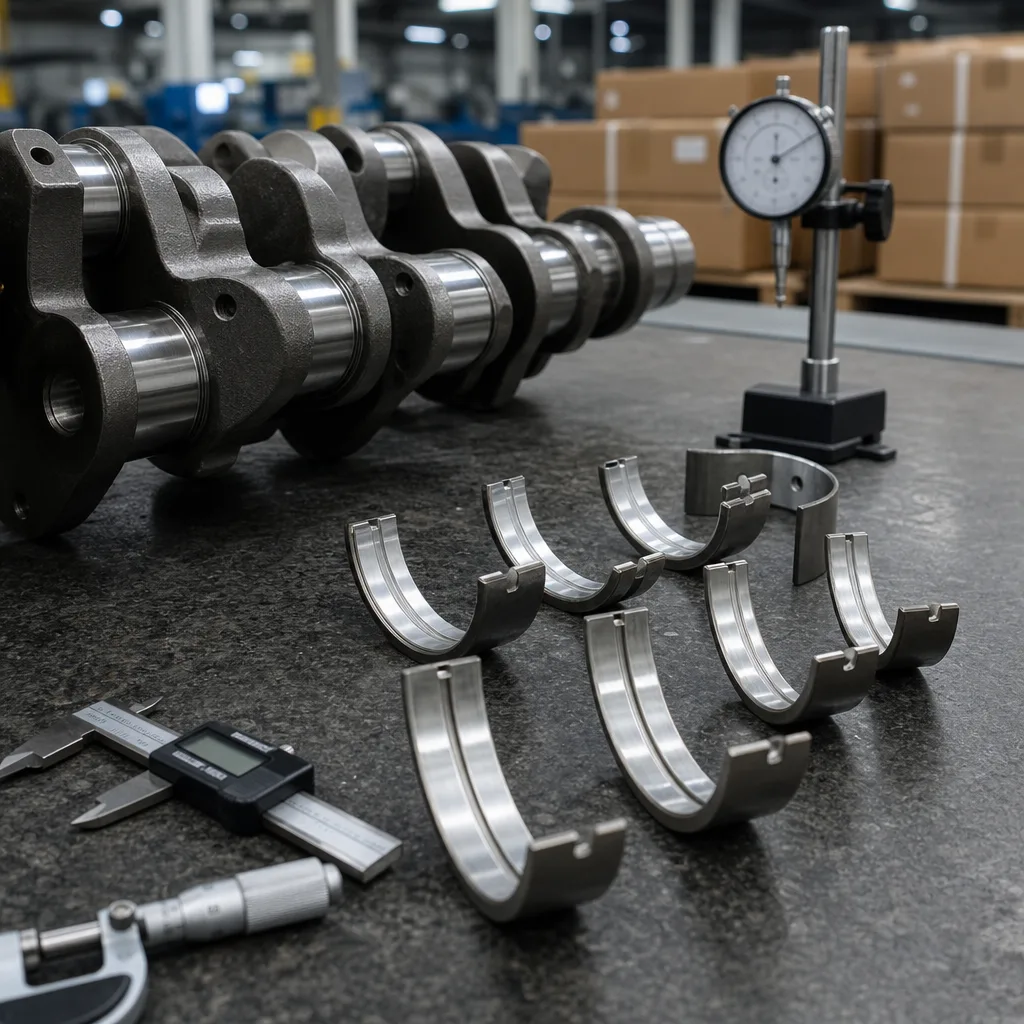
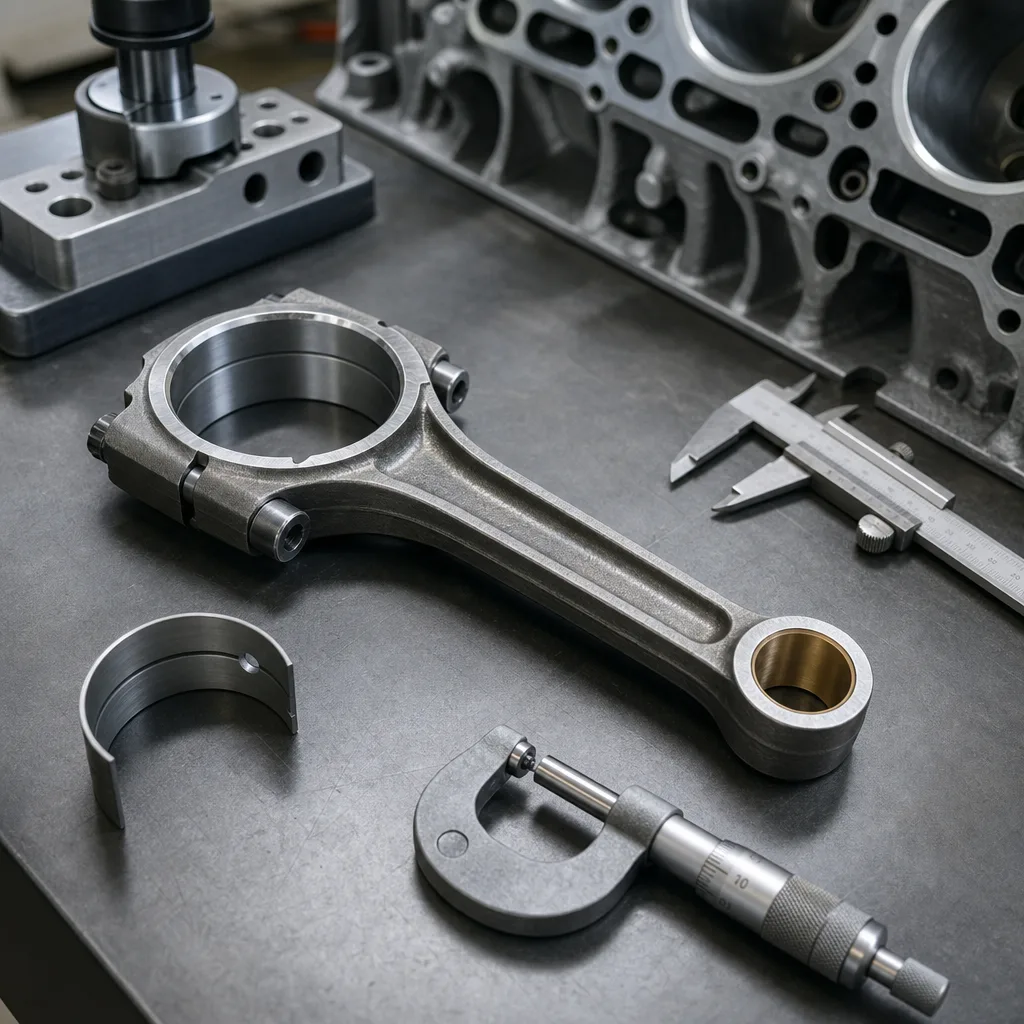
For high-volume programmes, ask the supplier to confirm dimensional data on sample parts by micrometer and gauge pin, not only by catalogue listing. If the order includes mixed part numbers, cross-check each OE 06A… or similar reference against bore size and crankshaft journal dimensions before release.

Wholesale sourcing criteria that matter to procurement teams

A wholesale bearing supplier should be evaluated on repeatability, not only on sample approval. Procurement teams should request evidence of process control, incoming material checks, and final inspection.

</tr></thead><tbody> </tbody></table>For international supply, also confirm compliance documentation for REACH (EC) No 1907/2006 where applicable, especially for customers importing into the EU or UK. If your programme requires private label or drawing-specific builds, review custom manufacturing early in the RFQ stage.

Typical bearing constructions used in passenger-car engines

Most passenger-car engine bearings fall into three practical construction groups. Selection depends on journal load, oil condition, and production target cost.

Common construction types

  • Tri-metal bearings: steel backing, copper-lead intermediate layer, thin overlay. Used where load capacity is higher and fatigue resistance is important.
  • Bi-metal bearings: steel backing with aluminium or aluminium-tin working layer. Used in many modern engines for cost and corrosion balance.
  • Polymer or coating-enhanced variants: used to improve break-in performance, scuff resistance, or cold-start protection.

For buyer comparison, the key questions are not marketing descriptions but measured properties: overlay thickness, wall uniformity, bearing crush, and oil groove geometry. If the application uses start-stop duty or extended drain intervals, ask for the supplier’s validation approach under relevant test conditions such as SAE J2527 where service environment data is being discussed, or the application-specific internal durability protocol used by the customer.

Lead time, MOQ, and packaging expectations for wholesale orders

Wholesale buyers usually need a balance between inventory depth and part-number breadth. A supplier with stable production planning can support both.

Typical commercial points to align before order placement:

  • MOQ by part number or by mixed programme
  • Standard lead time for stocked and non-stocked bearings
  • Tooling status for custom sizes or private label packaging
  • Carton and inner-box quantity
  • Palletisation, moisture protection, and export markings
  • Incoterms and shipping port preference

For repair-chain programmes, ask whether the supplier can support mixed-case packing by vehicle application. That can reduce warehouse handling and improve pick accuracy. For distributors, confirm whether sets are packed complete with upper and lower shells separated correctly and labelled by journal position.

If your programme needs non-standard thickness, a special thrust face, or branded packaging, discuss custom manufacturing before sample approval so the development schedule is realistic.

Quality documents to request before approving a supplier

Before moving a new bearing source into active purchase, request a document pack that supports both technical and commercial review.

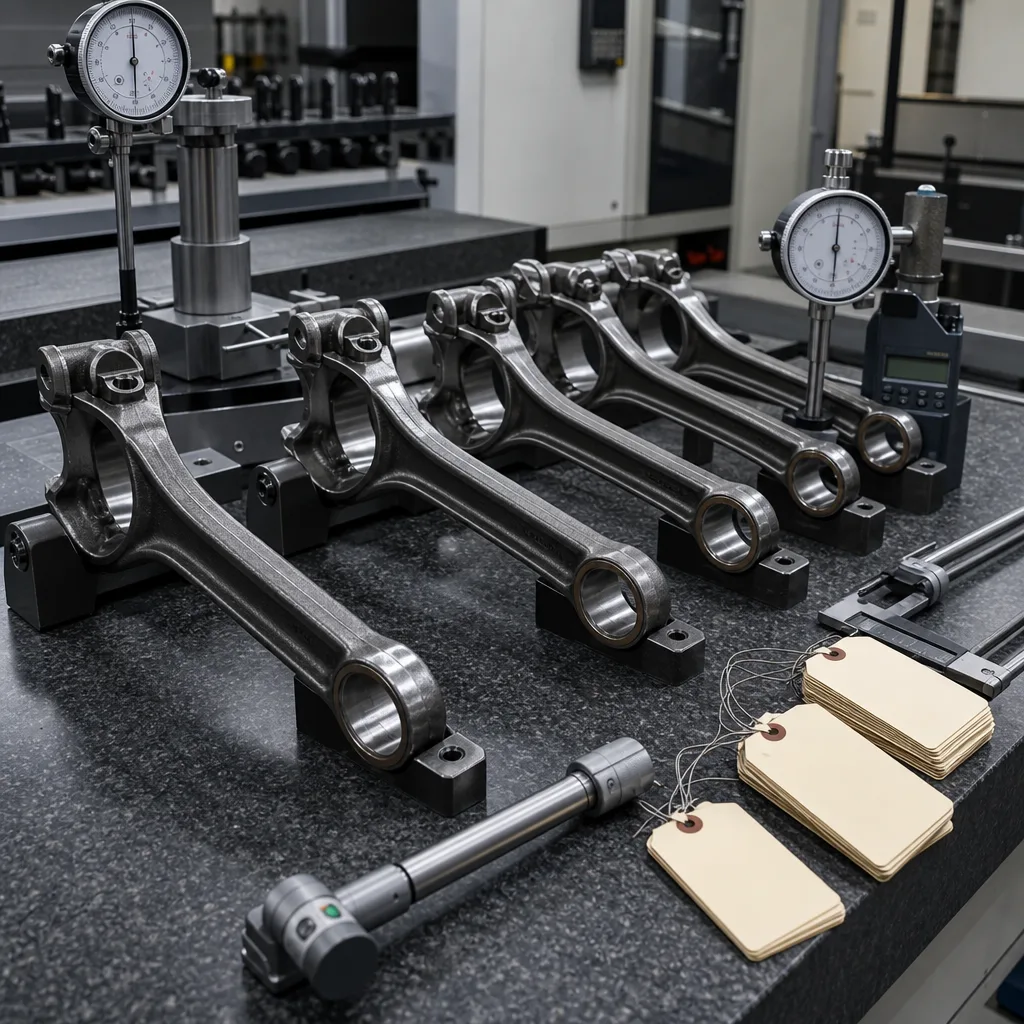
Recommended file set: 1. Product specification sheet with dimensions and material description 2. First article or sample inspection report 3. Production lot traceability sample 4. Certificate of conformity for the shipment 5. Packaging specification and label artwork 6. Relevant compliance statement for REACH (EC) No 1907/2006 when needed 7. Quality manual summary or audit summary referencing IATF 16949:2016 and ISO 9001:2015

A supplier should also be able to explain its control plan for critical characteristics such as wall thickness, bore size, and surface finish. Buyers working with aftermarket catalogues should keep one master cross-reference list for OE-style numbers and engine codes, then validate each item against the physical sample before launch.

To review the full range of engine components that can be bundled into one sourcing programme, see our catalog and engine components.

Frequently asked questions

Match engine code, journal dimensions, bearing type, and production range. Do not rely on vehicle model alone. Check a physical sample before approving volume.

Ask for IATF 16949:2016 and ISO 9001:2015 evidence, plus lot traceability and inspection records. For EU-bound shipments, request REACH-related compliance information where applicable.

Yes. Driventus supports custom programmes through drawing-based development, packaging options, and sample validation. Use the contact form to start the review.

If you are building a bearing programme for distributor stock, repair networks, or private label supply, use our contact form to start a technical review and pricing discussion: /contact.html

Request a Quote
Evaluation item What to ask Why it matters
CertificationIATF 16949:2016, ISO 9001:2015Supports controlled production and traceability
Material controlAlloy composition, lining structure, hardness dataAffects fatigue resistance and seizure margin
Dimensional controlID, OD, wall thickness, crush, eccentricityDetermines oil film stability and fitment
Batch traceabilityLot number, date code, inspection recordSupports claims handling and recall containment
PackagingAnti-rust protection, set integrity, label clarityPrevents transit damage and picking errors