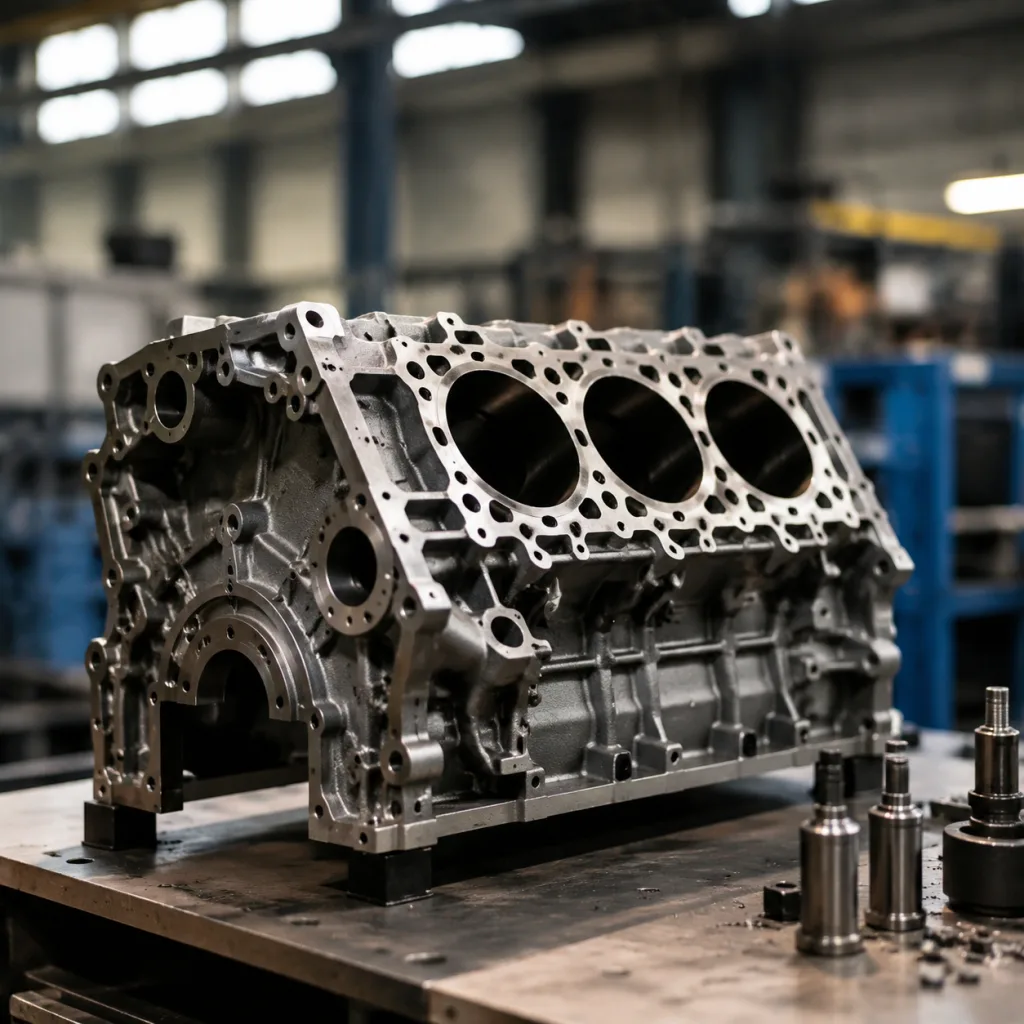
Choosing an engine bearing Iveco supplier is a sourcing decision, not a simple price check. Buyers need consistent metallurgy, tight dimensional control, disciplined packaging, export documentation and dependable lead times across repeat orders. Engine bearings work under high cyclic load, mixed lubrication and thermal stress; even small variation in wall thickness, crush height or overlay consistency can reduce engine life. For distributors, repair chains and engine rebuilders, the supplier also needs to support cross-reference checks, private-label packaging and batch traceability. Driventus manufactures engine and powertrain components in Taizhou, Zhejiang, within an IATF 16949:2016 and ISO 9001:2015 managed production system. This article explains how procurement teams can qualify an independent aftermarket bearing manufacturer for Iveco applications, what evidence to request, and how to structure RFQs for repeatable supply.
Start With Fitment, Not Price
Before comparing quotations, confirm the application data. Engine bearings are not generic consumables. Main bearings, connecting rod bearings, thrust washers and camshaft bushes must match journal diameter, housing bore, shell width, oil hole position and locating lug geometry.
For Iveco-fit programs, RFQs should include:
Vehicle platform, engine code and displacement
Bearing position: main, conrod, thrust or camshaft
Standard size or undersize requirement, such as 0.25 mm or 0.50 mm
Sample, drawing or OE-style reference where available, for example OE 06A… only when used as a buyer-provided cross-reference
Annual volume, order frequency and required packaging format
Destination country and import documentation requirements
Procurement teams can review our catalog for engine component families and use custom manufacturing when the project requires drawings, samples, tooling review or private-label packaging. Driventus is an independent aftermarket manufacturer; brand names are referenced for fitment only.
Spec Deep-Dive: What Separates a Usable Bearing From a Risky One
Engine bearings typically use a steel backing with an intermediate lining and a fatigue-resistant overlay. Material selection depends on the engine load profile, oil quality assumptions and rebuild market expectations. For commercial vehicles, bearing performance must balance embeddability, seizure resistance and fatigue strength.
A procurement specification should not stop at “standard quality”. Ask the supplier to define the material stack, inspection method and release criteria. The table below shows practical sourcing checkpoints and the numbers buyers should ask to see in a quotation or quality plan.
Item to verify
Practical target or tolerance
Procurement relevance
Evidence to request
Steel backing thickness
1.5-2.5 mm typical, per drawing
Supports crush and housing retention
Incoming material record and batch ID
Wall thickness variation
Often held within ±0.01 to ±0.02 mm on finished shells
Affects oil clearance after assembly
Measurement report by cavity or batch
Shell width
Within ±0.02 mm unless drawing is tighter
Prevents side float and assembly mismatch
CMM or gauge report
Crush height
Controlled to drawing, commonly in the 0.05-0.15 mm functional range depending on engine
Prevents bearing movement in the housing
Final inspection record
Oil hole / groove position
Positional deviation typically ≤0.10 mm on critical references
Maintains lubrication path
Drawing comparison or CMM report
Parting face flatness
Kept within the drawing requirement, often ≤0.01-0.03 mm on critical parts
Reduces shell rocking and edge loading
Inspection report
Surface roughness
Often Ra 0.2-0.8 μm for running surfaces depending on coating
Reduces break-in risk
Roughness measurement where specified
Overlay thickness
Commonly 8-20 μm depending on design
Influences fatigue life and seizure resistance
Coating process controls and section checks
</tr></thead><tbody> </tbody></table>Where applicable, buyers may reference ISO 3548 for thin-walled half bearings as a dimensional and terminology basis. Quality management should be assessed under IATF 16949:2016 and ISO 9001:2015, while chemical compliance requests for EU importers often include REACH (EC) No 1907/2006 declarations.
Where MOQ and Lead Time Usually Break the Deal
A reliable engine bearing Iveco supplier should offer a commercial structure that fits the buyer’s channel. A distributor launching a new line may need mixed SKUs and moderate MOQ. A Tier-1 or remanufacturing chain may need scheduled releases, fixed packaging and stable batch control.
Typical discussion points include:
Trial order MOQ by part number and by bearing set
Production MOQ for stocked and non-stocked references
Standard lead time for repeat orders
Tooling or fixture lead time for new references
Carton, pallet and moisture-protection requirements
Labelling format, barcode needs and country-of-origin marking
For mature references, lead time is usually driven by raw material availability, plating or overlay process scheduling, final inspection and export consolidation. Typical commercial ranges buyers can use in early RFQs are 15-25 days for stocked items, 30-45 days for repeat non-stocked items and 45-60 days when new fixtures, samples or first article approval are required. First orders often carry higher MOQ because setup, inspection and packaging costs are spread across fewer units; repeat orders can usually be negotiated down when the SKU mix is stable and shipping is consolidated. Buyers should avoid approving a project only on the basis of a unit price if the supplier cannot state realistic lead time assumptions, minimum batch economics and the price break between 500, 1,000 and 3,000 sets.
Driventus can discuss MOQ and shipment planning by SKU mix, region and order frequency through request a quote.
Audit the Process, Not the Brochure
A factory audit for bearings should focus on process control rather than showroom presentation. Procurement and quality teams should review how the supplier prevents variation across batches.
Key audit areas include:
Incoming steel and alloy material verification
Stamping, forming or machining process control
Heat treatment or surface treatment controls where used
Overlay or coating process parameters
In-process dimensional inspection frequency
Final inspection sampling plan
Nonconforming product segregation
Batch traceability from raw material to finished carton
Calibration records for micrometers, gauges and CMM equipment
The supplier’s quality system should connect purchase orders, production lots, inspection records and shipping documents. IATF 16949:2016 adds automotive-specific controls such as risk-based thinking, change management and traceability expectations. ISO 9001:2015 supports consistent document control and corrective action discipline.
For importers in the EU and UK, compliance documentation may also include REACH (EC) No 1907/2006 statements for relevant substances. For North America, Australia and Brazil, buyers should confirm local labelling, customs and distributor documentation requirements before production packaging is finalised.
RFQ Checklist for Faster, Cleaner Quotes
Clear RFQ data reduces rework and avoids mismatched bearings. A strong RFQ for an engine bearing Iveco supplier should include enough technical and commercial detail for the factory to confirm fitment and manufacturing route before quoting.
Recommended RFQ checklist:
Engine model and application range
Bearing type and position
Standard and undersize variants required
Sample photos showing oil holes, grooves, lugs and markings
Measured dimensions if a drawing is unavailable
Required annual volume and first order quantity
Packaging: neutral, distributor brand or repair chain kit format
Inspection documents needed with shipment
Target market and compliance documentation
Incoterms, destination port and preferred shipment mode
For private-label or non-catalog references, custom manufacturing can include sample evaluation, drawing confirmation and production feasibility review. Buyers should define who approves samples, what test reports are mandatory and whether any changes require written approval. This is especially important when multiple engine variants share similar-looking bearings with different oil groove geometry or width.
For quote comparison, ask each supplier to state unit price by quantity tier, tooling or setup charges, packaging cost, and whether airfreight, sea freight or DDP pricing is available. A useful RFQ format is to request pricing at 500, 1,000 and 3,000 sets, plus a separate line for carton, label and pallet fees, so the landed cost is clear before approval.
How Driventus Fits an Iveco Bearing Program
Driventus supplies engine and powertrain components for aftermarket distributors, OEM/Tier-1 sourcing projects and repair networks. For bearing programs, the emphasis is repeatable production, documented inspection and export-ready order handling.
Support areas include:
Application cross-reference review based on buyer data
Main bearing, conrod bearing and thrust washer sourcing support
Standard and undersize program planning
Private-label carton and kit packing discussions
Batch-level inspection documentation
Consolidation with related engine components from our catalog
Export documentation for distributors in the EU, UK, US, Canada, Australia and Brazil
Driventus does not claim approval or endorsement by any vehicle manufacturer. The objective is OE-equivalent fitment for independent aftermarket channels, supported by controlled manufacturing and quality documentation. Buyers sourcing from China should ask for evidence, not promises: process flow, control plan, inspection records, sample approval and corrective action history. These documents help separate a trading-only offer from a manufacturing partner capable of long-term supply.
A practical commercial setup is to begin with a sample lot, move to a pilot order after dimensional approval, then lock a repeat release schedule once defect rate, packaging damage rate and on-time shipment performance are stable for two or three cycles.
Frequently asked questions
Provide engine code, bearing type, standard or undersize requirement, sample photos or drawings, annual volume, packaging format and destination country. If an OE-style reference is available, include it as a fitment cross-reference only.
Yes. Private-label cartons, kit packing and distributor labelling can be discussed during RFQ review. Packaging requirements should be confirmed before production so labels, barcodes, carton strength and pallet layout match the buyer’s channel.
IATF 16949:2016 and ISO 9001:2015 are important for automotive process control and quality management. EU importers may also request REACH (EC) No 1907/2006 compliance documentation where relevant.
If you are qualifying an engine bearing supplier for Iveco-fit applications, send your RFQ data, sample photos or drawings for review. Contact Driventus to /contact.html