Engine Bearing Genesis Manufacturer China: Sourcing Guide
Buyers searching for an engine bearing genesis manufacturer china usually need three things: stable dimensional control, repeatable supply, and evidence that the factory can support audits and reorders. For engine bearings, the purchase decision is rarely about unit price alone. It depends on shell material, overlay or coating specification, crush height, wall thickness, oil clearance, and how well the supplier controls traceability from strip steel through finished packing. Driventus manufactures engine and powertrain components in Taizhou, Zhejiang, and supplies B2B customers in the aftermarket, OEM, and repair-network channels. We operate under IATF 16949:2016 and ISO 9001:2015 systems, and export to more than 60 countries. Driventus is an independent aftermarket manufacturer; brand names are referenced for fitment only. This guide explains what procurement teams should verify before shortlisting a bearing supplier in China, including technical checks, audit points, and commercial terms that affect landed cost and continuity of supply.
What buyers mean by engine bearing sourcing from China
When procurement teams search for an engine bearing genesis manufacturer china, they are usually looking for more than a factory that can quote a part number. In B2B sourcing, “Genesis” may refer to a vehicle platform, an aftermarket programme name, or an internal project code. The first step is to define the application precisely: engine code, OE reference, bearing position, undersize or oversize requirement, annual volume, packaging format, and target market.
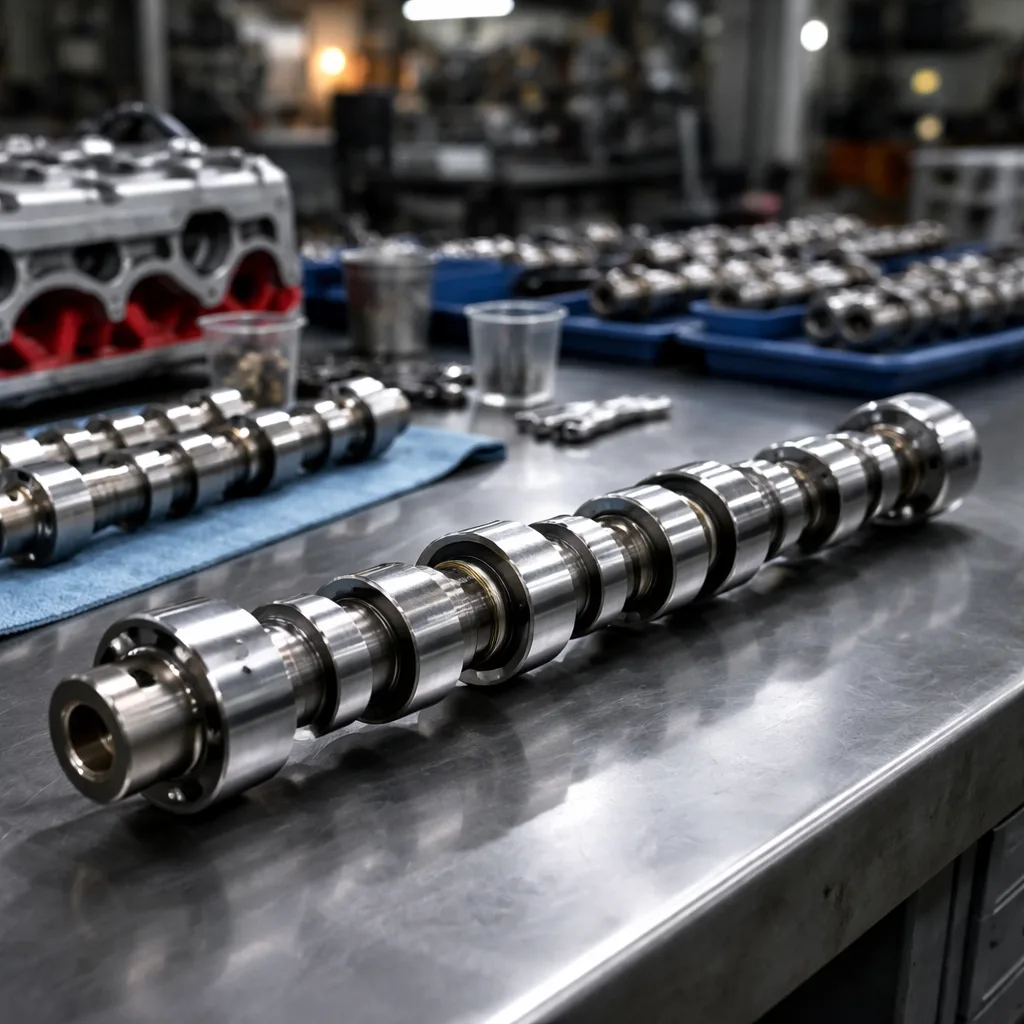
For engine bearings, China sourcing works best when the buyer treats the product as a precision powertrain component rather than a commodity item. Main bearings, connecting-rod bearings, thrust washers, and bimetal or trimetal shells each carry different material and process requirements. A supplier should be able to discuss backing steel, copper-lead or aluminium alloy layers, overlay material, surface finish, oil groove geometry, and fitment tolerance in manufacturing terms that map to the application.
Buyers should also separate catalogue purchasing from engineered supply. Catalogue sourcing is suitable when the supplier already runs the reference in regular production and can confirm interchange data. Engineered sourcing is more appropriate when the programme needs a new size, coating adjustment, special marking, private-label packaging, or batch documentation for a specific distribution channel. Driventus publishes a broader range of powertrain items in our catalog and engine components, which helps buyers consolidate supplier count when they are sourcing bearings alongside gaskets, pistons, or water pumps.
Technical points to verify before approval
Before approving an engine bearing supplier, buyers should confirm the dimensions and functional features that determine fitment under load. Key checkpoints include inner diameter, outer diameter, wall thickness, shell width, crush height, locating-lug position, chamfer profile, oil-hole alignment, oil-groove depth, and thrust-face geometry where applicable. A small deviation can change oil clearance, bearing seating, noise, wear pattern, and crankshaft service life.
Material structure is equally important. Ask the manufacturer to identify whether the bearing is aluminium-based, copper-lead, bimetal, trimetal, or supplied with a specific overlay or polymer coating. The choice should match engine load, lubrication condition, expected service interval, and aftermarket positioning. For repair-market programmes, confirm available service sizes such as 0.25 mm and 0.50 mm, or the oversize and undersize programme used in the target market.
Sample approval should be based on drawings, inspection reports, and practical assembly checks. Buyers should request measured samples from the same process route intended for bulk production, not hand-selected pieces from an unrelated batch. Useful approval evidence includes dimensional inspection, hardness or material verification, surface roughness data, visual inspection for scoring or burrs, and packaging drop or abrasion checks where export cartons will move through multiple warehouses.
If the programme requires tailored dimensions, custom manufacturing is useful when the bearing needs non-standard widths, coating changes, application-specific cartonisation, laser marking, or private-label documentation.
MOQ, lead time, and commercial structure
MOQ and lead time for engine bearings depend on whether the part is already in the supplier’s range, whether tooling or material preparation is required, and how the order is packaged. In-stock or active catalogue references can usually move faster than low-volume or newly developed references. Custom sizes, special coatings, new carton artwork, and consolidated mixed-SKU shipments normally require more planning time.
Buyers should ask for MOQ by part number and by shipment, because the two figures can differ. A supplier may be able to produce a low quantity for one reference but still require a practical carton, pallet, or container-consolidation level to keep export handling efficient. For distributors, the better commercial structure is often a rolling forecast: fast-moving bearings are replenished regularly, while slower references are grouped into scheduled production windows.
Price comparison should include the full landed-cost picture, not only the ex-works unit price. Confirm whether the quotation covers neutral packing, private-label cartons, inner bags, rust protection, barcode labels, inspection documentation, pallets, export cartons, and any destination-specific requirements. Incoterms such as EXW, FOB Ningbo/Shanghai, CIF, or DDP change the buyer’s risk and cost allocation, so they should be stated clearly in every quotation.
Payment terms, sample charges, tooling costs, artwork approval, and warranty handling also belong in the commercial discussion. For current range confirmation and availability, buyers can review our catalog or send a part-number list for cross-reference.
Quality system and audit evidence
A credible engine bearing manufacturer should be able to show how quality is controlled from incoming material to final shipment. Certificates such as IATF 16949:2016 and ISO 9001:2015 matter, but buyers should also review the working evidence behind them. This includes incoming material inspection, process control plans, in-process inspection records, final inspection reports, calibration records, nonconformance handling, and traceability by lot or batch.
During supplier audits, focus on the controls that directly affect bearing performance. Check how the factory manages strip material, forming, machining, surface treatment, cleaning, inspection, and packaging. Confirm that measuring equipment is calibrated and appropriate for the tolerances involved, including micrometers, bore gauges, profile projectors, surface roughness testers, and hardness-testing equipment where relevant.
Traceability is especially important for repeat B2B supply. Buyers should be able to connect a shipment to production date, material batch, inspection status, operator or line records, and packaging identification. If a field issue occurs, the supplier must be able to isolate the affected lot and explain containment, root-cause analysis, corrective action, and replacement procedure.
Packaging quality should also be included in the audit. Bearings must be protected from corrosion, impact, dust, and mix-ups during international transport. Clear labels, part-number control, carton strength, and separation between similar references reduce warehouse errors. You can review our quality system before arranging an audit or sample review.
Validation testing for replacement and OE-fit programmes
Validation should match the programme type. For replacement-market supply, buyers typically need dimensional conformity, fitment confirmation, material consistency, surface-finish verification, and stable packaging. For OE-fit or engineered programmes, the approval process may also include drawing review, PPAP-style documentation, functional testing, endurance assessment, and tighter change-control requirements.
A practical validation plan starts with part-number cross-reference and drawing comparison, then moves to sample inspection and trial assembly. The bearing should seat correctly in the housing bore, maintain the intended oil clearance, align with lubrication passages, and show proper crush when installed. Where possible, buyers should compare samples against the original reference and evaluate the contact pattern after controlled assembly.
For higher-risk applications, ask the supplier what testing can be supported internally or through qualified external labs. Relevant checks may include material composition, bonding integrity, hardness, overlay thickness, fatigue performance, wear resistance, corrosion resistance, and dimensional stability. The scope should be proportionate to order value, engine risk, and the buyer’s warranty exposure.
Change control is a common weak point in long-term sourcing. Once samples are approved, the supplier should notify the buyer before changing material sources, coating systems, tooling, production processes, inspection methods, or packaging structure. Driventus can support sample runs, technical documentation, and private-label supply under custom manufacturing.
How to shortlist a bearing supplier in China
A strong shortlist should combine technical capability, quality evidence, export experience, and commercial fit. Start by sending the same RFQ package to each candidate: part numbers, OE references for fitment, drawings if available, target annual volume, required oversizes, packaging requirements, destination market, and expected certificate or inspection documents. This makes quotations easier to compare and reduces misunderstandings.
Evaluate each supplier on responsiveness as well as price. A capable bearing manufacturer should ask informed questions about engine application, material, tolerance, packaging, and delivery requirements. Vague answers, missing certificates, unclear traceability, or reluctance to provide sample inspection data are warning signs, especially for buyers building a repeat supply programme.
For final comparison, use a weighted scorecard covering product range, engineering support, inspection capability, audit readiness, MOQ flexibility, lead time, export packaging, communication, and total landed cost. It is also worth checking whether the supplier can support adjacent engine components, because consolidated sourcing may reduce administration, freight complexity, and supplier-management workload.
Driventus is suitable for buyers who need engine bearing supply backed by broader powertrain manufacturing, quality-system documentation, export experience, and private-label support. To start sourcing or to send a request for samples, request a quote.
Frequently asked questions
Ask for IATF 16949:2016 and ISO 9001:2015 certificates, material declarations, inspection records, and traceability details. For export work, confirm packaging, labeling, and carton marks before release.
Yes. We support private-label and engineered programmes, including packaging and specification review. Driventus is an independent aftermarket manufacturer; brand names are referenced for fitment only.
Match the engine code, dimensions, and OE reference, then approve samples against the drawing. Use OE references only as fitment references, not as endorsement.
If you are building a bearing supply programme or comparing quotations, send your part list and target volumes to us for review. Start here: /contact.html
Request a Quote