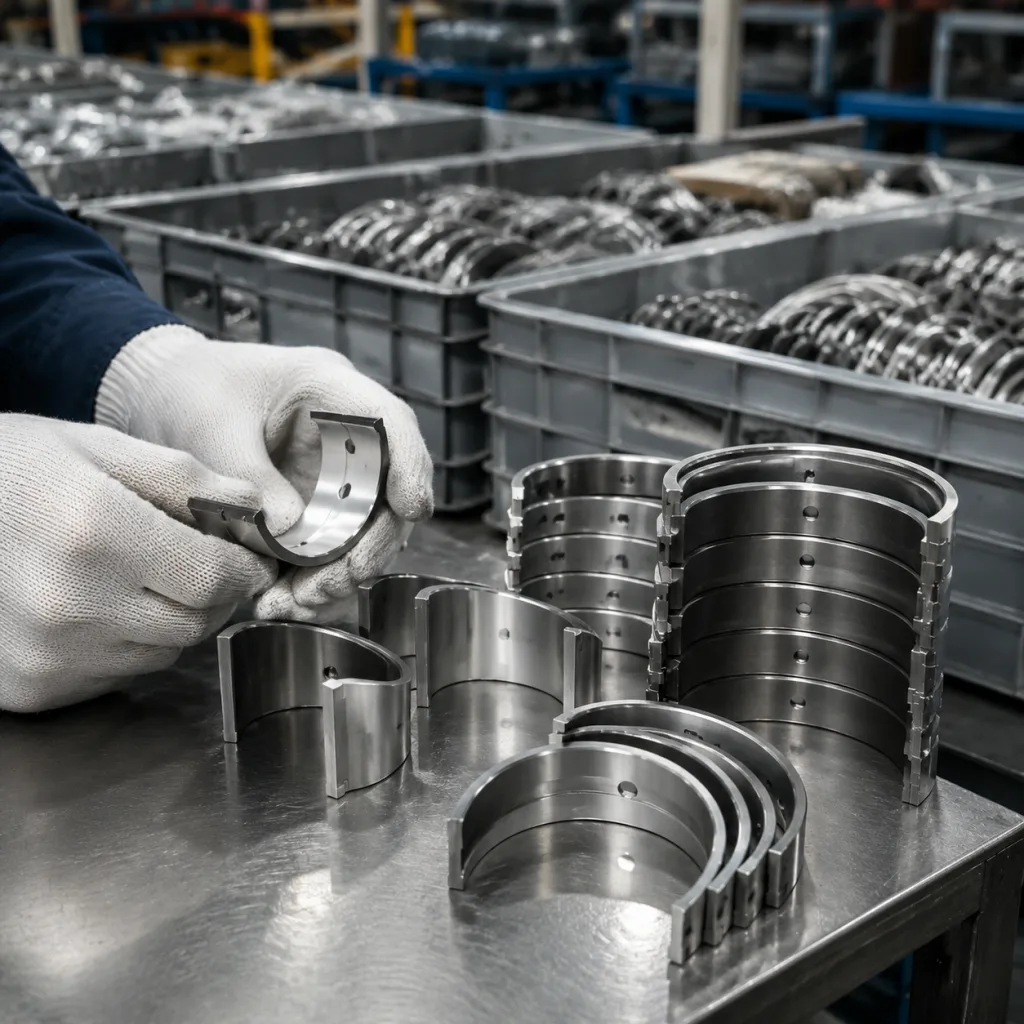
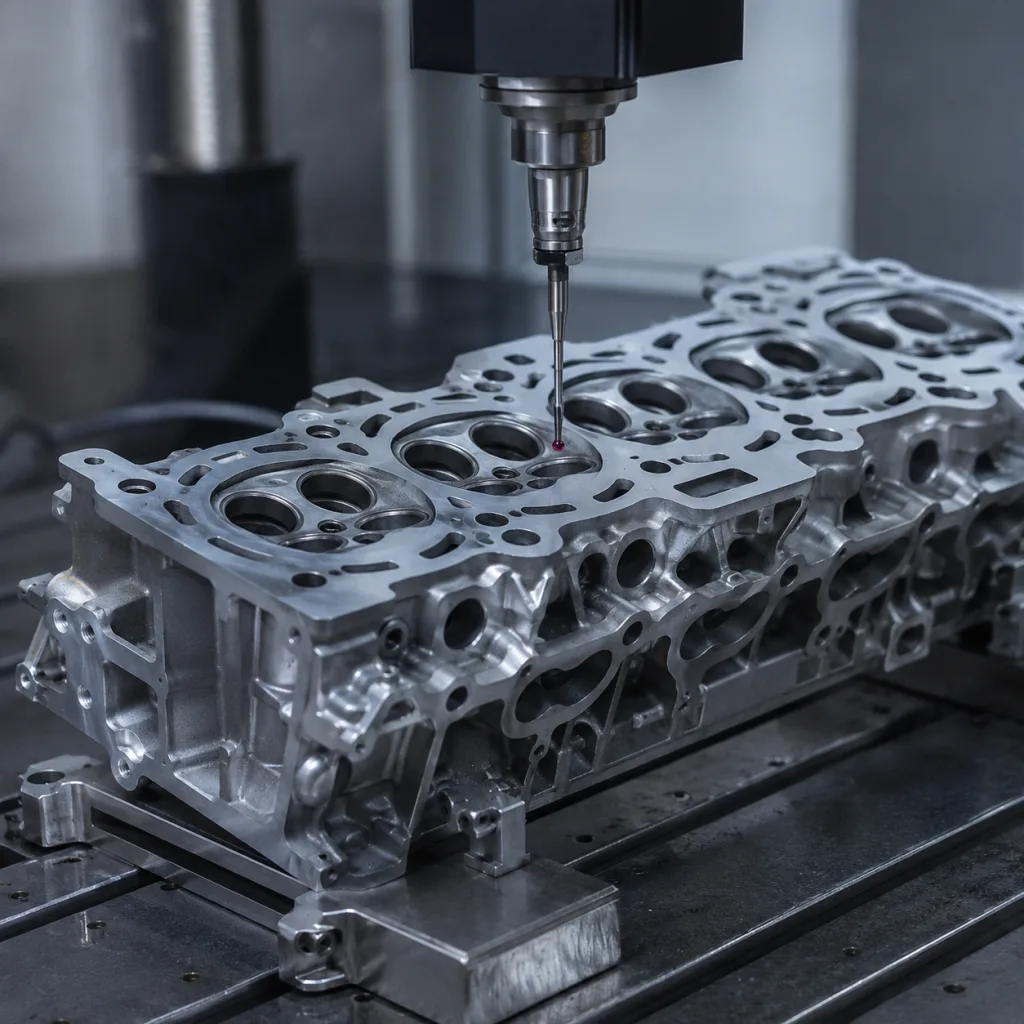
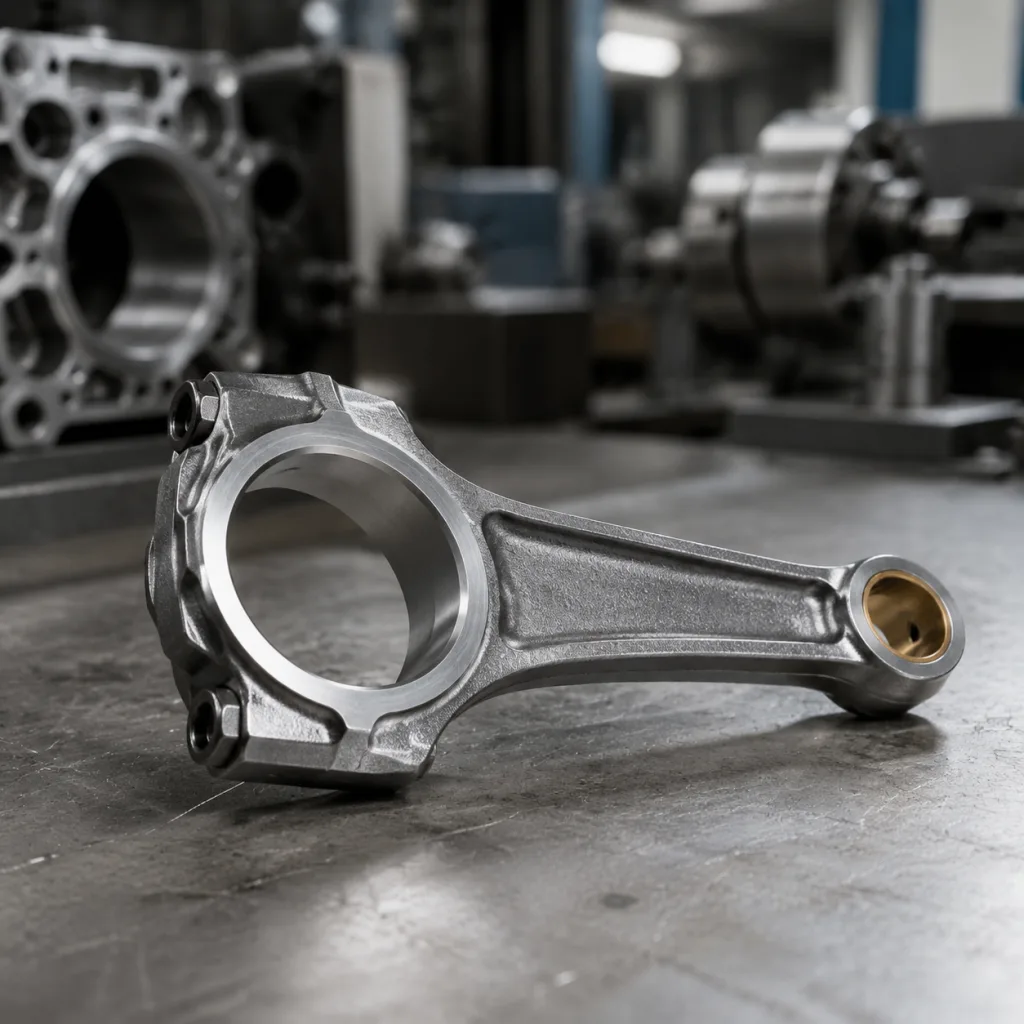
Procurement teams looking for an engine bearing Cadillac manufacturer China typically need three things to line up: dimensional fit, consistent metallurgy, and reliable supply. Driventus supports B2B buyers with aluminum-tin, tri-metal, and coated bearing shells for aftermarket, OEM/Tier-1, and repair-chain programs. Driventus is an independent aftermarket manufacturer; brand names are referenced for fitment only.
For buyers in the EU, UK, US, Canada, Australia, and Brazil, the real test is not a branding claim. It is whether the supplier can provide drawings, inspection records, suitable packaging, and dependable lead times. A bearing may look correct in a catalog and still fail if the alloy stack, oil clearance, crush, or thrust geometry is even slightly out of range. Sourcing decisions should therefore be built around measurable requirements, not assumptions.
This guide explains what to verify before sending an RFQ, how to compare bearing constructions, and how to assess a China factory for traceability, compliance, and production control. It also covers the commercial terms that influence continuity of supply, especially when a part is being re-sourced or moved from one market channel to another. The aim is simple: reduce rework early and focus only on suppliers that can hold the required specification.
What to confirm before you request samples
When buyers search for an engine bearing Cadillac manufacturer China, technical fitment should come before catalog wording. Confirm the engine family, bearing set type, housing bore, crankpin diameter, oil clearance target, and whether the requirement is for standard, undersize, or thrust components. If the application uses different journal sizes across variants, list each one separately. Mixed fitment is a common source of quoting errors and sample mismatches.
For a replacement program, ask for the latest drawing revision, surface finish requirement, and packaging label format before samples are released. These details may seem routine, but they prevent the supplier from filling gaps with assumptions.
A useful RFQ pack usually contains:
engine code and application notes
drawing or sample with revision level
annual forecast and first-order volume
target material and coating request
journal diameter, shell thickness, and oil clearance target
destination country and packing requirement
test or inspection reports required by your quality team
whether the part is for service replacement, private label, or production support
If the part must cross borders, state the regulatory and commercial context as well. A supplier that understands the use case can recommend whether the program needs standard packaging, barcoded cartons, corrosion protection, or lot-specific traceability. If you are still building a shortlist, start with our catalog and remove suppliers that cannot respond to dimensional data with traceable evidence. The quickest way to expose a weak vendor is to ask for measured answers, not sales assurances.
Bearing constructions and trade-offs
Different bearing constructions solve different procurement problems. In high-load or high-temperature service, the shell stack-up matters more than the badge on the carton. The right choice depends on load profile, lubrication quality, start-stop frequency, oil cleanliness, and service interval. A capable supplier should explain why a construction fits the duty cycle, not merely confirm that it can be produced.
Construction
Main benefit
Buyer trade-off
Typical use
Tri-metal
High load capacity and strong fatigue resistance
Higher cost and tighter process control
Main and rod bearings in demanding passenger car engines
Bi-metal
Lower friction and simpler production flow
Less margin under severe load
Cost-sensitive replacement parts and moderate-duty engines
Coated shell
Better scuff resistance during break-in
Coating process must be validated
Start-stop duty or engines with marginal lubrication
Thrust bearing
Controls axial movement
Must match crankshaft thrust faces exactly
Integrated thrust applications
</tr></thead><tbody> </tbody></table>Tri-metal constructions are generally preferred where the application sees higher unit loading, variable lubrication quality, or long service intervals. Their layered structure gives the supplier more control over strength and wear behavior. Bi-metal shells can be practical where cost pressure is high and engine duty is less aggressive, although they provide less margin when oil supply is inconsistent. Coated shells add a valuable safety layer during startup and initial wear-in, but only when coating thickness, adhesion, and surface finish are controlled consistently from lot to lot.
For adjacent part families such as gaskets, water pumps, and turbochargers, review our engine components range. The correct construction should be selected from measured load data, bearing clearance targets, and application history, not from a vehicle badge alone. If you are comparing several engines, ask the factory to quote each construction against the same dimensional benchmark so the commercial comparison remains meaningful.
Inspection data buyers should demand
A supplier that cannot show measurement methods, calibration status, and nonconformance handling is adding risk to the program. For regulated markets, the factory should work under IATF 16949:2016 and ISO 9001:2015 procedures, with material declarations that support REACH (EC) No 1907/2006. These documents matter because they indicate whether the supplier runs a repeatable process or simply sorts parts at the end of the line.
At minimum, request:
dimensional inspection records by lot
material certificates for the shell and backing metal
coating or overlay thickness data, where applicable
traceability from batch to carton label
control plan and gauge list
visual defect criteria for edge damage, contamination, and scoring
calibration records for the primary measuring equipment
a sample of the inspection format used for shipping release
For re-sourced parts, also verify wall thickness, crush, eccentricity, surface finish, and alignment against the released drawing. These are not secondary checks. They determine whether the bearing seats correctly and maintains the oil film under load. If a supplier only provides a pass/fail statement without actual data, the risk has not been reduced. Your quality team needs evidence that the lot was measured in a way it can audit later.
Strong suppliers will also explain how they handle out-of-spec findings. Ask who issues the nonconformance report, whether suspect stock is quarantined, how rework is controlled, and what happens when a lot is mixed or repacked. That answer is often more revealing than a certificate because it shows whether the plant can protect traceability after a problem is found.
MOQ, lead time, and supply stability
Commercial terms matter because engine bearing supply is usually part-number driven and schedule sensitive. MOQ should be linked to pack-out, finishing complexity, and test burden, not presented as a blanket sales rule. Lead time should be broken into sample production, tooling release, and repeat production so the buyer can see where delay risk sits. A low unit price has little value if the first usable lot arrives too late for launch or replenishment.
A credible factory should explain which sizes are stock items, which need tool setup, and which require customer approval before the first run. It should also state whether machining, heat treatment, coating, sorting, and final packing are controlled in-house or passed to subcontractors. The more steps that remain in one process flow, the easier it is to maintain lot traceability and reduce variation. If work is split across multiple sites, ask how lot identity is preserved through transfer, repacking, and final inspection.
For planning purposes, separate these lead-time buckets in the RFQ and in the supplier reply:
sample or approval lot production
tooling or process setup
raw material procurement
mass production
inspection and release
export packing and dispatch
This structure helps buyers compare suppliers on real schedule risk rather than a single optimistic date. It also shows whether a factory is quoting from actual capacity or simply from spare time in the calendar. If your team needs a technical program rather than a resale quote, custom manufacturing is only useful when the supplier can document process control end to end. In practice, supply stability comes from repeatable planning, controlled change management, and realistic promise dates, not from one urgent shipment.
How to qualify a supplier for long-term supply
Qualification should feel like a short audit, not a sales call. Verify the latest drawing revision, control plan, gauge capability, complaint response time, and packaging specification. If your organisation uses PPAP-style submission, ask for it even when it is not formally required. That request quickly separates factories with real process discipline from those relying on spot buying and manual sorting. For a long-term engine program, you need a supplier that can support engineering changes without losing record integrity or confusing one revision with another.
A practical qualification review should cover the following points:
revision control and change notification
incoming material verification and supplier approval
in-process inspection frequency
final audit criteria before shipment
containment and corrective action response
lot traceability from raw material to finished carton
packaging integrity for warehouse handling and export
ability to scale repeat orders without changing the process window
For long-term supply, the strongest signals are stable gauge readings, low scrap, a clear CAPA loop, and consistent communication when there is a deviation. A factory that can implement engineering changes without losing traceability is easier to manage across multiple markets and distribution channels. If the supplier can also show how it handles replacement lots, mixed batches, and field returns, you have a stronger basis for approving it as a strategic source rather than a spot-buy vendor.
For buyers comparing vendors, the best starting point is our quality system, followed by the product list in our catalog, and then a formal RFQ through request a quote. This sequence creates a cleaner benchmark: first confirm the supplier system, then the available part range, and only after that compare pricing and lead time. It keeps the qualification process focused on sources that can realistically support ongoing demand.
Frequently asked questions
Yes, but fitment must be confirmed by engine code, bearing set type, journal size, and drawing revision. We do not claim OEM approval. We match supplied specifications and validate the part against the requested dimensions and inspection method. If there are regional variants, we can review each application separately so the buyer does not receive a part that fits one market but not another.
Send the drawing or sample, part description, annual volume, target material, coating requirement, packaging spec, destination country, and any required test reports. If the part is being re-sourced, include the current revision, the reason for change, the current supplier reference if available, and any known issues such as noise, wear, or seizure history. A complete RFQ reduces the chance that the supplier will quote the wrong construction or clearance range.
The main references are IATF 16949:2016, ISO 9001:2015, and REACH (EC) No 1907/2006. Depending on your process, you may also require PPAP-style documentation, control plans, gauge capability evidence, and lot traceability records. If you sell into more than one market, ask the supplier to show how it keeps documentation aligned across export labels, inspection reports, and packing lists.
If you need a supplier review for Cadillac engine bearings, send your drawing pack, annual volume, and packaging requirements through [request a quote](/contact.html).