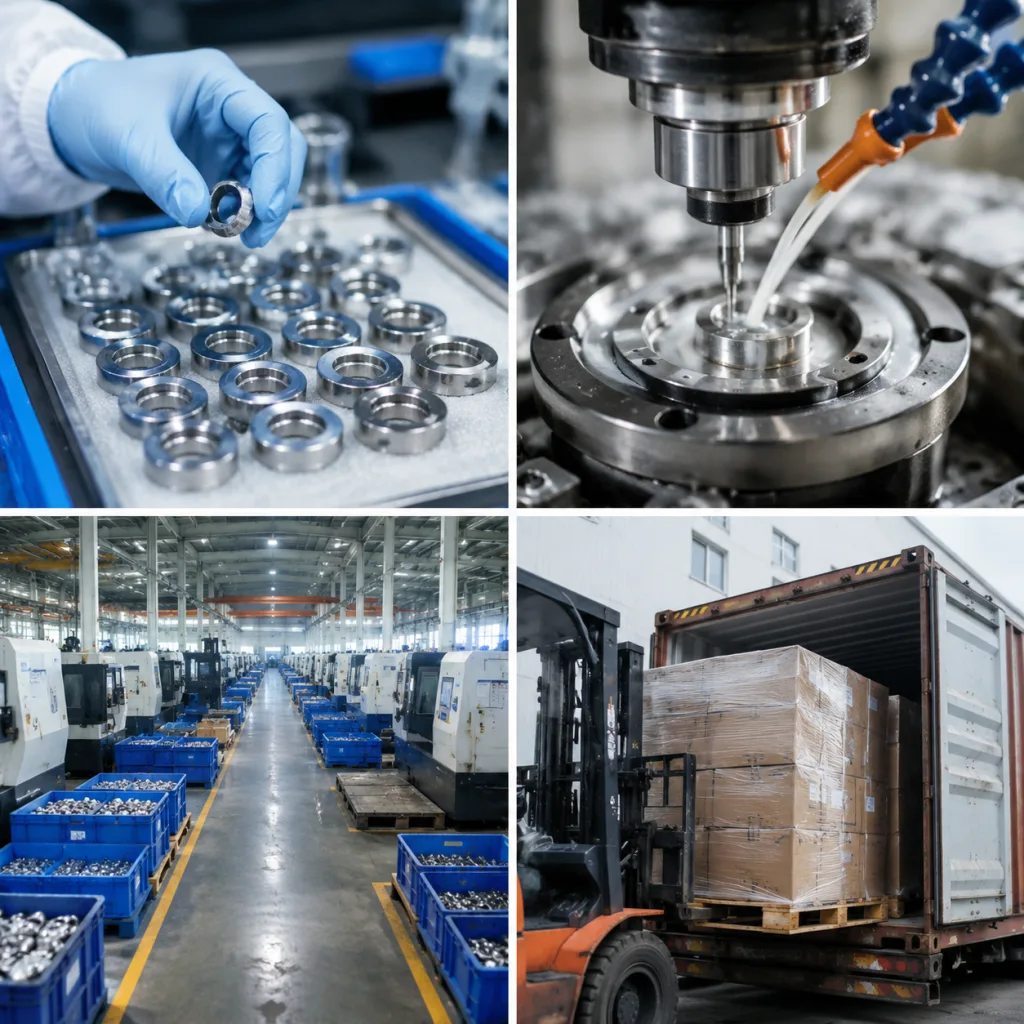
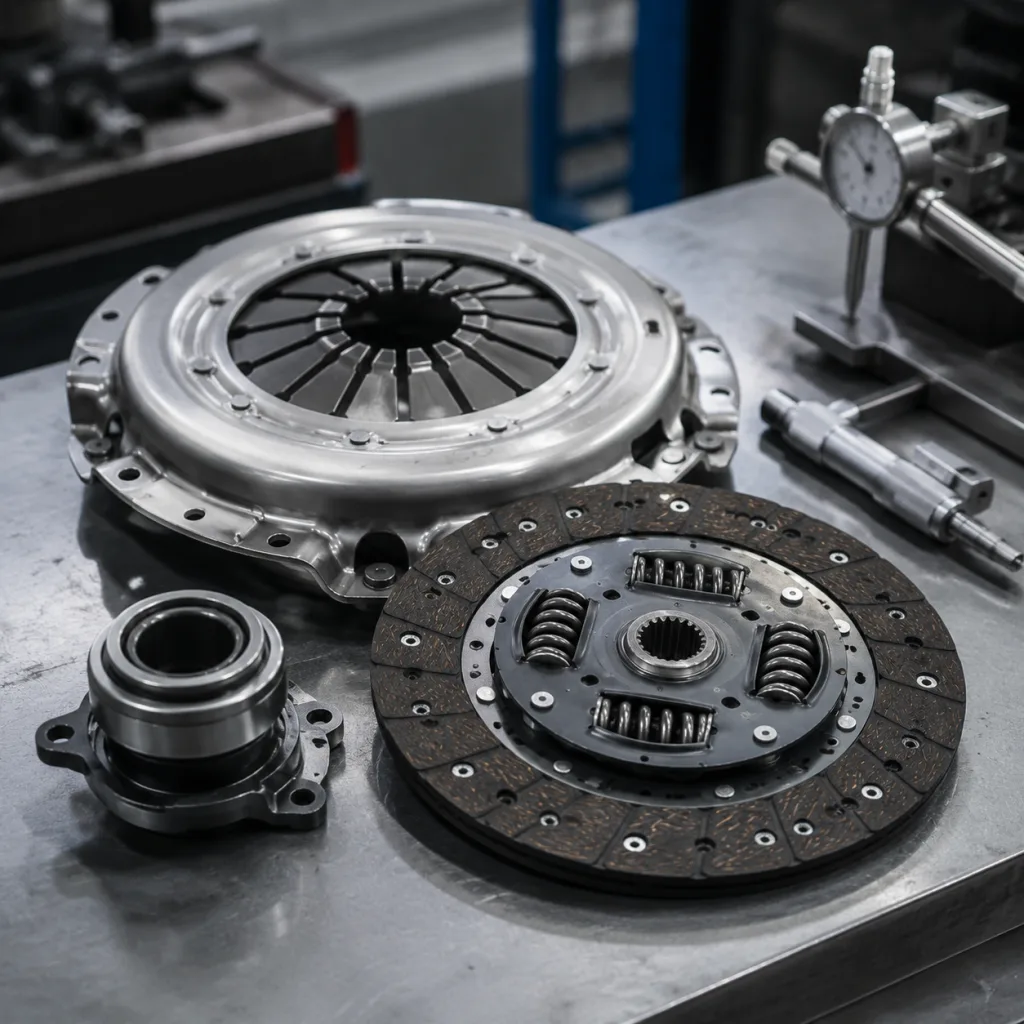
EGR valve seat wholesale sourcing should start with one question: what failure are you trying to prevent? A seat that looks correct can still leak, loosen in the housing, mark the valve face or create warranty noise after heat cycling. The risk is not the part size; it is the combination of sealing geometry, press-fit control, soot exposure, condensate corrosion and repeated 150–650°C temperature swings. For distributors, Tier-1 buyers and repair-chain procurement teams, weak sourcing usually shows up as dimensional drift, alloy substitution, scratched sealing faces, burrs, unstable surface finish, handling damage or missing batch traceability. Driventus manufactures engine and powertrain components in Taizhou, Zhejiang, with export supply to more than 60 countries. For EGR valve seat programmes, we usually align first on drawing control, alloy choice, CNC turning and grinding capability, inspection method, AQL level, MOQ, price ladder, packaging, lead time and audit requirements. Driventus is an independent aftermarket manufacturer; brand names are referenced for fitment only.
Decision framework: define the seat before asking for price
A useful RFQ for an egr valve seat wholesale programme does not begin with “please quote this ring.” It begins with the seat’s job inside the EGR valve assembly. Is it pressed into an aluminium housing? Is it part of a machined body? Is it supplied as a repair sub-assembly? Each answer changes the tolerance stack, inspection method and packaging risk.
Define these points before comparing suppliers:
2D drawing with datum structure, CTQ dimensions and tolerances, preferably in PDF plus DWG/DXF if available
3D STEP model or equivalent neutral file for toolpath, fixture and interference-fit review
Material grade or performance requirement, including 150–650°C heat exposure, oxidation resistance and condensate-corrosion expectation
OD, ID, seat angle, chamfer and groove dimensions with tolerance class; common CTQ features may need ±0.005–0.020 mm control
Surface roughness target on the sealing face and outer diameter, often Ra 0.2–0.8 µm depending on design
Leakage or assembly acceptance target, such as test pressure, pressure-decay limit or bubble-test condition
Annual demand, first-order quantity, release schedule and target price level at 1,000 / 5,000 / 10,000 pieces
Packaging, labelling, bar code, carton quantity, pallet format and traceability rules
OE part-number cross-reference already used in the buyer system, such as OE 06A… or OE 11251… format
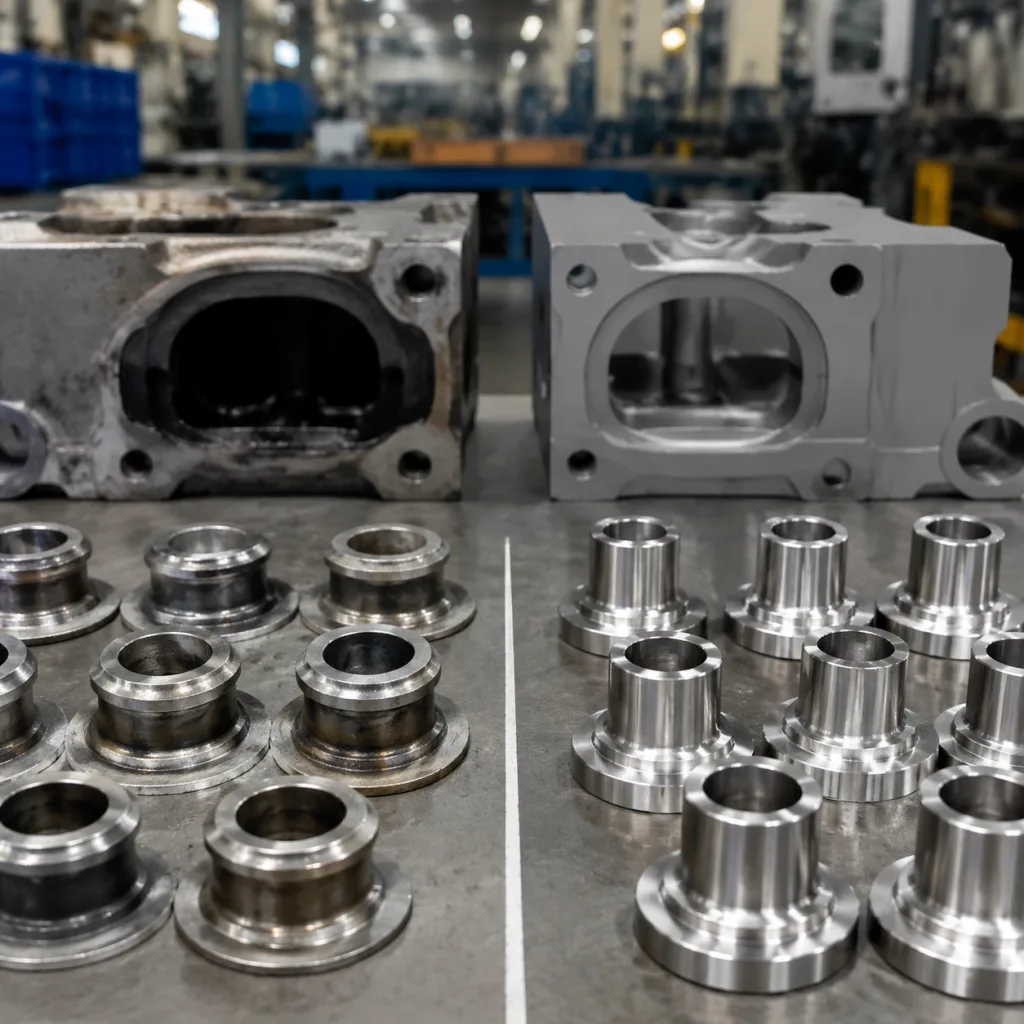
This prevents suppliers from quoting different assumptions behind the same unit price. A used sample alone is risky: the sealing face may be worn, the colour may reflect service heat rather than original material, and burrs or dents may be damage rather than design. For catalogue-based enquiries, buyers can review our catalog and related engine components. For drawing-controlled parts, custom manufacturing is usually the correct route.
Spec deep-dive: where microns, alloy choice and surface finish matter
EGR valve seats operate in hot exhaust gas, not in a clean bearing housing. Soot, condensate, vibration and thermal cycling can all change sealing behaviour. Material selection should match temperature range, gas chemistry, valve design, housing material and cost target. Many aftermarket programmes use stainless steel or heat-resistant alloy steel to balance machinability, scaling resistance and sealing durability. Typical discussions include 304/316 stainless for moderate corrosion demand, 430/431 stainless for hardness and cost balance, or application-specific heat-resistant alloy steel for higher temperature and wear demand.
Specification item
Typical sourcing requirement
Procurement note
Base material
304, 316, 430/431 stainless or heat-resistant alloy steel
Confirm exact grade by drawing or material certificate, not by verbal description
Hardness target
Often HRC 20–35 or drawing-specific
Too soft can wear; too hard may crack during press-fit or machining
Outer diameter tolerance
Commonly ±0.005–0.015 mm for press-fit features
Must match housing bore, aluminium expansion and interference requirement
Roundness / cylindricity
Often ≤0.005–0.010 mm on sealing or location features
Prevents localized leakage and unstable assembly force
Concentricity
Typically ≤0.01–0.03 mm against seating and location datums
Important for valve sealing repeatability and stem alignment
Seat angle
Commonly 30°, 45° or drawing-specific
Angle error changes contact width and leakage behaviour
Sealing face roughness
Commonly Ra 0.2–0.8 µm
Too rough can increase leakage; too smooth may affect bedding and lubricant retention
Burr and edge control
Chamfer 0.1–0.3 mm or radius per drawing
Burrs can break loose, scratch the valve or contaminate the EGR path
Heat exposure
Validated by application requirement, commonly 150–650°C
Avoid using one material across all engine families without review
Inspection
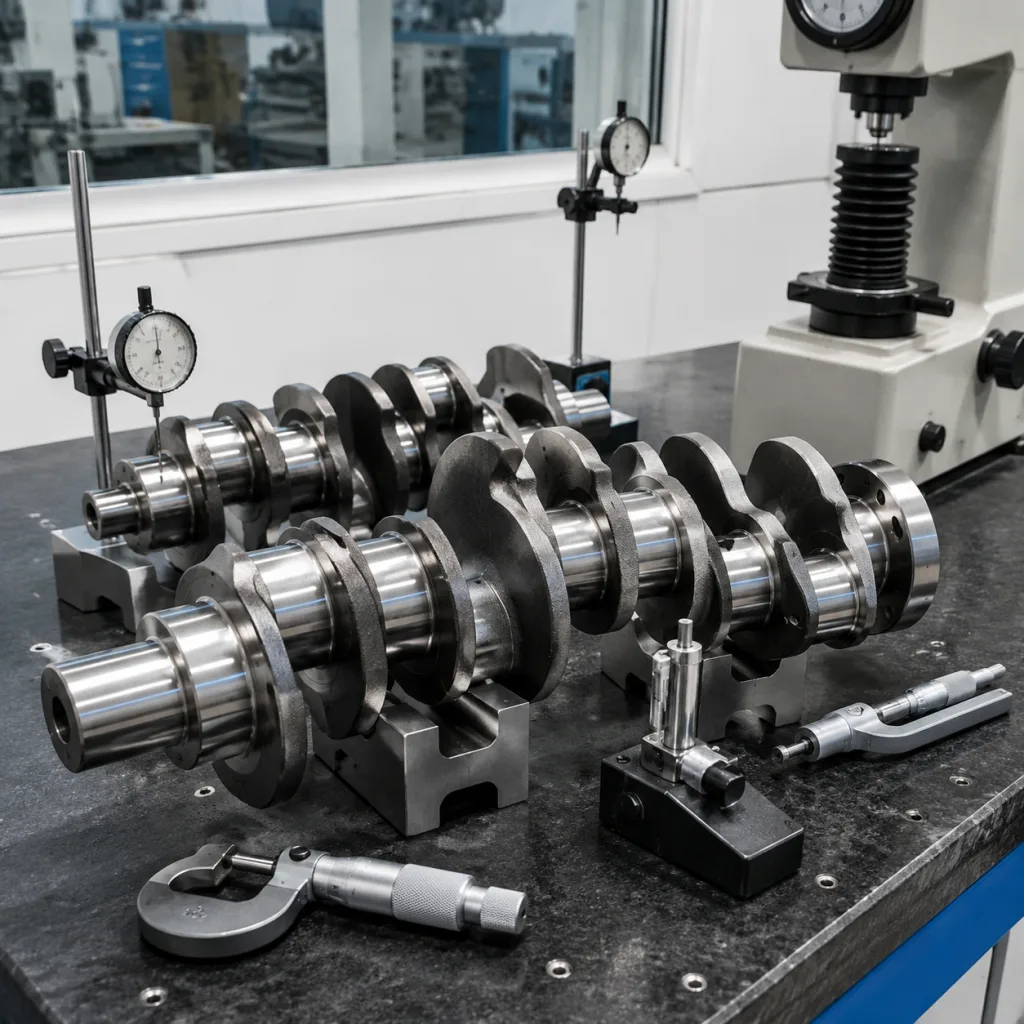
CMM, air gauge, profile projector, pin/plug gauge, roughness tester
Gauge R&R and measuring temperature should be agreed for high-volume programmes
</tr></thead><tbody> </tbody></table>A controlled route usually runs through bar-stock verification, CNC turning, optional heat treatment, finish machining or grinding of the sealing profile, deburring, cleaning, 100% visual inspection of sealing faces and final dimensional sampling. Driventus does not treat EGR valve seats as generic turned rings. The sealing profile, chamfer, edge break, surface texture and press-fit diameter can decide whether the assembly seals or fails. When the buyer has no existing drawing, our engineering team can help convert samples into controlled drawings for review before quotation.
Wholesale buying works best when the order is staged. Jumping from a photo or worn sample to 10,000 pieces may look fast, but it pushes technical risk into inventory. A better structure separates sample approval, pilot validation and repeat production.
A typical commercial path looks like this:
Sample stage: 10–50 pieces for dimensional, assembly and leakage verification; typical lead time is 10–20 working days after drawing approval when material is available
Pilot order: 200–1,000 pieces for installation, leakage and durability checks; typical lead time is 20–35 working days depending on inspection documents
Production order: 1,000–10,000+ pieces with agreed MOQ, shipment schedule and replenishment forecast; typical lead time is 30–45 working days after deposit and final specification approval
Blanket order: 3–6 month forecast with monthly releases, suitable for distributors with multi-country demand or repair-chain network supply
MOQ is not just a sales number. It reflects raw material availability, fixture work, CNC set-up time, inspection labour, cleaning process, packaging format and traceability control. Standard catalogue items can often start lower. Custom EGR valve seats normally need enough volume to absorb set-up, tooling and measurement cost.
Price is usually built from raw material grade and diameter, net machining cycle time, tool wear, scrap allowance, inspection frequency, packaging labour, documentation level and export logistics. A small custom part may be cheap by weight but expensive by control level, especially with ±0.005 mm OD tolerance, 100% air-gauge inspection, special trays or PPAP-style documentation. Ask for a price ladder at 1,000 / 3,000 / 5,000 / 10,000 pieces so set-up and inspection costs are visible.
Lead time depends on material stock, machining capacity, heat treatment or surface requirements, fixture availability and special inspection documents. For repeat orders, a rolling 8–12 week forecast helps reserve material and reduce delivery risk. Packaging must protect the sealing face from dents, scratches and contamination. Common options include PE bag plus partitioned carton, blister tray, foam-layer tray, VCI protection where needed, desiccant for sea freight, 10–100 pieces per inner pack depending on size, carton weight below 15–20 kg and customer-specific receiving labels.
Buyers preparing an import programme can request a quote with annual demand, destination market, target MOQ, inspection document level and preferred Incoterms such as EXW, FOB Ningbo/Shanghai, CIF or DAP.
Failure modes: what quality control must catch early
Final inspection alone is too late if the process is drifting. Procurement teams in the EU, UK, US, Canada, Australia and Brazil usually want evidence of process control, not just a pass/fail shipment report. Driventus operates under IATF 16949:2016 and ISO 9001:2015 frameworks. Our quality system supports incoming material verification, in-process inspection, final inspection and batch traceability.
For EGR valve seat wholesale supply, the common failure modes are practical and measurable: wrong alloy, unstable OD, seat-angle error, poor roundness, burrs, scratched sealing faces, mixed batches, oil or chip residue, and packaging dents. The document set should be chosen to catch those risks before the parts reach the buyer’s warehouse.
Buyers commonly request:
Material certificate or chemical composition report where applicable, linked to heat number or incoming batch
Dimensional inspection report against the approved drawing, with CTQ dimensions recorded separately
Surface roughness record for critical sealing faces, typically using a calibrated roughness tester
First article inspection report before pilot or production release
Control plan and process flow for repeat production, including machining, deburring, cleaning and packing steps
PPAP-style documentation when required by the buyer, commonly Level 2 or Level 3 for controlled programmes
Batch traceability record linked to production date, machine, operator, material batch and inspection results
Packaging specification and carton drop-test evidence when relevant
A practical inspection plan may include first-off approval after machine set-up, in-process checks every 30–60 minutes or every 50–100 pieces depending on CTQ risk, tool-change verification, final AQL sampling and 100% visual inspection of sealing faces. High-volume or safety-sensitive programmes may also require 100% OD air-gauge sorting, leakage fixture results or retained samples from each batch. Non-conforming product should be quarantined, identified by batch, reviewed by engineering and closed with 8D or corrective-action reporting when requested.
Factory audits may review CNC capability, gauge calibration status, MSA/Gauge R&R evidence, operator training, tool-life control, non-conformance handling, corrective-action closure, cleaning process and storage protection for machined parts. For regulated destination markets, buyers may also request evidence related to REACH (EC) No 1907/2006 substance control and RoHS-style material declarations where applicable. EGR components are used in emissions-related systems, so vehicle-level compliance may involve regulations such as ECE R-83; component sourcing should not be confused with vehicle certification.
Comparison table: low quote versus controlled landed cost
A low unit price is useful only after the technical baseline is equal. Otherwise, the cheaper quote may simply exclude material verification, profile control, protective packaging, inspection reporting, fixture cost, retained samples or corrective-action support. Import managers should compare total landed cost, defect risk, communication quality, documentation readiness and batch consistency.
Evaluation factor
Low-control supplier risk
Controlled manufacturing expectation
Drawing control
Verbal dimensions or sample-only copying
Revision-controlled drawing, datum scheme and approved sample
Material
Unverified substitute grade
Declared grade with material certificate and batch linkage
Machining
Tool wear not linked to inspection frequency
In-process checks, first-off approval and tool-life control
Sealing surface
Visual check only
Roughness, angle and profile measurement on defined frequency
OD press-fit
General caliper check
Micrometer, air gauge or go/no-go gauge matched to tolerance
Cleanliness
Oil, chips or burr residue in bulk bags
Deburring, washing, drying and protected packing
Traceability
Mixed batches in bulk packing
Batch-coded cartons and inspection linkage by lot number
Audit readiness
Limited documentation
Process flow, control plan, calibration records and NCR history
After-sales support
Replacement discussion only
Root-cause analysis, containment and corrective action
</tr></thead><tbody> </tbody></table>Normalize the quotation before choosing a supplier. Ask whether the price includes first article inspection, 100% visual sorting, roughness records, private-label cartons, barcode labels, palletization, spare retained samples and export documentation. Then compare logistics assumptions. FOB may look lower than CIF or DAP, but sea freight, insurance, customs clearance, duty and local handling can change the landed cost.
For multi-location repair chains, consistency across batches often beats the lowest single shipment price. A 1–2% leakage or assembly rejection rate can erase a small unit-price saving once warranty handling, customer credits and emergency replenishment are included. For wholesalers, private-label packaging, stable carton quantities, scannable labels and clear cross-reference data also reduce receiving errors, speed warehouse handling and limit customer returns.
Scenario: how Driventus takes a seat from RFQ to repeat supply
A typical Driventus project starts with a buyer sending a drawing, sample, application note or cross-reference list. The first review is technical, not commercial: fitment risk, material route, CTQ dimensions, press-fit logic, sealing-face finish, inspection method and packaging exposure. Only then does the quotation become meaningful.
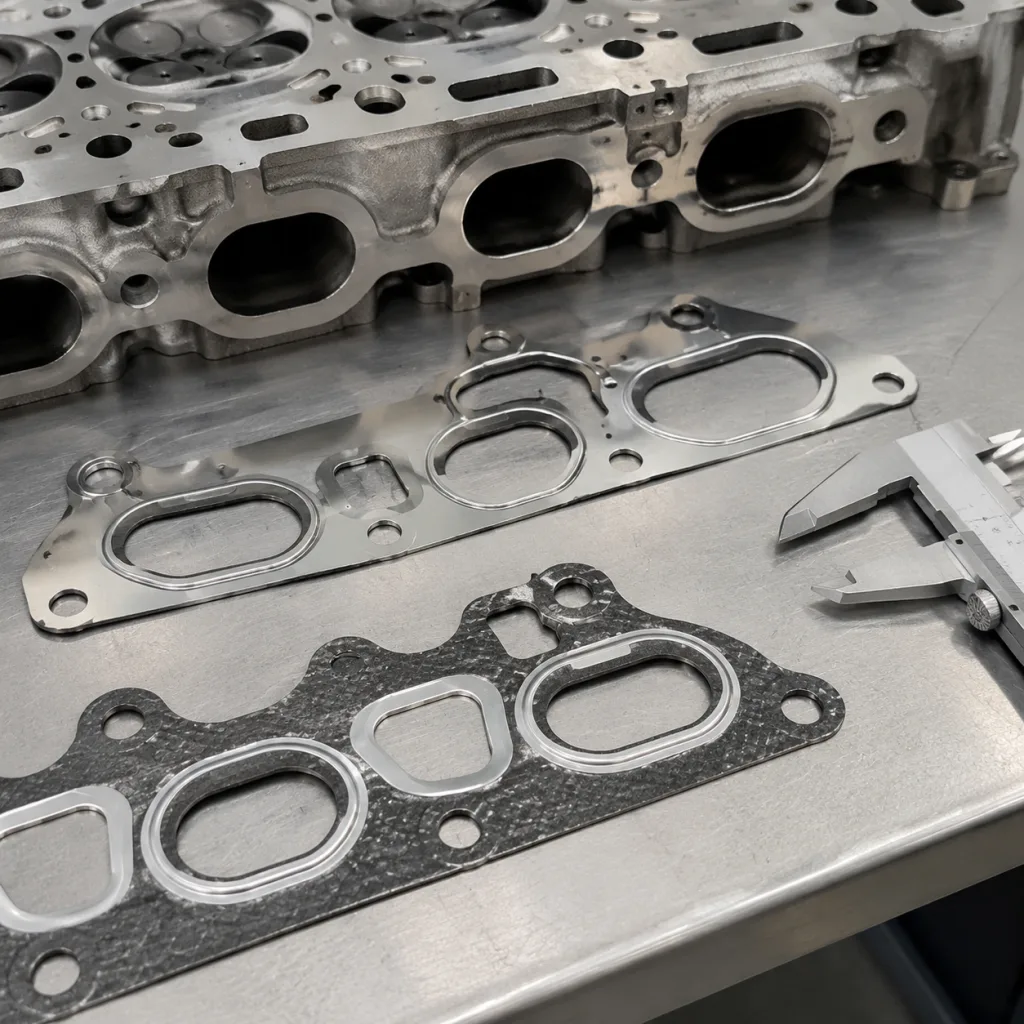
For egr valve seat wholesale enquiries, Driventus can support catalogue supply, sample-based development and drawing-controlled production. Our wider B2B supply covers engine components such as pistons, crankshafts, gaskets, water pumps, turbochargers and EGR-related parts.
Practical support includes:
Technical review of drawings, samples and application notes, including fitment, material and CTQ risk points
Material and process feasibility feedback before quotation, including tolerance, hardness and surface-finish feasibility
CNC machining with controlled inspection points, first-off approval and in-process dimensional checks
Sample submission with dimensional report, roughness data and agreed retained-sample control when required
MOQ and lead-time planning for distributor inventory cycles, including pilot orders and repeat blanket releases
Price-ladder quotation based on quantity, documentation level, packaging format and Incoterms
Export packaging suitable for sea, air or consolidated shipments, with carton labels, pallet marks and batch codes
Private-label and neutral packaging discussions where required for wholesalers and regional distributors
The usual flow is RFQ review, drawing or sample confirmation, feasibility feedback, quotation with MOQ and lead time, sample production, dimensional approval, pilot order, production release and repeat supply review. For custom items, buyers should allow time for drawing confirmation and sample validation instead of moving directly from sample photo to mass order. That pause reduces leakage risk, avoids packaging damage and gives both sides a stable specification for future batches.
We do not claim approval or endorsement by any vehicle manufacturer. Brand names, engine families and OE references are used only to identify fitment and purchasing requirements. Driventus is an independent aftermarket manufacturer; brand names are referenced for fitment only.
Frequently asked questions
A drawing or sample, material requirement, CTQ tolerances, annual volume, target MOQ, destination country, packaging needs and inspection-document requirements are the main inputs. If the part is tied to an OE cross-reference, provide it in your purchasing format.
Yes. Driventus can review drawings or samples for custom manufacturing, including material selection, machining feasibility, tolerance review, inspection planning, sample approval and pilot production before wholesale supply.
No. Driventus focuses on B2B supply for aftermarket distributors, wholesalers, OEM or Tier-1 buyers and multi-location repair chains that require repeatable volume, documentation and export support.
If you are comparing suppliers for an egr valve seat wholesale programme, send drawings, samples or cross-reference data for technical review. Contact Driventus to discuss MOQ, price ladder, lead time and documentation at /contact.html