Buyers searching for an egr valve porsche supplier need more than a part description. They need fitment control, traceable production, predictable lead times, and a quality file that stands up to incoming inspection and audit review. Driventus manufactures engine and powertrain components for B2B buyers in aftermarket, OEM, and repair-network channels. Our emphasis is dimensional consistency, material control, and documented process checks aligned with IATF 16949:2016 and ISO 9001:2015. For export programs, we also support documentation relevant to REACH (EC) No 1907/2006, plus customer-specific packaging and labelling requirements. Driventus is an independent aftermarket manufacturer; brand names are referenced for fitment only. If you are comparing suppliers for Porsche applications, use OE cross-reference data, engine code, emissions family, and mounting geometry before placing any order.
Start with the failure modes, not the catalog
For Porsche EGR sourcing, the fastest way to avoid a bad buy is to start with what usually goes wrong. Part numbers can match while the valve still fails on connector orientation, cooler geometry, gasket stack-up, or revision level. Confirm the engine code, model year, emissions variant, actuation type, and mounting pattern before you treat any listing as valid.
Minimum buyer checklist
OE reference, supersession, and engine application
Port count, bolt pattern, gasket interface, and mounting datum
Actuation method: electric, vacuum, or combined control
Electrical details: connector keying, pin count, and harness orientation
Material stack: stainless, aluminium, cast body, composite parts, and seal material
Included hardware, gasket set, and packaging requirement
Ask for a drawing with critical dimensions called out. Flange flatness, connector position, and centerline-to-bolt-hole distance are the checks that usually separate a clean replacement from a costly return. If the platform uses an OE reference such as `OE 06A107065`, verify the cross-reference against the actual engine family, emissions calibration, and revision level before release.
Practical specification targets
Flange flatness: within 0.10 mm across the sealing face
Bolt-hole positional tolerance: ±0.20 mm
Gasket compression range: 15% to 25% of installed thickness
Connector engagement force: positive lock without binding at room temperature
Actuation repeatability: consistent open/close response across the approved cycle window
The common trap is simple: a catalog-correct part that still misses on the vehicle because one interface detail is off.
Compare suppliers on the terms that change landed cost
A reliable supplier relationship depends on commercial terms as much as geometry. For recurring programmes, ask for MOQ by part number, standard lead time, sample lead time, carton quantity, and the price break structure by annual volume. That matters especially for EU, UK, and North American buyers who need inventory coverage without overstocking slow-moving variants.
Item
What to confirm
Typical buyer target
MOQ
Per SKU and per finish
50-100 pcs for standard cartons; lower for first articles
Lead time
Sample and production
7-15 days for samples; 25-45 days for production
Pricing
Tier by annual volume
Quote at 100/500/1,000 pcs to compare landed cost
Documentation
CoC, inspection report, material data
Included with first shipment and on request for repeats
Traceability
Lot code and batch record
One lot per production batch, retained for warranty support
Packaging
Single pack or bulk
Damage-free transit and branch-ready presentation
</tr></thead><tbody> </tbody></table>Do not compare unit price alone. Ask whether the quote includes gaskets, hardware, test documentation, and export carton packing. A lower ex-works price can become a higher landed cost if the supplier adds fees for inspection reports, nonstandard labels, or mixed-SKU cartons.
For multi-location repair chains, pack counts can be aligned to branch replenishment. For distributors, mixed-application ordering is useful when the platform is common but the calibration differs. For larger programmes, a quarterly call-off schedule helps the supplier reserve capacity and stabilize lead time.
Commercial rule of thumb
Low-volume pilot order: higher unit price, faster sample release
Repeat order: lower price after first batch approval
Forecasted programme: best pricing when MOQ and delivery schedule are fixed
If you need a clean comparison, ask every supplier for the same quote format: SKU, OE reference, MOQ, sample lead time, production lead time, unit price by tier, carton count, and validity period.
Audit the specification before you approve the part
An EGR valve must withstand thermal cycling, soot exposure, and repeated actuation without sticking. That means quality control should cover seating force, leakage, actuation response, and dimensional repeatability. Driventus runs production under a documented quality system aligned with quality system controls and customer inspection requirements.
Typical checks include:
Incoming material verification for castings, seals, fasteners, and electrical parts
Visual inspection of housings, ports, connectors, and machining marks
Dimensional verification of flange faces, locating features, and critical bores
Functional actuation testing at room temperature and, where required, hot-condition simulation
Leak screening where applicable to the part design
Final packing audit, label verification, and batch code traceability
For supplier approval, ask for PPAP-style evidence where needed, including dimensional reports, material declarations, and control-plan alignment. A practical approval pack should include the following:
First article dimensional report with measured values against the drawing
Material certificates or declarations for primary body and sealing materials
Process flow summary covering machining, cleaning, assembly, and final test
Control plan identifying critical characteristics and inspection frequency
Traceability format showing lot number, production date, and operator or line code
Common acceptance tolerances buyers ask for
Critical diameter variation: within ±0.05 mm to ±0.10 mm depending on feature function
Sealing face finish: controlled to prevent leaks and gasket cutting
Actuation cycle: no sticking, abnormal noise, or delayed response during the approved test window
Label accuracy: part number, batch code, and carton marks match the shipping documents
Standards commonly referenced in export supply chains include IATF 16949:2016, ISO 9001:2015, and REACH (EC) No 1907/2006. If your internal approval team needs a more detailed file, specify whether you want inspection results per batch or per shipment so the documentation format matches your receiving process.
Validate fitment on the actual engine, not just the OE number
Even when the OE cross-reference appears correct, fitment should be validated on the actual engine and emissions package. Common mismatch points include connector orientation, cooler pipe position, gasket thickness, and software calibration expectations. If the vehicle uses a linked emissions system, a direct swap may still require verification after installation.
Before release to stock, verify: 1. Overall length, body envelope, and mounting datum points 2. Electrical connector keying, pin count, and harness clearance 3. Coolant or exhaust gas path alignment, if applicable 4. Gasket compression and sealing face finish 5. Test fit on the intended engine family and revision level
For replacement programmes, dimensional match matters as much as nominal interchange. A supplier that provides clear drawings and revision control lowers return rates and reduces workshop downtime. For buyer-side validation, it is smart to build a simple go/no-go process:
Confirm OE number and engine code
Compare the sample against the master drawing
Check connector orientation with the vehicle harness
Verify seal engagement after dry-fit installation
Record any deviation before the first production release
Risk points to flag early
Different cooler geometry on the same engine family
Same OE reference but different connector keying by model year
Superseded part number with revised actuator calibration
Gasket mismatch that causes seepage after heat cycling
A strong supplier should be able to discuss those differences before you buy, not after a return comes back from the workshop.
Why a vertical manufacturer is easier to manage
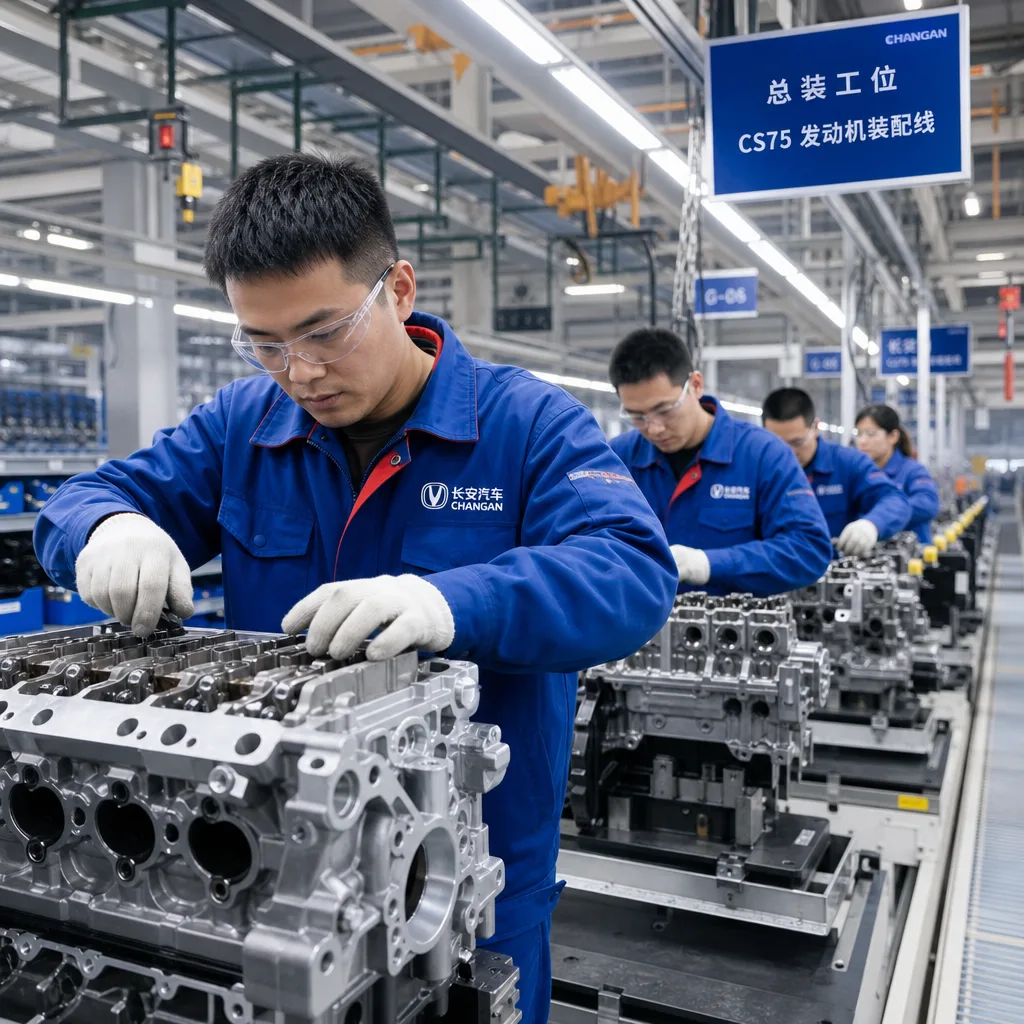
Procurement teams often prefer a vertically integrated manufacturer because it reduces handoffs between casting, machining, assembly, and inspection. That matters for part consistency, revision control, and response time when a buyer needs a fast replenishment cycle.
Driventus supplies engine and powertrain components from Taizhou, Zhejiang, with export coverage in 60+ countries. For buyers with private-label or catalogue expansion plans, custom manufacturing supports packaging, branding, and specification alignment. You can also review our catalog and related engine components at /products/engine-components.html.
If your team is building a Porsche-fitment programme, the main commercial questions are straightforward: Can the supplier hold the tolerance band, document the batch, and ship on time? Those are the questions we are set up to answer.
A vertical supply model also helps when buyers need:
Faster change control on revised drawings
Consistent test methods across batches
Better control over sealing parts, fasteners, and labels
Fewer delays from outsourced handoffs
For program managers, the practical advantage is lower coordination risk. One accountable source can quote the part, confirm the drawing revision, validate the batch, and package the order to the agreed branch or warehouse format.
Frequently asked questions
Yes. Driventus supplies independent aftermarket parts for B2B buyers. Brand names are used only for fitment reference, and final application approval remains with the buyer.
We can provide part specifications, inspection records, material declarations, and quality-system documentation aligned with customer review needs. For approved accounts, we can also support batch traceability, first article data, and packing verification on request.
Yes. We offer custom manufacturing and packaging support for distributors, wholesalers, and repair networks with agreed MOQ and lead time. Pack counts, carton labels, and master-box configuration can be aligned to your warehouse or branch-replenishment process.
If you need a sourcing review, cross-reference check, or quotation for Porsche-fitment EGR valves, please [request a quote](/contact.html).