EGR Valve Kia Supplier: B2B Sourcing Checklist
Choosing an egr valve kia supplier is not only a price comparison. The decision affects emissions performance, warranty exposure, stock availability, and import continuity across the full sales programme. For distributors, Tier-1 service-parts buyers, and repair-chain category managers, supplier evaluation should confirm manufacturing control, fitment accuracy, actuator calibration, leakage performance, export packaging, and traceable documentation before any volume order is placed.
Kia applications may use vacuum-operated, electric, or cooled EGR valve assemblies depending on engine family, model year, regional emissions level, and control strategy. A similar-looking valve can differ in connector layout, position-sensor output, valve travel, flange angle, or cooler interface. That makes fitment data and validation evidence essential parts of the sourcing file.
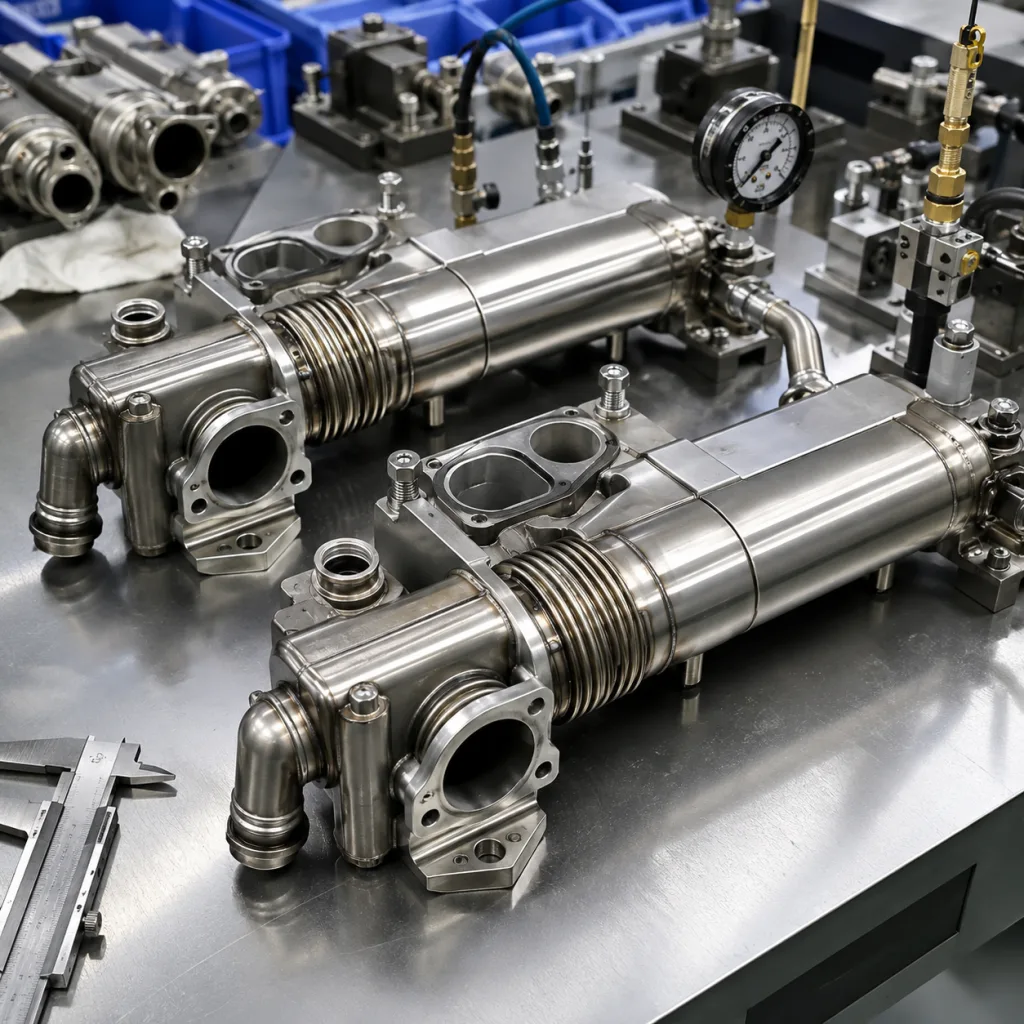
Driventus Auto Parts manufactures EGR valves and related engine components in Taizhou, Zhejiang, for B2B export programmes. We support aftermarket and private-label sourcing with controlled BOMs, incoming inspection, functional testing, batch traceability, and shipment documentation. Driventus is an independent aftermarket manufacturer; vehicle brand names are referenced for fitment identification only.
What Buyers Should Confirm Before Sourcing
A practical sourcing review starts with exact vehicle coverage, engine code range, connector type, mounting interface, gasket layout, and emissions market. Kia fitment can vary by region, model year, engine calibration, and EGR cooling layout, so visual comparison alone is not enough. A valve that appears interchangeable may create diagnostic faults or installation problems if the sensor signal, motor travel, bolt pattern, pipe diameter, or actuator orientation differs from the intended application.
Procurement teams should provide the supplier with a target application list, sample photos, dimensional drawings where available, and any buyer-supplied OE or aftermarket cross-reference data. This allows engineering to check the reference before pricing, tooling, packaging, or production planning begins. Driventus does not claim approval or endorsement by any vehicle manufacturer.
Key points to verify during supplier qualification:
- Product type: electric EGR valve, vacuum EGR valve, or EGR valve with cooler interface.
- Interface data: connector pin count, bolt pattern, gasket face, pipe diameter, and actuator orientation.
- Electrical control: coil resistance, motor response, position sensor signal range, and diagnostic compatibility.
- Mechanical control: valve stroke, seat sealing, spring return force, shaft wear resistance, and return position.
- Fitment evidence: buyer-approved samples, dimensional checks, catalogue mapping, and cross-reference confirmation.
- Documentation: inspection report, batch traceability, packing list, certificate of origin, and commercial invoice.
For buyers reviewing wider engine-part programmes, our catalog includes EGR valves and related powertrain components.
Supplier Capability, MOQ, and Lead Time
A credible egr valve kia supplier should be able to explain production capacity, batch control, component sourcing, test coverage, and change-management procedures. Low-volume sample orders are useful for fitment checks and installation trials, but stable distribution supply normally requires confirmed annual demand, packaging artwork, barcode rules, and a forecast that accounts for manufacturing and sea-freight lead time.
Commercial terms should be reviewed by SKU rather than assumed across the full programme. Stocked references, new-development items, private-label kits, and modified assemblies may have different MOQ, tooling, fixture, and inspection requirements. Early confirmation of carton configuration and pallet loading also helps avoid last-minute changes before shipment.
Typical commercial parameters for Driventus EGR valve programmes are shown below. Final figures depend on part complexity, tooling status, testing requirements, order mix, and packaging format.
| Sourcing item | Typical B2B range | Notes for procurement |
|---|---|---|
| Sample quantity | 5-20 pcs per SKU | Used for dimensional, installation, and functional checks |
| MOQ for stocked references | 50-100 pcs per SKU | Subject to current production plan and export carton configuration |
| MOQ for new development | 300-500 pcs per SKU | May require tooling, fixture, or calibration work |
| Sample lead time | 15-30 days | Faster when equivalent tooling and components are available |
| Mass production lead time | 35-60 days | Depends on order mix, testing load, and export schedule |
| Packaging options | Neutral, buyer label, private label | Artwork and barcode rules must be confirmed before production |