EGR Cooler vs Mahle Alternative: How B2B Buyers Make the Call
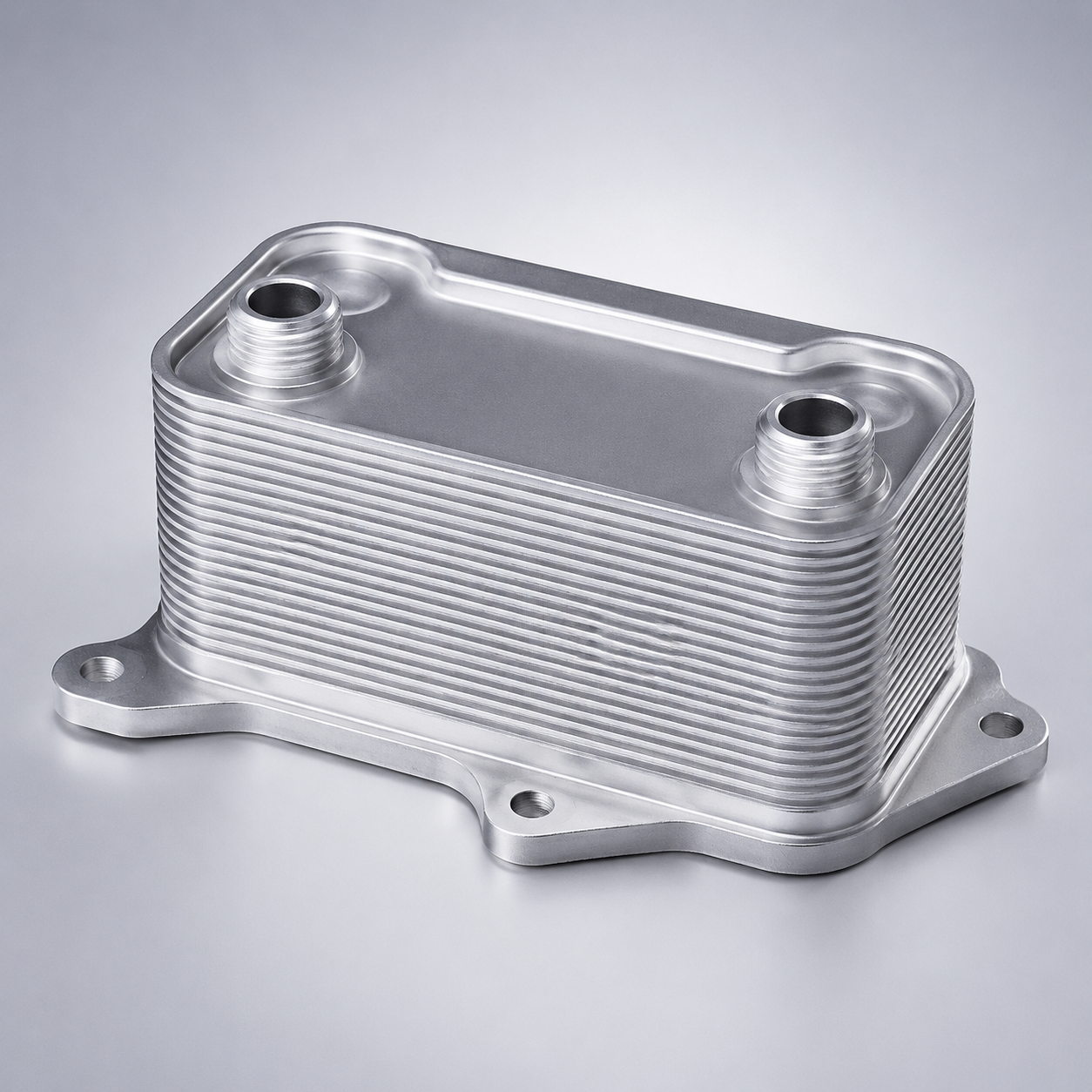
For procurement teams, the phrase **egr cooler vs Mahle alternative** is not really about brand preference. It is a qualification decision: can another supplier match the required fit, thermal durability, leak integrity, and documentation without creating supply or warranty risk?
That is why a serious review goes beyond price. Buyers need evidence on drawings, materials, joining quality, validation data, packaging protection, and traceability. This article breaks the decision into practical sourcing angles so distributors, OEM suppliers, and repair groups can assess alternatives on proof rather than assumption.
Driventus is an independent aftermarket manufacturer; brand names are referenced for fitment only.
Start with the real decision: equivalent part or hidden risk?
When buyers compare an established EGR cooler with a Mahle alternative, the useful question is simple: is this source functionally interchangeable and operationally dependable? If the answer is unclear, the low quote is not yet a saving. It is a potential warranty issue waiting to happen.
What needs to be checked usually falls into two buckets.
Product equivalence — dimensions, port geometry, bracket position, thread specification, material grade, and sealing surfaces
Production control — leak testing, joining consistency, traceability, lot discipline, packaging protection, and repeat-order stability
In practice, the comparison should cover:
Dimensional interchangeability — mounting faces, centre distances, tube routing, bracket location, and sensor boss threads
Material specification — stainless grades used in shells, tubes, and joined areas
Leak integrity — air, helium, or hydrostatic test thresholds at defined pressures
Thermal durability — resistance to repeated heat-up and cool-down cycles without crack initiation or braze failure
Coolant-side corrosion behaviour — especially where maintenance quality varies by market
Soot and condensate exposure — influence on fouling tendency and internal flow stability
Traceability and lot control — batch records, inspection history, and retention-sample practice
Commercial reliability — MOQ, replenishment lead time, packaging consistency, and response to claims
For fitment-led RFQs, buyers should also verify any OE reference included in the enquiry, for example OE 06A107065 where the customer already uses that identifier. Cross-references help identify the target application; they do not prove vehicle manufacturer approval.
A credible supplier should be able to support the discussion with controlled drawings, validation summaries, and PPAP-style records where required.
A side-by-side test: where an alternative wins, and where it fails
Evaluation point
Established branded source
Qualified aftermarket alternative
Drawing conformity
Often based on mature OE-derived geometry
Must show dimensional verification against approved drawings or master samples
Core construction
Known design history
Should disclose tube, plate, or fin structure plus joining method
Weld/braze control
Stable if process control is maintained
Must show process parameters, inspection checkpoints, and leak-test records
Validation data
Sometimes easier to access through distribution networks
Should provide pressure, thermal-cycle, and corrosion-test summaries
Batch traceability
Usually standard practice
Must trace finished goods back to raw material and final inspection
Supply flexibility
Can be limited by channel structure
Often stronger for private-label, mixed-SKU, and lower-volume programmes
Cost structure
Usually includes brand premium
Often lower when sourced directly from the manufacturer
</tr></thead><tbody> </tbody></table>This kind of comparison helps because it removes vague claims. A lower landed cost may improve margin, but it does not confirm technical equivalence. That still has to be demonstrated.
An alternative tends to perform well when the manufacturer has tight drawing control, a stable joining process, and documented validation. It fails when samples look acceptable but production discipline is weak. That gap between sample quality and mass-production consistency is where many sourcing mistakes begin.
If the programme covers multiple engine thermal or emissions-related SKUs, buyers should also review the supplier's wider range through our catalog. Breadth alone is not proof, but it can indicate repeatable manufacturing capability across adjacent product families.
Approval workflow before you switch suppliers
A sound approval process is usually sequential. Skip one step, and the later problem is harder to contain.
Step 1: Lock the reference
Confirm the OE or application cross-reference, drawing scope, and any customer-specific requirements. If the sample source is unclear, qualification starts on the wrong foundation.
Step 2: Check fit-critical dimensions
Request a critical-dimensions report covering:
flange flatness
centre distances
overall envelope
port alignment
thread specification
bracket position
Step 3: Review integrity data
At minimum, buyers should ask for:
Pressure test data for coolant-circuit sealing
Thermal cycle results reflecting realistic exhaust and coolant temperature variation
Metallographic or section evidence where braze or weld quality is critical
Material declarations aligned with REACH (EC) No 1907/2006 for EU market supply
Packaging validation for thin-wall assemblies and exposed necks or flanges
Step 4: Audit the process, not just the part
The manufacturing review should cover incoming material inspection, fixture alignment control, furnace or welding parameters, final leak testing, nonconformance handling, and lot traceability.
Step 5: Run a controlled pilot
Many buyers start with a pilot order, then monitor leak rate, fitment issues, and field returns for three to six months before scaling.
This matters because strong bench performance is only half the story. The real sourcing question is whether those results are reproducible lot after lot under commercial production conditions.
Spec deep-dive: the details that usually predict field performance
Some specification points look minor on paper. In service, they are often decisive.
Joining quality is one of them. Whether the cooler uses brazed or welded construction, the buyer needs confidence that penetration and bond consistency are controlled, not assumed. A neat external appearance does not guarantee durable internal joints.
Flange flatness is another. Small deviations can create sealing issues during installation, especially across mixed service environments where gasket quality and torque discipline vary.
Material selection also deserves closer review than many RFQs give it. Stainless grades used in shells, tubes, and joined areas affect corrosion behaviour, fatigue resistance, and long-term stability under thermal cycling.
Then there is leak integrity. The test method matters, but so do the release criteria, the sampling logic, and whether testing is performed on every unit or under a statistically justified plan.
For automotive buyers, these technical points should sit inside a controlled system. A supplier working under IATF 16949:2016 and ISO 9001:2015 should be able to map control points from raw material receipt through shipment. Buyers can review the supplier's quality system to see how those controls are applied in practice.
If the cooler is used within an emissions-relevant system, purchasers should also consider whether a replacement could introduce a service condition that affects regulated exhaust behaviour. Application requirements vary by market and vehicle class, but wider frameworks such as ECE R-83 remain relevant context when assessing risk.
Direct-from-manufacturer sourcing: where the upside is real, and where it goes wrong
Factory-direct or private-label sourcing can improve economics and visibility. It can also create extra launch work. Both things are true.
Where buyers usually gain
Lower acquisition cost through a shorter supply chain
Better visibility on materials and manufacturing route
More flexibility on labels, barcodes, cartons, and pallet configuration
Easier SKU consolidation with one supplier
Faster engineering response for range extension or running changes
Where programmes usually fail
Validation is rushed because the sample price looks attractive
Pilot lots do not match mass-production consistency
Compliance or customs documents are incomplete
Packaging does not adequately protect flanges or cooler necks in transit
Warranty analysis is too slow to contain field issues early
The main trade-off is not branded versus unbranded. It is channel convenience versus direct manufacturing visibility. A branded box may reduce initial evaluation work. A direct source may offer better cost and more control, but only if the buyer has a disciplined approval process.
For higher-volume programmes, it is sensible to write measurable acceptance criteria into the supply agreement, including PPM targets, leak-test compliance, corrective-action timing, and change-notification expectations.
Supplier interview: eight questions that quickly expose weak alternatives
Before nomination or trial order, procurement teams should ask questions that require records, not reassurance.
1. Is the part built to a controlled drawing, a reverse-engineered sample, or a customer print? 2. What stainless grades are used in the shell, tubes, and joined areas? 3. What final leak-test method is used, and what pressure threshold applies? 4. How is flange flatness measured, recorded, and released? 5. What validation has been completed for thermal fatigue and corrosion resistance? 6. Can the supplier support barcoding, private label, and mixed-carton packaging? 7. What is the standard lead time for repeat orders, and what safety stock is held? 8. How are warranty claims analysed, and how quickly is 8D feedback issued?
A strong supplier usually answers quickly and specifically. A weak one often replies in general terms, sends incomplete reports, or avoids discussing process controls.
If the programme includes branded packaging, application expansion, or drawing-based changes, factory-direct custom manufacturing is often more practical than sourcing through a trading layer.
Driventus is an independent aftermarket manufacturer; brand names are referenced for fitment only.
Which sourcing model fits your channel?
The best answer in the egr cooler vs Mahle alternative decision depends on who is carrying the risk.
Aftermarket distributors and wholesalers usually care most about coverage, price stability, low return rates, and packaging consistency.
OEM and Tier-1 buyers focus more heavily on drawing control, PPAP-style documentation, traceability, and engineering change management.
Multi-location repair groups prioritise installation consistency, dependable replenishment, and low comeback rates across branches.
A practical rule is this: the more expensive the failure in the field, the less useful a price-led decision becomes.
That is why strong buyers do not rely on name recognition alone. They compare process capability, product evidence, and supply fit for the programme. If those three line up, an alternative can be commercially stronger than the incumbent. If they do not, the safer-looking quote may be the more expensive choice.
For buyers assessing broader consolidation opportunities across engine and powertrain categories, our catalog can help identify adjacent SKUs for review.
Frequently asked questions
The minimum proof is dimensional conformity, validated leak integrity, thermal-cycle performance, material disclosure, and traceable production records. For B2B sourcing, inspection reports and manufacturing controls carry more weight than brand claims alone.
It depends on the programme. For OEM, Tier-1, and more controlled aftermarket supply, IATF 16949:2016 is a strong indicator of automotive process discipline. ISO 9001:2015 is still useful, but it is usually less comprehensive for automotive-specific controls.
Yes. Many direct manufacturers can support private-label cartons, barcode formats, and in some cases bracket or port modifications, subject to tooling, drawing review, and validation. Any change should be documented and revalidated before release.
If you are qualifying a new EGR cooler source, we can review drawings, validation requirements, and supply volumes with your team. To discuss a programme or request a quote, visit /contact.html