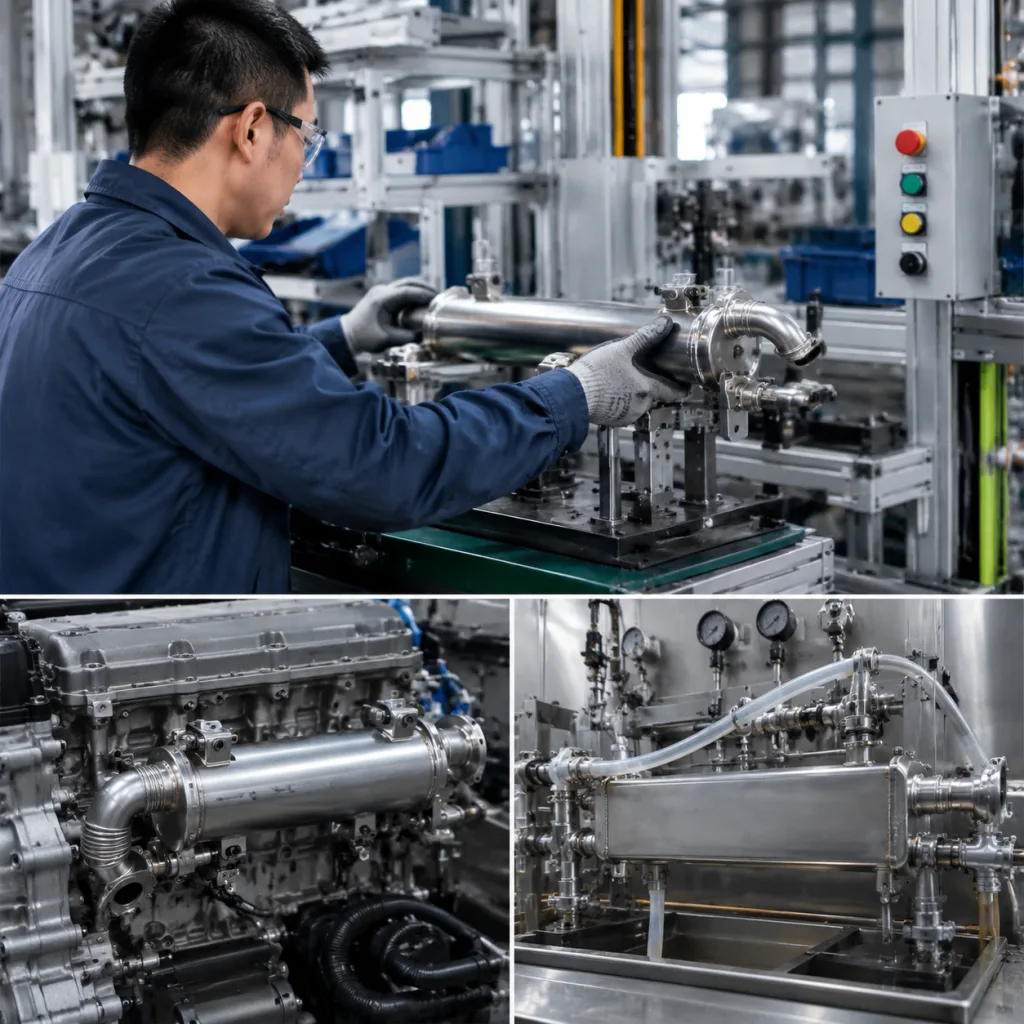
When procurement teams evaluate an egr cooler isuzu oem supplier, the decision should go beyond unit price. The supplier must control brazing quality, pressure integrity, dimensional fit, internal cleanliness and packaging consistency across repeated shipments. It also needs to support audits, documentation, change control and claims response without interrupting supply.
Driventus manufactures engine and powertrain components in Taizhou, Zhejiang, and exports to more than 60 countries. Our EGR cooler programmes support aftermarket distributors, OEM and Tier-1 buyers, and repair networks that need stable quality, traceable production and practical export coordination. This guide outlines the sourcing checks buyers should apply when qualifying Isuzu-pattern EGR coolers for diesel applications, including materials, validation, MOQ, lead time, compliance, documentation and factory audit evidence. Driventus is an independent aftermarket manufacturer; vehicle brand names are referenced for fitment identification only.
What Buyers Should Confirm Before Nomination
An EGR cooler operates in a demanding part of the diesel exhaust system. It handles hot, soot-laden exhaust gas while transferring heat into the coolant circuit through a brazed or welded heat exchanger. If a joint, tube, flange or gasket interface fails, the result can be coolant loss, white exhaust smoke, unstable combustion, contamination of intake components, overheating or repeat workshop claims. For commercial vehicles and light-duty diesel fleets, the field cost of failure is usually much higher than the purchase-price difference between suppliers.
Before nominating an EGR cooler supplier for Isuzu-pattern applications, procurement teams should confirm the supplier's capability in three areas:
Manufacturing route: tube bundle forming, plate stack assembly, vacuum brazing, TIG welding, surface cleaning and final pressure testing.
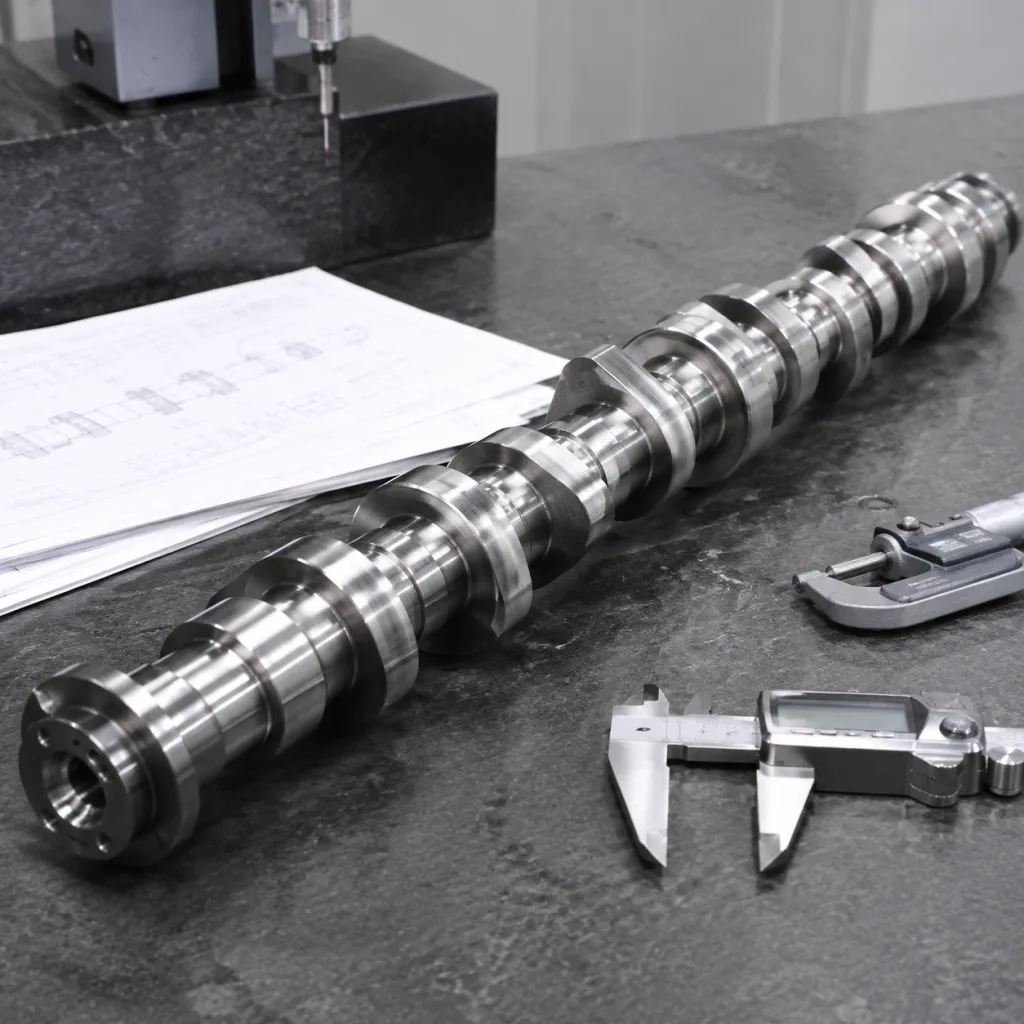
Engineering control: drawing review, OE sample comparison, 3D scanning where required, fixture validation, tolerance review and documented change control.
Batch evidence: incoming material certificates, in-process inspection sheets, leak-test data, packaging drop-test records and traceable lot codes.
Driventus can support part-family review through our catalog, including EGR coolers and related engine components. For distributor programmes, we normally begin with cross-reference review and sample confirmation before moving to volume tooling, validation plans or packaging artwork.
Manufacturing Controls for EGR Cooler Programmes
EGR cooler production depends on joint integrity, repeatable geometry and internal cleanliness. The cooler core must withstand thermal cycling, pressure pulses, vibration and corrosive condensate. Fit accuracy also matters because flange position, pipe angle, coolant-port alignment and bracket location affect installation time and warranty risk in the repair network.
A typical Driventus production control plan for this product category includes:
Control point
Procurement relevance
Typical verification
Stainless steel tube or plate material
Corrosion and heat resistance
Material certificate and incoming inspection
Brazing or welding process
Leak prevention and service life
Furnace profile or weld parameter record
Flange flatness
Sealing against exhaust and coolant leakage
CMM or fixture gauge inspection
Port and bracket position
Direct-fit installation and reduced rework
Fixture check or dimensional report
Internal cleanliness
Reduced blockage, residue and contamination risk
Visual inspection and cleaning record
Pressure integrity
Confirmation of coolant-side sealing
100% pressure or air-decay leak test
Packaging protection
Prevention of flange, pipe and sensor-port damage in transit
Carton specification and drop-test review
</tr></thead><tbody> </tbody></table>For higher-volume buyers, Driventus can build project-specific control plans aligned with IATF 16949:2016 expectations and ISO 9001:2015 document control. These systems do not replace buyer validation, but they give auditors a structured basis for process review, corrective action handling, production release and ongoing shipment monitoring.
MOQ, Lead Time and Forecast Planning
Supplier discussions often stall when the commercial assumptions are unclear. An EGR cooler programme may include slow-moving references for older engines, fast-moving SKUs for active fleet platforms and customer-specific packaging requirements. Each group has a different cost structure, tooling status and inventory risk.
For new Isuzu-pattern EGR cooler sourcing, Driventus typically separates the programme into three stages:
1. Sample and drawing confirmation, including OE sample comparison where available. 2. Pilot order, using neutral packaging or agreed private-label packaging. 3. Rolling supply, supported by forecast visibility and agreed safety stock where volume justifies it.
MOQ depends on tooling status, raw material availability, packaging type, forecast confidence and annual demand. Existing references usually carry a lower MOQ than newly developed coolers that require fixtures, validation and first article inspection. Lead time also varies by project status: stocked or semi-finished references can move faster, while new-development items need time for engineering review, sample build, testing, customer feedback and approval.
For practical procurement planning, buyers should provide annual volume, destination market, target delivery schedule, packaging requirements and any inspection standard used by their warehouse or incoming quality team. This allows the quotation to reflect actual landed-cost risk instead of only the ex-works unit price.
Quality Documentation and Audit Evidence
A qualified EGR cooler Isuzu OEM supplier should be able to provide more than a catalogue photo, price sheet and packing list. Buyers serving the EU, UK, North America, Australia, Brazil and other regulated markets need evidence that the factory can control repeated shipments, isolate affected batches and respond to claims with disciplined root-cause analysis.
Driventus can provide documentation packs according to programme scope, including:
IATF 16949:2016 and ISO 9001:2015 certification evidence for the management system.
Material certificates for stainless steel and relevant purchased components.
Dimensional reports for key flange, bracket, port and pipe positions.
Leak-test records by batch or production lot.
First article inspection reports for new references.
PPAP-style documentation where required for OEM or Tier-1 projects.
Corrective action reports using 8D format when a confirmed quality issue occurs.
Packaging specifications, label samples and carton-strength checks when required by the buyer.
Regulatory obligations depend on the destination market and installation context. For material declarations, buyers may request support related to REACH (EC) No 1907/2006. For vehicle emissions systems, the complete vehicle or system approval context remains the responsibility of the vehicle manufacturer, importer or installer. Driventus does not claim endorsement, sponsorship or approval by Isuzu or any other vehicle brand.
Custom Manufacturing for Isuzu-Pattern Applications
Some distributors need direct-fit aftermarket replacements, while OEM and Tier-1 buyers may require bracket changes, port orientation changes, tube geometry adjustments, sensor-boss revisions, private tooling or dedicated packaging. Driventus supports custom manufacturing when the buyer can provide samples, drawings, performance requirements or confirmed application data.
Data Needed for Development
A complete enquiry should include the application family, engine code if available, target markets, expected annual demand, mating gasket information, coolant pipe orientation, exhaust flange details, sensor or valve interface requirements and packaging specifications. If the buyer references OE numbers, use generic fitment identifiers such as OE 06A107065 only when they are already part of the enquiry record; Driventus will not invent or imply brand-owned part numbers.
Validation Scope
For custom projects, validation may include dimensional inspection, pressure testing, thermal cycling, vibration checks, internal cleanliness review and installation trial feedback. Requirements should be agreed before quotation because deeper validation changes both cost and timeline. Buyers with their own test protocols can share them during the RFQ stage so the factory can confirm feasibility, tooling needs and sample-production timing before development begins.
RFQ Checklist for Procurement Teams
A precise RFQ shortens supplier response time and reduces rework. When sending an EGR cooler enquiry to Driventus, include enough technical, commercial and logistics detail for the factory to identify whether the request fits an existing programme, a modified reference or a new-development project.
Useful RFQ information includes:
Target product: EGR cooler for Isuzu-pattern application.
Required fitment data: engine family, model range, production years and market region.
Reference basis: sample, drawing, buyer part number or approved cross-reference list.
Annual demand: estimated units by SKU and shipment frequency.
Order model: trial order, scheduled call-off, private label or direct bulk supply.
Quality requirements: inspection plan, PPAP need, special characteristics and warranty expectation.
Compliance requests: REACH (EC) No 1907/2006 support, material declaration or market-specific paperwork.
Logistics: Incoterms, destination port, preferred forwarder and required delivery window.
Audit expectations: certification review, process audit, sample report or batch-documentation request.
Buyers can request a quote with current references, samples or drawings. Our team will review the application data, confirm the sourcing route and return pricing, MOQ and lead-time details based on the required quality and documentation scope.
Frequently asked questions
Yes. Driventus supports neutral packaging and buyer-branded packaging depending on MOQ, artwork approval, destination market and programme duration. Packaging specifications should be confirmed during RFQ to avoid carton strength, label, barcode or palletisation issues.
Buyers should review IATF 16949:2016 and ISO 9001:2015 certification, then verify the actual control plan, inspection records, leak-test data, material certificates and corrective action process. Certification is useful, but batch-level evidence is still needed.
No. Driventus is an independent aftermarket manufacturer; brand names are referenced for fitment only. We do not claim approval, sponsorship or endorsement by any vehicle manufacturer.
For pricing, MOQ, lead time and audit-document review on EGR cooler supply, send your application list, samples or drawings to Driventus. Start a sourcing discussion at /contact.html