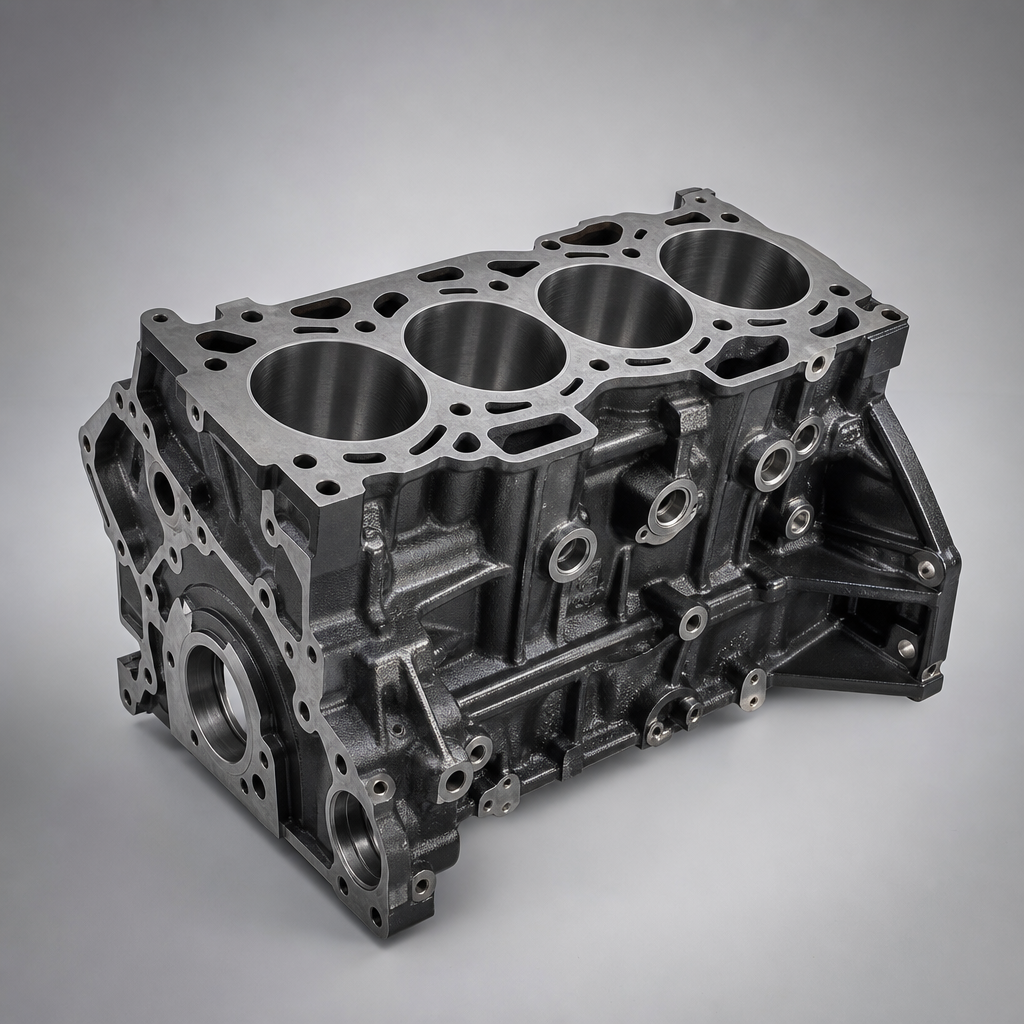
Sourcing an EGR cooler for Infiniti applications is a fitment and validation exercise, not a simple price comparison. Buyers need the correct tube routing, flange geometry, coolant connection layout, material specification, and thermal performance for the exact engine code and model year. For cross-border procurement, the supplier must also demonstrate stable process control, documentation, and repeatable packaging for export. Driventus supplies EGR cooler assemblies and related engine components from Taizhou, Zhejiang, with production controlled under IATF 16949:2016 and ISO 9001:2015. Driventus is an independent aftermarket manufacturer; brand names are referenced for fitment only. This article explains what procurement teams should verify before placing an order, how to compare Chinese manufacturing options, and which documents to request during audit and first-article approval. For broader part coverage, see [our catalog](/products.html), [our quality system](/quality.html), and [custom manufacturing](/oem-services.html).
Decision framework: What to lock before contacting suppliers
Before you send a single RFQ, lock the fitment data. Engine code, vehicle platform, production year range, emission variant, inlet and outlet orientation, coolant hose size, mounting points—small differences in bracket offset or flange angle can make an apparently similar cooler unusable at installation.
Procurement teams should also confirm whether the required unit is a welded stainless-steel cooler (e.g., 304L or 316L grade, 1.5 mm wall thickness), a tube-and-shell design (e.g., 8 mm OD tubes, 0.8 mm wall), or a gas-to-liquid assembly integrated with a bypass valve. If the buyer is replacing an OE unit, the correct cross-reference should be verified from the vehicle VIN, engine family, or OE part number (e.g., 14710-XXXXX for Nissan/Infiniti) before any sample order is approved.
Key items to verify:
OE part-number cross-reference and engine family
Overall envelope dimensions and core length (e.g., 300 mm ± 1 mm)
Mounting-hole centres (e.g., 80 mm ± 0.2 mm) and flange thickness (e.g., 8 mm ± 0.1 mm)
Coolant port diameter (e.g., 16 mm ID) and thread type (e.g., M16x1.5)
EGR inlet and outlet orientation (e.g., 90° offset, 45° rotation)
Thermal duty cycle (e.g., 800°C max inlet gas, 120°C coolant) and pressure-drop target (e.g., < 5 kPa at 100 kg/h flow)
Gasket set and fastener inclusion (e.g., M8 bolts, 20 N·m torque spec)
Driventus can support build-to-print and sample-based confirmation when the buyer supplies measured drawings or a physical sample.
Failure modes that make Chinese manufacturing the right choice
China is a common sourcing base for EGR coolers because the parts combine metal fabrication, welding, leak testing, machining, and packaging in one supply chain. That matters for procurement because the failure modes are often tied to process control rather than raw material alone.
A qualified manufacturer should be able to show control over stainless steel grade selection (e.g., 304L with 0.03% max carbon), welded joint consistency (e.g., 2 mm bead width, no porosity), dimensional inspection (e.g., CMM check on 10% sample, ±0.1 mm tolerance), and final leak testing (e.g., 100% air test at 200 kPa, 30 s hold, < 0.5 cc/min leak rate). Buyers usually benefit from shorter lead times (e.g., 25–35 days for first sample, 45–60 days for bulk) than a fragmented multi-supplier route, especially when the supplier owns tube forming, jigging, welding, and test fixtures in-house.
For fleet or wholesale programmes, the practical sourcing question is not whether the factory is in China. It is whether the factory can hold geometry, test every batch, and document the result in a form that supports import compliance and internal audit. That is where a structured quality system matters more than the location itself. Driventus works to IATF 16949:2016 and ISO 9001:2015 processes for controlled production and traceability.
Spec deep-dive: What to measure, not just read
A buyer should compare EGR coolers on measurable parameters, not catalogue descriptions. The table below covers the most common checks used during supplier qualification.
Item
What to confirm
Typical buyer concern
Material
Stainless steel grade (e.g., 304L, 316L, 1.5 mm wall), bracket material (e.g., 409 SS, 2 mm), gasket type (e.g., graphite, 1.5 mm thick)
Corrosion resistance and thermal cycling
Weld quality
Visual finish (e.g., no spatter, 2 mm bead), bead continuity, no burn-through (e.g., 0.5 mm max undercut)
Leak risk and fatigue life
Dimensions
Core size (e.g., 300x100x50 mm ± 1 mm), flange offset (e.g., 10 mm ± 0.2 mm), port angle (e.g., 90° ± 1°), bolt pattern (e.g., 4 holes, 80 mm centres)
Direct fit and installation time
Pressure test
Air or water leak test record (e.g., 200 kPa, 30 s, < 0.5 cc/min), hold time
Early failure prevention
Flow path
Internal passage design (e.g., 8 mm tubes, 0.8 mm wall), soot deposition risk (e.g., 10% max flow reduction after 100 h)
Restricted EGR flow
Packaging
Protection for machined faces and ports (e.g., foam inserts, 20 kg carton, 5-layer corrugated)
Transit damage and claims
Documentation
CoC, inspection record (e.g., 10% sample, 100% leak test), export packing list
Customs and warehouse receiving
</tr></thead><tbody> </tbody></table>If the programme has a published performance target, ask for the actual test condition rather than a general statement. Pressure drop (e.g., < 5 kPa at 100 kg/h), burst margin (e.g., > 3x operating pressure, min 600 kPa), and thermal shock resistance (e.g., 100 cycles, 800°C to 20°C, no failure) should be tied to the same test method across all quotations. For many importers, that discipline is the difference between a usable sourcing file and a price sheet.
Validation checklist: Testing that separates serious suppliers from the rest
An EGR cooler sits in a high-heat, high-contamination environment. A supplier that only checks appearance is not enough for repeat purchasing. Buyers should ask for testing evidence that covers both integrity and dimensional repeatability.
Useful validation items include:
100% leak testing on finished assemblies (e.g., air test at 200 kPa, 30 s hold, < 0.5 cc/min)
Dimensional inspection on a defined sampling plan (e.g., AQL 1.0, CMM check on 10% sample, ±0.1 mm tolerance)
Welding process controls (e.g., WPS, 2 mm bead width, 0.5 mm max undercut) and jig records (e.g., jig calibration every 6 months)
Thermal cycling or heat-soak evidence where available (e.g., 100 cycles, 800°C to 20°C, no failure)
Corrosion-related material declaration for export compliance (e.g., REACH compliant, 304L grade)
Packaging drop or transit protection review (e.g., 1.2 m drop test, 20 kg carton, 5-layer corrugated)
Published standards do not cover every aftermarket cooler detail, but they help structure the supplier file. Material declarations may be aligned with REACH (EC) No 1907/2006 for EU shipments, while internal quality systems should sit under IATF 16949:2016 and ISO 9001:2015. If the buyer needs a durability benchmark for related exhaust components, standards such as SAE J2527 are sometimes used for corrosion exposure context, although the exact relevance depends on the test plan and part design.
A serious supplier should be able to provide sample inspection records before mass production and lot-level traceability after release.
Comparison: How to evaluate suppliers beyond unit price
Commercial comparison should be tied to risk, not only unit price. For a repeat-order EGR cooler programme, the buyer should compare the following items across shortlisted factories.
1. MOQ and mix flexibility for part families: e.g., 500 pcs per reference, or 1000 pcs across 3 references. 2. Lead time for first sample (e.g., 25–35 days), pre-production (e.g., 10–15 days after sample approval), and bulk release (e.g., 45–60 days after order confirmation). 3. Tooling ownership (e.g., buyer-owned or supplier-owned, amortized over 5000 pcs) and sample revision control (e.g., 3 rounds of revision included). 4. Packaging standard for export cartons (e.g., 20 kg, 5-layer corrugated, foam inserts) and pallet loading (e.g., 40 cartons per pallet, 800 kg max). 5. Warranty handling (e.g., 12 months from shipment), defect response time (e.g., 48 hours), and containment process (e.g., 100% sort within 5 days). 6. Document set available for customs, warehouse, and quality review: e.g., CoC, inspection report, packing list, material declaration.
A factory that can quote quickly but cannot support revision control often creates more cost later through misfit stock and returns. A supplier that can supply lower volume (e.g., MOQ 200 pcs) with clean documentation may be more valuable to a regional distributor than one offering only aggressive unit pricing (e.g., $15 vs $18 per unit).
When comparing quotations, ask for separate lines for tooling (e.g., $2000 one-time), sample approval (e.g., $100 per sample), test charges (e.g., $500 per batch), and production price (e.g., $15 per unit). That makes it easier to judge whether the supplier is offering true manufacturing capacity or simply a low entry number with hidden recovery later.
Step-by-step: Fitment verification and replacement control
For replacement business, the part must match the application closely enough to install without rework. That is especially important for Infiniti vehicles where multiple engine variants (e.g., VQ35DE, VQ37VHR, VK56DE) can share a body platform but differ in cooler layout.
Before approval, confirm:
OE cross-reference from the buyer’s reference list (e.g., 14710-XXXXX for Nissan/Infiniti)
Engine code and emissions version (e.g., VQ35DE, Euro 4)
Port spacing (e.g., 80 mm ± 0.2 mm) and gasket face dimensions (e.g., 50x30 mm)
Sensor or pipe interface points nearby (e.g., 10 mm clearance to EGR valve)
Clearances to surrounding brackets and heat shields (e.g., 5 mm min)
Driventus does not claim vehicle manufacturer approval or endorsement. Driventus is an independent aftermarket manufacturer; brand names are referenced for fitment only.
If the buyer is working from an OE number, the easiest path is to request a matched sample and compare it against the physical unit in service. That reduces the risk of ordering a visually similar cooler with a different core length or offset bracket. For complex programmes, our catalog and engine components overview can help buyers group related part numbers under one sourcing file.
Scenario: Export paperwork and compliance file for import managers
Import managers usually need a simple but complete compliance file. For EGR coolers, that file should contain enough information for receiving inspection, customs clearance, and quality release.
Recommended documents:
Commercial invoice and packing list (e.g., 20 cartons, 400 kg net, 450 kg gross)
Product description with application reference (e.g., EGR cooler for Infiniti G35, VQ35DE)
Material declaration or chemical compliance statement (e.g., REACH compliant, 304L grade)
Inspection report for dimensions (e.g., 10% sample, ±0.1 mm tolerance) and leak test (e.g., 100% at 200 kPa, < 0.5 cc/min)
Certificate of conformity where requested by the buyer (e.g., IATF 16949:2016 certified)
Carton count, net weight, and gross weight data (e.g., 20 cartons, 20 kg each, 400 kg net, 450 kg gross)
For EU-bound shipments, REACH (EC) No 1907/2006 is a common reference point for substance control. For internal supplier qualification, IATF 16949:2016 and ISO 9001:2015 remain the most useful system references because they show whether the factory can repeat the process, not just build a sample once.
Where programme scope allows, buyers often request an initial sample approval package (e.g., 5 samples with inspection report) followed by lot-based inspection records (e.g., 10% sample per lot). That reduces the risk of mixed revisions entering stock.
Q&A: When custom manufacturing makes sense
Not every Infiniti EGR cooler programme should be handled as a straight catalogue purchase. Custom manufacturing is appropriate when the buyer needs a revised tube angle (e.g., 45° instead of 90°), a different flange (e.g., 8 mm thick vs 10 mm), modified bracket spacing (e.g., 80 mm vs 100 mm), alternative surface treatment (e.g., aluminized coating), or a private-label packaging plan (e.g., branded cartons, 20 pcs per box).
Custom work is also useful when the buyer wants to consolidate multiple references into one production drawing, provided the fitment envelope remains controlled. In that case, the supplier should document which dimensions are fixed (e.g., core length 300 mm ± 1 mm) and which can be adjusted (e.g., bracket offset ± 5 mm) for a given engine family.
A practical custom project should include:
Measured sample or drawing set (e.g., 3D CAD, 2D drawing with tolerances)
Target annual volume and release schedule (e.g., 5000 pcs/year, 2 releases per year)
Material preference and corrosion requirement (e.g., 304L, REACH compliant)
Packaging and labelling instructions (e.g., branded cartons, 20 pcs per box, 5-layer corrugated)
If you are consolidating references or setting up a private specification, custom manufacturing is the right starting point. For standard replacement business, a catalogued reference may be enough once fitment is confirmed.
Frequently asked questions
Ask for a quotation with OE cross-reference (e.g., 14710-XXXXX), dimensional data (e.g., core length 300 mm ± 1 mm), material declaration (e.g., 304L), leak-test record (e.g., 100% at 200 kPa, < 0.5 cc/min), and export packing details (e.g., 20 kg carton, 5-layer corrugated). That is usually enough for internal review and customs planning.
Yes. Custom manufacturing is suitable when the buyer supplies a sample, drawing, or agreed target dimensions. The fixed and adjustable dimensions should be defined before tooling release. Typical MOQ for custom work is 500 pcs, lead time 35–45 days for first sample.
Fitment risk is controlled by checking engine code (e.g., VQ35DE), OE reference (e.g., 14710-XXXXX), port orientation (e.g., 90° offset), flange geometry (e.g., 80 mm centres, 8 mm thick), and mounting points against a physical sample or measured drawing before mass production. We also offer a sample matching service with a 10-day turnaround.
No. Driventus supplies EGR coolers and related engine components across multiple passenger-car and light-duty programmes. Application references are used for fitment only. We cover over 2000 references for Nissan, Toyota, Honda, and other brands.
Review the fitment data, send your reference numbers, and we will confirm the production path for your programme. Start with a quote request at /contact.html