For distributors and import managers, sourcing EGR coolers for Citroen applications requires more than a unit-price comparison. The component operates in a hot, corrosive exhaust stream while keeping pressurised coolant sealed from the gas path. Poor control of brazing, flange geometry, internal cleanliness or port position can lead to coolant loss, exhaust leakage, diagnostic trouble codes, installation delays and warranty claims across a repair network. Driventus manufactures EGR coolers and related engine components in Taizhou, Zhejiang, for aftermarket, OEM and Tier-1 supply channels. Production is managed under IATF 16949:2016 and ISO 9001:2015 systems, with dimensional inspection, pressure testing and material verification built into the release process. This guide explains how to evaluate egr cooler Citroen wholesale supply, including specification control, MOQ, lead-time, audit evidence, documentation and fitment boundaries for EU, UK, North American, Australian and Brazilian buyers.
Wholesale Sourcing Priorities for Citroen Applications
Citroen platforms use several diesel and petrol engine families, and many share architecture with wider Stellantis/PSA applications. A wholesale programme should therefore begin with application mapping, not with the assumption that one cooler body can cover a broad catalogue position. Buyers should define engine code, model year range, emissions level, mounting interface, valve connection type, bypass design, sensor ports and coolant hose orientation before confirming the purchasing specification.
For aftermarket distribution, the commercial question is not only whether a part fits one vehicle in a sample check. It is whether the supplier can support repeatable fitment data, stable packaging, traceable batches and low return rates across multiple part numbers. Driventus can review buyer drawings, original samples, customer-provided OE-style cross-references and TecDoc-style fitment structures, then align the sourcing file with the intended sales channel.
A practical sourcing file should include:
Target vehicle applications, engine codes and model-year ranges
Required annual volume and forecast by SKU
Sample approval requirement and PPAP level, where applicable
Coolant-side and exhaust-side pressure test requirements
Packaging standard for sea freight, air freight or bonded warehouse delivery
Marking rules, including neutral branding or buyer private label
Required accessories, such as gaskets, clamps or mounting hardware
Compliance documents required for customs and market access
Driventus is an independent aftermarket manufacturer; Citroen and other brand names are referenced for fitment identification only.
Specification Controls That Reduce Warranty Risk
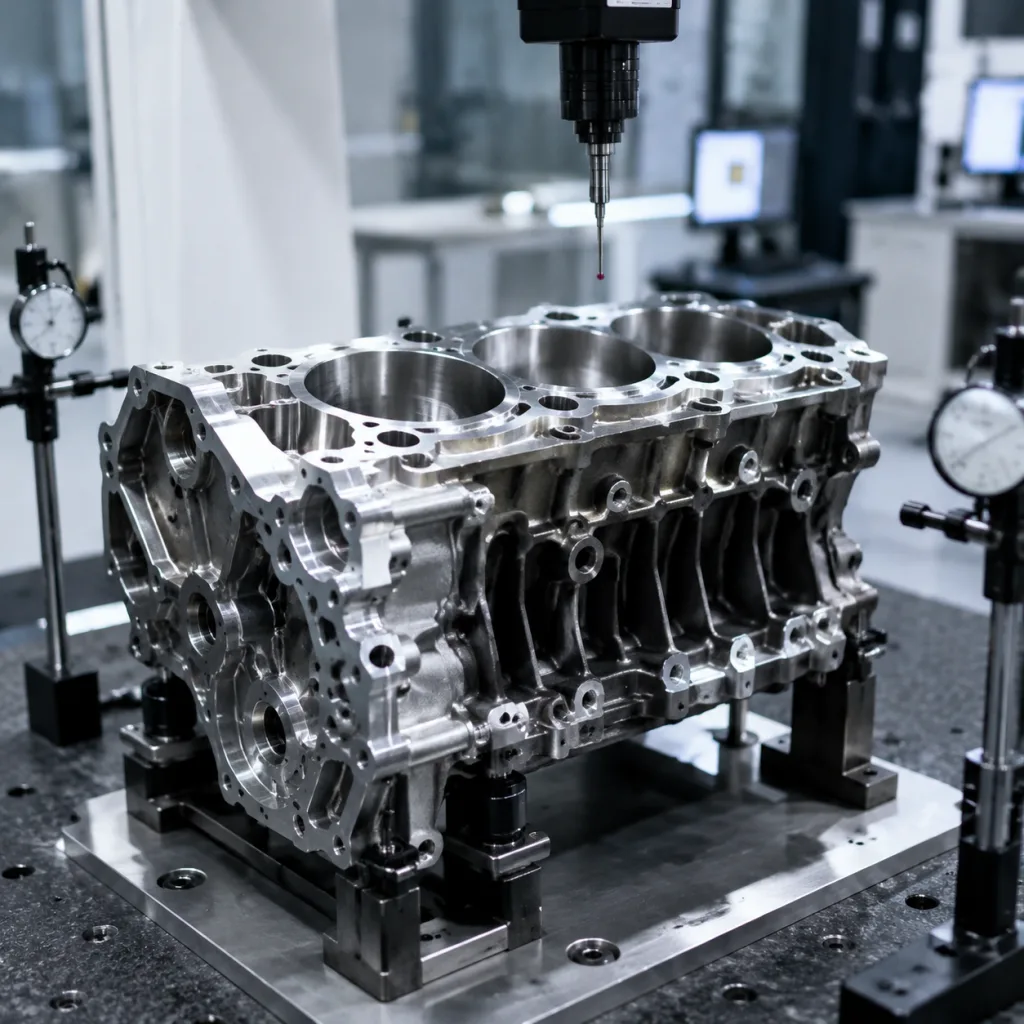
An EGR cooler must transfer heat from exhaust gas to coolant while maintaining separation between the two circuits. Procurement teams should treat wall thickness, brazing quality, weld consistency, flange flatness and internal cleanliness as controlled characteristics. Small dimensional differences can cause gasket misalignment, coolant seepage, exhaust noise or stress at pipe connections after installation.
Control item
Typical buyer requirement
Inspection method
Flange flatness
Drawing-controlled tolerance
Surface plate and feeler gauge or CMM
Coolant-side leakage
100 percent pressure test
Air-under-water, dry leak or pressure decay test
Exhaust-side leakage
Batch or 100 percent test by programme
Pressure decay or fixture-based leak test
Weld or brazed joint integrity
No visible cracks, pores or incomplete fusion
Visual inspection and section audit
Mounting hole position
Drawing tolerance maintained
CMM or fixture gauge
Port and bracket orientation
Match approved sample or drawing
Assembly fixture and visual check
Internal cleanliness
No loose metal particles or process residue
Flushing, borescope or visual check
Packaging protection
No deformation during transport
Drop and vibration review where specified
</tr></thead><tbody> </tbody></table>Material selection depends on application and buyer specification. Stainless steel is widely used because it resists high-temperature corrosion from exhaust condensate, while aluminium or cast interfaces may appear in some assemblies. Gaskets, valves, bypass flaps and sensor ports must be verified separately because an apparently similar cooler body may use different connections or sealing surfaces.
When comparing factories, the most useful evidence is not a sales photo or a generic certificate. Request control plans, inspection records, material certificates, leak-test data and sample reports tied to the exact part family. Quality systems such as IATF 16949:2016 and ISO 9001:2015 support process discipline, but buyers should still confirm part-level validation before approving bulk supply.
MOQ, Lead-Time and Programme Structure
Wholesale EGR cooler orders usually fall into three patterns: mixed-SKU stocking orders, private-label distributor programmes and project-based production for a defined platform. Each pattern needs a different planning rhythm. A mixed order may prioritise catalogue breadth and carton consistency. A private-label programme may require artwork approval, barcode control, carton testing and regional labelling checks. A project order may involve drawing review, first article approval, PPAP documentation and staged release.
Typical planning points for egr cooler Citroen wholesale purchasing include:
Sample development or sample matching after receipt of drawings, original samples or detailed fitment data
Pre-production sample review with dimensional report, pressure test record and installation interface check
MOQ set by SKU complexity, tooling status, material availability and packaging format
Standard lead-time based on casting or tube forming, brazing, machining, assembly, testing and export booking
Container planning to consolidate EGR coolers with gaskets, water pumps, turbocharger components or other engine parts when freight efficiency matters
After-sales control covering claim evidence, return sampling and corrective action timing before shipment
Buyers can review current part coverage through our catalog. For Citroen-related engine and emissions components that are not already released, Driventus can assess custom manufacturing using customer drawings, samples or structured technical data.
A stable purchasing programme should also define order freeze dates. EGR cooler assemblies often include multiple bought-in subcomponents, so late changes to brackets, fittings, labels or packaging can affect production sequencing and shipment planning.
Factory Audit and Quality System Evidence
A factory audit should verify whether the supplier can control repeated production, not only whether it can produce one acceptable sample. For EGR coolers, audit teams should focus on incoming material control, welding or brazing parameters, machining fixtures, leak-test calibration, nonconforming product handling and traceability from raw material to finished carton.
Useful audit checkpoints include:
Valid IATF 16949:2016 and ISO 9001:2015 certificates within scope
Documented APQP, PPAP or equivalent project release process where required
Calibration records for pressure gauges, leak testers, CMM and torque tools
Work instructions at forming, welding, brazing, machining and assembly stations
First-off and last-off inspection records for each production batch
Lot traceability for metal materials, gaskets and purchased fittings
Clear segregation and disposition records for nonconforming product
Corrective action process with root-cause analysis and verification
Packaging inspection before export loading
For regulated markets, documentation may also include material declarations and restricted substance statements aligned with REACH (EC) No 1907/2006 where applicable. Emissions system components must support vehicle repair and maintenance without implying approval by any vehicle manufacturer. The supplier should avoid claims that exceed the evidence base, especially where vehicle-level emissions approval is not held.
Driventus maintains a documented quality system covering process control, inspection and supplier management. Buyers may request audit materials, sample reports and production records during supplier qualification.
Fitment Data, Cross-References and Compliance Boundaries
Fitment errors create avoidable cost in wholesale channels. A distributor may receive a cooler that looks correct in photos but fails in the workshop because the bracket angle, coolant port, bypass arrangement, gasket face or sensor position differs from the target vehicle application. This risk increases when one platform has multiple emissions variants, engine calibrations or regional specifications.
Procurement teams should separate three types of information:
Physical fitment: flange, port, bracket, hose, valve and gasket interface
Functional requirement: coolant sealing, exhaust flow path, heat exchange performance and bypass operation where applicable
Commercial reference: buyer SKU, supplier number and customer-provided OE-style cross-reference
When a buyer provides a cross-reference such as an OE-style number, Driventus can use it as one input for matching, but it should not replace drawing, sample or validated application confirmation. Brand names and model names are used only to identify fitment context. Driventus is an independent aftermarket manufacturer; Citroen and other brand names are referenced for fitment only.
For Europe and the UK, buyers may ask for documentation related to REACH (EC) No 1907/2006. For emissions-related parts, the vehicle system context may relate to regulatory frameworks such as ECE R-83, but an aftermarket EGR cooler supplier should not claim vehicle-level certification unless such certification is formally held and applicable. In North America, importers should also confirm labelling, customs classification, customer-specific warranty obligations and any state or federal restrictions before shipment.
How to Request a Quote That Can Be Compared
A clear RFQ helps suppliers quote accurately and helps buyers compare factories on more than unit price. For egr cooler Citroen wholesale sourcing, include fitment data, target volume, packaging requirements and quality expectations in the first request. Missing data often leads to conservative pricing, incomplete quotations or engineering changes after the sample stage.
Recommended RFQ content:
Application list by model, year range, engine code and market
Buyer part number and any customer-provided OE-style references
Annual forecast, first order quantity and target delivery schedule
Required accessories, such as gaskets, clamps or mounting hardware
Branding requirement: neutral, private label or customer carton
Test requirements: coolant leak test, exhaust leak test, thermal cycle or salt spray where specified
Required documents: certificate copies, inspection report, material declaration, packing list format and certificate of origin
Incoterms, destination port and preferred shipment method
Claim-handling rules, including evidence required for technical review
When comparing offers, check what is included. A low quote may exclude gaskets, use weaker packaging, omit 100 percent pressure testing or depend on a longer production window. A technically complete quotation should identify the part configuration, test scope, MOQ, lead-time, packaging method and document package.
To start a structured quotation, buyers can request a quote with samples, drawings or a target SKU list.
Frequently asked questions
Yes. Private-label supply can be reviewed by SKU, volume and packaging requirement. Buyers should provide artwork rules, barcode format, carton specification and any market-specific documentation needs before sample approval.
Available documents may include IATF 16949:2016 and ISO 9001:2015 certificates, inspection reports, pressure test records, packing details, material declarations and shipment documents. Exact content depends on the product programme and buyer requirements.
No. Coverage depends on engine family, year range, emissions configuration, mounting points, coolant connections and regional specification. Buyers should confirm fitment by drawings, samples or validated application data before bulk ordering.
Driventus can review your Citroen EGR cooler SKU list, target MOQ, packaging requirements and audit documents for a practical wholesale quotation. Send the sourcing details through /contact.html