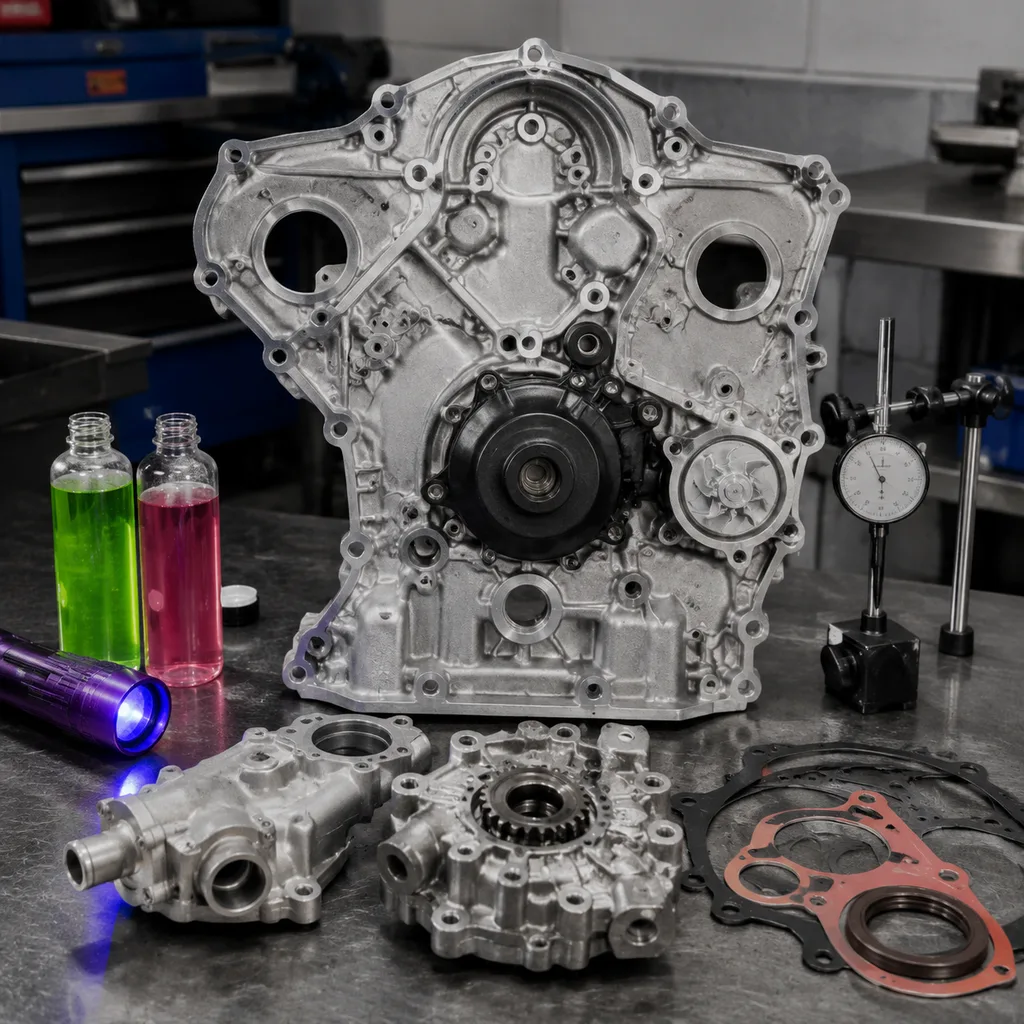
EGR Cooler Cadillac Manufacturer China: Sourcing Guide
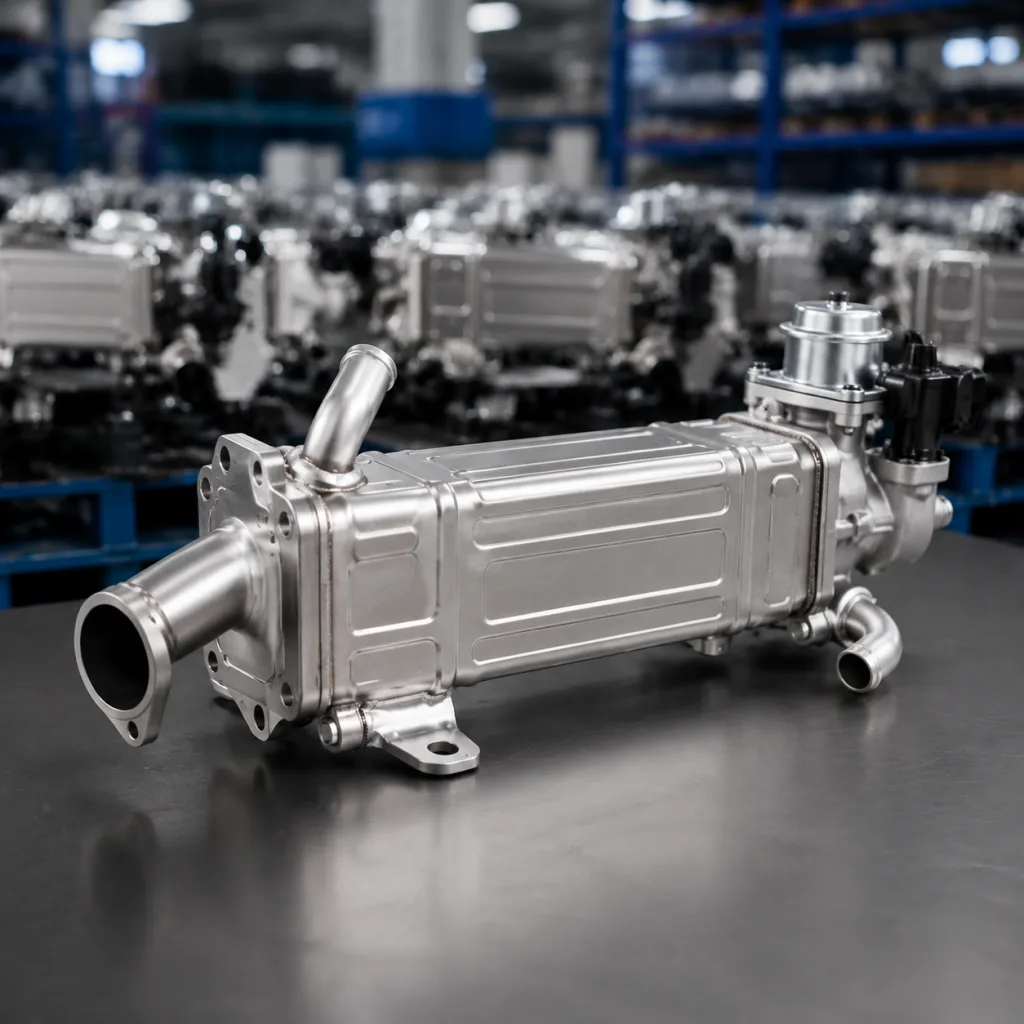
Procurement teams searching for an `egr cooler cadillac manufacturer china` usually need more than a nominal part-number match. The cooler has to fit the engine family, survive thermal cycling without leakage, and arrive with documentation that stands up to internal review. Driventus supplies engine and powertrain components from Taizhou, Zhejiang, under IATF 16949:2016 and ISO 9001:2015 quality systems for controlled production and inspection. Driventus is an independent aftermarket manufacturer; brand names are referenced for fitment only. For Cadillac applications, buyers typically compare OE numbers, gasket interface dimensions, cooler-core construction, and emissions-related durability targets before approving samples. This guide focuses on the decisions that actually change outcomes: fitment checks, failure modes, validation gates, and supply planning. If you need a quoted programme, sample set, or cross-reference review, the fastest path is clear.
Fitment first: what to verify before quoting
For Cadillac EGR cooler sourcing, the first task is to confirm the exact engine and OE cross-reference, not only the vehicle badge. Cadillac nameplates can share platforms across multiple engine variants, so the same model year may use different cooler assemblies.
Minimum verification set
- OE reference and engine code
- Cooler inlet and outlet port geometry
- Mounting-face pattern and bracket position
- Tube or plate core material
- Seal stack-up, gasket type, and clamp load
- Pressure and thermal test requirement
Buyer-ready data request
- Part number photo from the old unit
- Overall length, width, and height in millimetres
- Port centre distance and flange thickness
- Bolt-hole diameter and centre-to-centre spacing
- Heat-exchanger passage count or core channel count
- Target test pressure and acceptance limit
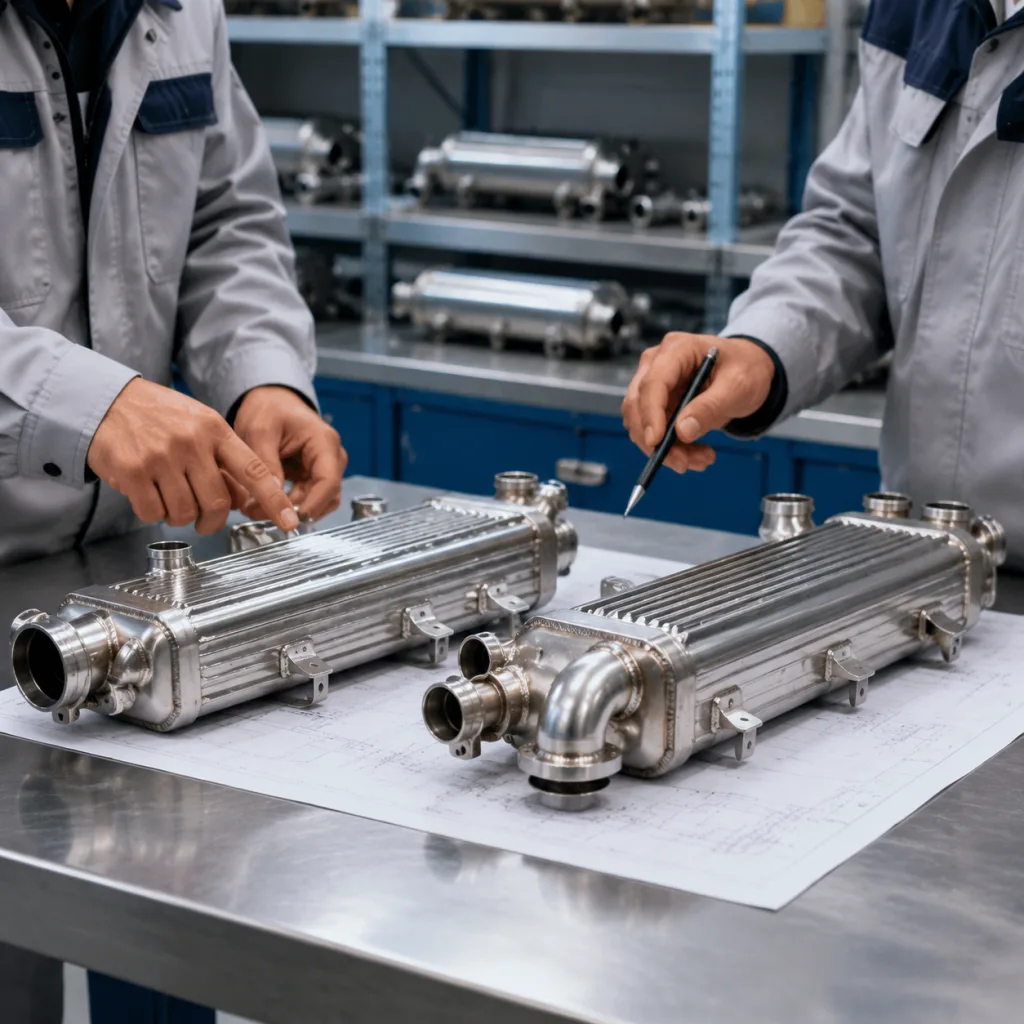
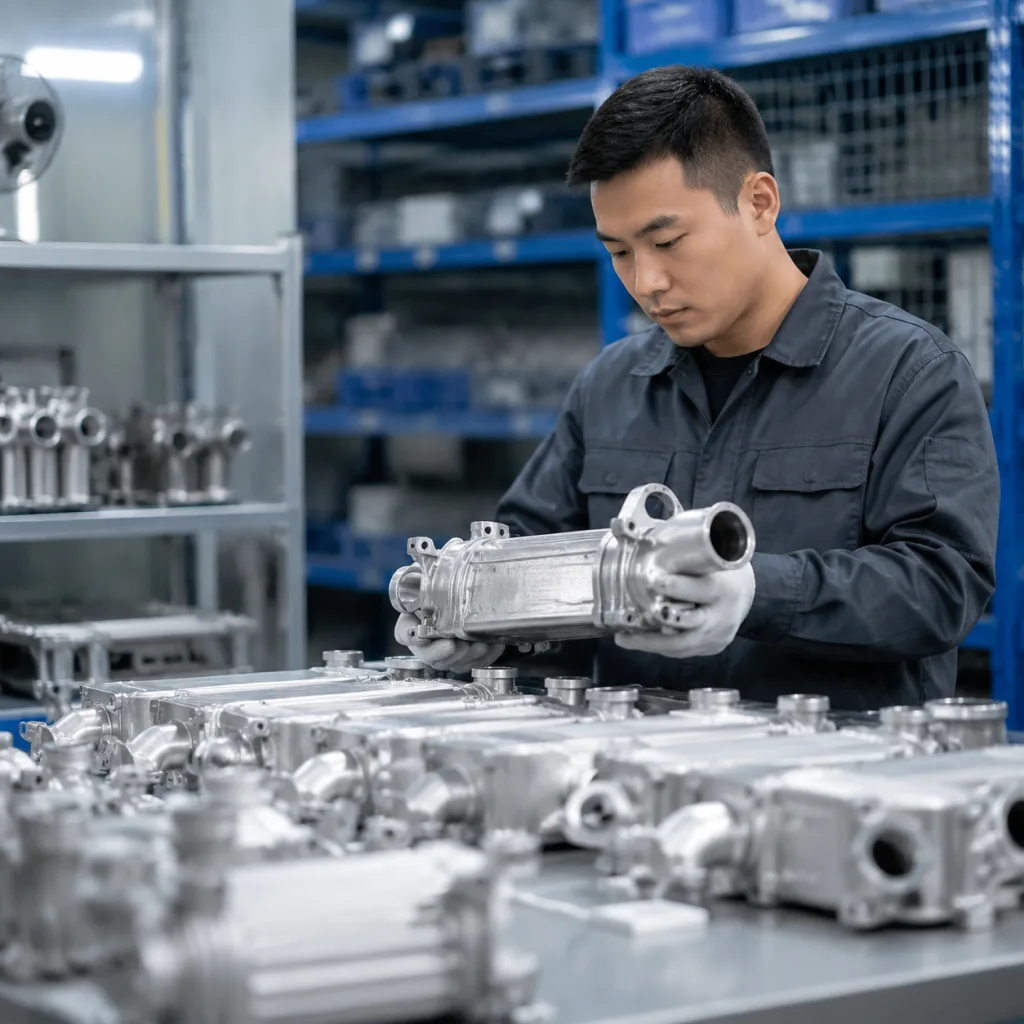
A supplier that can build from OE cross-reference logic, dimensional samples, and physical reference parts is easier to audit than one working from a model description alone. Buyers often request a photo-verified sample review before purchase order release so the production part can be checked against the original unit, not just the catalog listing.
Where EGR coolers fail in the field
An EGR cooler is a heat exchanger, so the weak points are usually mechanical and thermal, not cosmetic. Most field failures trace back to leakage, distortion, or blocked flow.
Common failure modes
- Weld cracks at joints or end tanks after repeated heat soak
- Warped flange faces that compromise gasket sealing
- Internal fouling from slag, scale, or incomplete cleaning
- Restricted flow caused by poorly formed passages or bead intrusion
- Corrosion where material choice does not match exhaust duty
- Seal failure when bracket alignment shifts the load path
What to watch during sourcing
- Parts that look clean but lack pressure evidence
- Dimensional claims without flange-flatness data
- Samples that fit on the bench but shift under clamp load
- Quotes that omit test pressure, cycle count, or rejection criteria
A low price is rarely the real problem. The problem is usually hidden in repeatability: one sample fits, the second does not, and the third leaks after thermal cycling. Buyers avoid that by asking for dimensional reports, leak records, and retained golden samples before they approve production.
Compare build specs, not just part numbers
In aftermarket supply, two EGR coolers can share a cross-reference yet behave very differently in service. That is why procurement teams should compare construction details, not rely on listing language.
| Item | Typical sourcing target |
|---|---|
| Core material | Stainless steel, commonly 304/409-grade family matched to exhaust duty |
| Housing | Stainless steel or equivalent heat-resistant alloy |
| Wall thickness | Typically 0.8–1.5 mm depending on design and duty cycle |
| Flatness tolerance | Flange faces commonly held within 0.20 mm over the sealing area |
| Port position | Centre locations matched to drawing, typically within ±0.50 mm |
| Leak test | Air-under-water or pressure decay, zero visible leakage at agreed pressure |
| Dimensional control | Critical mounting and port dimensions held to drawing |
| Surface finish | Clean internal passage, no slag, no loose scale |
| Documentation | Batch traceability and inspection record |