Connecting Rod for Citroen Jumper Replacement Guide
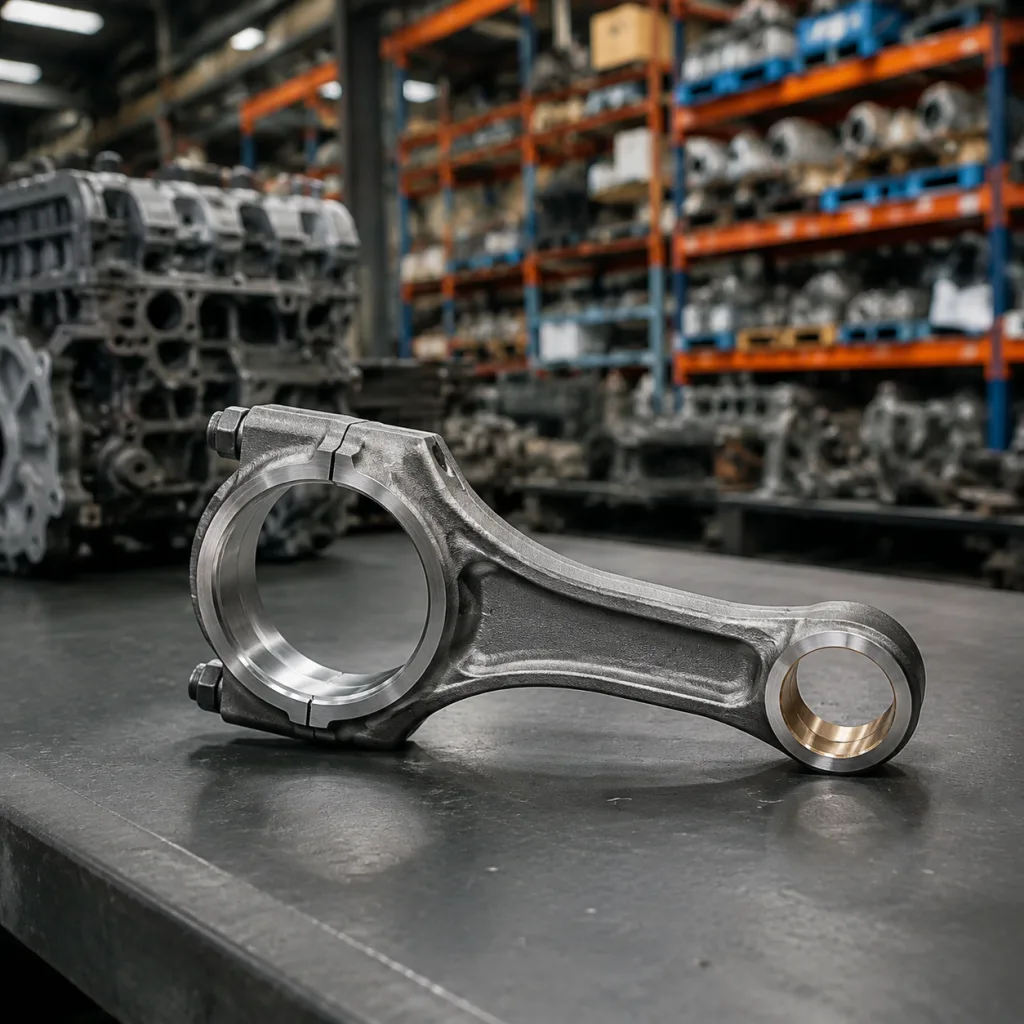
Choosing a connecting rod for Citroen Jumper replacement is a fitment decision, not a catalog exercise. The wrong rod can pass a quick visual check and still fail on length, pin diameter, bore size, bolt spec, or weight balance. That is how rebuilds come back with noise, ovality, incorrect oil clearance, or repeat failure. For fleet repair, distributor stock, and workshop supply, the goal is simple: match the engine build specification and keep installation predictable. Driventus is an independent aftermarket manufacturer; brand names are referenced for fitment only. Our replacement parts are produced under `IATF 16949:2016` and `ISO 9001:2015` controls, with validation practices aligned to light-duty commercial use. This guide focuses on the checks that prevent wrong-part purchases and failed rebuilds.
Start with the engine code, not the vehicle badge
The fastest way to buy the wrong rod is to start with the vehicle nameplate. Citroen Jumper applications vary by engine code, emissions level, model year, and rebuild history, so the same displacement can hide different rod dimensions.
Confirm these points first
Engine code and model year range
OE cross-reference, where available
Center-to-center length
Big-end and small-end bore dimensions
Piston pin diameter and fit type
Cap bolt specification and tightening method
Bearing shell size used in the engine family
Traceability marking and packaging quantity
If the request includes an OE number such as `OE 06A107065`, use it only as a reference, not proof of interchangeability. Ask for the removed part, photos of both ends, and measured dimensions when the history is unclear. A good buying workflow is: identify the engine code, verify the sample rod, then release the PO only after the supplier confirms the same geometry and fastening method.
How to decide whether a rod is truly OE-equivalent
OE-equivalent does not mean similar. It means the replacement rod fits the same assembly envelope without forcing changes to the engine build.
Check point
Why it matters
What to ask
Center-to-center length
Sets piston position
Does it match the removed rod exactly?
Big-end bore
Controls shell crush and running clearance
Is the housing bore within spec?
Small-end bore
Affects pin fit and noise
Is the pin press-fit or floating?
Rod mass
Affects balance across cylinders
Are rods matched within a controlled spread?
Bolt spec
Prevents cap loss or stretch failure
Are stretch bolts or torque-to-yield fasteners used?
Side clearance
Prevents binding and knock
Does assembled clearance match the engine manual?
</tr></thead><tbody> </tbody></table>Buyers should ask for actual values, not “fits the application” language. Useful PO wording includes center-to-center length to the nearest 0.1 mm, big-end and small-end bore to the nearest 0.01 mm, and rod-to-rod weight spread within the supplier’s matching window. A supplier that can show controlled dimensions and repeatable gauge records is easier to approve than one relying on visual similarity alone.
Materials and heat treatment: the failure mode buyers overlook
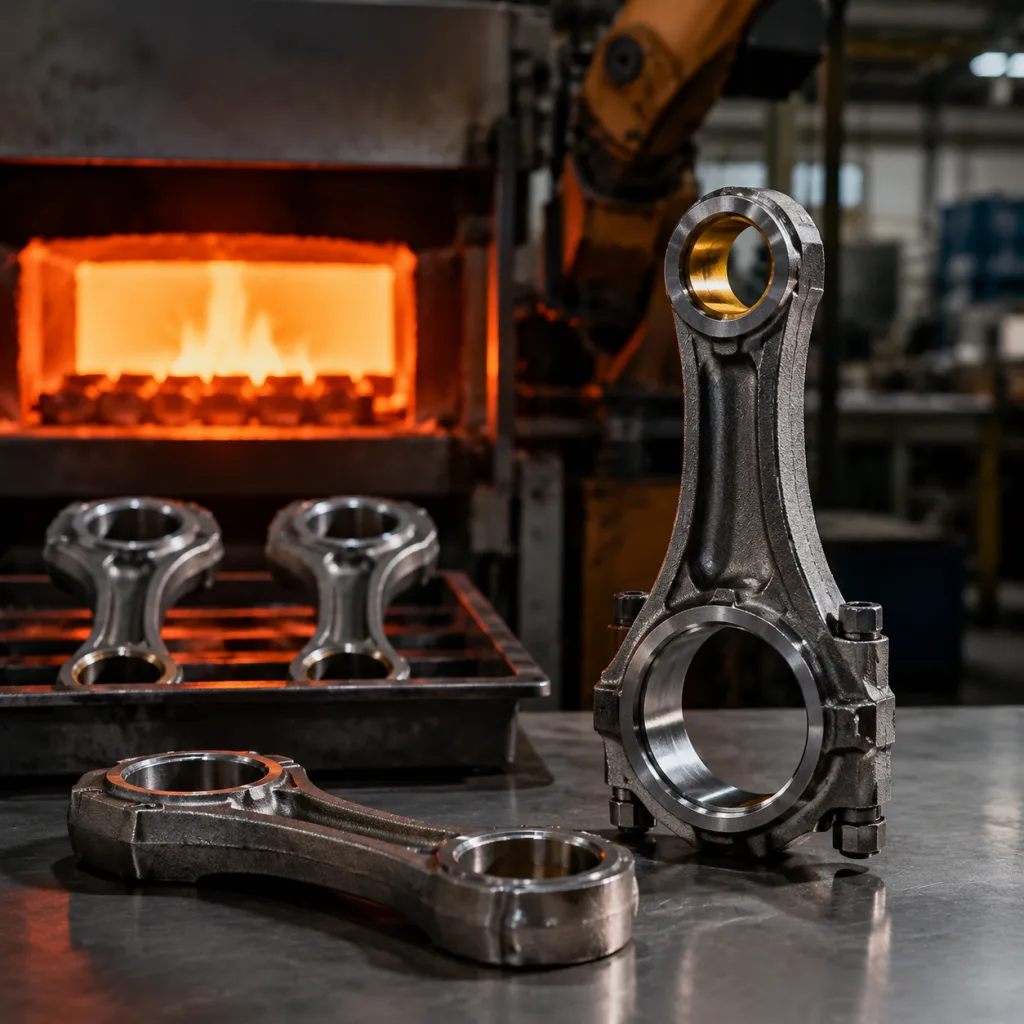
A connecting rod fails under repeated tensile and compressive loading, so material and heat treatment matter as much as dimensions. Forged steel is common in aftermarket replacement because it offers strong fatigue resistance when the forging and machining sequence is controlled.
Verify these production details
Forging route and post-forge machining sequence
Heat-treatment method and hardness window
Shot peening or other surface strengthening, if specified
Cap separation method and repeatability
Flash removal and parting-line finish
Hardness distribution across beam, small end, and big end
For commercial diesel use, a generic “heat-treated” claim is not enough. Ask for a documented hardness range by batch and confirmation that enough machining stock remains for final line boring or honing when the rebuild calls for it. Cosmetic finish does not predict durability. Fatigue resistance does. If the vehicle will see high mileage or stop-start duty, request any available bending or fatigue test summary, the load basis, and the acceptance criteria used for release.
Inspection points that should be on the receiving checklist
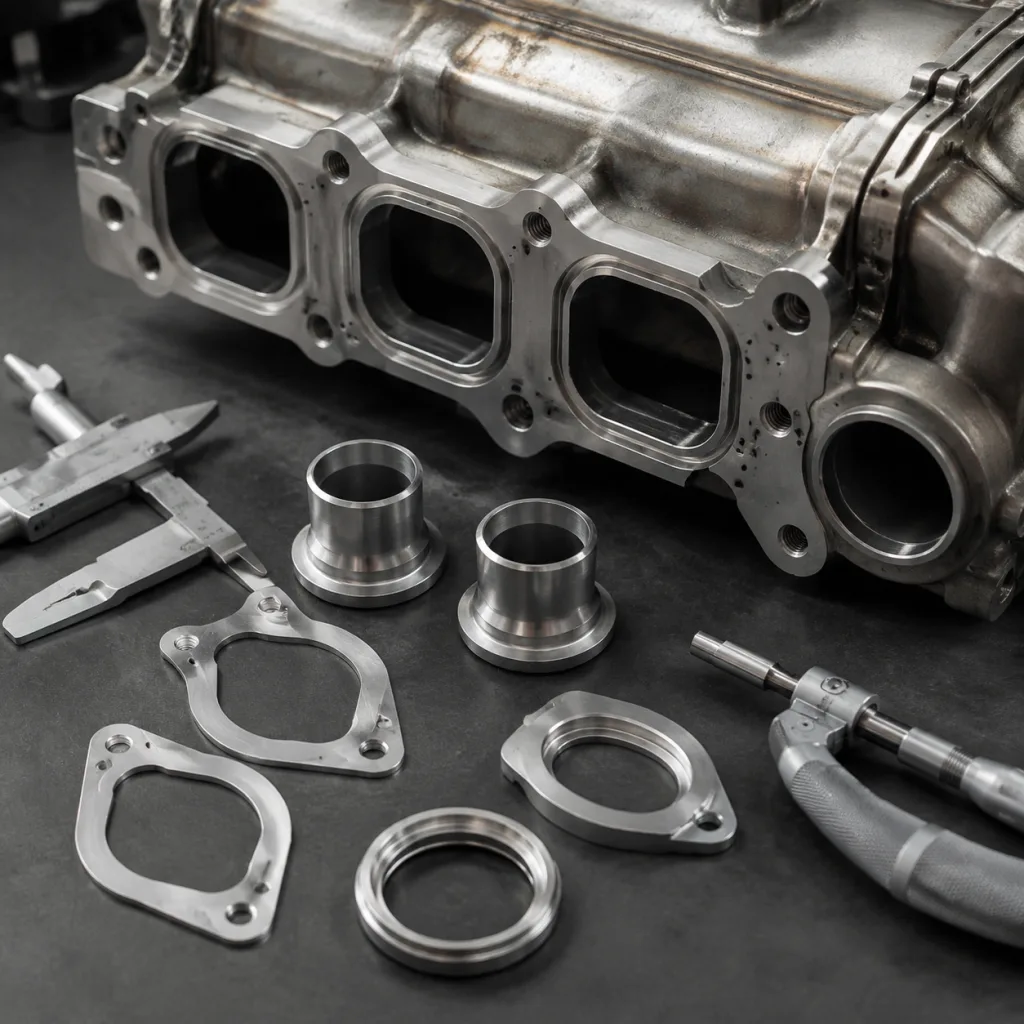
A professional replacement part needs measurable controls, not broad assurances. At receiving, the useful checks are dimensional inspection, hardness testing, bolt verification, and traceable packaging.
Request these documents and controls
First article or sample approval data
In-process gauge control records
Final inspection report by batch
Dimensional certificate with measured values and tolerance limits
Packaging and label traceability
Complaint handling and corrective-action process
Bolt torque or stretch verification method, if fasteners are supplied
For export supply, the file should also show conformance to relevant chemical and process expectations such as `REACH (EC) No 1907/2006` where applicable. If the part is intended for light commercial diesel service, some buyers also align validation expectations with broader vehicle practices such as `ECE R-83` and exposure methods like `SAE J2527` when coatings or corrosion risk are involved. The practical rule is simple: reject any lot that cannot be tied to a reportable batch number, an inspection record, and the correct label data.
Buying for a warehouse, workshop chain, or distributor
Distribution buying has a different failure mode: not bad fitment, but bad stock discipline. Confirm carton quantity, palletization, labeling, lead time, and customs paperwork before the SKU goes live.
For branch networks, keep a strict substitution matrix. Record the engine code, OE number where available, and the measured data from the failed part. That reduces returns and stops the wrong rod from moving between depots. Driventus supplies B2B customers in Europe, the UK, North America, Australia, and Brazil with export-ready packaging and documented traceability.
When comparing quotes, use landed cost, not unit price alone. Packaging, labeling, inspection paperwork, and freight terms often change the real cost per sellable part. Ask for three numbers every time: unit price at MOQ, unit price at an annual-break quantity, and confirmed production lead time in working days. Also confirm whether the quote includes protective oiling, export cartons, and private-label labeling. If your network needs staggered delivery, request a split-shipment schedule so one depot is not overstocked while another waits.
When to escalate to engineering support
Escalate when the original rod is too damaged to measure, the engine has been modified, or the build requires non-standard bearing selection. At that point, a catalog lookup alone will not settle the question.
Use this sequence 1. Capture engine code, VIN, and OE reference if available. 2. Measure center-to-center length, bore sizes, and cap width. 3. Photograph both ends, the cap face, and the failed area. 4. Confirm quantity and required lead time. 5. Request a sample review or drawing review before release. 6. Define the acceptable tolerance window for the rebuild. 7. Confirm whether the crankshaft journal and piston pin arrangement are standard, undersize, or oversize.
If you need drawing-based support or batch supply, request a quote. Engineering support is most useful when the buyer needs a decision quickly: direct OE-equivalent supply, corrected sample approval, or a custom run. Provide photos, dimensions, and order quantity up front, and the response will be faster and more specific.
Frequently asked questions
No. Different engine codes can use different rod lengths, pin fits, bolt specifications, and bearing arrangements. Always confirm the engine code and measured dimensions before ordering, and check whether the engine uses standard or matched-weight rods.
Ask for dimensional data, material and hardness information, batch traceability, packaging details, MOQ, lead time, and any sample or inspection report tied to the lot. For controlled purchasing, also ask whether the quoted price includes export packing and whether the supplier can hold a repeat order under the same revision.
No. Driventus is an independent aftermarket manufacturer; brand names are referenced for fitment only. We supply replacement parts to match the relevant fitment and specification, with production and inspection controls designed for repeat B2B supply.
If you need a verified replacement rod or a drawing-based match, send the engine code and sample details through /contact.html.