Dual Mass Flywheel Isuzu Manufacturer in China
Sourcing a dual mass flywheel for Isuzu applications is not only a pricing exercise. The component must absorb torsional vibration, protect the transmission, align correctly with the clutch system, and avoid noise, shudder, starter engagement issues, or premature spring wear. For importers, distributors, and repair-chain buyers, the supplier decision also depends on process traceability, dependable lead times, export-safe packing, and documentation that can withstand customer review. Driventus manufactures engine and powertrain components in Taizhou, Zhejiang, and supplies B2B customers in more than 60 countries. This guide explains how to evaluate a dual mass flywheel Isuzu manufacturer China buyers can audit, which technical points to confirm, and what commercial data should be settled before a production order. Driventus is an independent aftermarket manufacturer; brand names are used only to identify fitment.
What Buyers Should Verify Before Sourcing
A dual mass flywheel is a safety-relevant rotating component installed between the crankshaft and clutch assembly. An incorrect reference or poorly controlled process can lead to driveline vibration, clutch engagement complaints, starter ring gear damage, installation delays, or warranty returns. Buyers should therefore evaluate both the product specification and the supplier’s manufacturing discipline.
Key verification points include:
- Application coverage: engine code, transmission type, clutch diameter, crankshaft bolt pattern, ring gear tooth count, and vehicle build range.
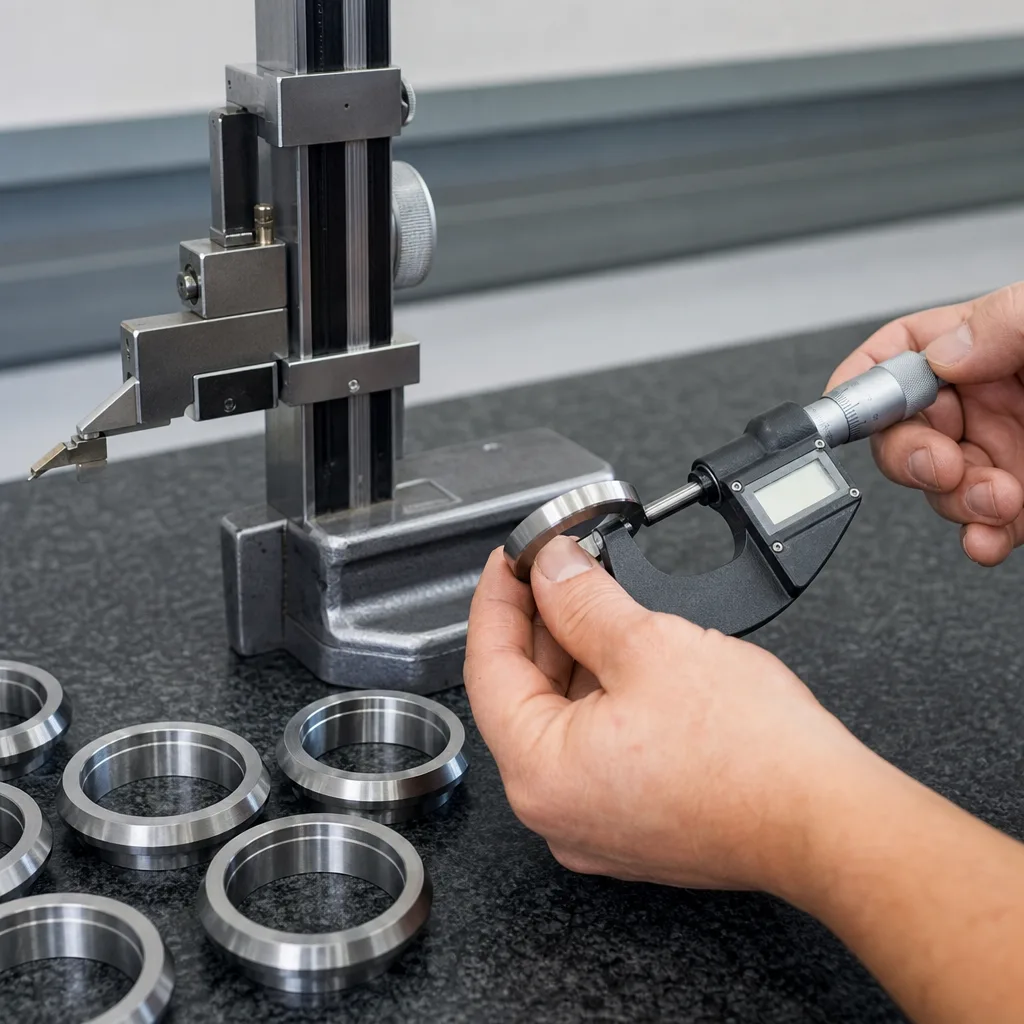
- Dimensional control: friction surface flatness, bolt hole position, runout, pilot bearing bore, and clutch locating dowel position.
- Dynamic performance: torsional damping angle, spring rate, radial play, axial movement, and rotational balance.
- Heat resistance: friction surface hardness, thermal distortion control, and grease stability around the damping chamber.
- Traceability: batch number, material lot, heat-treatment record, machining inspection, assembly data, and final test record.
- Packaging: corrosion protection, internal support, shock-resistant cartons, pallet strength, and label format suitable for warehouse scanning.
A qualified supplier should be able to provide drawings for buyer confirmation, sample inspection reports, and production control plans. For wider program sourcing, procurement teams can review our catalog to align dual mass flywheel demand with related engine and powertrain components.
Manufacturing and Quality Controls
Driventus operates under IATF 16949:2016 and ISO 9001:2015 frameworks. These standards do not replace part-level validation, but they create a structured basis for process control, corrective action, document management, and traceability. For a dual mass flywheel program, relevant controls normally include incoming material inspection, CNC machining, heat-treatment verification, assembly checks, rotational balancing, and final dimensional inspection.
A typical control plan for aftermarket dual mass flywheels includes these checkpoints:
| Process stage | Control item | Typical procurement concern |
|---|---|---|
| Material intake | Steel grade certificate and lot traceability | Avoid mixed material batches |
| Machining | Bolt circle, bore diameter, friction face finish | Ensure fitment and clutch alignment |
| Heat treatment | Surface hardness and distortion | Reduce scoring and thermal warpage |
| Assembly | Arc spring preload and lubricant fill | Control noise and damping consistency |
| Balancing | Residual imbalance measurement | Reduce vibration at operating speed |
| Final inspection | Runout, ring gear position, visual defects | Prevent installation and starter issues |
| Item | Standard sourcing question | Driventus approach |
|---|---|---|
| MOQ | Can the supplier support trial orders? | MOQ depends on tooling status, material availability, and annual forecast |
| Sample lead time | How fast can fitment samples be shipped? | Existing references are usually faster than new development programs |
| Production lead time | Can peak-season demand be scheduled? | Confirmed after capacity review and material planning |
| Packaging | Is the carton strong enough for export? | Anti-corrosion protection, formed supports, reinforced carton, palletisation |
| Documentation | Can customs and buyer files be supported? | Invoice, packing list, certificate of origin when required, test records on request |
| Forecasting | Can the supplier hold repeat program stability? | Rolling forecasts help secure steel, springs, and machining capacity |