dual mass flywheel · 2026-06-06

Dual Mass Flywheel Dodge OEM Supplier: Sourcing Guide

Buying a dual mass flywheel for Dodge applications is not a simple catalog decision. It is a fitment, validation, and process-control decision. Procurement teams need OE-number verification, engine and transmission matching, consistent torsional damping, and traceable quality records that stand up to audit and warranty review. When assessing a dual mass flywheel Dodge OEM supplier, the most important variables are dimensional accuracy, balance control, validation depth, revision discipline, packaging quality, and the supplier’s ability to support repeat orders without specification drift. Driventus supplies dual mass flywheel programs for aftermarket and OEM-facing customers with process control aligned to IATF 16949:2016 and ISO 9001:2015, plus material compliance support for REACH (EC) No 1907/2006 where required. Driventus is an independent aftermarket manufacturer; brand names are referenced for fitment only. For buyers managing regional inventory, repair-chain demand, or private-label programmes, the real questions are lead time, MOQ, validation scope, and whether the supplier can support OE-number cross-references without overstating vehicle-maker approval. The sections below outline what to verify before placing an order, how to compare suppliers on technical and commercial terms, and how to reduce returns, warranty exposure, and replenishment risk over the life of the programme.

What a buyer should verify first

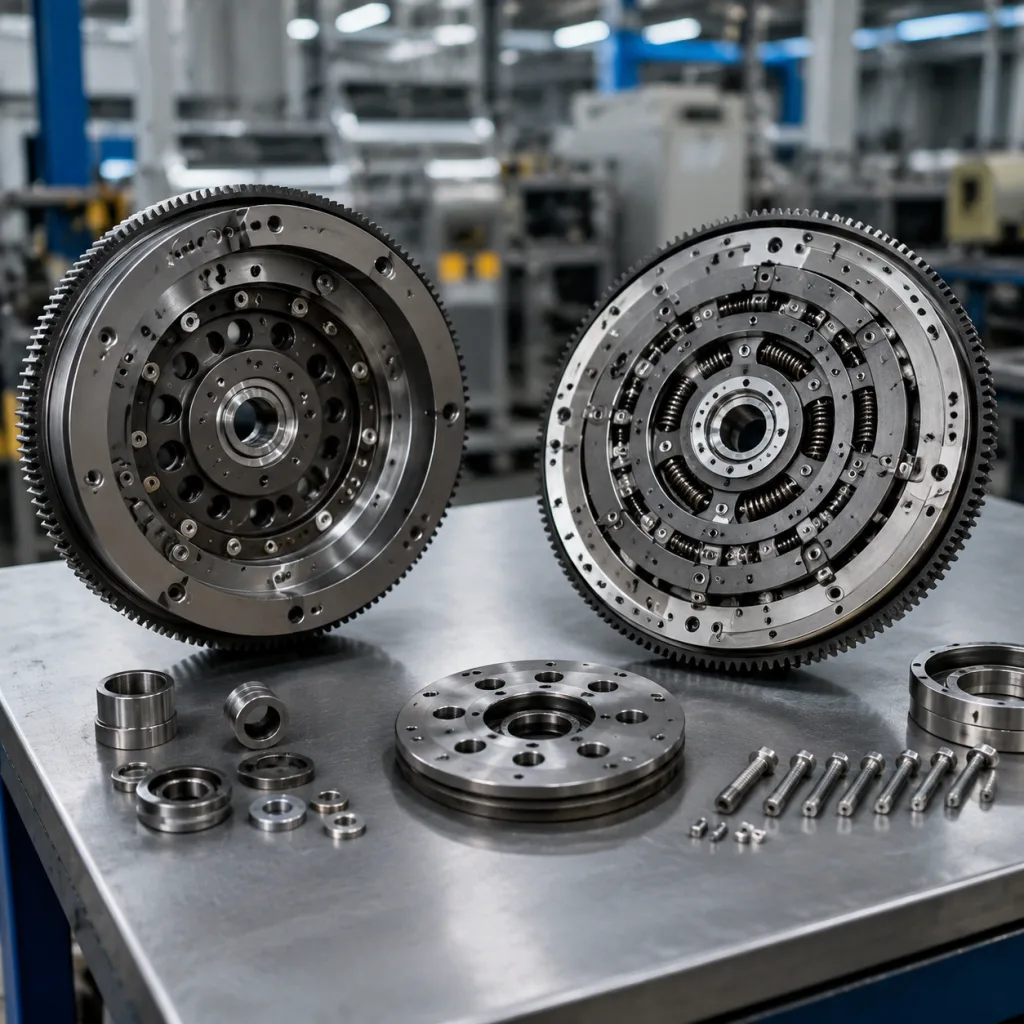
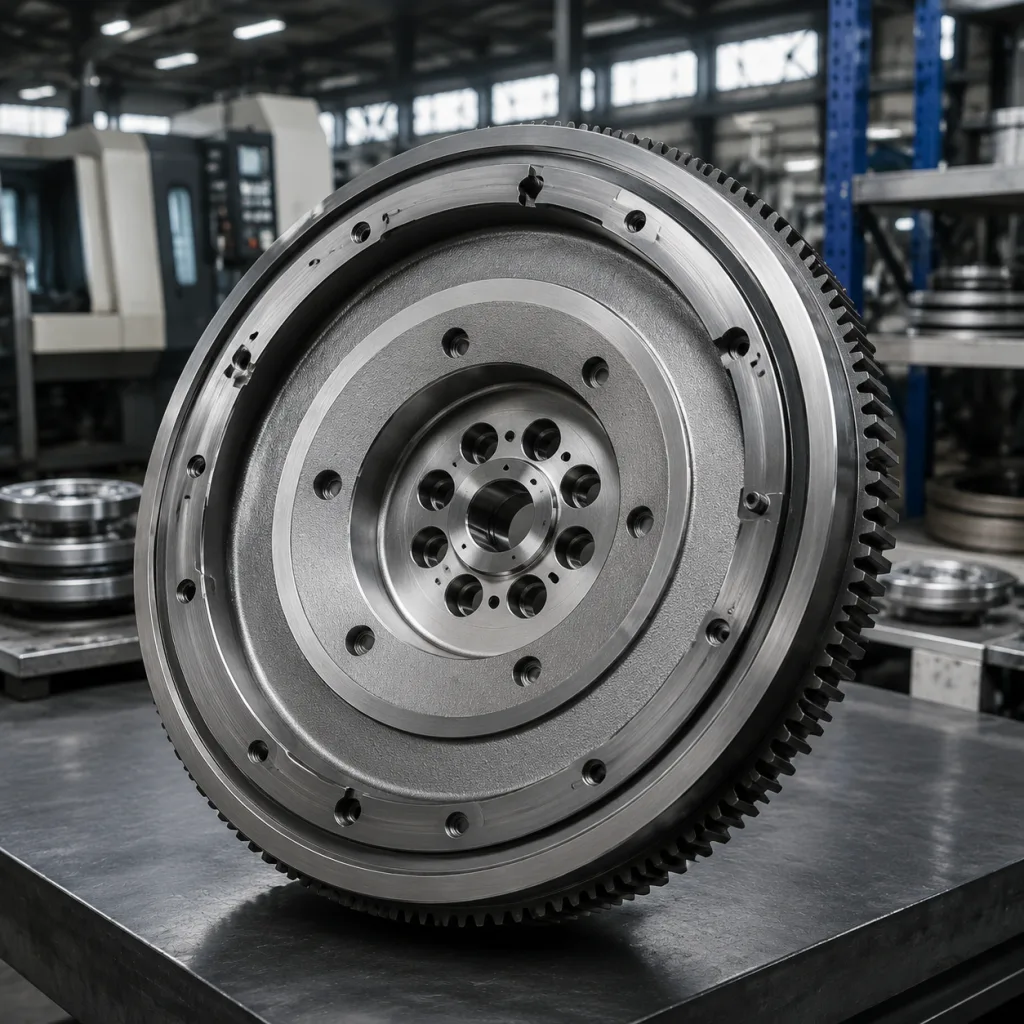
A dual mass flywheel is a rotating assembly that influences idle quality, rattle suppression, clutch engagement, launch feel, and drivetrain life. Because it sits between the crankshaft and clutch system, even small errors in geometry, damping behavior, ring gear details, or offset can lead to installation issues or delayed field failures. Before price comparisons begin, establish the technical baseline.

Start with these core checks:

  • OE cross-reference and engine code compatibility, including transmission variant and clutch diameter
  • Mass and inertia envelope versus the existing OE part
  • Hub spline count, bolt pattern, pilot interface, and starter ring gear geometry
  • Rotational free play, angular travel, and damping curve requirements
  • Surface hardness, balance grade, and heat-treatment records
  • Packaging method for export transit and warehouse handling

Each item addresses a different source of risk. OE cross-reference is only the first filter; engine code and gearbox details often decide whether the part will install and perform correctly. Mass and inertia influence drivability, launch feel, and NVH behavior. Ring gear geometry affects starter engagement and wear. Rotational free play and damping performance help control rattle and driveline shock. Hardness, heat treatment, and balance all shape wear life and vibration performance. Packaging matters too, because impact damage, corrosion, or handling deformation can turn a compliant part into a warranty issue before it ever reaches the installer.

For Dodge applications, one of the most common sourcing mistakes is relying on incomplete fitment data. A single catalog listing may cover several engine variants, but the clutch system, starter ring gear, crankshaft flange, pilot arrangement, or bolt specification may still differ. That is why buyers should provide as much application detail as possible at RFQ stage, including:

  • VIN or VIN-derived application data where available
  • OE reference numbers from the removed unit or service documentation
  • Engine code and transmission code
  • Production year and market region
  • Photos of the removed flywheel, ring gear, and mounting face
  • If possible, key dimensions from the original part

A credible supplier will ask for this information before approving samples or moving toward mass production. That is usually a good sign, not a delay tactic. It shows the supplier is trying to eliminate cross-reference errors before tooling, packaging, and stocking decisions are fixed. In practice, a stricter qualification step at the start usually leads to faster, more stable supply later.

Supplier qualification criteria

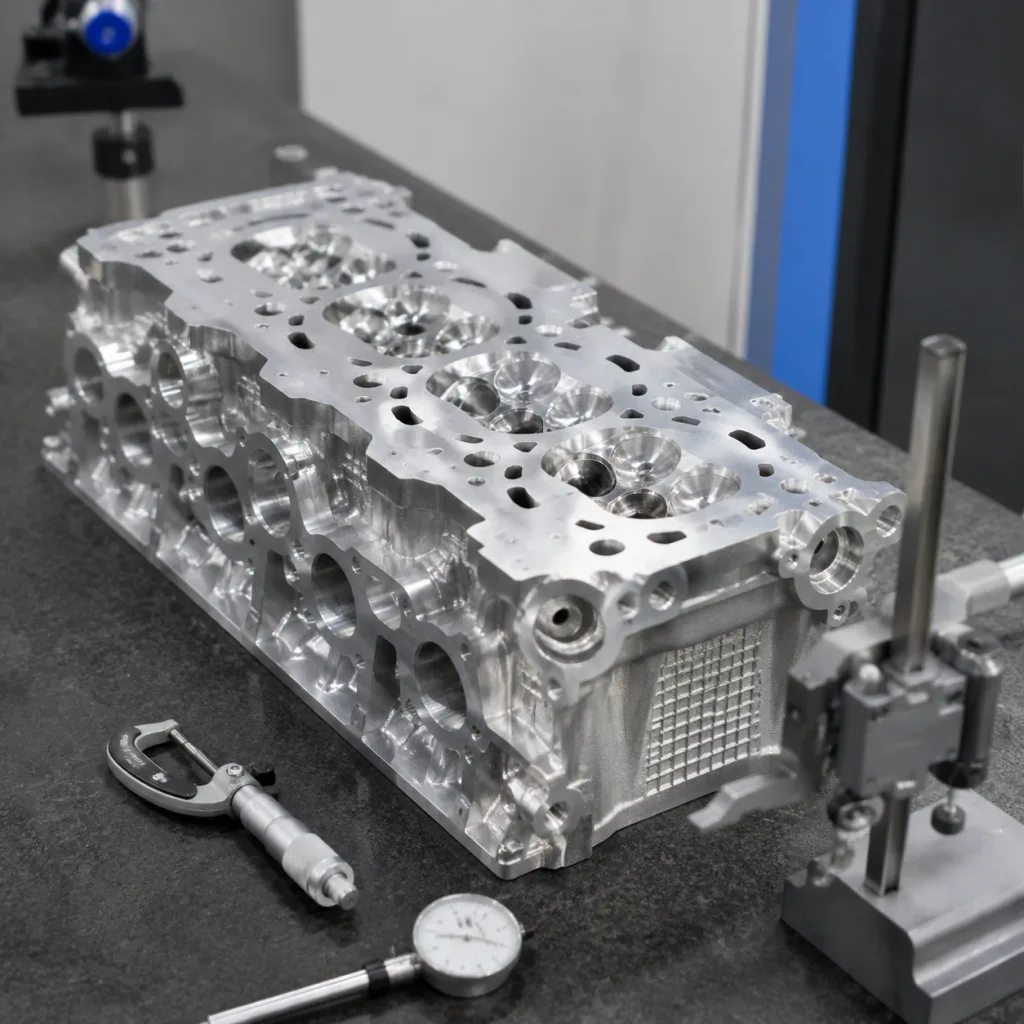
When evaluating a dual mass flywheel Dodge OEM supplier, look past brochure language and focus on manufacturing control. At minimum, the supplier should have documented process control, lot traceability, incoming material inspection, machining control, balance verification, and a clear method for containing nonconforming product. It should also be able to explain not just what is inspected, but when, how, and against which limits.

</tr></thead><tbody> </tbody></table>Beyond the checklist, buyers should understand how the programme is actually managed. Useful qualification questions include:

  • Are critical dimensions checked 100% or by sampling plan?
  • Which features are treated as special characteristics?
  • How is dynamic balance verified and recorded by lot?
  • What traceability appears on the part, box, and outer carton?
  • How are machining, heat treatment, and balancing linked in the production record?
  • What is the supplier’s process for deviation approval and engineering revision control?
  • How are field complaints contained if stock is already in transit or in warehouse inventory?

This product category rewards discipline. A supplier may hold dimensions correctly and still create field problems if spring pack behavior, friction characteristics, or balance consistency drift from batch to batch. That is why qualification needs to cover both dimensional compliance and process repeatability.

It is also important to distinguish between a trading company that sells catalogued parts and a supplier that manages programme-level control. For repeat B2B purchasing, the stronger partner is usually the one that can provide revision-managed drawings, batch-linked inspection records, and clear communication between engineering, quality, and sales. If answers stay vague, if application questions are brushed aside, or if certificates are offered without process detail behind them, treat that as a warning sign.

Fitment and cross-reference discipline

Fitment control sits at the center of this product family. The same model line may use different flywheel specifications depending on engine code, gearbox family, emission version, production year, or regional market. That is why purchases should never be approved on vehicle nameplate alone. In many cases, the quality of the cross-reference review is the single biggest driver of return rates and installer satisfaction.

Use this checklist during RFQ review:

1. Confirm OE number, engine code, and transmission code together. 2. Match tooth count, offset, and starter engagement geometry. 3. Verify clutch kit compatibility if the flywheel is sold as part of a repair set. 4. Request dimensional drawings before first order approval. 5. Ask for a first article sample or PPAP-style document pack for repeat programs.

Those five steps should then be turned into a standard internal process. For example, if your business carries multiple Dodge references across different distribution centers, the cross-reference file should include at least the buyer part number, OE number, application notes, engine code, transmission code, year range, clutch diameter, and any exclusion notes. A simple "fits Dodge model X" description is not detailed enough for warehouse, sales, and warranty teams to use safely.

Practical fitment risks to watch for include:

  • Different ring gear tooth counts within the same vehicle family
  • Different crank mounting patterns between engine variants
  • Changes in step height or offset affecting clutch release geometry
  • Variations in friction surface dimensions that affect clutch pairing
  • Service-replacement supersessions where the latest OE number replaces several earlier versions

This is often where supplier communication quality becomes obvious. A capable supplier will usually ask for removed-part photos, dimensional checkpoints, and any known supersession history before finalizing the quotation. If the supplier can provide dimensional drawings or a structured cross-reference matrix, that reduces ambiguity for both sides.

If your team works across multiple warehouse locations, standardizing the cross-reference file is especially important. It reduces returns, prevents mis-picks, improves installer confidence, and makes stock rotation easier to manage. It also supports cleaner forecasting because demand is tied to validated applications rather than loosely grouped vehicle names. For broader powertrain sourcing, see our catalog and engine components.

Lead time, MOQ, and private-label supply

Commercial terms matter, but they should be reviewed after technical fitment is confirmed. A lower unit price can become expensive if the supplier cannot hold tolerance, misses ship dates, requires repeated rework, or uses packaging that creates transit and warehouse damage. In dual mass flywheel sourcing, strong commercial performance means consistent execution from production through packing, export, and replenishment.

Typical procurement questions:

  • What is the MOQ for standard and custom references?
  • Can the supplier support mixed-reference cartons for regional distribution?
  • What is the nominal lead time for sampled, repeat, and private-label orders?
  • Can packaging be printed to buyer specification without changing the core part number?
  • What is the escalation path if a batch shows runout or balance variation?

To make those questions more useful, break lead time into stages instead of asking for one broad number. A realistic sourcing plan usually includes:

  • Technical review and cross-reference confirmation
  • Sample production or sample allocation
  • Sample inspection and approval
  • Packaging artwork approval for private-label supply
  • Production scheduling
  • Final inspection and release
  • Export packing, booking, and transit

This stage-based view helps procurement teams separate true manufacturing time from approval delay, booking delay, or labeling delay. It also creates a better discussion around buffer stock and reorder points.

MOQ should be evaluated reference by reference. Some Dodge flywheel references may serve a broad demand base and justify stock holding, while others move more slowly and are better suited to consolidated ordering. Buyers should ask whether the supplier can support:

  • Mixed loads across multiple references
  • Shared packaging formats for simpler warehouse handling
  • Neutral or branded cartons
  • Regional language labels
  • Master-carton specifications aligned with pallet efficiency and damage control

For private-label programmes, packaging control is not just a branding exercise. Correct labeling reduces picking errors, simplifies regional compliance, and speeds warehouse intake. A supplier that can align part identification, barcode format, carton dimensions, and palletization method with the buyer’s distribution model will often deliver lower downstream cost than one offering only a cheaper ex-works price.

For buyers planning recurring demand, custom manufacturing is often the better route when private labeling, controlled packaging, a dedicated cross-reference set, or tighter revision control is needed. For resellers and warehouse distributors, a defined replenishment window is usually more valuable than a one-off low quote, because stable availability supports sell-through, service levels, and fewer emergency purchases.

Validation and durability checks

A reliable dual mass flywheel programme should be backed by test evidence, not just visual inspection. The exact validation stack depends on the application, but a defensible technical file usually includes proof that the assembly meets dimensional, balance, mechanical, and durability expectations under repeatable conditions. For buyers, this matters because many field complaints only appear after installation, when replacement cost includes freight, labor, and reputational damage.

A typical validation file may include:

  • Static and dynamic balance records
  • Torque capacity verification
  • Angular deflection or free-play measurement
  • Thermal and surface durability checks
  • Corrosion resistance validation for coated assemblies
  • Noise, vibration, and harshness review at the vehicle or rig level

These items are not generic box-ticks. Each one supports a different sourcing decision. Balance records help control vibration and bearing load. Torque capacity verification helps confirm suitability under engine output and launch conditions. Angular deflection and free-play measurements relate directly to damping function and driveline behavior. Thermal and surface checks help predict performance under repeated clutch engagement. Corrosion validation helps estimate how well the product will tolerate shipping, storage, and field exposure. NVH review is especially important for dual mass flywheels, because a part can install correctly and still fail commercially if it produces objectionable noise or idle harshness.

Buyers should also ask how validation data is linked to routine production. A strong supplier should be able to explain:

  • Which tests are part of product development versus routine release
  • Which characteristics are verified on every batch
  • How sample approval criteria translate into production inspection limits
  • How long records are retained and how they are retrieved by lot number
  • What triggers revalidation after a material, tooling, or process change

Where surface treatment is used, some buyers also request corrosion testing aligned with SAE J2527 for coated components. That does not replace application-specific validation, but it can help compare finish durability across suppliers and support better packaging and storage decisions.

For documentation, ask the factory to retain the test plan, acceptance criteria, and lot linkage. That is what separates a one-time sample from a repeatable programme. A documented quality system matters more than a single pass result, because long-term supply depends on repeatability, not just a successful pre-shipment inspection.

How Driventus supports sourcing programs

Driventus builds powertrain components for B2B supply chains that need stable export execution and traceable production. For a dual mass flywheel programme, the value is not in broad compatibility claims. It is in controlled revisions, lot-history records, and clear communication from sample approval through repeat supply. For buyers looking for a dual mass flywheel Dodge OEM supplier, that matters because the sourcing challenge is often operational as much as technical.

What procurement teams usually use us for:

  • OE-number cross-reference support for aftermarket programmes
  • Sample runs for fitment confirmation
  • Packaging and carton configuration for warehouse and distribution channels
  • Technical documents for internal supplier approval
  • Supply planning for regional inventory and private-label projects

In practice, support begins with application review. Buyers send the OE reference, engine code, transmission details, target volume, and any removed-part images or dimensions available. From there, the programme can move into one of several paths:

  • Direct quotation for an already validated reference
  • Sample review for fitment confirmation
  • Drawing and dimensional comparison for higher-risk applications
  • Custom packaging or private-label development
  • Tooling or custom manufacturing review for non-standard requirements

This step-based approach helps prevent a common sourcing error: moving too quickly from catalog match to production order without enough application confirmation. It also helps buyers align technical approval with commercial planning, so MOQ, lead time, and labeling are agreed before stock is committed.

Driventus also supports the documentation buyers typically need for internal onboarding and audit review, including quality certificates, inspection records, and traceability-linked production information relevant to the programme scope. For warehouse distributors and repair-chain suppliers, packaging consistency and export handling are part of the value, because those details affect damage rates, stock intake speed, and replenishment efficiency.

If you need a sourcing partner for a Dodge application, the next step is to send the OE reference, engine code, transmission code, and target annual volume. We can then confirm whether the part should move into sample, quotation, or custom tool review, and define the most practical path for stable repeat supply.

Frequently asked questions

Yes. Send the OE number, engine code, transmission details, and if available the removed-part photos. We verify fitment against the reference data before quotation and sample release.

Typical packs include dimensional reports, material traceability, balance records, and quality certificates aligned with IATF 16949:2016 and ISO 9001:2015.

Yes. We support custom manufacturing, carton labeling, and export packaging for distributors, OEM programmes, and repair-chain supply.

If you are building a repeat supply programme for a Dodge fitment, send the OE reference and volume target so we can confirm the right sourcing path. Use our request a quote form at /contact.html.

Request a Quote
Qualification item What to ask for Why it matters
Quality systemIATF 16949:2016 and ISO 9001:2015 certificatesIndicates structured automotive process control
Material traceabilityHeat numbers, mill certificates, and batch recordsSupports warranty and recall containment
Dimensional controlInspection reports with critical dimensionsConfirms OE-level fitment consistency
Dynamic balanceBalance method and acceptance limitReduces vibration and premature wear
Surface treatmentCoating or corrosion protection detailsHelps with storage and field durability
Compliance supportREACH (EC) No 1907/2006 declaration where applicableSupports EU import documentation