Cylinder Sleeve Supplier Sourcing Guide for Buyers
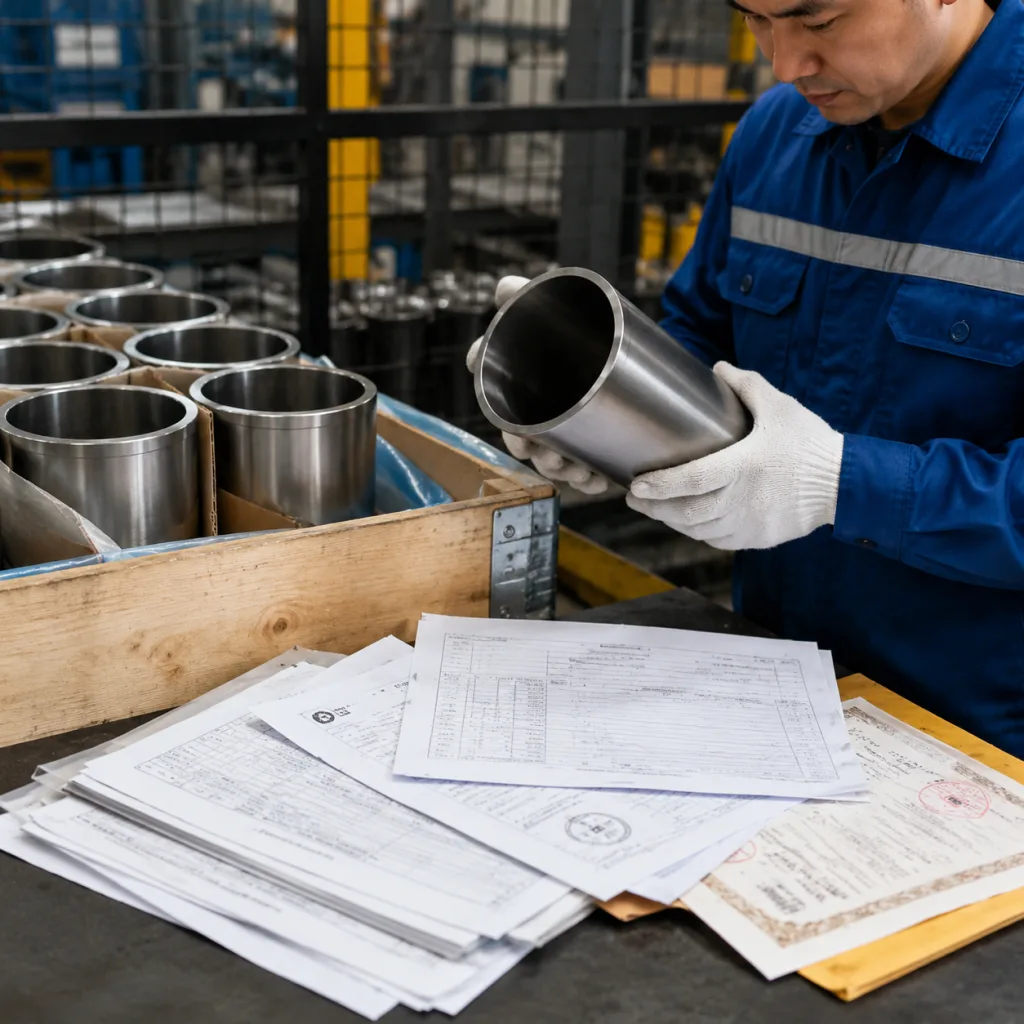
A cylinder sleeve is inexpensive compared with an engine, but one unstable liner can trigger leakage, oil consumption, seizure complaints or warranty returns across an entire batch. That makes supplier selection a technical risk decision, not a price-shopping exercise. Buyers need evidence of alloy control, casting stability, machining accuracy, corrosion-safe packing and documents that can be traced back to the shipped lot.
Driventus, based in Taizhou, Zhejiang, manufactures dry and wet liners for passenger cars, light commercial vehicles, heavy-duty engines and selected industrial applications. This guide is written for distributors, rebuilders, remanufacturers and sourcing teams comparing a new cylinder sleeve supplier against incumbent factories. It explains what to define before RFQ, what to check during audit, where sleeve specifications usually fail, how catalogue and custom programmes differ, and how to compare quotes without hiding cost in inspection, freight or claims. Driventus is an independent aftermarket manufacturer; brand names are referenced for fitment only.
RFQ Decision Framework: What Must Be Fixed Before Price
A useful RFQ removes guesswork. If the inputs are loose, each supplier may quote a different material grade, machining allowance, honing level or packing method. The cheapest offer may simply be quoting a different product.
Lock these items before comparing prices:
- Engine application, displacement, fuel type and naturally aspirated or turbocharged status
- Sleeve type: dry, wet, flanged, semi-finished, plateau-honed or fully finished
- Annual volume, first order quantity and expected reorder frequency by part number
- Drawing revision, CAD file, 2D PDF, controlled sample or agreed catalogue reference
- Material requirement, such as HT250/HT300 grey cast iron, alloy cast iron or customer-specified equivalent
- Bore, outside diameter, flange, length and groove tolerances; if unknown, request both standard aftermarket tolerance and drawing-controlled tolerance
- Surface finish target, for example bore Ra 0.4–0.8 μm after honing, or the buyer’s plateau parameters where specified
- Heat treatment, stress relief or hardness requirement, often agreed in ranges such as HB 190–260 depending on duty and material grade
- Packaging format: neutral carton, customer label, barcode, bulk industrial pack or palletized mixed-SKU shipment
- Destination country, Incoterms, required port and planned shipment mode for samples and production
- Required documents: inspection report, material certificate, chemical composition by melt batch, PPAP elements or IMDS-style material data where applicable
For catalogue programmes, buyers can review our catalog and shortlist sleeve families by bore range, application and market demand. For drawing-controlled work, custom manufacturing is usually the better route because tooling, samples and validation records must be aligned before production release.
One decision should be made early: will the buyer accept a functional equivalent, or only an exact drawing match? A functional equivalent can reduce tooling cost and shorten sampling. An exact match gives tighter control, but it also shifts more work into drawing review, gauge planning, first-article inspection and approval records.
Factory Audit: Where Weak Sleeve Suppliers Break Down
A strong audit does not only ask whether the factory can make cylinder sleeves. It checks whether the supplier can repeat the same sleeve across batches, shifts and export shipments.
The main failure pattern is familiar: good samples, unstable production. Casting is approved once, then hardness drifts. Machining looks clean, but gauges are overdue. Packing passes a photo review, then mixed cartons or rust appear after sea freight. The audit should look for controls that prevent these problems before they reach the buyer.
| Audit area | What to verify | Buyer risk if missing |
|---|---|---|
| Quality certification | IATF 16949:2016 and ISO 9001:2015 certificates within valid scope, plus latest surveillance status | Weak process control and limited corrective action discipline |
| Material control | Melt records, chemical analysis, inoculation record and batch identification | Hardness variation, wear issues or machining instability |
| Casting control | Visual grading, porosity limits, blank weight checks and rejection logs | Hidden shrinkage, leakage risk or wall-thickness loss after machining |
| Machining process | CNC boring, turning, grinding, grooving and honing capability with defined operation sequence | Out-of-roundness, poor fit or inconsistent bore finish |
| Process capability | Cpk or run-chart data for bore, OD, flange thickness and groove dimensions where volumes justify it | Good samples but unstable production lots |
| Gauge management | Calibrated bore gauges, air gauges, micrometers, roughness testers and hardness testers with valid calibration labels | Undetected dimensional drift |
| Traceability | Lot number from melt or blank batch through machining, inspection and packed carton | Slow containment during field claims |
| Packing validation | Rust prevention, VCI or anti-rust oil, separators, carton burst strength and pallet stacking method | Corrosion, edge damage or mixed parts in transit |
| Item | Catalogue programme | Custom programme |
|---|---|---|
| MOQ | Often 50–200 pcs per fast-moving part number, or lower when mixed into a consolidated order | Often 300–1,000 pcs per part number due to tooling, blank casting and setup cost |
| Sampling lead-time | Usually 15–30 calendar days if blanks and fixtures exist | Usually 35–60 calendar days because tooling, first-article machining and checks are required |
| Mass production lead-time | Commonly 30–45 days after deposit for stocked tooling and normal workload | Commonly 45–75 days after sample approval, depending on casting batch and validation status |
| Tooling cost | Often not required for existing references | Quoted separately for patterns, core boxes, gauges or machining fixtures |
| Price logic | Lower unit price when SKUs share material, bore range and packing | Higher unit price until volume absorbs tooling, setup and scrap risk |
| Documentation | Standard inspection and packing records | Can include control plan, dimensional report, capability data and agreed PPAP elements |