Cylinder Sleeve Peugeot Wholesale: Sourcing Guide for Buyers
For B2B buyers, cylinder sleeve Peugeot wholesale sourcing is mainly a question of fitment control, material consistency, and supply stability. Peugeot applications span multiple engine families, so the first procurement step is to match the bore, flange geometry, overall length, and cooling jacket requirements to the target engine code and OE reference. Driventus supplies engine and powertrain components from Taizhou, Zhejiang, with IATF 16949:2016 and ISO 9001:2015 controlled processes. Driventus is an independent aftermarket manufacturer; brand names are referenced for fitment only. Buyers should also verify whether the sleeve is dry or wet, whether finish machining is required, and what validation data is available for metallurgy, hardness, and dimensional inspection. For importers and distributors, the practical value is not only unit price, but also repeatable packaging, batch traceability, and documented quality release. This article covers the supplier checks that matter before placing volume orders.
What wholesale buyers should verify first
When sourcing a Peugeot cylinder sleeve in volume, start with the technical identity of the part, not the catalogue description. Confirm the engine family, OE cross-reference, and sleeve type before discussing price.
Minimum buying data to request:
Engine code and OE reference, where available
Sleeve type: dry or wet
Bore diameter, outer diameter, flange height, and overall length
Material specification and heat-treatment state
Surface finish and machining allowance
Packaging unit, label format, and batch traceability
For procurement teams, the most common sourcing error is accepting a part that fits the bore but not the deck height or coolant sealing arrangement. If the sleeve will be finish-machined locally, confirm stock allowance and distortion control after press fit. If you need a broader product range, see our catalog and the dedicated engine components page.
Typical specifications for Peugeot engine sleeves
Cylinder sleeves are usually supplied as precision cast or centrifugally cast iron components, then finish-machined to the required tolerance band. For Peugeot applications, buyers should expect consistency in bore concentricity, wall thickness, and flange geometry across the lot.
Item
Typical buyer check
Why it matters
Material
High-strength cast iron or alloyed cast iron
Wear resistance and thermal stability
Bore tolerance
Defined to the engine rebuild requirement
Piston clearance control
Outer diameter
Matched to block interference fit
Retention after installation
Flange height
Checked against deck surface
Head gasket sealing
Surface finish
Controlled Ra after machining
Ring and bore wear performance
Traceability
Lot number and inspection record
Warranty and recall control
</tr></thead><tbody> </tbody></table>If a project requires a special wall thickness, coating, or finished bore size, ask about custom manufacturing. For serial supply, a written inspection plan is more useful than a verbal promise. Ask for first article samples, production control samples, and dimensional reports for each lot.
Certification, compliance, and documentation
For European, UK, North American, Canadian, Australian, and Brazilian buyers, documentation quality is part of the buying decision. Driventus operates under IATF 16949:2016 and ISO 9001:2015. For material and chemical compliance, buyers may also request REACH (EC) No 1907/2006 declarations where applicable.
A serious supplier should be able to provide:
Material composition or mill certificate, when specified
Incoming and in-process inspection records
Final dimensional inspection report
Packaging and batch identification details
Export documentation support
If your internal supplier approval process includes plant audits or remote audits, use our quality system as the starting point for document review. Do not treat a low unit price as proof of process control. For cylinder sleeves, variation in hardness, porosity, or wall concentricity can create field failures long after the first shipment.
Lead time, MOQ, and supply planning
Wholesale buyers usually need a stable replenishment plan, not a one-time shipment. Lead time depends on whether the sleeve is standard stock or a build-to-print item with special machining.
Commercial points to confirm before ordering:
MOQ by OE reference or dimension set
Sample lead time versus bulk lead time
Standard carton quantity and pallet configuration
Incoterms, export packing, and documentation cut-off dates
Spare capacity for repeat orders during seasonality
For distributors, the risk is carrying slow-moving inventory that fits only one engine code. For repair-chain accounts, the risk is stock-outs caused by poor demand matching. A practical supplier should help you consolidate references where the bore and flange design are identical. If you are quoting multiple markets, ask for mixed SKU planning and forecast-based production slots. To proceed, use request a quote with the engine code, OE reference, and annual demand estimate.
Validation testing before release
Before approval, wholesale buyers should ask how the sleeve is validated for real engine conditions. Dimensional checks alone are not enough for a part that must survive combustion heat, coolant exposure, and repeated thermal cycling.
Common validation items include:
Hardness testing on production lots
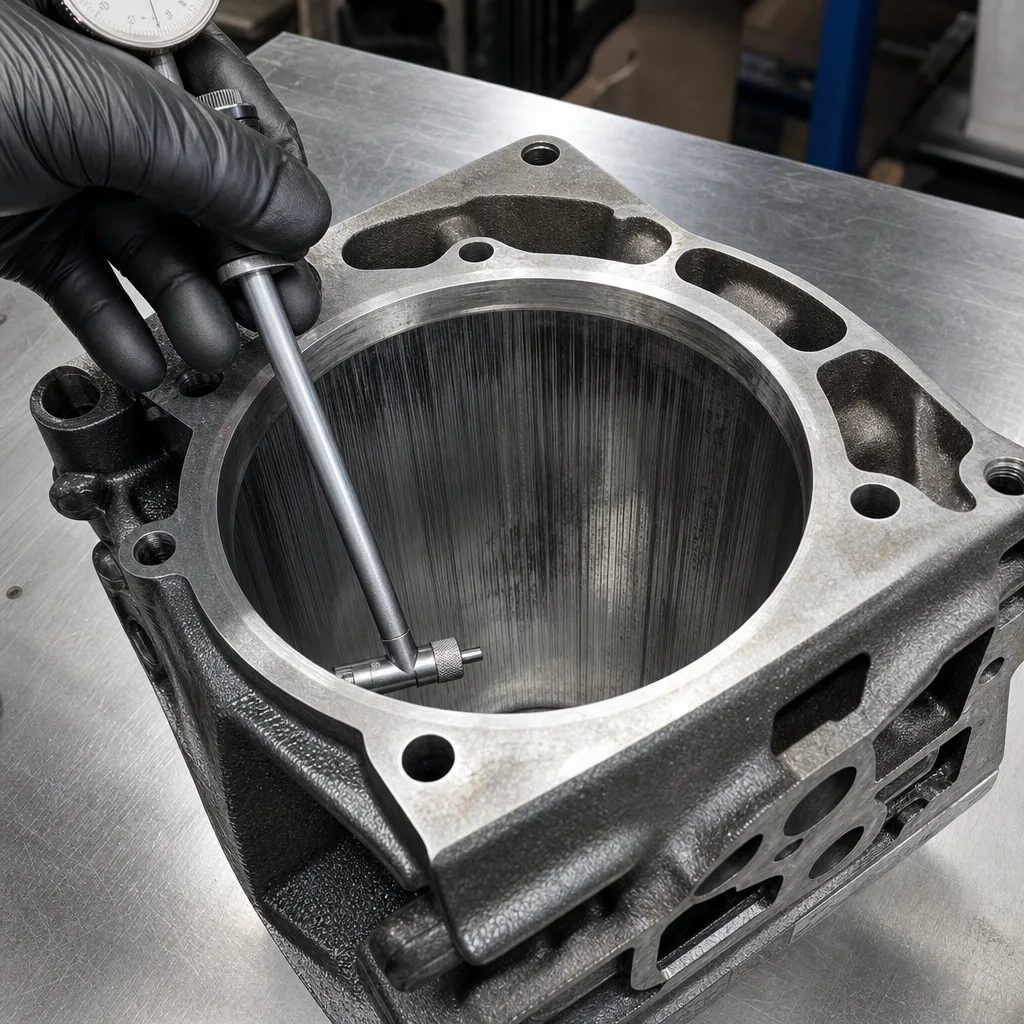
Micrometer and bore gauge verification
Concentricity and roundness checks
Pressure or leakage checks for wet-sleeve applications
Metallurgical review for porosity and crack risk
Where the application involves emissions-sensitive engines, buyers may also consider the broader vehicle test environment, including references such as ECE R-83 or SAE J2527 when discussing system-level durability data. These standards are not sleeve-specific, but they help frame the test environment used by downstream customers. Buyers should request written test conditions, not only pass/fail statements.
Why wholesale buyers choose a controlled aftermarket source
A controlled aftermarket supplier is valuable when the goal is repeatable supply across multiple markets. Driventus is an independent aftermarket manufacturer; brand names are referenced for fitment only. That disclosure matters because buyers need to avoid any implication of OEM endorsement while still matching the correct engine application.
For sourcing teams, the commercial benefits are straightforward:
One technical contact for fitment confirmation
Controlled batch production and inspection records
Export-ready packaging and labelling
Support for private label or neutral branding
Faster response on replacement references and supersession questions
If your buying programme covers sleeves, pistons, gaskets, or water pumps, consolidation can reduce inbound freight complexity and simplify vendor management. For cross-functional review, compare the technical sheets, then align the commercial terms. The most reliable supplier is the one that can repeat the same dimensions and documentation on the next shipment, not only on the first sample.
Frequently asked questions
Provide the engine code, OE reference if available, sleeve type, bore and outer diameter, flange height, quantity, and target market. A drawing or sample photo helps reduce mismatch risk.
Yes. Share the drawing, material target, tolerance band, and annual demand. Custom machining and private-label packaging are available through our OEM service workflow.
Ask for dimensional inspection data, batch traceability, material documentation where specified, and proof of controlled quality procedures under IATF 16949:2016 or ISO 9001:2015.
If you are sourcing Peugeot cylinder sleeves for distribution or workshop supply, send your reference data and target volume to us for review. Start here: [request a quote](/contact.html)