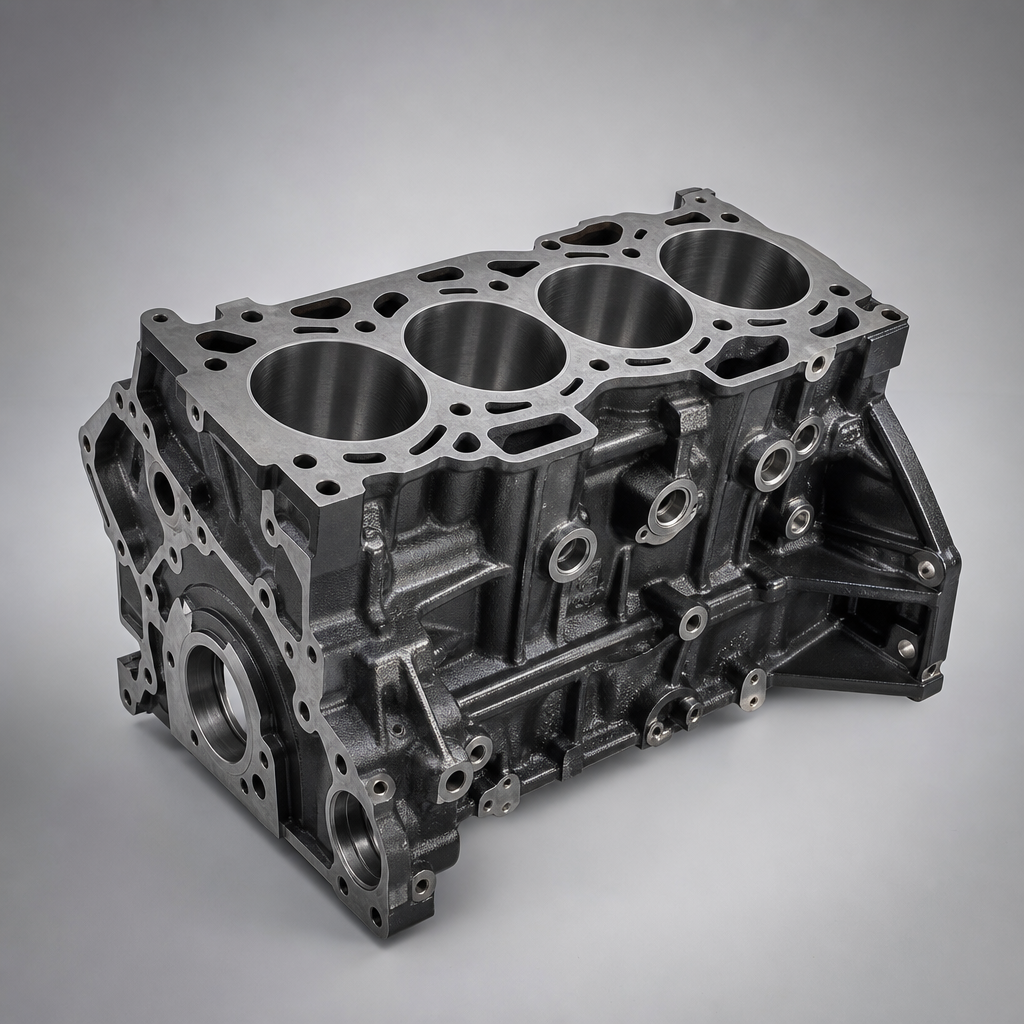
cylinder sleeve · 2026-06-05

Cylinder Sleeve Mitsubishi Manufacturer China | Sourcing Guide

Sourcing a cylinder sleeve for Mitsubishi-fit diesel or petrol engines is less about chasing the lowest unit price and more about controlling supply risk. Serious buyers need repeatable dimensional accuracy, stable metallurgy, documented inspection, and a supplier that can hold the same specification across repeat lots. For importers, engine rebuild distributors, and industrial parts buyers, the key questions are practical: which casting route is used, what hardness range is released, what bore and OD tolerances are achieved after finish machining, how wall thickness and concentricity are controlled, and what records show the factory can supply serial orders without batch-to-batch drift.

A qualified China manufacturer should offer more than a fitment list. Procurement teams usually want to see process control under IATF 16949:2016 and ISO 9001:2015, lot traceability, and material compliance declarations where required, including REACH (EC) No 1907/2006 for EU-bound supply. They also need to know whether the supplier is working from an established Mitsubishi-fit programme, a customer drawing, or a sample-based reverse-engineered part, because each route affects tooling cost, approval timing, and validation risk.

This guide outlines what to check when assessing a cylinder sleeve mitsubishi manufacturer china source, including casting route, machining standards, tolerance ranges, MOQ, lead time, audit priorities, and documentation. Driventus is an independent aftermarket manufacturer; brand names are referenced for fitment only.

What procurement teams should verify first

For this type of purchase, the first filter should be manufacturing control, not catalogue breadth. A cylinder sleeve supplier should be able to walk you through the full process: raw casting or centrifugal tube source, rough machining, finish boring, honing, washing, rust prevention, packing, and export documentation. If that explanation is vague, the sourcing risk is already high.

At the qualification stage, buyers should confirm whether the factory understands Mitsubishi-fit requirements by engine family, cooling design, duty cycle, and installation method. A dry sleeve for a light commercial diesel, for instance, may have very different wall-thickness priorities, interference-fit needs, and wear expectations than a wet sleeve used in agricultural or industrial equipment.

Key checks include:

  • Application coverage: dry-sleeve and wet-sleeve programmes for Mitsubishi-fit engine families used in passenger, light commercial, agricultural, marine, and industrial equipment
  • Manufacturing route: alloyed grey cast iron or centrifugally cast iron, with clear disclosure of whether the sleeve is cast near-net, machined from tube stock, or supplied from an external foundry and finish-machined in-house
  • Critical dimensions: inner diameter, outer diameter, flange OD, flange thickness, overall length, port or seal groove geometry where applicable, wall thickness, roundness, cylindricity, and finished-hone surface roughness
  • Tolerance capability: evidence of routine control of bore size, typically within about ±0.01 to ±0.02 mm after finish honing, with tighter or looser windows depending on sleeve size and customer drawing
  • Inspection method: 100% checking on critical dimensions or a defined sampling plan using calibrated bore gauges, air gauges, micrometers, height gauges, surface roughness testers, and hardness testers
  • Batch traceability: heat number, casting lot, machining lot, inspection record, operator or machine code, and packing identification linked to shipment records
  • Export readiness: neutral packing, private label, barcode labels, pallet specification, and desiccant or VCI protection where required, plus country-of-origin documentation

It is also worth confirming whether the supplier works to an internal drawing, a customer-controlled drawing, or an OEM-reference fitment list. Many dimensional disputes start with unclear drawing control rather than poor machining. A disciplined manufacturer should identify the controlling revision, define the inspection standard, and explain how first samples are approved before mass production begins.

Procurement teams should ask for evidence, not just assurances. Useful first-stage documents include a process flow chart, sample dimensional reports, hardness records, photos of the machining and honing area, and examples of export packing. These give a quick sense of whether the supplier is running a controlled process or simply trading from multiple sources.

If you are sourcing across multiple engine component lines, it may help to review our catalog and the wider /products/engine-components.html range to consolidate vendors where practical.

Material, machining and tolerance control

Cylinder sleeve performance depends on a small set of variables, and all of them need to be controlled. For Mitsubishi-fit applications, import managers should ask for a technical data sheet showing the nominal material grade, hardness range, microstructure target, machining allowance, and final dimensional window. Without that baseline, supplier comparisons tend to collapse into price-only discussions.

In many aftermarket and industrial programmes, sleeves are produced in grey cast iron grades such as HT250/HT300-class material or equivalent alloyed cast iron chosen for wear resistance, thermal conductivity, damping, and machinability. Some programmes also specify alloy additions such as chromium, molybdenum, copper, or nickel in controlled amounts to improve wear behaviour or thermal stability. Exact chemistry should follow the approved drawing or internal specification, not generic sales language.

The casting route should be discussed in practical terms. A manufacturer may use centrifugal casting, static casting, or qualified tube stock depending on part geometry and production economics. Centrifugal casting is often preferred for higher-density structure and better wall uniformity on cylindrical parts, but each route can be acceptable if process capability is proven. Buyers need to know what they are actually receiving, since wear behaviour, machining allowance, and wall-thickness consistency can vary by source.

Typical control points

  • Base material: alloyed grey cast iron or equivalent sleeve-grade cast iron with controlled carbon, silicon, manganese, phosphorus, sulfur, and alloy additions according to drawing or internal spec
  • Hardness range: commonly released around 180-260 HB for many engine sleeve applications, though the exact target should match the piston ring package and service duty
  • Microstructure: controlled graphite morphology with a predominantly pearlitic matrix where specified; excessive free ferrite, carbides, or chill should be monitored because they can affect wear and machinability
  • Bore finish: finish-honed crosshatch typically in the 20°-45° range depending on application, with roughness often controlled in the region of Ra 0.4-1.2 µm when sleeves are supplied fully finished
  • Wall thickness variation: controlled to reduce distortion during press-fit installation and thermal cycling; buyers should ask for actual wall-thickness measurement points on the inspection report
  • Concentricity and roundness: often checked in the low hundredths of a millimetre range; for many finished sleeves, roundness and taper may be held within 0.01-0.03 mm, subject to size and drawing requirements
  • Outer diameter control: especially important for interference fit in parent bores; a typical press-fit programme may require a controlled interference window, often around 0.03-0.08 mm, but final values must match the engine design
  • Corrosion protection: rust-preventive oil, VCI bag, capped bores, or equivalent temporary protection before shipment

Machining capability deserves close attention. In many sourcing failures, the material is acceptable but boring, plateau honing, gauging, and final measurement are not held consistently from batch to batch. A reliable supplier should be able to explain the sequence from rough turning through finish boring, honing, deburring, washing, rust prevention, and packing. Buyers should also ask how tool wear is monitored, how often bore corrections are made, and whether SPC or in-process gauge checks are used on critical dimensions.

A supplier should clearly state whether sleeves are supplied semi-finished, finish-bored, or finish-honed. That distinction affects receiving inspection, the rebuilder's own process capability, and the amount of stock left for final assembly. If the sleeve is semi-finished, the buyer needs to know the machining allowance, often expressed as stock left on the bore and sometimes on the OD. If it is finish-honed, the buyer needs the exact bore tolerance, taper limit, out-of-round limit, and surface-finish target.

Typical sourcing questions

1. What is the standard bore tolerance after finish honing? 2. Is the sleeve produced from centrifugal casting, static casting, or machined tube stock? 3. What hardness range is specified by part family, and by which test method? 4. What microstructure or metallurgical controls are checked during routine production? 5. Can the factory provide PPAP-style documentation when requested for OEM or Tier-1 programmes? 6. How are taper, out-of-round, and concentricity measured and recorded? 7. Are packing and rust-prevention methods validated for sea-freight transit of 30-60 days?

For buyers assessing process maturity, the supplier's quality system should show how calibration, nonconformance control, corrective action, MSA, and gauge management are handled under IATF 16949:2016 and ISO 9001:2015.

MOQ, lead time and audit points for China supply

For aftermarket and distributor purchasing, commercial terms matter almost as much as technical fit. MOQ and lead time should be discussed by part status: stocked item, repeat item, or new development item. Treating all three the same often leads to avoidable delays and pricing disputes.

A stocked item can move quickly if the manufacturer already runs that Mitsubishi-fit sleeve on a regular schedule and has finished inventory or semi-finished blanks available. A repeat item usually depends on machine loading, foundry replenishment, and honing capacity. A new item takes longer because it may require drawing confirmation, tooling or fixture review, sample machining, and first-article approval before mass production can start.

</tr></thead><tbody> </tbody></table>Lead time should always be broken into casting procurement, rough machining, finish machining/honing, final inspection, and shipping preparation. Some suppliers quote only machining days and leave out packing approval, final inspection release, palletizing, fumigation arrangements where applicable, or export booking cut-off. For importers working on tight replenishment cycles, those omitted days matter.

When auditing a supplier in China, focus on practical evidence rather than presentation slides:

  • Incoming material control and approved foundry or tube-stock supplier qualification
  • Casting source consistency or in-house casting capability
  • Machining line capacity, fixture repeatability, and machine-maintenance records
  • Honing process control, abrasive specification, and tool-wear monitoring
  • Calibration records for bore gauges, air gauges, roughness testers, and hardness testers
  • First-off, in-process, and final inspection records by lot
  • Cleaning, washing, and anti-rust process before packing
  • Warehouse FIFO and export packing conditions
  • Segregation of conforming and nonconforming product
  • Label control so cartons can be traced back to lot, drawing revision, and inspection status

Buyers should also look at how the factory manages production planning. If the same machines are shared across many unrelated part families, the real capacity available for sleeves may be lower than the quoted figure. Ask what the monthly output is for similar sleeves, what scrap rate is typical, how peak-season loading is handled, and whether safety stock can be arranged for recurring demand.

Where volume justifies it, buyers may also request dedicated fixtures, reserved safety stock, annual blanket orders, or a scheduled call-off arrangement. Driventus can support custom manufacturing for drawing-based or sample-based development where a standard item does not fully fit your programme.

Compliance and documentation for EU, UK and North America

Cylinder sleeves are not usually approved on catalogue description alone in regulated export markets. Buyers often need a clear document pack for internal approval, customs support, and distributor recordkeeping. A supplier that can machine the part but cannot provide the right paperwork consistently still creates purchasing risk.

The required documents depend on the customer. An aftermarket importer may only need core quality records and shipment papers, while an OEM or Tier-1 customer may ask for deeper process evidence before approval. What matters is that the manufacturer knows which documents are standard, which are available on request, and how records are tied back to each production lot.

Common document requests include:

  • Material certificate or material declaration linked to heat or casting lot
  • Dimensional inspection report for initial samples, including bore, OD, length, flange features, taper, and roundness where specified
  • Hardness report with test method and sample quantity identified
  • Surface roughness or hone-finish data if the sleeve is supplied fully finished
  • Production lot traceability record
  • REACH (EC) No 1907/2006 declaration where required for EU distribution
  • Certificate statements tied to IATF 16949:2016 and ISO 9001:2015 scope
  • Packaging specification and shipping-mark confirmation
  • Commercial invoice, packing list, and certificate of origin where needed for customs processing

For OEM and Tier-1 purchasing, additional controls may be requested, such as process flow charts, control plans, PFMEA summaries, MSA records, initial process capability data, gauge calibration status, and PPAP-style submission packages. Not every aftermarket order requires this level of documentation, but a capable manufacturer should be able to discuss it clearly and provide it when the programme calls for it.

It is also good practice to ask how the supplier handles engineering changes. Even small adjustments to bore-finish parameters, casting source, anti-rust oil, or packaging method can affect receiving quality and field performance. A controlled engineering change process is a strong sign that the factory understands serial supply discipline.

For EU, UK, and North American buyers, packaging and labeling compliance can matter almost as much as part inspection. Confirm carton markings, pallet format, barcode rules, gross and net weight limits, and customer-specific label content before the first shipment. Doing so helps reduce warehouse receiving errors, relabeling cost, and disputes over mixed lots or unclear origin marks.

In practical terms, the strongest suppliers keep a document trail linking the part number, drawing revision, production lot, inspection result, and shipment reference. That level of record control makes complaint handling much faster if an issue appears after import.

When a Mitsubishi-fit sleeve supplier is a good long-term match

A suitable manufacturing partner is usually defined by repeatability over 12 to 24 months, not by the first shipment. Buyers should assess whether the factory can maintain dimensions and metallurgy across repeat batches while also handling forecast changes, packaging revisions, and new-item development without introducing quality drift.

For long-term sourcing, consistency matters more than an aggressively low opening price. A supplier that holds bore size, OD, wall thickness, hardness, and packing quality steady across multiple shipments will usually lower total landed cost through fewer complaints, less incoming-inspection disruption, lower line-stoppage risk, and more predictable replenishment planning. This matters especially for distributors and rebuilders that need new sleeves to match earlier deliveries without changing assembly procedures.

Positive indicators include:

  • Stable monthly output with documented capacity planning
  • Repeatable control of critical dimensions such as bore, OD, flange height, and overall length
  • Low complaint recurrence rate and timely 8D or corrective-action reporting
  • Ability to support mixed-container export orders across engine components
  • Consistent packing standard for warehouse receiving efficiency
  • Transparent communication on tooling wear, process changes, or raw-material risks
  • Clear ownership of drawings, samples, fixtures, and approval records
  • Willingness to support forecast-based scheduling for repeat programmes

A good long-term match should also bring commercial stability. That includes predictable MOQ, realistic lead times, defined remake or claim-handling procedures, and a clear process for managing obsolete or slow-moving part numbers. Buyers should ask how the supplier handles annual cost review, raw-material volatility, emergency replenishment requests, and engineering changes, because those issues often determine whether a sourcing relationship remains workable after the first year.

For importer groups and multi-location repair chains, vendor consolidation can reduce administration cost if the same supplier can support sleeves, pistons, gaskets, pumps, and related engine parts under one export process. That does not mean every component should automatically be awarded to one factory, but consolidated sourcing is worth considering when quality systems, packaging standards, and shipping performance are already proven.

If you are reviewing supplier options for Mitsubishi-fit cylinder sleeves from China, prepare a technical checklist before requesting prices. Include part number, engine model, dry or wet sleeve type, required material or hardness, bore and OD tolerances, supply condition, annual volume, and required documents. That usually leads to faster comparisons, cleaner quotations, and fewer quality disputes after launch. It also makes it easier to compare one cylinder sleeve mitsubishi manufacturer china option against another using measurable criteria rather than catalogue claims alone.

If you want to discuss a drawing, sample, or annual demand forecast, you can request a quote. Driventus is an independent aftermarket manufacturer; brand names are referenced for fitment only.

Frequently asked questions

MOQ depends on whether the item is already in production. For repeat items, 100 to 500 pieces per part is common. For new developments, MOQ is often higher, typically 300 to 1,000 pieces, because tooling, fixture setup, sampling, and process validation cost must be absorbed. Buyers should also confirm whether mixed-part loading is possible, since that can reduce the practical MOQ for container planning.

At minimum, buyers usually ask for a dimensional inspection report, material information, hardness results, and packing details. If the sleeve is supplied finish-honed, roughness data and key geometry checks such as taper or out-of-round may also be requested. For regulated markets, a REACH declaration may be required, along with certification details under IATF 16949:2016 and ISO 9001:2015. For more controlled programmes, buyers may additionally request a process flow, control plan summary, PFMEA extracts, or other PPAP-style records.

Yes, many suppliers can develop from technical drawings or approved samples. Buyers should confirm casting route, tooling or fixture requirements, sample lead time, first-article process, dimensional approval steps, and ownership terms for tooling before placing a development order. It is also important to define which drawing revision or approved sample condition becomes the production reference for future repeat orders.

If you are qualifying a supplier for Mitsubishi-fit cylinder sleeves, send your drawing, sample, or annual volume plan for review. Contact Driventus to discuss supply options at /contact.html

Request a Quote
Sourcing factor Typical expectation What to confirm with supplier
MOQ for stocked sleeve100-500 pcsMixed-part loading availability, carton quantity, pallet quantity
MOQ for new item300-1,000 pcsTooling requirement, fixture cost, first-article timing, sample cost
Sample lead time2-6 weeksDrawing confirmation, casting availability, inspection report, any pattern/fixture lead time
Mass production lead time30-60 daysMonthly capacity, peak-season variation, machining bottlenecks, shipping port
DocumentationStandard export setMaterial report, dimensional report, hardness report, packing list, certificate of origin
BrandingNeutral/private labelCarton artwork approval, inner label, barcode format, lot-code rule