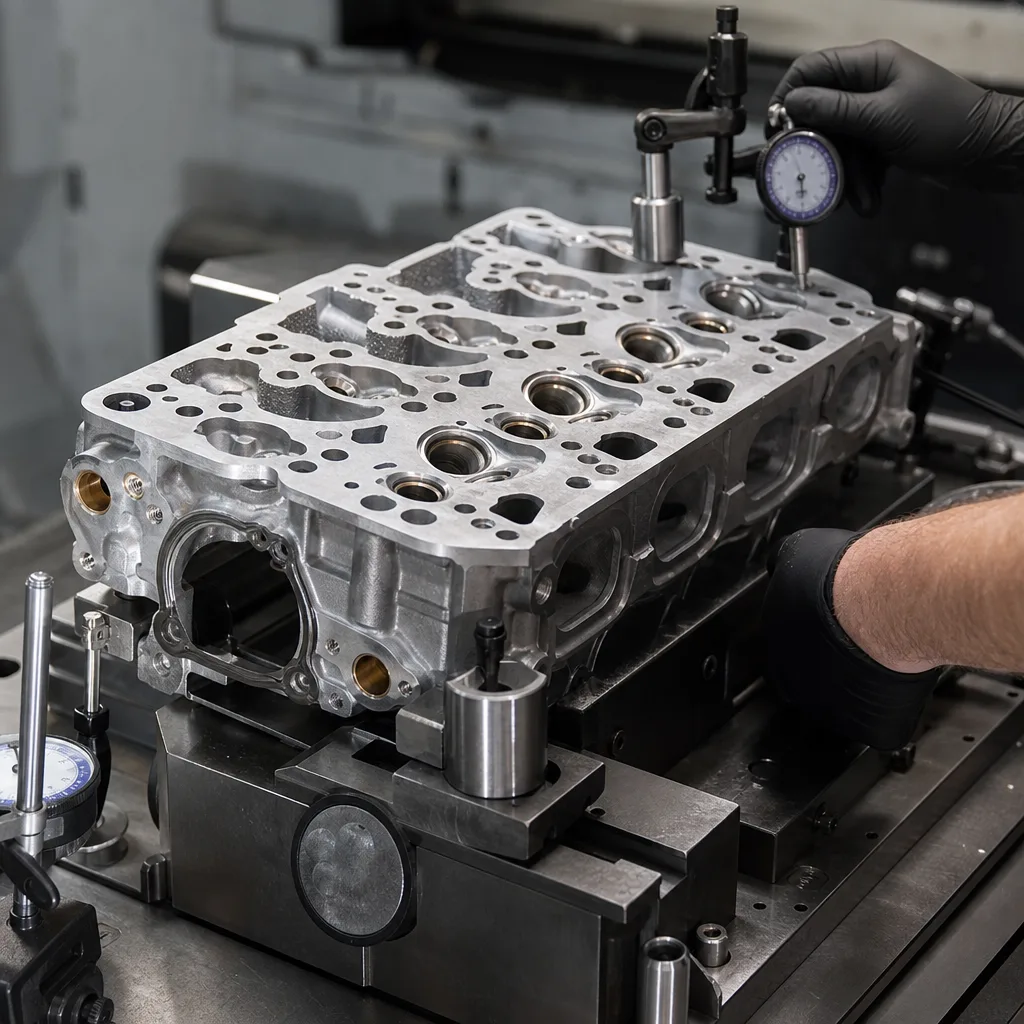
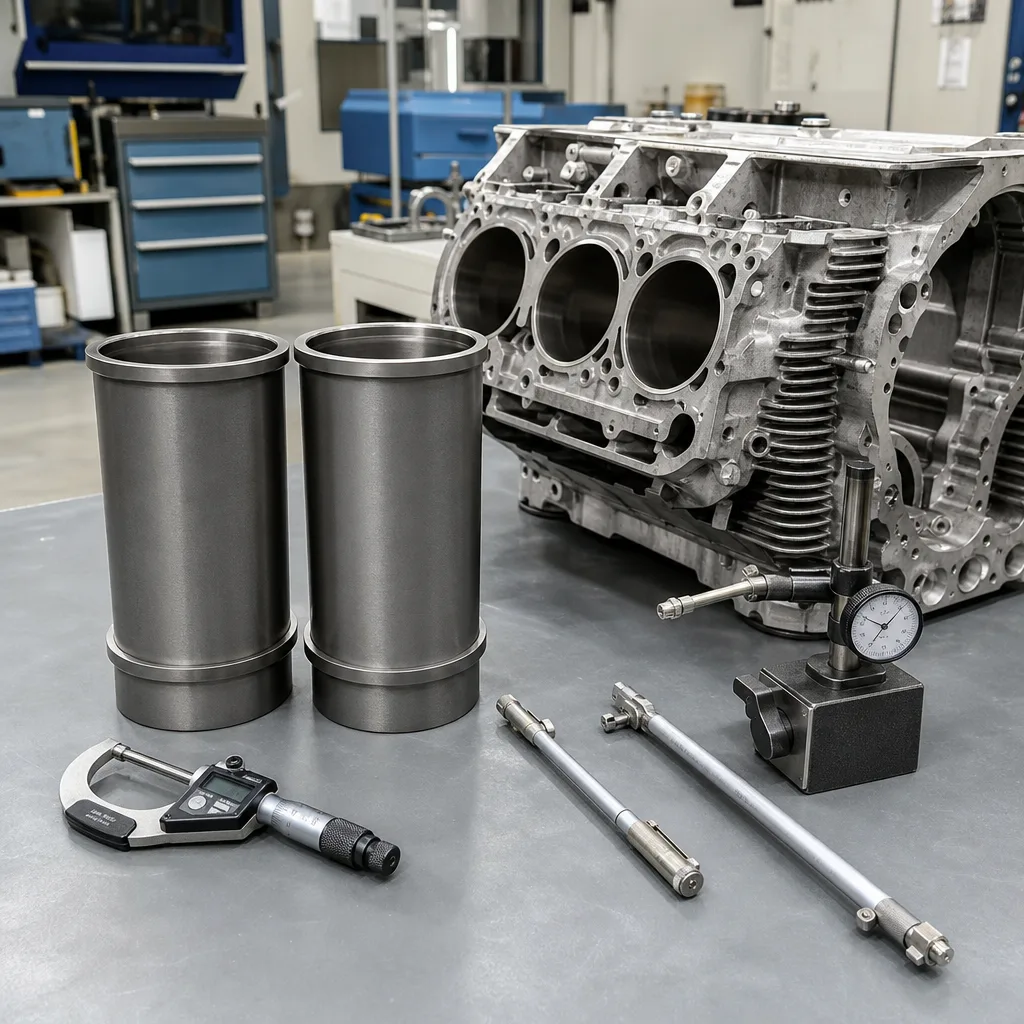
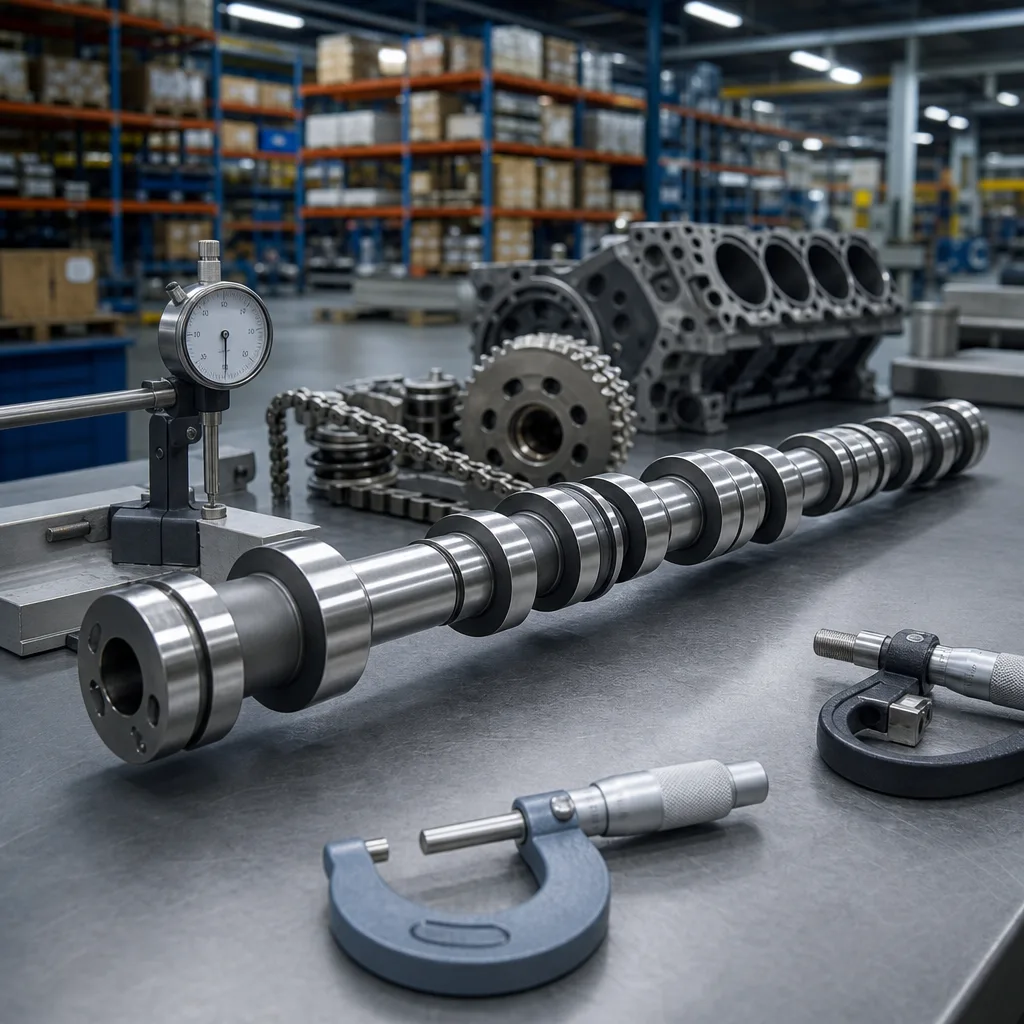
Sourcing Mazda-compatible cylinder sleeves is not a simple lowest-price exercise. A capable cylinder sleeve Mazda OEM supplier needs tight control over bore geometry, sleeve metallurgy, batch traceability, export packing, and lot-to-lot repeatability. For rebuild programmes, distributor ranges, and engine component sourcing, the core questions are technical: does the sleeve match the intended engine code and bore family, can the plant hold OD, ID, wall thickness, taper, roundness, and surface finish to the approved drawing, and can each batch be traced from raw material heat through to the packed carton? Driventus is an independent aftermarket manufacturer; brand names are referenced for fitment only. Procurement teams should review drawing revision control, PPAP or first-article records where required, inspection frequency, sample approval, MOQ, lead time, change control, and export readiness before releasing production. This guide explains the technical and commercial checks expected from a cylinder sleeve supplier for Mazda fitment, including material certificates, custom options, audit points, and logistics controls that help reduce risk across EU, UK, US, Canadian, Australian, and Brazilian supply chains.
What buyers should verify before RFQ
When a buyer screens a cylinder sleeve Mazda OEM supplier, fitment control should come before price. A low quote has little value if the sleeve cannot be matched to the correct engine family, nominal bore, sleeve OD, and installation condition. Before issuing an RFQ, define whether the requirement is for a finished sleeve, semi-finished liner, dry sleeve, wet sleeve, or repair liner. Each option changes the tolerance stack, machining allowance, corrosion protection, and inspection plan.
The supplier should be able to connect the part to an approved drawing revision, OE-reference cross list, or validated sample. Ask for the engine code, nominal cylinder bore, finished ID range, sleeve OD, flange diameter and height where applicable, wall thickness, chamfer design, press-fit or protrusion requirement, and final honing allowance. A clear RFQ should also state whether the sleeve is supplied ready to install or with stock for the rebuilder to finish after pressing. If the supplier cannot explain how the sleeve is identified, measured, and controlled internally, the sourcing risk is already too high for a production programme.
A workable quotation should state:
Application, engine family, and engine code reference
Sleeve type, including dry, wet, semi-finished, finished, or repair service
Material grade, casting route, heat treatment, hardness target, and heat number control
Finished dimensions, machining allowance, and bore surface finish requirement, including Ra/Rz where specified
Inspection method for ID, OD, roundness, concentricity, taper, flange height, and wall thickness
Drawing revision, sample reference, OE-reference cross list, or approval status
Packaging standard for sea, air, courier, or mixed export shipments, including rust prevention period
MOQ, sample quantity, pilot order size, repeat-order lead time, and validity period for price and tooling status
It helps to keep commercial information separate from technical acceptance criteria. The purchasing file should cover target volume, destination market, expected annual demand, packaging preference, labeling needs, and distributor barcode or carton marking requirements. The engineering file should hold the drawing, inspection criteria, material requirement, sample approval process, and requalification triggers. This separation makes quote comparison cleaner and stops technical requirements from being treated as optional preferences.
Material and geometry decisions shape service life. Even a sleeve with the right chemistry can fail in rebuild use if bore control is weak, especially when press fit, parent block condition, and final honing are not considered together. Specify the sleeve design against the approved drawing, then link that design to inspection methods that prove the part can be repeated in production.
For Mazda-compatible sourcing, buyers should pay close attention to wall thickness consistency, flange geometry where used, bore finish, OD tolerance, and the relationship between the sleeve and the engine block. Dry sleeves depend heavily on interference fit and distortion control; many rebuild specifications require the final ID to be finished after installation because pressing can affect roundness and taper. Wet sleeves need reliable sealing lands, flange seating, coolant-side corrosion resistance, and controlled protrusion. Repair liners need enough machining allowance for the engine rebuilder to restore geometry without reducing support in the parent block.
Common buyer comparisons are below.
Sleeve type
Best fit
Buyer checks
Main risk if missed
Dry sleeve
Compact engines, lower cooling dependence, block repair where coolant does not contact the liner directly
Remaining parent material, final honing allowance, concentricity, ID/OD relationship
Poor ring seal, oil consumption, insufficient block support
Semi-finished sleeve
Distributors or rebuilders with local finishing capability
Machining stock, OD control, material consistency, corrosion protection in storage
Inconsistent final bore, excess machining time, scrap at the rebuilder
</tr></thead><tbody> </tbody></table>The material must match the duty. Centrifugal-cast or continuously cast grey iron is commonly selected for wear resistance, machinability, and dimensional stability. Buyers should request chemistry control for carbon, silicon, manganese, phosphorus, and sulphur, along with hardness reporting, often in the HB 180-260 range depending on the approved specification. For more demanding engine duty, add microstructure review for graphite form, pearlite content, carbide distribution, and porosity during sample approval.
For production control, ask for first-article samples, dimensional reports, hardness checks, and recurring capability tracking on critical features. High-risk characteristics such as sleeve OD, finished ID, flange height, wall thickness, roundness, taper, and concentricity should be measured with defined gauges and recorded against the drawing, not described only as "within tolerance." That discipline helps prevent drift when the same sleeve is ordered across multiple batches or supplied to several distributor markets.
Build the quality file before placing volume
A serious export supplier should operate under IATF 16949:2016 or, at minimum, ISO 9001:2015 with automotive-style controls for calibration, incoming inspection, in-process checks, final inspection, traceability, and nonconformance handling. For EU-bound shipments, ask for REACH (EC) No 1907/2006 declarations and a clear restricted-substances statement. Buyers serving multiple regions should keep the same file ready for customs review, customer audits, warranty investigation, and future reorders.
This is where many sourcing files break down. The paper trail matters as much as the sleeve itself because receiving inspection often cannot detect every long-term risk. A sleeve may look acceptable at delivery but still create problems if the material certificate is missing, the heat or batch cannot be traced, or the supplier changes casting, heat treatment, machining, honing, or coating without notice. A complete quality file gives procurement, engineering, and aftersales teams one shared reference point.
Buyers should request:
Dimensional report for the pilot lot, including critical ID, OD, wall thickness, taper, roundness, concentricity, and flange measurements
Material certificate or heat analysis connected to the production batch and casting route
Hardness report and, where required, microstructure or metallography evidence
Batch traceability from raw material receiving to machining, final inspection, carton label, and packing list
Calibration status for bore gauges, air gauges, micrometers, height gauges, surface roughness testers, and dedicated fixtures
Packaging specification with carton strength, pallet detail, VCI paper or oil protection, desiccant use where required, and labeling format
REACH declaration for EU supply and any market-specific compliance statements required by the buyer
Change-control commitment for process, tooling, material, subcontractor, drawing, marking, or packaging updates
Nonconformance and corrective action process, including containment timing and 8D or equivalent response for field complaints
For higher-risk programmes, add first-article approval, retained samples, control plans, process flow diagrams, PFMEA, and measurement system analysis for critical gauges. If the sleeve will be sold under a distributor brand, the buyer should also define marking rules, private-label carton layout, country-of-origin documentation, and how traceability codes will appear on the packing list, carton label, or part label.
Build this file before volume release, not after a claim. During sample approval, the supplier should prove that the production route, inspection equipment, and documentation format are ready for repeat orders. If you are comparing factories, review the quality system before you move to the first order.
Control MOQ, lead time, and export terms
MOQ and lead time are easier to manage when the quote separates standard catalogue sleeves from custom work. Standard sleeves should be quoted with tooling status, available sample quantity, current stock position where relevant, and repeat-order MOQ. Custom dimensions, special coatings, changed flange geometry, revised wall thickness, altered machining allowance, or market-specific packaging should go through custom manufacturing with a separate sampling and approval plan.
A reliable quote should show the full sourcing path from sample to repeat supply. Confirm sample lead time, validation quantity, whether samples are made from production tooling, and which changes trigger re-approval. For cylinder sleeves, small differences in machining allowance, OD tolerance, surface roughness, rust protection, or packing method can affect both cost and lead time, so these details should be fixed before PO release.
Buyers should also ask for:
Sample approval lead time and sample quantity, separated by stock sample and made-to-drawing sample
Pilot order quantity, inspection level, and acceptance criteria
Mass production lead time after sample approval, including casting or heat-treatment lead time where applicable
Repeat-order MOQ and price break points by quantity or annual forecast
Palletising method, carton dimensions, gross weight, net weight, and cubic volume
Carton count per export case or pallet and maximum carton weight for manual handling
Rust prevention method for sea freight and long warehouse storage, including expected protection period
Labeling, barcode, neutral packing, or private-label packing options
Forecast requirements for distributors, repair chains, or regional warehouse programmes
This keeps landed cost visible before PO release. Freight, pallet density, carton durability, moisture control, and document timing can affect the real cost as much as the unit price, especially for heavy cast iron components. A sleeve programme shipped by sea freight may need double-wall cartons, stretch-wrapped pallets, VCI protection, desiccants, and pallet edge protection. An urgent air shipment may need tighter carton weight control and more compact packing.
If the plant is supplying multiple regions, confirm whether the same drawing, material grade, and inspection plan can be supported across all sales channels without requalification. This matters for distributors and repair chains that need one stable part number across several markets. It also reduces the risk of regional variation, mixed inventory, duplicate qualification work, and unexpected stock segregation when demand grows.
Run a supplier audit that exposes real capacity
Before awarding a cylinder sleeve programme, run a short factory audit or remote audit. The aim is not just to confirm that the supplier owns machines. It is to understand whether the factory can repeat the approved sleeve at the required volume, document every batch, and respond quickly when a quality issue appears. A good cylinder sleeve Mazda OEM supplier should be able to walk through the process from raw casting or bar receipt to rough machining, stress relief or heat treatment where specified, finishing, inspection, packing, and shipment.
Focus on the equipment list, process flow, gauge control, operator training, and traceability from raw material to packed cartons. Ask whether the supplier can support dimensional reports, hardness checks, surface roughness readings, metallography when required, and change control on any process or material adjustment. If subcontracted processes are involved, such as casting, heat treatment, coating, phosphating, or special surface treatment, the supplier should explain how those partners are approved, audited, and linked to the batch record.
A useful audit agenda is simple:
Confirm machine types used for rough turning, finish turning, boring, grinding, chamfering, and honing
Check calibration status for bore gauges, micrometers, air gauges, fixtures, surface roughness testers, and metrology tools
Review incoming material inspection, heat identification, material certificates, and lot segregation
Verify in-process checks for wall thickness, concentricity, taper, roundness, flange height, and surface finish
Review final inspection records, batch release rules, AQL or 100% inspection points, and packing sign-off
Confirm how retained samples, rejected parts, rework, and mixed lots are controlled
Check warehouse conditions, corrosion prevention, carton compression strength, pallet handling, and container loading practice
Review complaint handling, root cause analysis, corrective action response time, and containment method
Confirm who approves drawing revisions, process changes, subcontractor changes, and customer-specific requirements
The audit should test capacity in practical terms. Ask how many sleeves can be produced per shift by sleeve family, which machines are bottlenecks, how rush orders are handled, what inspection capacity is available per shift, and whether the same line supports other engine component families. A supplier may have the right technical skill but still be a poor fit if capacity is unstable or inspection resources cannot keep up with volume.
If the answers are vague, the risk moves to your receiving dock. If the answers are documented, you have a better basis for source approval, repeat orders, and long-term supply planning. The strongest suppliers can show records, explain decisions, and connect each production step to the requirements in the buyer's drawing and quality file.
Frequently asked questions
Match engine code, nominal bore, sleeve type, flange height, wall thickness, OD tolerance, finished ID, and machining allowance to the approved drawing. Do not rely on model name alone. For mixed fleets, ask the supplier to confirm the part against a dimensioned print, OE-reference cross list, or validated sample before releasing mass production.
At minimum, request a dimensional report, material certificate, batch traceability, packaging specification, and a REACH declaration for EU supply. For controlled programmes, add first-article approval records, hardness reports, calibration evidence, retained sample rules, control plan, and a written change-control commitment.
Yes, if the project has a drawing, target volume, and acceptance criteria. Custom work usually starts with drawing review and manufacturability feedback, then sample validation, pilot production, and repeatable release quantities. The process is designed for B2B sourcing, distributor programmes, and repair-chain supply, not one-off retail orders.
If you need a drawing review, sample plan, or target price, send the RFQ through [request a quote](/contact.html).