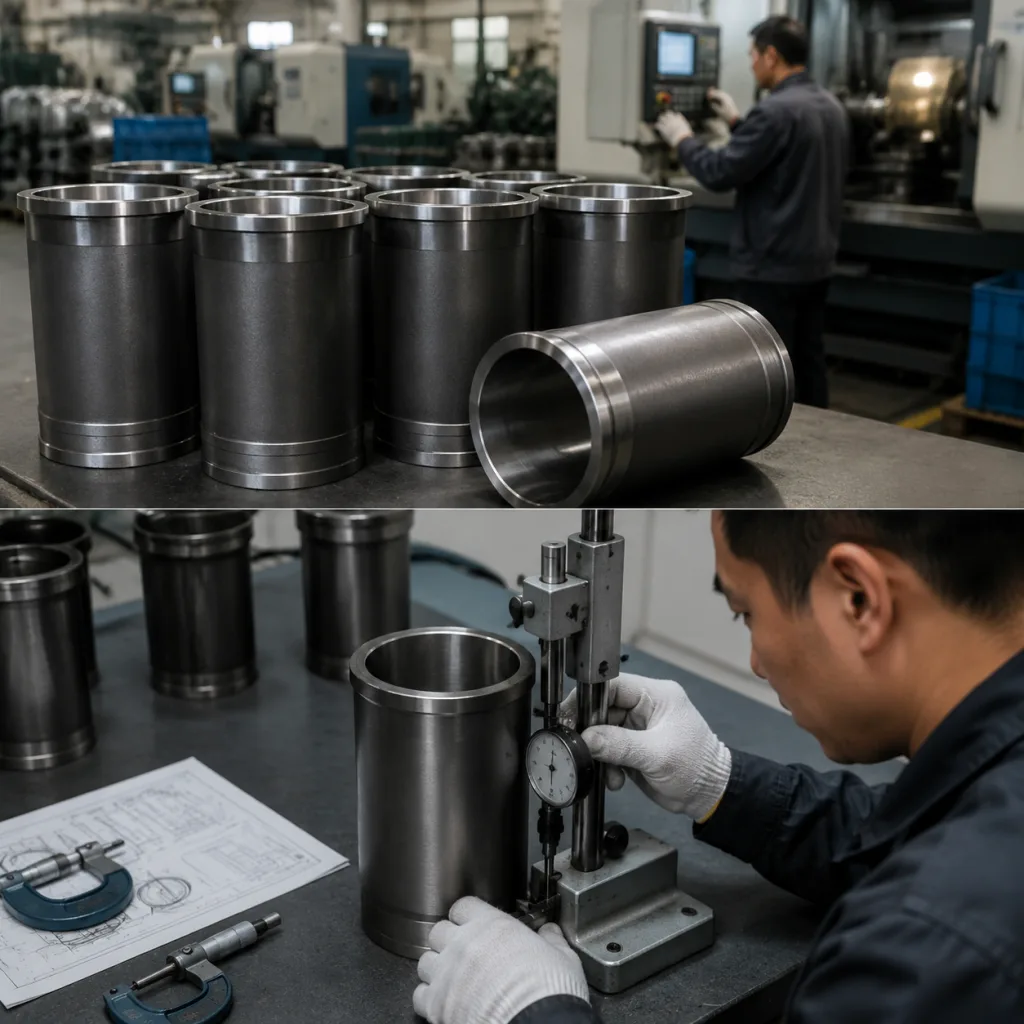
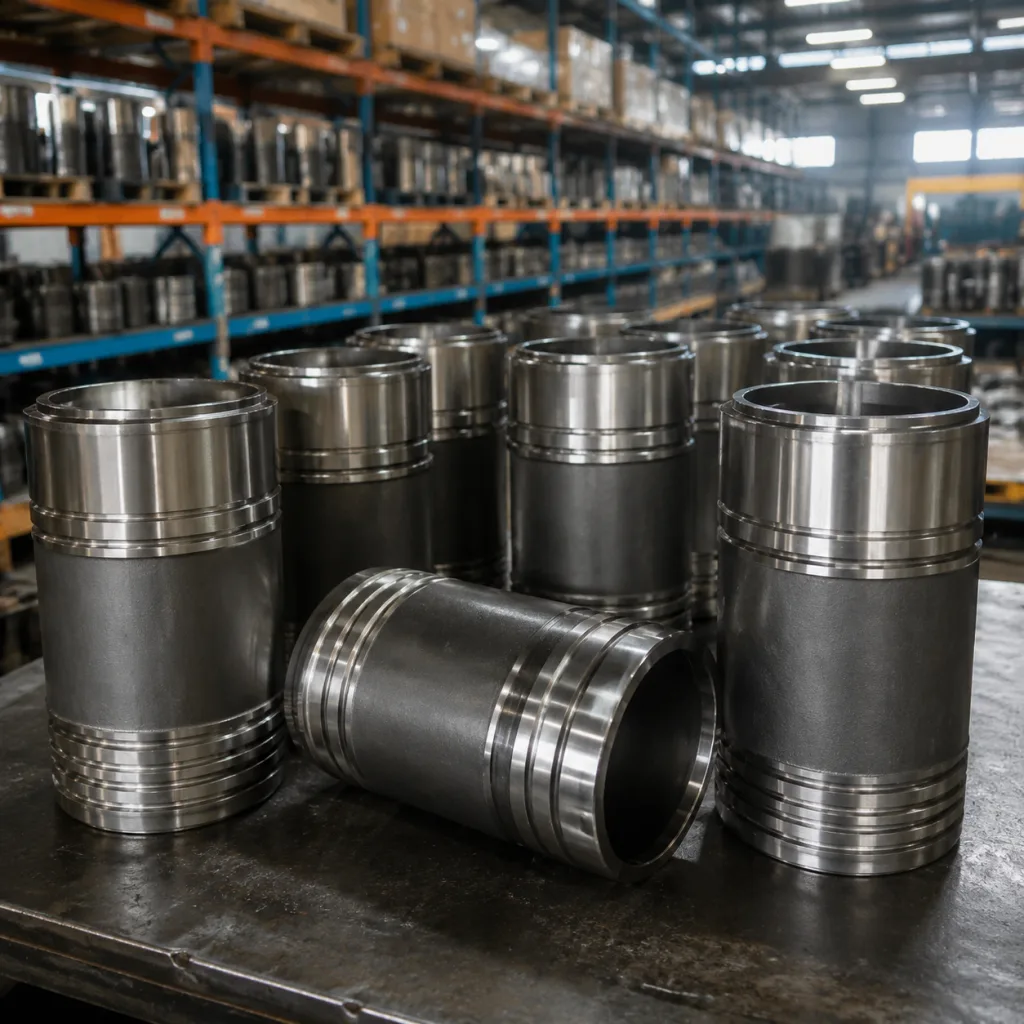
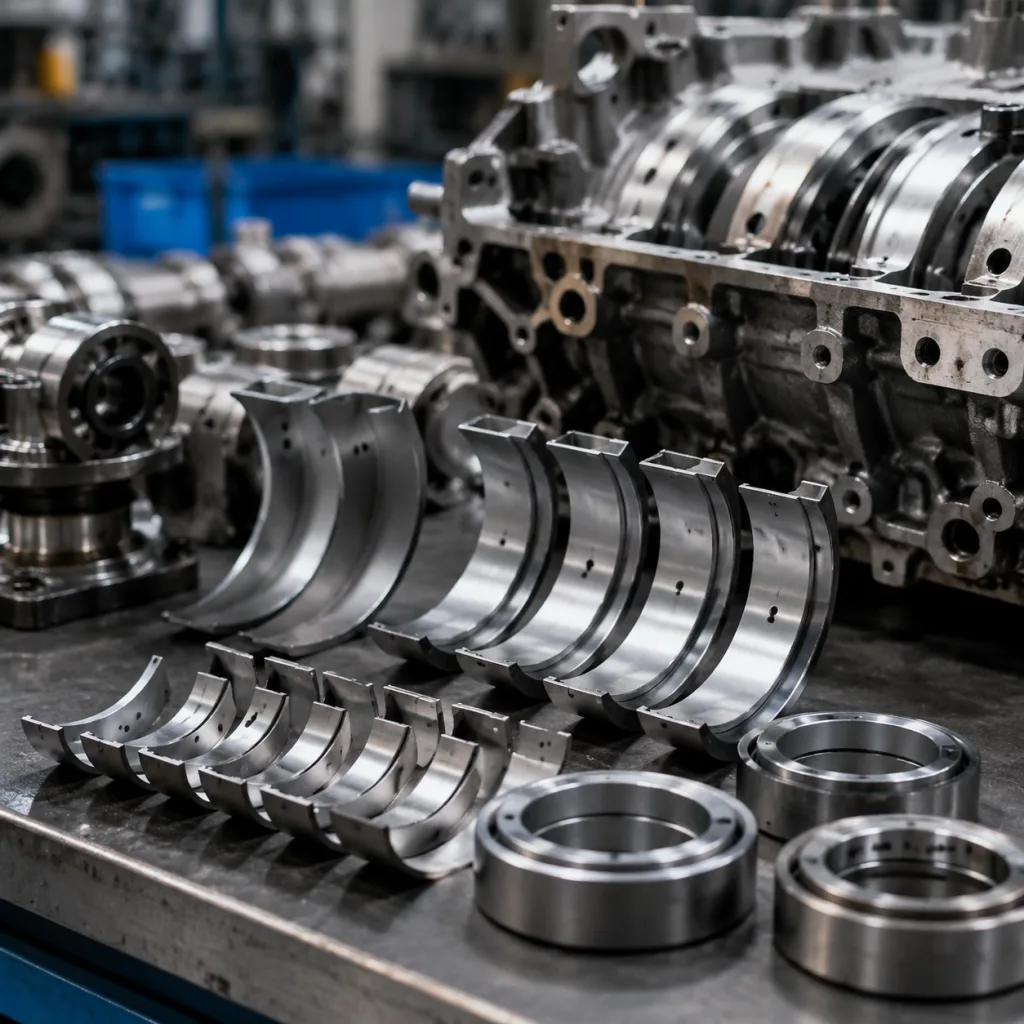
Buying cylinder sleeves for Cadillac applications from China is a validation problem before it is a pricing problem. The right supplier has to prove dimensional control, material consistency, and repeatable machining on the exact engine family—not just claim broad manufacturing capability. Driventus is an independent aftermarket manufacturer; brand names are referenced for fitment only. For buyers comparing Chinese factories, the practical question is simple: can the plant build to the required bore size and wall thickness, document process control, and deliver the same result on every lot? This article takes a more decision-driven look at how to evaluate a cylinder sleeve Cadillac manufacturer China, from fitment risk to specification checks and commercial terms.
Where fitment usually goes wrong
Most sourcing failures start with the wrong reference part. A Cadillac cylinder sleeve can look correct and still miss the bore, flange, or interference requirement once it reaches the block. The first job is to separate the vehicle brand from the actual engine family, then verify the sleeve against measurements, not assumptions.
Before you send an RFQ, lock these details:
Engine code, casting number, and OE cross-reference
Nominal bore, finished bore, and allowable ovality
Sleeve height, flange thickness, and counterbore depth
Installed interference fit range for the block
Material grade, hardness target, and heat-treatment condition
Surface finish target for bore and OD, plus the inspection method
Sampling plan for first article, pilot lot, and mass production
Typical procurement tolerances depend on the engine design, but many programs ask for bore tolerance within `±0.01 mm` to `±0.02 mm`, OD tolerance within `±0.01 mm` to `±0.03 mm`, and concentricity within `0.02 mm` to `0.05 mm` total indicator reading. If the program is performance-sensitive, require the supplier to state the exact gauges used and how often they are calibrated.
A supplier that cannot explain how the sleeve is machined, honed, and inspected is not ready for production. That gap usually shows up later as rework, not in the quotation.
Spec sheet reality: what matters and what doesn’t
The casting description matters less than the finished part. Cylinder sleeves are usually supplied in centrifugally cast iron or alloy cast iron, then machined to the drawing. Procurement should focus on the finished controls that affect fit, wear, and sealing.
Item
Typical control point
Buyer note
Material
Cast iron / alloy cast iron
Confirm chemistry, hardness, and heat-treatment route
Bore tolerance
Drawing-specific, often `±0.01 mm` to `±0.02 mm`
Match to piston, ring, and clearance targets
OD tolerance
Drawing-specific, often `±0.01 mm` to `±0.03 mm`
Critical for block interference fit
Concentricity
`0.02 mm` to `0.05 mm` TIR
Reduces wear, oil consumption, and noise
Surface finish
Honed bore, commonly `Ra 0.2–0.8 µm`
Request Ra target and gauging method
Heat treatment
As specified
Ask for a process record if required
Wall thickness
Program-specific, often held within `±0.10 mm` to `±0.25 mm`
Confirm minimum section at the thinnest point
Straightness and roundness
Drawing-specific
Important on long sleeves and thin-wall parts
</tr></thead><tbody> </tbody></table>For export programs, a supplier working to `IATF 16949:2016` and `ISO 9001:2015` should provide traceability, in-process inspection, and final dimensional reports. A strong factory will also record the raw material lot, furnace batch, machining lot, honing lot, and final pack date so quality teams can trace a rejection back to source. For regulated markets, material and chemical conformity may also need review against `REACH (EC) No 1907/2006`.
How Chinese production helps — and where it doesn’t
China-based production can work well for sleeve programs because it combines machining capacity with flexible lead times on repeat orders. That advantage only matters if the factory is built for B2B delivery rather than spot production.
Look for a plant that can handle:
Sample-to-production change control with revision tracking
Batch traceability by heat, lot, and machining date
Stable machining on cylinder bore and OD surfaces with tool-life control
Export packaging for sea freight, air freight, and mixed-SKU cartons
Documentation in English for receiving, quality, and customs teams
Daily or weekly production updates for multi-SKU purchase orders
A useful supplier should also support engineering communication through CAD files, drawing markups, and measurement feedback. If the project is more than a catalogue replacement, review custom manufacturing early so tooling, MOQ, and inspection gates are agreed before production starts.
The real value is not only cost. A capable factory can often turn a new sleeve into samples in `7–15 days`, then repeat production in `20–35 days` depending on order size, heat-treatment queue, and packing scope. That timeline depends on having the right casting route, machining setup, and inspection capacity already in place.
Validation checklist before you approve a supplier
A cylinder sleeve should not be approved on appearance alone. The validation file needs first-article dimensions, hardness confirmation where applicable, and a visual standard that both sides can read the same way. If the sleeve is for performance or fleet use, ask whether the supplier can support endurance-style verification and dimensional stability checks after thermal cycling.
Use this approval sequence:
1. Compare the sleeve drawing with the block and piston data. 2. Request a sample with a measured report from calibrated instruments. 3. Confirm packaging, rust prevention, and edge protection. 4. Review the supplier’s quality system documents. 5. Lock the final inspection criteria in writing. 6. Define the acceptance limit for critical dimensions, rework, and replacement parts.
For most programs, buyers use a first-article report with `100%` inspection of critical dimensions, then shift to lot sampling such as `AQL 1.0` or `AQL 2.5` for non-critical attributes once the process is stable. For a higher-risk program, ask for hardness testing, microstructure photos, and a packing integrity check on the pilot lot.
If you manage multiple part families, an established our catalog and engine components range can simplify consolidation. Even then, each approved sleeve still needs its own drawing match and sample sign-off.
Commercial terms that decide the real cost
Price is only one line in the decision. Total landed cost also depends on MOQ, sample lead time, tooling scope, freight packing, and rejection rate. A low unit price with weak measurement control often becomes expensive once sorting, delays, and returns are added.
Ask these questions during RFQ:
What is the MOQ by part number and by material grade?
What is the standard lead time for samples and mass production?
Can the factory hold repeatability across multiple batches?
Which inspection records ship with each lot?
What export experience does the supplier have for North America, Europe, and Latin America?
What price break applies at `100`, `300`, `500`, and `1,000` units?
Are tooling, honing, phosphate, rust-prevention oil, and carton labels included or separate?
A useful quote should show three numbers: sample price, production price, and landed packing price. Sample orders often cost more per piece because setup and measurement are spread across a small run. Production pricing usually improves at `300+` or `500+` pieces once the line is stable.
Lead time should be split into engineering/sample time and mass-production time. A credible supplier will usually quote `7–14 days` for samples, `20–35 days` for repeat production, and `35–45 days` when new tooling, special heat treatment, or export packaging changes are involved. If the project needs part-number consolidation, kitting, or special packaging, confirm the scope before order placement. For direct discussion, request a quote.
FAQ: quick answers buyers ask most
Q1: Can a Chinese factory supply Cadillac cylinder sleeves to OE dimensions? Yes, if the supplier has the correct drawing, sample, and machining controls. The part must be verified by measurement, not by brand name alone. Ask for a dimensional report with the critical bore, OD, height, and concentricity values called out against the drawing.
Q2: What documents should I request before approving a supplier? Ask for material data, dimensional reports, sample approval photos, packaging details, and quality certificates such as `IATF 16949:2016` and `ISO 9001:2015` where applicable. For higher-risk programs, also request lot traceability, hardness records, and the final inspection checklist used for shipment.
Q3: How do I reduce fitment risk on a first order? Use a measured sample, confirm the engine code and OE reference, and lock the acceptance criteria in writing before mass production. It also helps to specify the installation condition, interference range, and the exact measuring temperature so both sides use the same reference.
Q4: What MOQ and lead time should I expect? Many sleeve programs start around `100–300` pieces per part number, but MOQ can be lower or higher depending on tooling status and material grade. Sample lead time is often `7–14 days`, while production is commonly `20–35 days` after approval, assuming raw material is available and no special finish is added.
Frequently asked questions
Yes, if the supplier has the correct drawing, sample, and machining controls. The part must be verified by measurement, not by brand name alone. Ask for a dimensional report with the critical bore, OD, height, and concentricity values called out against the drawing.
Ask for material data, dimensional reports, sample approval photos, packaging details, and quality certificates such as `IATF 16949:2016` and `ISO 9001:2015` where applicable. For higher-risk programs, also request lot traceability, hardness records, and the final inspection checklist used for shipment.
Use a measured sample, confirm the engine code and OE reference, and lock the acceptance criteria in writing before mass production. It also helps to specify the installation condition, interference range, and the exact measuring temperature so both sides use the same reference.
Many sleeve programs start around `100–300` pieces per part number, but MOQ can be lower or higher depending on tooling status and material grade. Sample lead time is often `7–14 days`, while production is commonly `20–35 days` after approval, assuming raw material is available and no special finish is added.
If you are comparing suppliers, send the drawing, target volume, and OE reference and we will review fitment and production feasibility. Start here: /contact.html