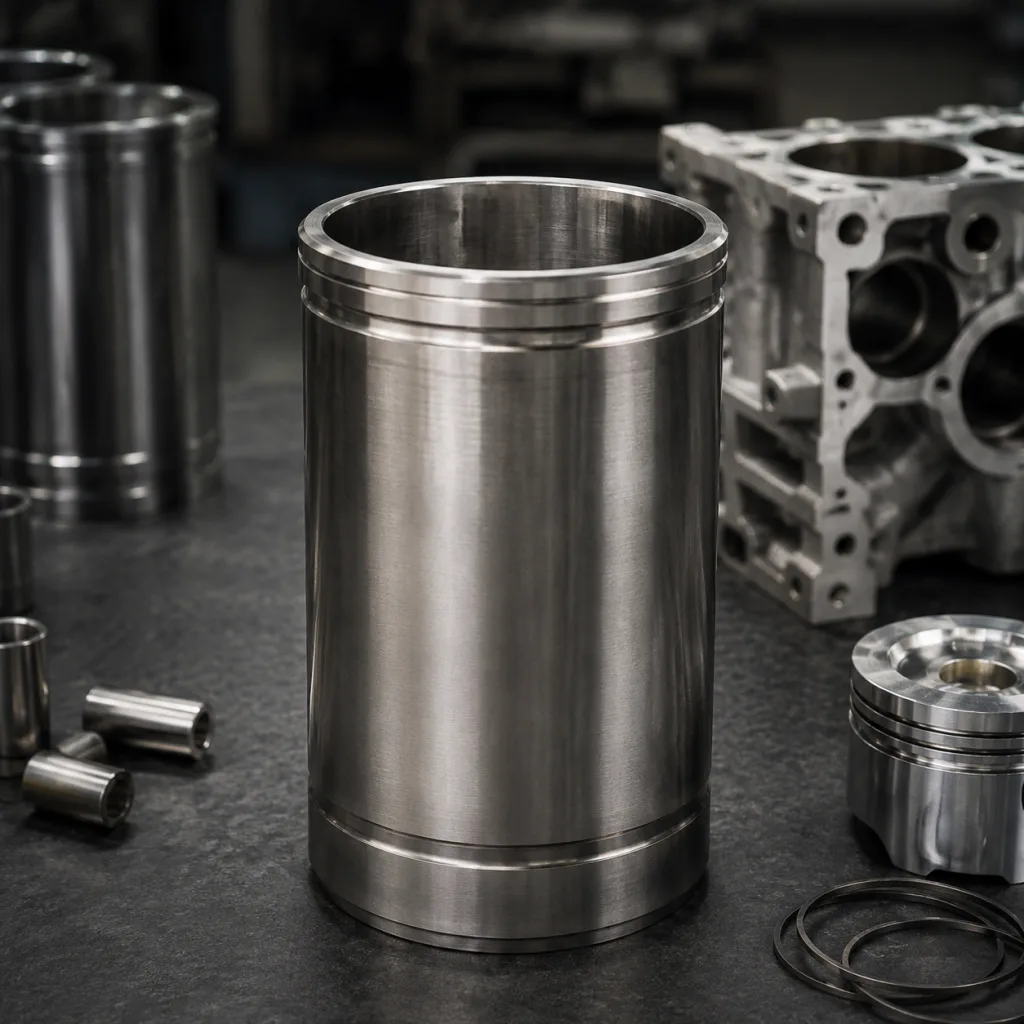
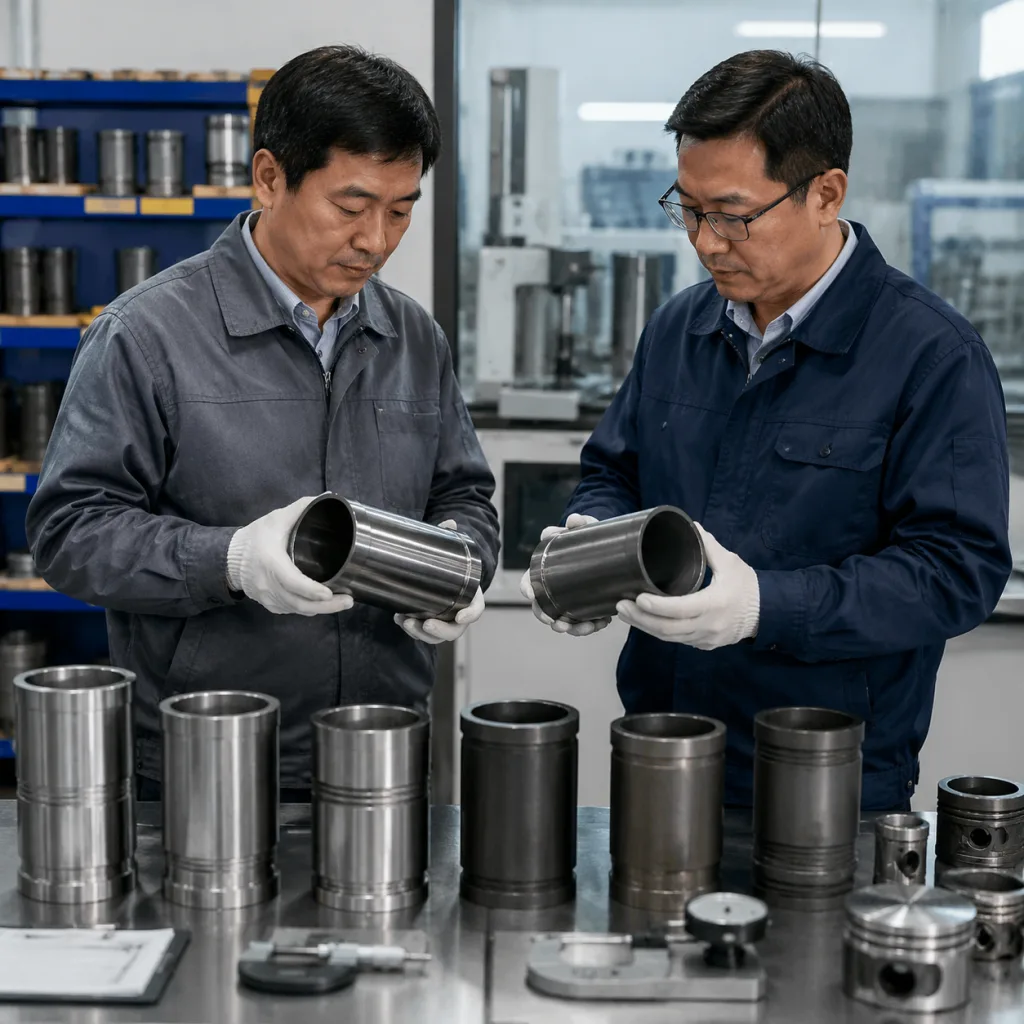
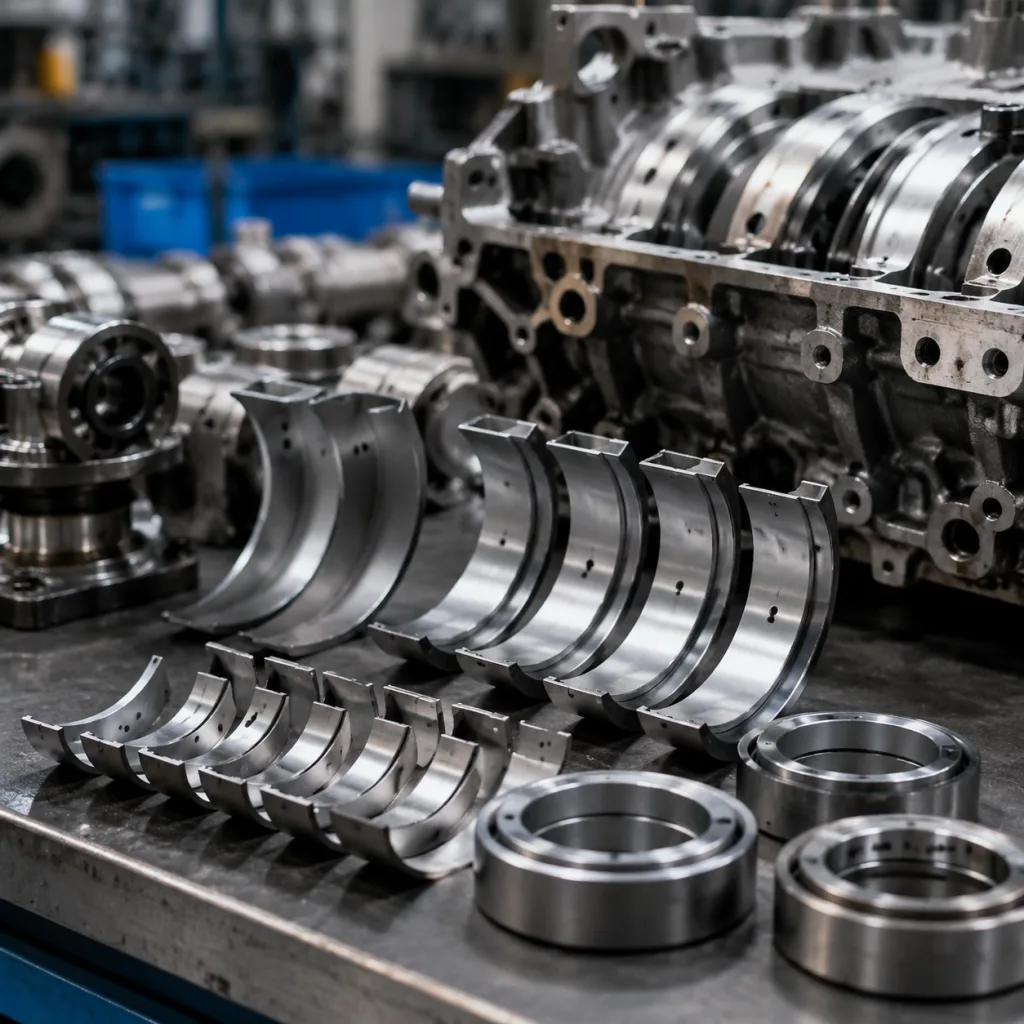
Sourcing a cylinder liner Hyundai OEM supplier is a qualification exercise, not a catalog search. Fitment matters, but so do bore control, metallurgy, heat treatment traceability, and packaging that survives export transit. For Hyundai engine programs and aftermarket programs that reference Hyundai fitment, the real question is whether the supplier can hold dimensions and surface finish across repeated lots. Driventus manufactures engine and powertrain components in Taizhou, Zhejiang, and supports B2B buyers in the EU, UK, US, Canada, Australia, and Brazil. Driventus is an independent aftermarket manufacturer; brand names are referenced for fitment only. We work to IATF 16949:2016 and ISO 9001:2015 controls, with documented inspection, traceability, and export packing. The guide below is structured as a practical decision framework: what to verify, where suppliers fail, how to compare options, and what to request before you approve sampling or a long-term program.
Start with fitment, not the engine name
For a cylinder liner Hyundai OEM supplier search, the first filter is dimensional fit. Engine family names help, but they do not tell you whether the liner will seat correctly or hold clearance under load.
Confirm material grade, typically pearlitic cast iron or alloyed cast iron, plus hardness and microstructure data.
Ask for dimensional inspection records for concentricity, roundness, wall thickness, and deck height.
Request sample quantity, MOQ, standard lead time, and export packing details.
Confirm corrosion protection, palletization, and carton labeling for sea freight.
A qualified supplier should be able to share controlled drawings, inspection reports, and lot traceability before commercial discussion gets too far. If those records are missing, the sourcing risk usually shows up later as rejection, rework, or warranty exposure.
Where liner programs usually fail
Cylinder liner issues are often caused by process drift, not by obvious material defects. That is why buyers should look for failure modes, not just promises.
Failure mode
What it looks like
What to verify
Oversize or undersize bore
Poor piston clearance, scoring, oil consumption
Final bore control and gauge records
Out-of-round geometry
Blow-by, sealing loss, ring wear
Roundness and concentricity data
Weak surface finish
Slow ring seating, scuffing
Honing spec and roughness target
Uneven wall thickness
Heat concentration, cracking risk
Wall thickness measurements
Incorrect flange or step height
Seating problems in the block
Counterbore and deck interface checks
</tr></thead><tbody> </tbody></table>If your program uses wet or dry liners, confirm the installation method, interference fit, and any seal groove geometry. Replacement sourcing usually fails first at the interface, not in the headline specification.
Specification details that deserve a closer look
A useful comparison goes beyond basic dimensions. Ask for the data that shows how the liner is built, finished, and controlled.
Base material and chemistry range
Heat-treatment method and hardness target
Honing condition or semi-finished state
Surface roughness and plateau finish, if applicable
Chamfer geometry and edge break
Coating, plating, or anti-rust treatment
Marking method and traceability code format
A good supplier can explain which tolerances are critical and which are controlled by the installation process. That distinction matters. It helps you separate a true manufacturing capability from a part that only matches on paper.
Compliance evidence to request before sampling
B2B buyers should ask for evidence, not assurances. A credible cylinder liner supplier can show how parts are controlled from incoming material to final pack-out.
Driventus operates under IATF 16949:2016 and ISO 9001:2015 quality management systems. For export markets, material and process declarations should also support REACH (EC) No 1907/2006 where applicable. If the liner is part of a broader engine program, buyers may also ask how the part aligns with distributor or vehicle-level compliance workflows tied to durability or emissions-related documentation, where relevant to the program.
A factory audit should cover:
Incoming raw material verification
Heat treatment records
CNC and honing process control
Gauge calibration status
Final inspection and packaging control
Nonconformance handling and corrective action closure
If a supplier cannot produce these records on request, the risk is usually not just quality. It is schedule instability, weak traceability, and harder claims handling later.
Compare suppliers on more than unit price
For cylinder liner programs, unit price can look attractive while the commercial structure quietly adds cost later. A better comparison is total landed cost plus support quality.
MOQ by part number and machining variant
Trial order quantity for internal approval or PPAP-style validation
Standard lead time and peak-season extension
Tooling cost, if custom dimensions or coatings are required
Packaging unit, carton count, and pallet configuration
Incoterms and port-of-export assumptions
If you are stocking distributor inventory, mixed-SKU shipment planning may matter more than tooling economics. If you are an OEM or Tier-1 buyer, scheduled releases and stable lot sizing usually matter more. Driventus can support our catalog for standard parts and custom manufacturing for drawing-based programs. For related sourcing categories, see engine components.
A practical qualification path with Driventus
When buyers need both replacement coverage and program-specific engineering support, the fastest path is usually a simple qualification sequence.
1. Share the drawing, OE reference, and target volume. 2. Confirm fitment, dimensional risks, and any machining differences. 3. Review material, heat treatment, and inspection documents. 4. Request first articles or a small sample batch. 5. Validate packaging, labeling, and transit protection. 6. Approve commercial terms and release the pilot order.
Driventus supports that workflow with casting, machining, honing, inspection, and export packing under one production structure. That reduces handoffs, which in turn reduces variation across branches, inbound inspection load, and claim complexity. For documentation and audit enquiries, review our quality system before requesting samples or commercial terms.
Frequently asked questions
Yes. We supply B2B export programs for distributors, OEM / Tier-1 suppliers, and repair chains. Driventus is an independent aftermarket manufacturer; brand names are referenced for fitment only.
Ask for dimensional data, material details, heat-treatment records, lot traceability, packing specification, and lead time. For regulated markets, also check REACH documentation where applicable.
Yes. Through drawing-based work and [custom manufacturing](/oem-services.html), we can review bespoke diameters, heights, coatings, and packaging requirements after technical confirmation.
If you are qualifying a new cylinder liner Hyundai OEM supplier, send your drawing, OE reference, and target volume for review. Start here: /contact.html