Choosing a cylinder liner seat supplier is not simply a price exercise. For importers, OEM buyers, and aftermarket distributors, the real exposure sits in dimensional stability, seat hardness, interference-fit control, and consistency from one batch to the next. If a liner seat drifts outside drawing tolerance, the result can be coolant leakage, liner fretting, bore distortion, or early engine failure after assembly. Supplier qualification therefore has to cover both the technical and commercial sides.
Most procurement teams want evidence in five areas: material traceability, machining capability, inspection discipline, batch documentation, and export execution. They also need clear answers on MOQ, tooling ownership, sample timing, and how non-conformances will be handled. This article outlines practical sourcing criteria for liner seat components used in diesel and petrol engine programmes, with attention to factory audit points, RFQ structure, and like-for-like supplier comparison. Driventus is an independent aftermarket manufacturer; brand names are referenced for fitment only.
What procurement teams should verify first
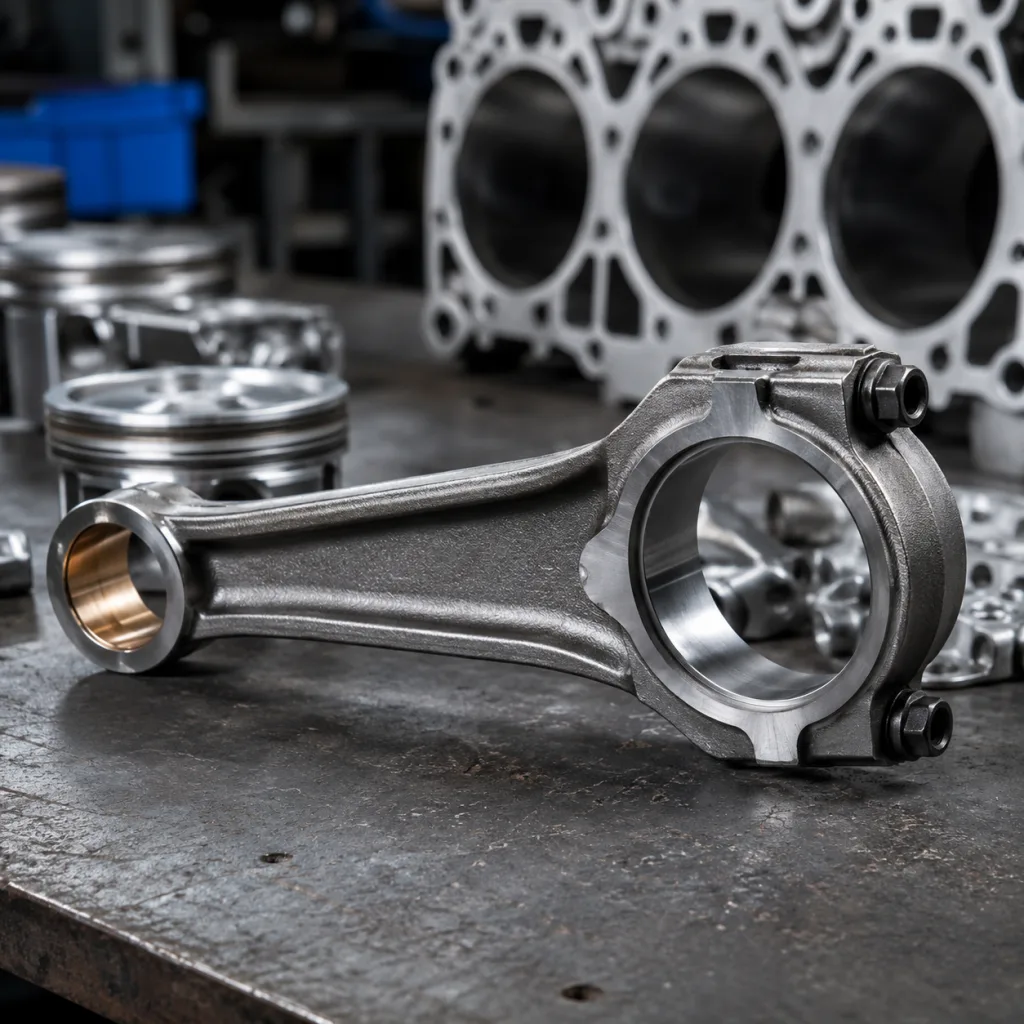
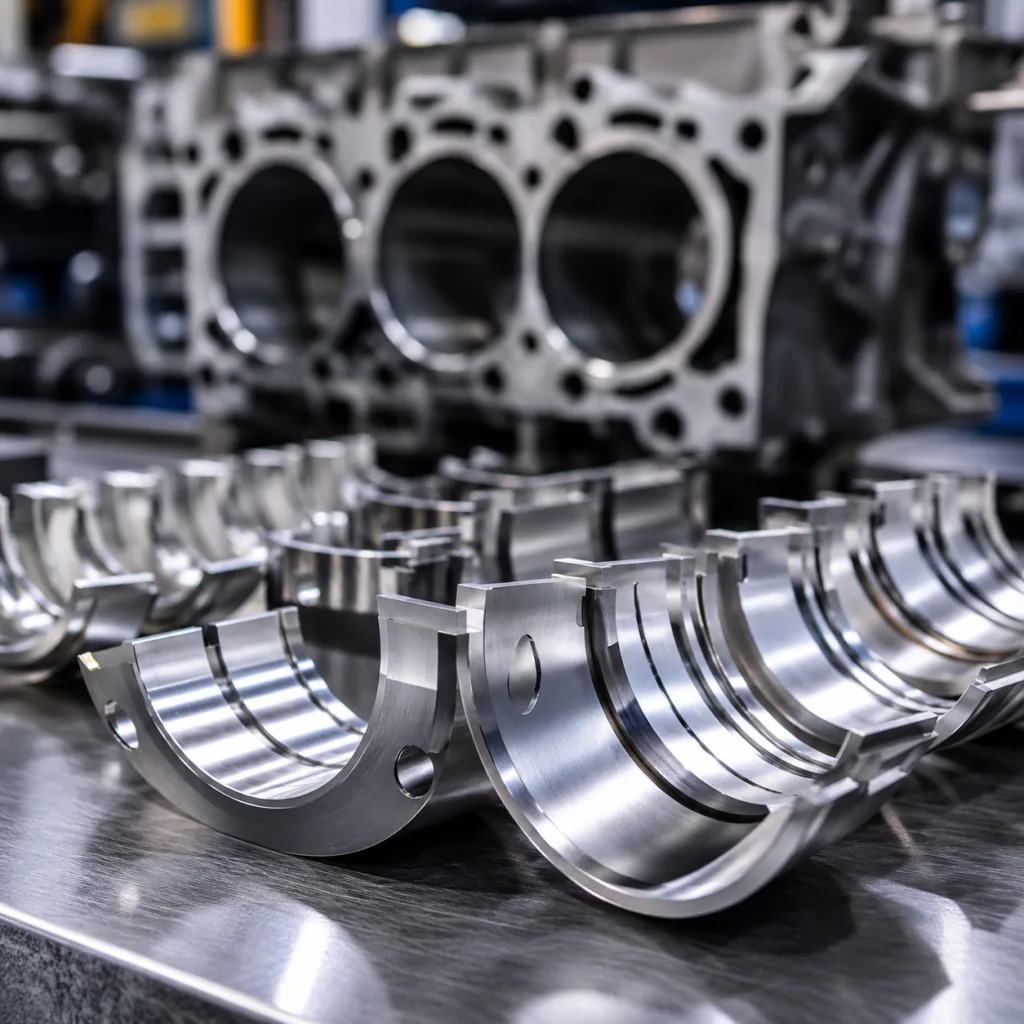
Cylinder liner seat components sit at the interface between the engine block counterbore and the liner register or flange location. In service, they need to hold geometry through thermal cycling, clamp load, combustion-induced vibration, and coolant exposure. That is why supplier review should start with proven process capability, not brochure claims.
First confirm exactly what the part is expected to do in the engine assembly. Some buyers issue a fully toleranced drawing covering material grade, hardness, datum structure, GD&T, and surface texture. Others provide only a sample or an internal reference. That difference matters. Two suppliers can quote the same nominal size but work from different fit classes, datum schemes, or finish routes. A reliable cylinder liner seat supplier should review the application and clarify fit requirements, machining sequence, inspection method, and likely failure modes before production starts.
Key checks at RFQ and audit stage:
Material grade definition: grey iron, ductile iron, alloy steel, or specified insert material with declared chemistry and the applicable standard, such as EN-GJL, EN-GJS, SAE, or ASTM equivalent
Critical dimensions: inner diameter, outer diameter, step height, flange thickness, face runout, concentricity, flatness, and perpendicularity to the defined datum set
Fit condition: a stated interference or transition-fit window against the mating housing, usually specified in mm rather than described only as "press fit"
Heat treatment control: hardness target, case depth where relevant, and batch-to-batch variation limits
Machining route: rough turning, semi-finish boring, finish turning or grinding, edge break, washing, and preservation sequence
Inspection plan: incoming material checks, first-off inspection, in-process SPC, final sampling plan, and lot release criteria
Traceability: a lot code linked to the raw material heat, machine route, inspection records, and operator or shift history
Export readiness: rust-preventive oil or VCI method, sealed-bag specification, carton stacking limit, and pallet design for sea freight
These details matter because liner seat performance depends on the interaction between dimensions, metallurgy, and assembly conditions. A supplier may hold nominal size and still cause field failures if roundness, face flatness, or bore-to-face concentricity are not controlled. On many engine hard-part drawings, roundness and flatness are held in the 0.01-0.03 mm range, while seating-face roughness may be specified around Ra 0.8-3.2 μm, depending on the sealing concept and assembly method. Even acceptable machining is not enough if traceability is weak or the parts are not preserved properly for sea freight.
At quotation stage, buyers should also ask how the supplier defines critical characteristics. A capable factory will usually identify the dimensions most likely to affect press fit, liner position, and sealing, then explain how they are measured, how often they are checked, and what reaction plan is triggered if drift appears. Examples include 100% go/no-go or air-gauge checking on a critical outside diameter, first-off CMM verification at setup, and hourly bore-gauge checks with offset-correction rules. That is a far better sign than a basic quote showing only weight, price, and lead time.
If the application sits within a broader engine hard-parts programme, it can help to review related items in our catalog and engine components.
Supplier capability checklist: tolerances, testing and certification
For a purchasing decision, ask for evidence you can actually review: a control plan, sample inspection report, packaging specification, and examples of lot traceability. General quality language is not enough.
A proper capability review has three layers: the management system, the production process, and the verification method. Certification alone does not prove the part will meet tolerance, but it does show whether the supplier has a structured system for revision control, calibration, corrective action, and lot release. The technical layer then answers the more important question: can the shop machine the part repeatedly within the required limits?
Evaluation point
What to request
Why it matters
Quality management
IATF 16949:2016 and ISO 9001:2015 certificates
Confirms structured control of production, document revision, and corrective action
Reduces the risk of grade mix-up and unstable wear or crush performance
Dimensional control
CMM reports, bore-gauge records, roundness and flatness results
Protects assembly fit and liner seating stability
Process capability
Cp/Cpk or Pp/Ppk data for critical dimensions where available
Indicates repeatability over production lots
Surface condition
Roughness readings, burr-control standard, and cleaning spec
Affects sealing, seating, and assembly-damage risk
Compliance
REACH (EC) No 1907/2006 declaration when applicable
Supports EU import compliance for substances control
Non-conformance process
8D format, containment timing, sorting method
Important for field issues and receiving defects
Packaging validation
Corrosion test method, carton spec, pallet test, or transit checks
Prevents oxidation and handling damage in sea freight
</tr></thead><tbody> </tbody></table>For tolerance-sensitive parts, ask the supplier to state which dimensions are checked 100% and which are checked by sampling. That distinction matters. A critical outside diameter used in an interference fit may need tighter process monitoring than a non-functional chamfer. In many sourcing programmes, the OD, register height, and seating face are treated as CTQ characteristics, while cosmetic edges are sampled at a lower frequency. If the supplier cannot explain that logic, it may be treating all dimensions the same, which usually means the most important ones are not getting enough control.
Testing and verification should also be reviewed in practical terms:
Incoming material checks: chemistry confirmation by mill cert review, PMI where required, and hardness spot checks against specification
First-piece approval: verification that setup pieces meet the drawing before full-run release, often including a full ballooned dimensional report
In-process monitoring: operator check frequency, SPC charting on CTQ dimensions, and defined offset-adjustment limits
Final inspection: lot release criteria, sampling standard such as ISO 2859-1 or customer-defined AQL, and the report format supplied to the buyer
Retention samples: whether approved samples and master gauges are retained for comparison on future batches
A capable source should also explain gauge calibration intervals, gauge R&R method, and the retention period for quality records. As a guide, buyers often look for measurement-system variation below 10% for critical gauges, with 10-30% reviewed case by case depending on tolerance width. If those answers are vague, repeat-order risk is higher. Buyers should also ask whether reports are generated directly from calibrated digital systems or manually transcribed. Manual records are not automatically unacceptable, but they do carry more clerical risk unless the process is tightly controlled.
Another useful check is whether the supplier can support customer-specific documentation. Some importers require PPAP-style files, first article inspection reports, ballooned drawings, control plans, PFMEA summaries, or process flow charts even when the programme is aftermarket rather than OE. A factory that already handles these requests usually adapts faster and causes fewer approval delays.
You can review Driventus' quality system for the type of controls buyers typically expect from an export manufacturer.
MOQ, lead time and commercial terms for liner seat sourcing
Commercial fit matters as much as technical fit. A factory may be fully competent and still be the wrong choice for your order profile or replenishment cycle.
One common sourcing mistake is approving a cylinder liner seat supplier on sample quality alone, then learning later that the plant only runs efficiently at batch sizes far above actual demand. For service parts, classic engine applications, or mixed-container aftermarket buying, MOQ flexibility can be just as important as machining accuracy. The same applies to lead-time discipline. A technically strong factory is not much use if its planning system cannot support your replenishment pattern.
Typical items to confirm in the RFQ
MOQ by part number: pilot batch, standard production batch, and price-break quantity
Tooling scope: whether soft jaws, dedicated fixtures, mandrels, form tools, gauges, or casting patterns are required
Sample lead time: usually tied to drawing release, tooling completion, gauge readiness, and raw material availability
Mass-production lead time: confirm from PO release and technical approval, not from quotation date
Safety stock options: finished-goods buffer, raw-material reservation, or framework agreement against forecast
Incoterms: EXW, FOB, CIF, or DDP depending on route and customs capability
Claim window: receiving-inspection period, quarantine process, and disposition of suspect material
It helps to split lead time into three phases when talking with suppliers:
1. Development lead time: drawing review, process plan, sample making, tooling preparation, and approval feedback 2. Production lead time: raw material procurement, machining, washing, inspection, preservation, packing, and release 3. Logistics lead time: inland transport, port handling, sea or air transit, and customs clearance
Many disputes start because the buyer asks for one lead time and the supplier quotes only factory production days, leaving out approval waiting time or shipping. A clearer RFQ requests each phase separately.
For commercial terms, buyers should also confirm whether the quoted price includes:
One-time tooling or fixture cost
Gauge cost for dedicated inspection tools
Packaging cost for export-standard preservation
Labeling cost for customer part numbers, lot labels, or barcodes
Document cost for PPAP-style reports or third-party inspection
This is especially important when the part is custom-made rather than taken from an existing range. A low opening unit price can become less competitive once tooling amortisation, inspection reporting, and custom packaging are added.
For buyers supplying their own drawings, include the latest revision index, CTQ dimensions, specified measurement method, and any special process notes. If the part is reverse-engineered from a legacy sample, agree in writing which dimensions are controlled from the approved sample set and which are reference only. Also confirm whether mating-engine data, such as housing bore tolerance and target installed crush or interference, is available. That protects both sides if cast surfaces, radii, or non-functional features vary slightly later.
Buyers should also ask whether the supplier can support rolling forecasts or blanket orders. This matters when annual demand is stable but monthly call-off quantities move around. Some factories will reserve raw stock, semi-finished blanks, or machine capacity against a forecast, which reduces replenishment risk without forcing the buyer to hold too much inventory.
For custom programmes, low-volume legacy applications, or private-label packaging, Driventus also supports custom manufacturing.
Factory audit points specific to cylinder liner seat production
A general factory tour is not enough. Audit the real process path for the part family.
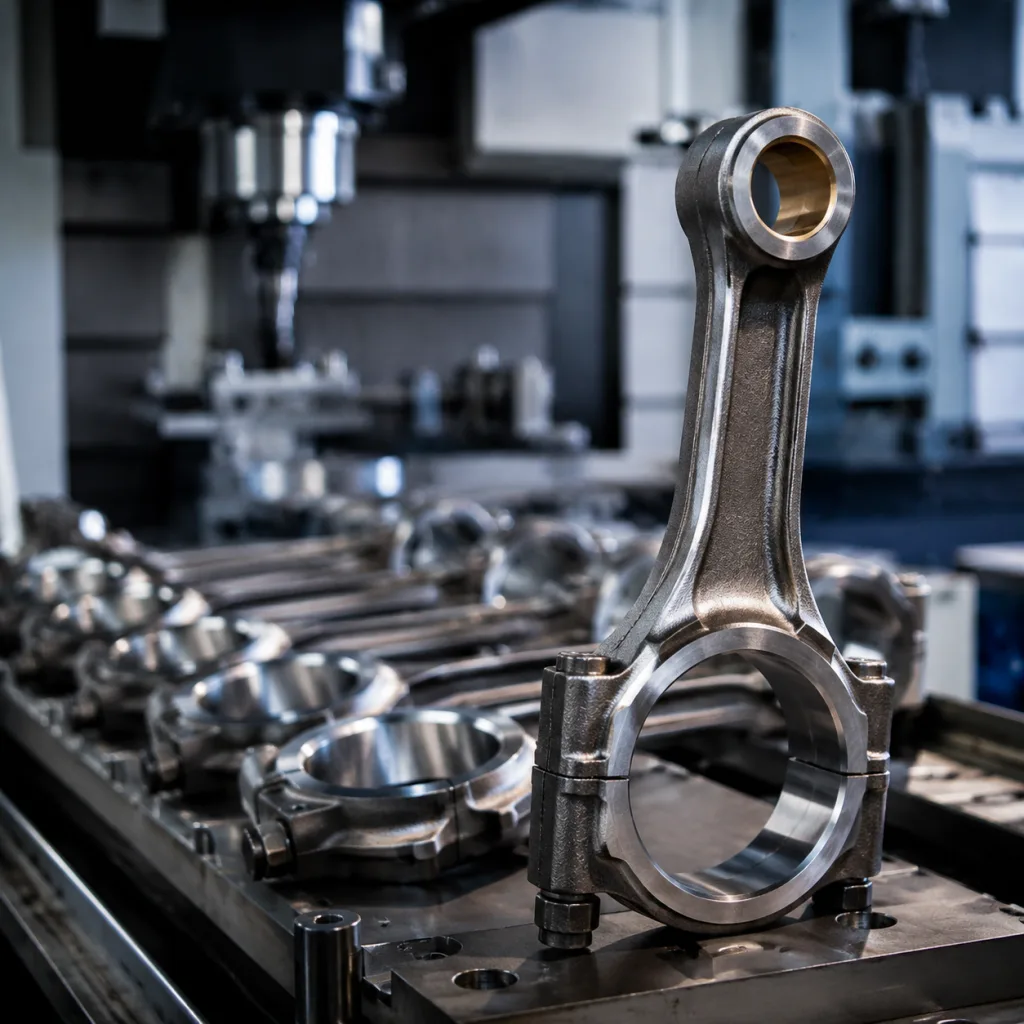
Cylinder liner seat production should be reviewed as a sequence, from incoming material through to the final packed lot. The point of the audit is not just to see machines running. It is to determine whether the process can repeatedly maintain the dimensions and surface condition that matter in engine assembly. A polished showroom corner or presentation deck should never replace direct observation at the workstations actually making the parts.
Process observations worth making on site
1. Raw material segregation: verify heat numbers, rack labels, FIFO discipline, and separation of similar-looking grades or sizes. 2. Machine capability: check whether critical diameters are finish-machined on stable CNC lathes, boring centres, or grinding equipment, and whether tool-wear compensation is controlled by authorised staff only. 3. In-process inspection frequency: confirm whether checks are done at every setup, every hour, every 50 pieces, or per lot, and whether written reaction plans exist for out-of-trend data. 4. Deburring and cleaning: burrs, embedded chips, or abrasive residue at the seat edge can damage installation surfaces and distort measurement. 5. Final preservation: inspect rust-inhibitor application, bag sealing, carton specification, and pallet compression strength.
When possible, ask to see a production run in progress rather than only finished stock. That makes it easier to confirm:
How operators identify the correct drawing revision and control plan at the machine
Whether bore gauges, micrometers, height gauges, or air gauges are available at the point of use
How non-conforming pieces are quarantined from accepted parts
Whether setup pieces are clearly marked and blocked from shipment
How the factory records tool change, offset correction, and process adjustments during the shift
Documents to sample during the audit
Latest drawing revision in use at the machine
First article or PPAP-style sample package if requested by the customer
Calibration status for bore gauges, micrometers, roughness testers, and CMM probes
Training records for inspectors, setters, and operators on this part family
Corrective-action records for recent dimensional, burr, rust, or surface-finish defects
A strong audit also checks basic quality housekeeping. Parts with precision-machined seating faces should not be stacked metal to metal if face damage is possible. Inspection benches should be clean, organised, and reasonably temperature-stable. For tight dimensional work, metrology areas around 20°C are common practice, with compensation or control needed if shop-floor measurement is carried out in hotter conditions.
If the supplier performs heat treatment in-house or through a subcontractor, ask how traceability is maintained across that step. The supplier should be able to link the finished part lot to the treatment batch, furnace load, and corresponding hardness result. Where subcontract processes are used, buyers should verify that those subcontractors are approved, audited, and included in the supplier's quality records.
For importers serving the EU and UK, ask whether compliance declarations are issued per shipment or under an annual blanket statement. That reduces delays when customs or downstream customers ask for material and chemical data. It is also worth confirming how long inspection and traceability records are retained, especially where warranty periods are long or the parts support industrial, marine, or heavy-duty engines with extended service life.
Common sourcing risks and how to reduce them
Most supply failures in this category can be traced back to preventable gaps between the drawing, the process, and receiving inspection.
A cylinder liner seat supplier may look acceptable at sample stage and still create downstream risk if control points weaken after SOP. In practice, the biggest issues usually come from assumption gaps: the buyer assumes the fit range is understood, the supplier machines to nominal size, and the problem only appears during assembly or field-return analysis. The best sourcing programmes reduce that risk by making critical requirements explicit and checking them repeatedly during early production.
Common risks include:
Unclear fit requirement: the supplier machines to nominal size without agreement on interference range or measurement temperature
Material substitution: chemistry, microstructure, or hardness differs from the approved sample batch
Inconsistent surface finish: assembly force and seating behaviour change between lots
Poor traceability: mixed batches make root-cause analysis slow and containment expensive
Transit corrosion: sea-freight exposure damages precision surfaces before receipt
Other recurring risks include:
Drawing revision mismatch: the factory works to an outdated print after an engineering change
Gauge inconsistency: supplier and buyer use different datums, gauge zero methods, or measurement force and reach different results
Packaging compression damage: export cartons collapse or internal dividers fail in transit
Mixed production lots: remainders from different runs are packed together without clear lot separation
Subcontract process drift: outsourced grinding, coating, or heat treatment changes without buyer visibility
Practical controls for buyers:
Freeze a signed drawing and specification before tooling release
Mark 3 to 5 CTQ dimensions on the RFQ and control plan
Require pre-shipment dimensional reports on the first three batches
Set written acceptance criteria for rust prevention, bag sealing, and carton strength
Use an incoming inspection plan based on AQL plus 100% checks on selected critical features where justified
Agree an 8D response time, such as 24-48 hours for containment and 5-10 working days for root-cause and corrective action
To make those controls more effective, tie each one to a specific failure mode. If corrosion is a known issue on sea-freight routes, do not stop at saying "export packing required". Define oiling or VCI requirements, inner-bag sealing expectations, desiccant use where needed, and carton or pallet conditions. If dimensional drift is the main concern, specify the exact dimensions that must appear on pre-shipment reports, the gauge type to be used, and the required sampling level.
For first orders, many procurement teams reduce risk by using a staged approval model:
1. Technical review of drawing, GD&T, and material specification 2. Sample approval against a full dimensional report and material evidence 3. Pilot batch with tighter reporting requirements and lot traceability 4. Regular production after stable conformity is demonstrated
This approach is often more practical than trying to qualify a supplier fully from one sample lot. It also helps prove that the factory can repeat results, not just produce one good first sample under exceptional supervision.
Where the seat is part of a wider engine rebuild programme, ask whether related cylinder liner, piston, gasket, and sealing parts can be sourced together. That can reduce freight fragmentation and simplify vendor management, but only if technical controls stay product-specific across each part group.
How to compare suppliers on a like-for-like basis
A structured comparison helps procurement teams avoid choosing on unit price alone. In practice, a weighted scorecard is often the simplest way to make engineering, quality, and logistics trade-offs visible before nomination.
That matters because two quotations from different sources are rarely based on the same assumptions unless the buyer forces that structure. One cylinder liner seat supplier may include export packaging, dimensional reports, and raw material certification in the price, while another may not. One may quote against a confirmed annual volume; another may assume a single batch order. Without a normalised comparison, the cheapest quote on paper can create a higher total cost through claims, longer lead times, or hidden add-ons.
Suggested scorecard categories:
Technical compliance: 30%
Quality documentation and certification: 20%
Lead time and delivery reliability: 15%
Commercial terms and MOQ: 15%
Audit result and communication speed: 10%
Packaging and export support: 10%
Ask each source to quote against the same data pack:
Drawing revision and tolerances
Annual usage estimate
Batch size expectation
Packaging format
Incoterm and destination port
Required certificates and reports
It is often useful to convert supplier responses into a simple comparison sheet that includes both quantitative and qualitative items. For example:
Comparison item
Supplier A
Supplier B
Supplier C
Unit price
MOQ per part number
Sample lead time
Production lead time
Material certs available
CMM / bore inspection capability
Cp/Cpk evidence available
Packaging method
Non-conformance response time
Audit result
</tr></thead><tbody> </tbody></table>This makes quote comparison cleaner and reduces later disputes over assumption gaps. It also shows where a supplier is strong but commercially mismatched. The technically best source may still be unsuitable if MOQ is too high for a service business, while a flexible low-MOQ supplier may need tighter inspection controls before approval.
When possible, buyers should compare landed cost rather than ex-works price alone. Landed cost may include freight, packaging upgrades, customs charges, insurance, inspection fees, financing cost from longer lead times, and expected quality cost. Some buyers also assign a notional risk cost to suppliers with no Cpk evidence, weak packaging validation, or slow corrective-action turnaround.
If you are screening a new cylinder liner seat supplier for distribution or OE-service business, a short pilot order with defined inspection gates is usually the lowest-risk next step. The pilot should include the agreed drawing revision, approved packaging, required reports, lot traceability, and a clear process for handling deviations if they arise.
If you would like Driventus to review your drawing, volume forecast, or sample requirement, you can request a quote.
Frequently asked questions
MOQ depends on part geometry, whether the component is machined from bar, tube, forging, or casting, and whether dedicated fixtures or gauges are required. Buyers should separate pilot-batch MOQ from regular production MOQ and confirm both by part number, not only by total order value.
For most B2B programmes, buyers expect IATF 16949:2016 or ISO 9001:2015 certification, plus material traceability, dimensional records, and hardness evidence. For EU supply, a REACH (EC) No 1907/2006 declaration may also be requested where applicable.
Release a controlled drawing, identify CTQ characteristics, require sample approval before mass production, and request dimensional reports on early batches. It is also good practice to align the measurement method, gauge type, and datum references before the first shipment.
If you are qualifying a new source for liner seat components, Driventus can review drawings, sample requirements, and delivery targets with your purchasing team. Contact us to discuss your programme at /contact.html