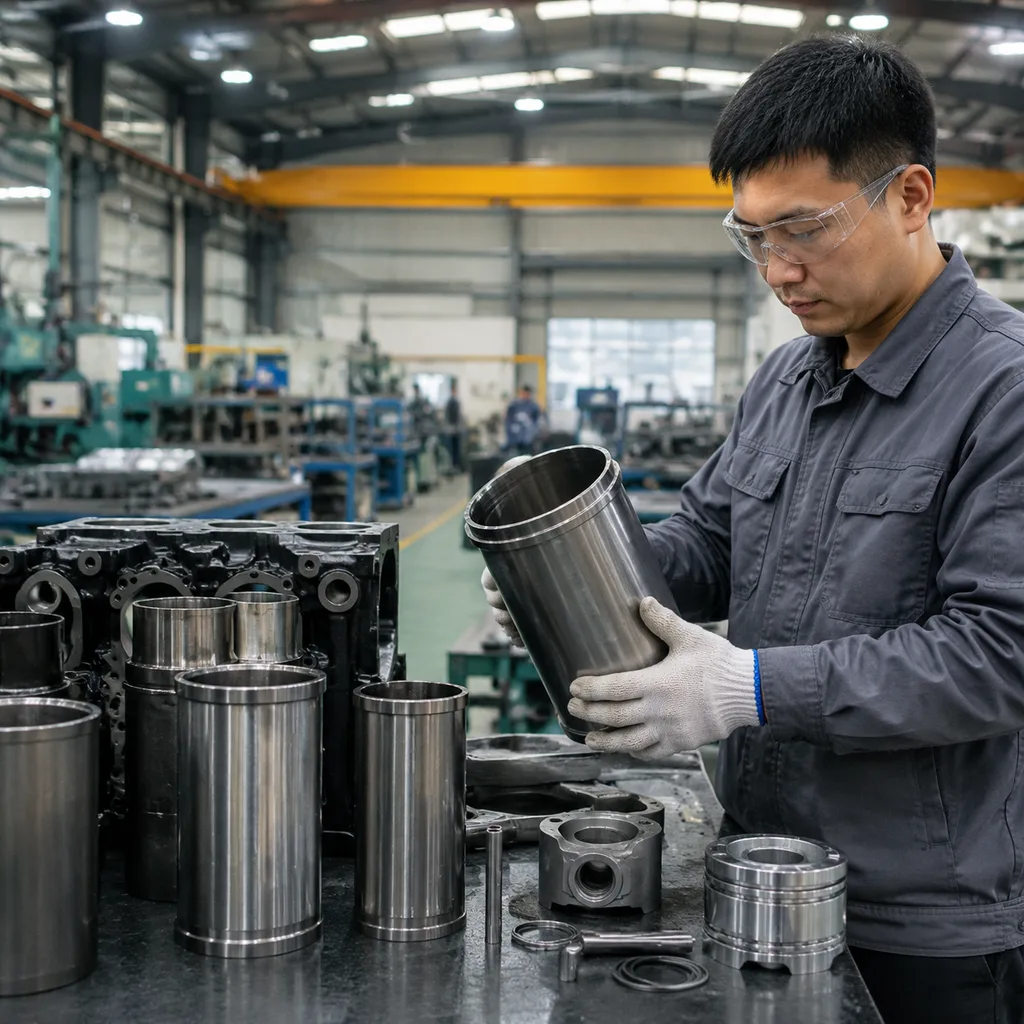
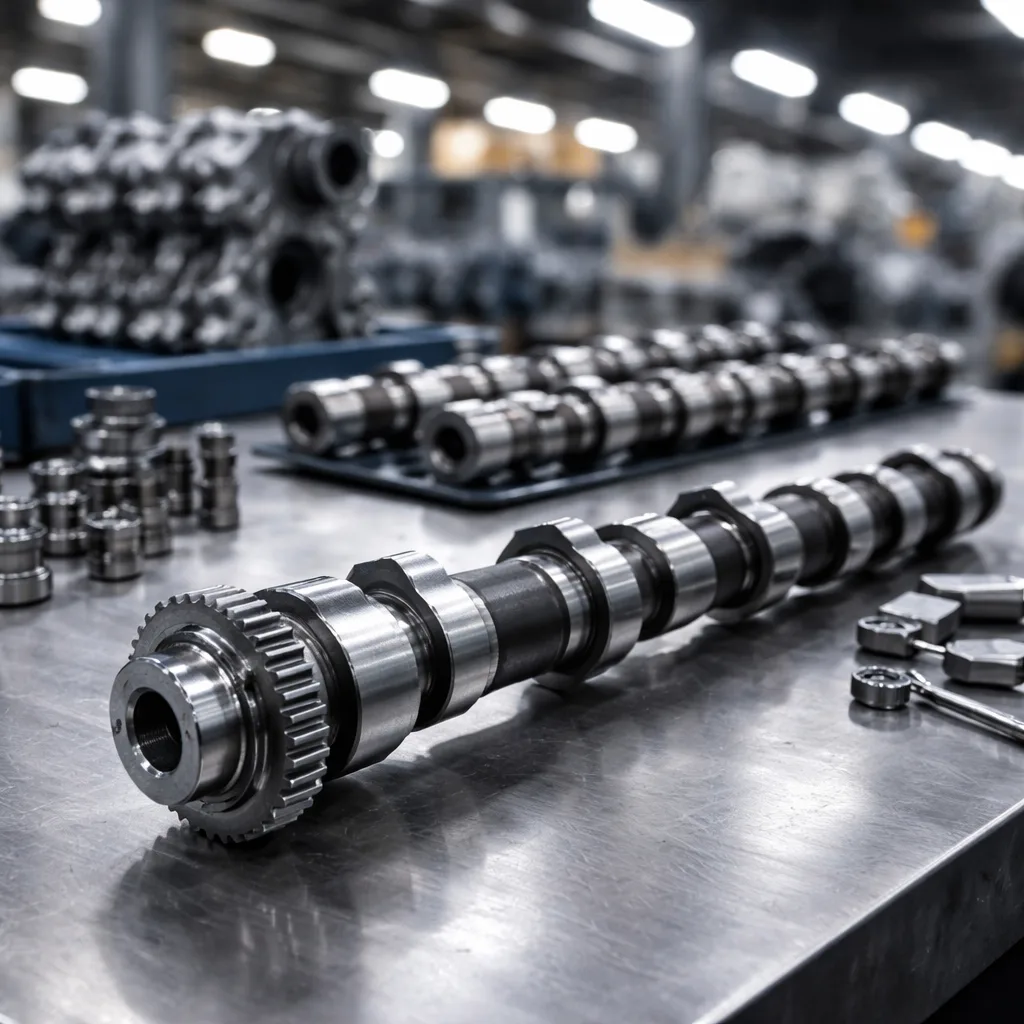
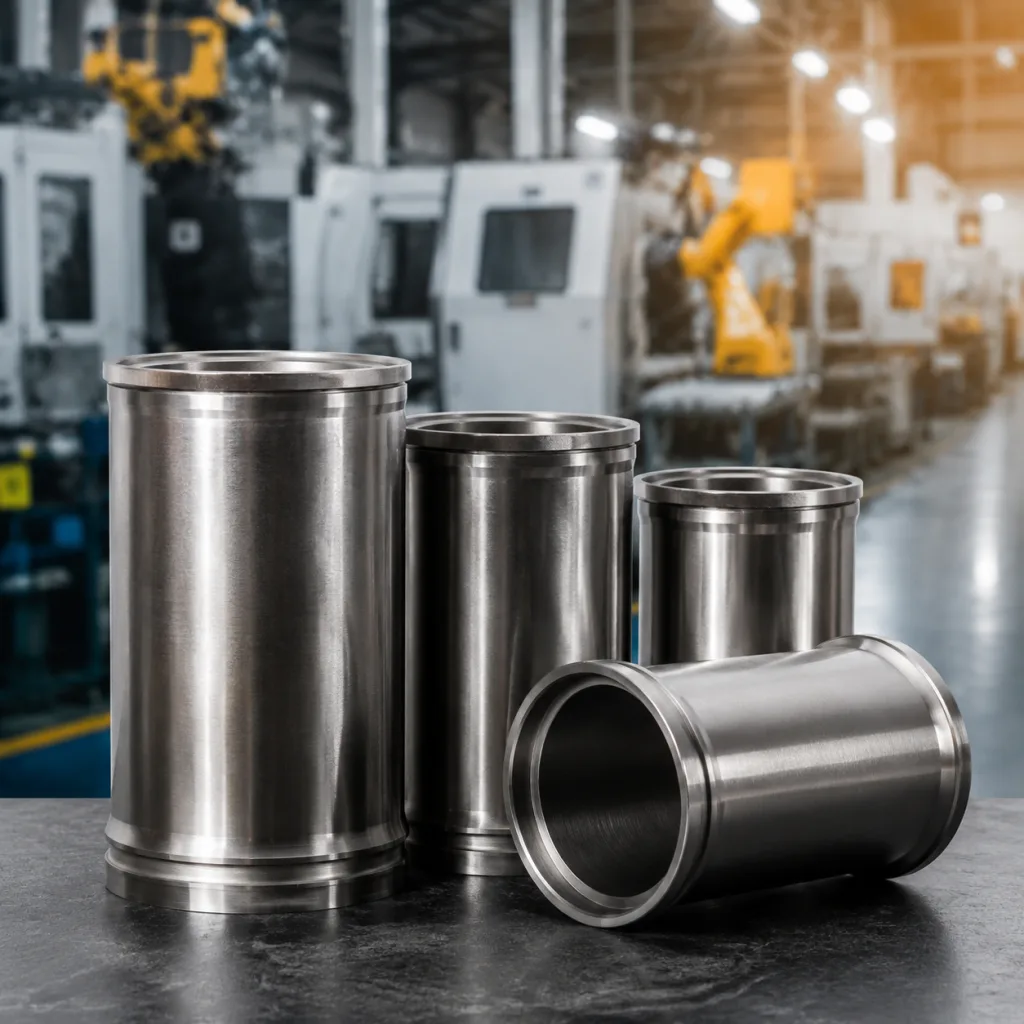
Procurement teams sourcing RAM cylinder liners need more than a price list. They need dimensional consistency, verified metallurgy, traceable machining, export-ready packaging, and a supplier that can support audits before volume orders are placed. Driventus Auto Parts manufactures cylinder liners and related engine components in Taizhou, Zhejiang, for aftermarket distributors, importers, and repair-chain supply programs. Our production covers wet and dry liner formats for light-duty and commercial engine applications, with bore finishing, flange geometry, sealing surfaces, and concentricity controlled to drawing requirements. This article helps buyers decide when a cylinder liner RAM manufacturer China source is a fit, where projects fail, and what data shortens the RFQ cycle. Driventus is an independent aftermarket manufacturer; brand names are referenced for fitment only.
When a RAM liner source is worth qualifying
A cylinder liner is not a commodity casting. It lives under combustion pressure, thermal cycling, coolant exposure, and constant ring friction. That means the first sourcing question is not price. It is whether the supplier can hold geometry, material, and repeatability together.
Before you shortlist a factory, verify the basics:
Direct manufacturer: the plant should produce liners, not only resell stock.
Documented quality system: ask for current IATF 16949:2016 and ISO 9001:2015 certificates where applicable.
Drawing discipline: confirm the supplier can work from buyer drawings, samples, or OE cross-references.
Material traceability: request heat or batch records for cast iron or alloy grades.
Inspection evidence: require reports for bore diameter, ovality, taper, hardness, surface roughness, and visual defects.
Fitment method: make sure wet liner, dry liner, semi-finished liner, and finished liner requirements are handled differently.
If a supplier cannot speak in measurable terms, the risk is usually hidden in the sample stage. For RAM-related programs, buyers should also confirm the plant can align with engine code, displacement, model year, and service-repair practice. Vehicle nameplates alone are not enough to lock fitment.
Where sourcing programs usually break
Most liner projects do not fail because the part was impossible to make. They fail because the buyer and supplier used different assumptions.
Common failure modes include:
Wrong fitment basis: the RFQ names the truck, but not the engine code or liner type.
Tight price-first buying: the quote looks good, then sample rework and inspection costs appear later.
Incomplete dimensional data: outside diameter is provided, but flange height, seating depth, or wall thickness is missing.
Unclear finish level: one side expects semi-finished stock, the other quotes fully honed parts.
Packaging mismatch: cartons, rust protection, and labels are not approved before production.
Weak approval loop: no first-article signoff, so pilot stock is accepted too early.
The quickest way to reduce these problems is to separate three things from the start: what the liner must fit, what it must measure, and how it must ship. Once those are clear, pricing conversations become much cleaner.
For buyers comparing supply options, a simple rule helps: if the part is critical to engine rebuild quality, pay more attention to control data than to the unit price. A cheap liner that misses hardness, taper, or sealing requirements is not a bargain.
Spec sheet snapshot: MOQ, lead time, and pricing
Commercial terms depend on engine family, liner design, annual volume, machining depth, and packaging. The table below gives a practical baseline for importers evaluating a cylinder liner RAM manufacturer China source for aftermarket supply.
Item
Typical sourcing parameter
Notes for procurement
Sample quantity
4–20 pieces
Useful for dimensional, hardness, and assembly checks
Production MOQ
100–500 pieces per reference
Lower MOQ may apply for stocked dimensions or shared tooling
Sample lead time
20–35 days
Longer if tooling, pattern adjustment, or reverse engineering is required
Mass production lead time
45–75 days
Depends on casting schedule, machining load, inspection scope, and packing approval
Price logic
Quoted by reference, volume tier, and finish level
Semi-finished, finished, and private-label parts usually price differently
Packaging
Neutral, Driventus, or buyer private label
Carton strength, VCI/rust protection, and barcode format should be specified
Documentation
Inspection report, packing list, invoice, certificate of origin on request
Buyer forms can be reviewed before order confirmation
Incoterms
FOB, CIF, CFR, EXW subject to order
Consolidated shipments can be arranged through forwarders
</tr></thead><tbody> </tbody></table>Unit cost usually moves with three variables: raw material grade, machining complexity, and order quantity. A stocked dry liner with neutral packaging typically prices lower than a finished wet liner with tighter honing and custom branding. Smaller orders also carry more setup and inspection allocation, so MOQ and price should be reviewed together rather than treated as separate issues.
Lead time follows the same logic. If the reference is already tooled and in stock, sampling can move quickly. If a new reference needs reverse engineering from samples, fixture work, or first-article signoff, buyers should plan a validation window before production is released. Driventus can review active references, coverage gaps, and forecast demand to build a phased supply plan. Available engine parts can be reviewed in our catalog, including related items under engine components.
Inside the machining and inspection stack
Cylinder liner performance is driven by bore geometry, wall structure, and surface finish. A liner can hit nominal size and still fail if taper, ovality, flange flatness, press fit, or honing texture is off.
Driventus applies process controls under a documented quality system aligned with IATF 16949:2016 and ISO 9001:2015. These standards do not replace product validation, but they do require defined procedures for risk control, traceability, nonconforming product handling, calibration, and corrective action.
Typical inspection points include:
Casting visual inspection for shrinkage, cracks, sand inclusion, and porosity.
Chemical composition checks against the approved material specification.
Hardness testing on defined surfaces or sample coupons.
Bore diameter measurement at multiple depths and clock positions.
Taper and ovality verification using calibrated gauges.
Flange thickness, flange diameter, and seating face flatness checks.
Surface roughness measurement after honing.
Chamfer and edge inspection to reduce assembly damage risk.
Anti-corrosion treatment and packaging inspection before shipment.
Practical control numbers belong on the buyer drawing or approval sheet. As a sourcing benchmark, many liner programs require bore diameter control within a few hundredths of a millimeter, taper and ovality held to tight micrometer-level limits, and surface roughness checked after final honing. Wet liners need extra attention at sealing grooves, O-ring lands, and coolant-contact surfaces. Dry liners depend more on outside diameter consistency, wall thickness, and press-fit condition for heat transfer and block retention.
Fitment data: what to send before asking for a quote
For RAM-related sourcing programs, fitment accuracy depends on engine code, displacement, model year, liner type, and service repair practice. A vehicle application description alone is not enough for purchasing decisions.
Send one or more of the following:
Existing sample liner.
Technical drawing with dimensions and material requirement.
Engine family and displacement.
Bore size and finished wall thickness.
Wet or dry liner configuration.
Flange and sealing groove dimensions.
OE part-number cross-reference, if available, such as OE 06A107065 only when relevant to the buyer’s own data.
When a buyer sends a sample, the workflow should stay simple: receive the sample, measure critical dimensions, confirm material and geometry, prepare a draft drawing if needed, and issue a sample quotation with a defined approval path. That keeps the project moving and reduces the chance of mismatched parts entering pilot stock.
Driventus does not claim approval or endorsement by any vehicle manufacturer. Driventus is an independent aftermarket manufacturer; brand names are referenced for fitment only. Cross-reference data is used to identify dimensional compatibility and market demand, not to imply an original equipment supply relationship.
For buyers with proprietary drawings, custom manufacturing can include material selection, reverse engineering from samples, fixture development, and packaging adapted to distributor or workshop-chain requirements. Non-disclosure agreements can be reviewed where a sourcing project involves controlled technical data.
Audit points buyers should not skip
Supplier qualification should not stop at a certificate scan. Importers and Tier-1 purchasing teams need evidence that the factory can maintain repeatability across orders and respond when quality issues occur.
Check these areas before approval:
1. Incoming material control: supplier approval, material certificates, and batch segregation. 2. Process flow: casting, heat treatment where applicable, rough machining, finish machining, honing, cleaning, and packing. 3. Gauge calibration: calibration status, frequency, and records for bore gauges, micrometers, hardness testers, and roughness testers. 4. Traceability: batch codes linking production date, material lot, inspection data, and shipment. 5. Corrective action process: containment, root cause analysis, corrective action, and effectiveness verification. 6. Packaging validation: drop resistance, palletisation, rust prevention, and barcode or label format.
Material compliance may also matter for some markets. For EU supply chains, buyers may request information related to REACH (EC) No 1907/2006 for restricted substances. For products moving into regulated distributor networks, packaging materials, labels, and documentation should match local import rules. Engine emission regulations such as ECE R-83 apply to vehicle emissions performance; replacement components must be sourced responsibly so they do not undermine intended engine function.
The most useful audit output is not a generic certificate copy. It is a practical record set: control plan, inspection method, calibration list, in-process check frequency, lot traceability example, and an actual nonconformance response workflow. That is what shows the factory can support repeated purchase orders rather than only first samples.
RFQ checklist for faster quotations
A clear RFQ reduces sampling mistakes and shortens commercial review. When contacting a cylinder liner RAM manufacturer China procurement teams should include enough technical and commercial data for the factory to confirm feasibility before pricing.
Required documents: inspection report, certificate of origin, material report, or buyer-specific forms.
Best practice is to separate tooling, sample, and mass-production pricing. That makes it easier to see whether a low first-order unit price is being offset by high setup charges or a nonrepeatable process. Buyers should also ask for price breaks by tier, for example at 100, 300, and 500 pieces, plus any surcharge for private-label cartons, barcode labels, or additional rust-prevention wrapping.
For repeat programs, Driventus can support phased development: sample confirmation, pilot order, inspection review, then scheduled production. That sequence helps buyers confirm fitment and avoid stocking parts that cannot be used in the target repair market.
Frequently asked questions
Yes. Driventus can supply neutral or private-label packaging after confirming carton design, label content, minimum order quantity, and destination-market requirements. Packaging should be approved during sampling to avoid relabelling work after production.
Buyers should request current IATF 16949:2016 and ISO 9001:2015 certificates where applicable, plus inspection reports for the ordered parts. Certifications support process control, but dimensional reports and sample validation remain essential.
Yes, sample-based development is possible. Driventus can measure supplied liners, prepare drawings for confirmation, review material and machining requirements, then produce samples for buyer validation before mass production.
If you are qualifying a cylinder liner supplier for RAM applications or broader engine programs, send drawings, samples, quantities, tolerance targets, and destination details. Contact Driventus to [request a quote](/contact.html).