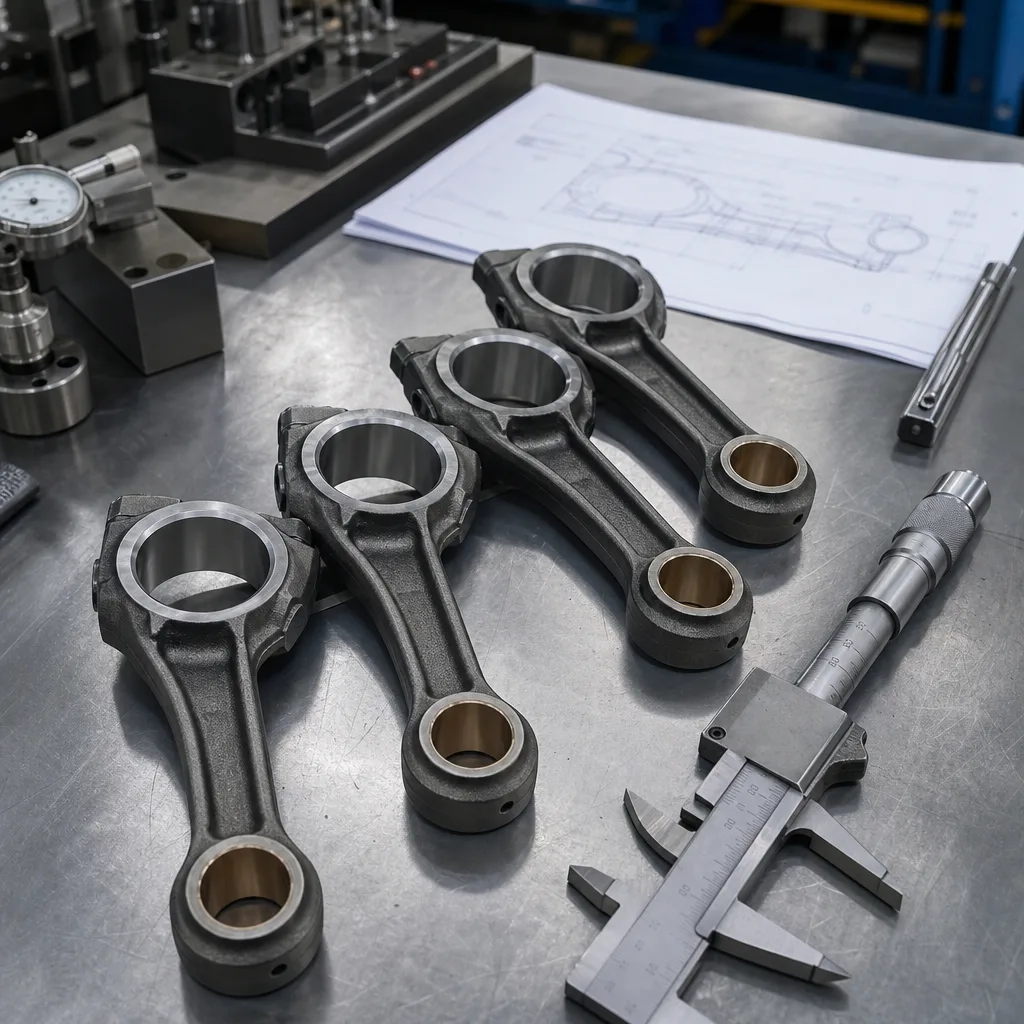
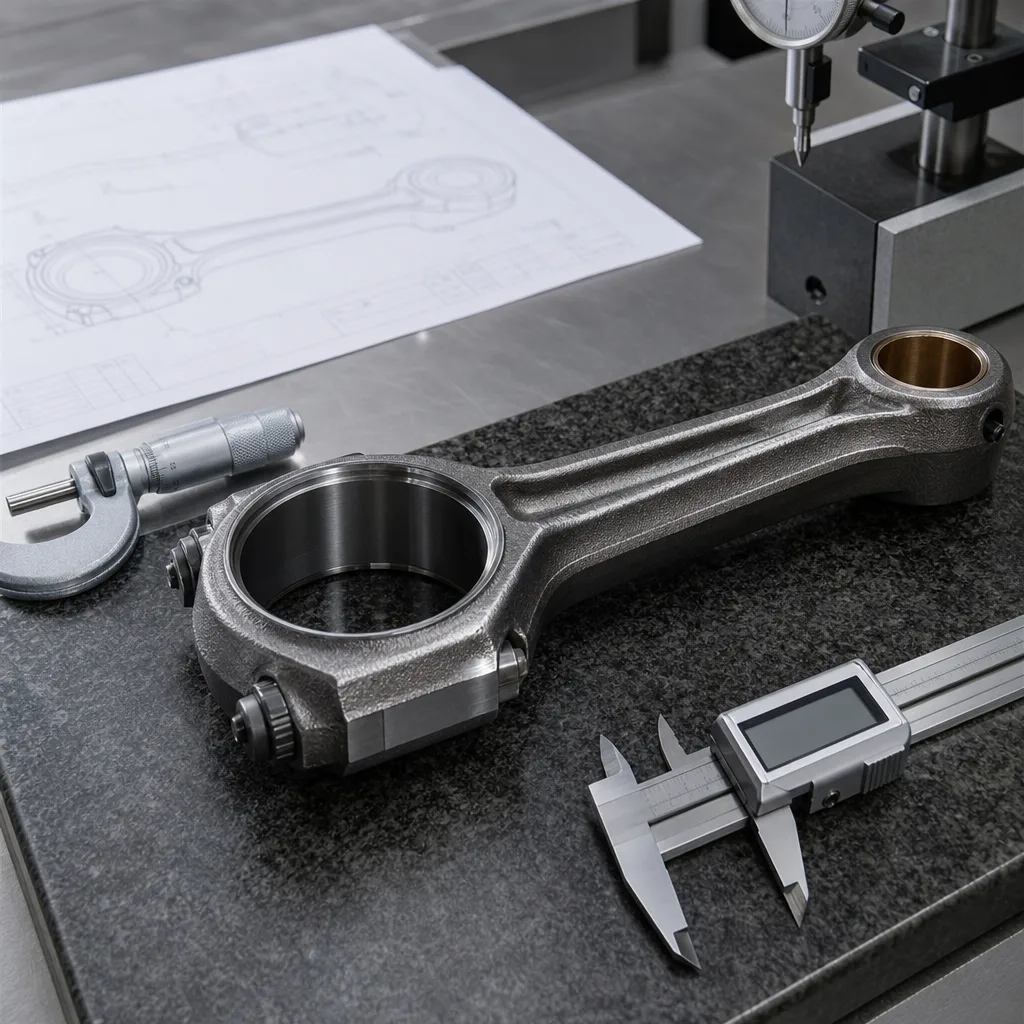
If you are sourcing cylinder liners for Fiat applications, the main questions are consistency, dimensional control, and supply stability. A procurement decision should start with the bore size, liner type, material specification, coating or finish requirement, and the OE cross-reference. It should also include evidence of process control, traceability, and test methods used for each production lot. Driventus supplies engine and powertrain parts from Taizhou, Zhejiang, with export experience in more than 60 countries and certification to IATF 16949:2016 and ISO 9001:2015. Driventus is an independent aftermarket manufacturer; brand names are referenced for fitment only. This article explains how buyers evaluate a cylinder liner Fiat OEM supplier, what technical data to request, and how to compare factory capability before audit or RFQ. For product scope, see [our catalog](/products.html) and our [quality system](/quality.html).
Technical specifications to request in the RFQ
A serious RFQ should specify the measurable values, not just the part name. The table below is a practical starting point for buyers and QA teams.
Item
Typical buyer requirement
Part type
Dry liner / wet liner / flange liner
Material
Alloy cast iron or specified iron grade
Hardness
Defined HRC or HB range
Bore tolerance
As required by drawing; common control on roundness and taper
OD tolerance
Controlled for block interference fit
Length
Verified against OE or customer print
Surface finish
Honed, semi-finished, or ground
Inspection
100% critical dimension check or sampling plan
Documentation
CoC, inspection report, heat lot traceability
</tr></thead><tbody> </tbody></table>If your programme requires emissions-related validation, align the part with the applicable engine build standard and documentation flow. For fleet and OE-related supply chains, buyers may also reference internal PPAP files and material declarations aligned to REACH (EC) No 1907/2006. Where a customer drawing exists, use it as the controlling document rather than an aftermarket catalogue description.
How Driventus supports OEM and aftermarket sourcing
Driventus works as a B2B manufacturing partner for distributors, OEM and Tier-1 programmes, and repair-chain supply. Buyers usually want three things: repeatability, auditability, and lead-time control.
Our production model supports these requirements through:
Controlled machining and inspection flow for critical dimensions
Material traceability by batch and heat lot
Lot-level packaging identification for warehouse receipt
Export documentation for cross-border procurement
Stable supply planning for repeat orders
For buyers needing programme-specific development, see custom manufacturing. That route is useful when a Fiat application needs a special liner length, coating, chamfer, or packaging format. Driventus can support sample runs, drawing review, and production planning before a standing order is released.
Audit points to cover
Before approval, a factory audit should confirm gauge calibration, incoming material control, in-process inspection, final inspection, and nonconformance handling. Ask whether the supplier can show documented control of measuring equipment, operator training records, and corrective action closure. These points matter more than a sales statement about capacity.
Comparing supplier capability before you place an order
A cylinder liner supplier should be evaluated on measurable commercial and technical criteria. Use a simple scorecard during RFQ review.
Evaluation point
What to look for
Certification
IATF 16949:2016, ISO 9001:2015
Engineering support
Drawing review and fitment confirmation
Sampling
Pre-production samples and dimensional reports
MOQ
Clear minimum order quantity by part family
Lead time
Quoted in weeks, with shipping method stated
Traceability
Batch and heat identification
Packaging
Rust prevention and transit protection
Communication
Response time for technical queries
</tr></thead><tbody> </tbody></table>MOQ and lead time should be stated before commercial negotiation ends. For replenishment programmes, ask whether the supplier can hold raw material or finished stock for repeat SKUs. If your demand is regional, confirm whether split shipments or mixed-SKU cartons are allowed. Buyers who manage multiple branches often need a supplier that can ship by pallet, carton, or consolidated container without changing the part specification.
For related engine parts, you can also review our catalog and the broader engine components page when consolidating procurement across pistons, rings, gaskets, and liners.
Validation, compliance, and export documentation
A procurement approval should not stop at dimensions. Ask for the validation package that supports the shipment.
Common documents include:
Certificate of Conformity
Material certificate or internal material declaration
Dimensional inspection report
Batch traceability record
Packing list and commercial invoice
Export declaration and transport documents
For durability expectations, some buyers reference cyclic test methods such as SAE J2527 for corrosion-related evaluation on nearby components, or emissions programme requirements aligned with ECE R-83 where applicable to the engine system. Those standards do not replace part-level dimensional checks, but they show how the component fits into a broader validation plan.
Driventus operates under IATF 16949:2016 and ISO 9001:2015. That means process discipline, corrective action, and documented inspection are part of the operating system, not optional extras. If your supplier set includes multiple sources, keep the same acceptance criteria across all vendors so the comparison remains objective.
When to request custom manufacturing
Custom manufacturing is appropriate when the OE part is unavailable, the application is modified, or the customer wants to consolidate multiple references into one controlled part number. This is common in older Fiat engine families and in rebuild programmes that need a stable replacement liner with verified machining allowance.
Request custom work when you need:
A special OD or length not covered by standard stock
A different flange profile or seat detail
Material or surface finish changes for local machining
Private-label packaging for distribution channels
Consolidation of two superseded references into one approved SKU
If you are at the RFQ stage, use request a quote to send drawings, photos, OE references, and annual volume. That allows the factory to confirm manufacturability, tooling needs, and commercial terms before samples are issued. Driventus is an independent aftermarket manufacturer; brand names are referenced for fitment only.
Frequently asked questions
Yes, if the OE number is supplied and the application details are clear. We still recommend confirming bore, OD, length, and liner type before quotation to avoid fitment errors.
At minimum, ask for a packing list, commercial invoice, certificate of conformity, and inspection report. For controlled programmes, add traceability and material documentation.
Yes. Custom manufacturing is available when drawings or samples define the required geometry, material, and tolerance targets.
If you are comparing sources for a Fiat cylinder liner programme, send your drawing, OE reference, and volume target for review. Start here: /contact.html