Cylinder Liner BMW Wholesale: Sourcing Guide
Cylinder liner BMW wholesale buying is less about finding the cheapest quote and more about avoiding a bad fit. The usual failure points are dimensional drift, alloy mismatch, surface inconsistency, and weak batch traceability. A liner can look correct in a catalog and still fail if bore geometry, wall thickness, or flange height do not match the engine family. Driventus supplies cylinder liner programs from Taizhou, Zhejiang, with export experience in 60+ countries and production aligned with IATF 16949:2016 and ISO 9001:2015. Driventus is an independent aftermarket manufacturer; brand names are referenced for fitment only. This article breaks the sourcing decision into the checks that matter most: fitment, process control, documentation, commercial terms, and launch validation.
Start with fitment, not price
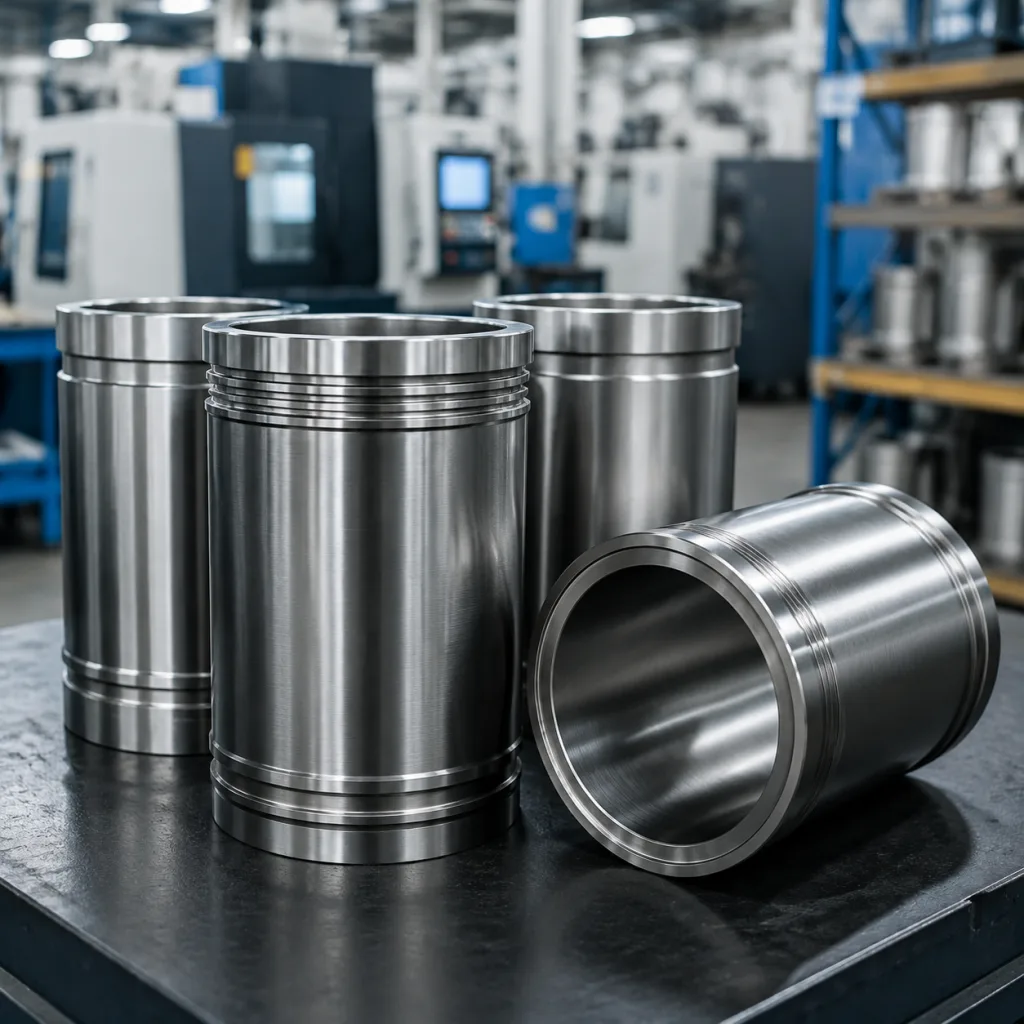
If your program covers several BMW-fitment engine families, request a part matrix before sampling. That prevents mis-shipments and keeps catalog control consistent across branches, warehouses, and distributor accounts. Confirm the engine code, liner type, and OE cross-reference for each application, then verify whether the part is intended for standard repair, oversize service, or a rebuild specification. For cylinder liner BMW wholesale sourcing, this first pass is where most downstream issues are avoided. Ask the supplier to list nominal bore, outer diameter, flange diameter, overall height, and wall thickness on the quote, then compare those numbers to the target engine drawing or a verified teardown sample. Many wholesale programs work to bore size within ±0.01 mm to ±0.02 mm, outer diameter within ±0.02 mm, flange height within ±0.03 mm, and concentricity or runout controlled to the customer drawing or sample limit. If the supplier cannot state the tolerance stack before sampling, treat that as a sourcing risk. In mixed-application catalogs, separate standard liners, flange liners, and wet-liner versions in the part matrix so warehouse staff can distinguish them at receiving.
What the material and machining data should prove
Ask for the base material specification, heat-treatment method, and machining tolerances before approval. Wall thickness, bore size, outer diameter, flange height, and surface finish all affect installation and service life, so they should be checked against your drawing or sample approval record. Where applicable, request test methods aligned with your inspection plan and the supplier’s documented process control, including dimensional checks, hardness verification, and surface condition review. If the program includes multiple batch runs, confirm whether the same tooling and inspection standard will be used across replenishment orders so fitment stays consistent over time. For quoting purposes, specify the inspection method as well: micrometer or bore gauge for bore size, height gauge for flange, and roundness or CMM measurement if the part is critical to your warranty exposure. A buyer-friendly spec sheet should also note hardness range, commonly around 220-260 HB for many cast iron liner programs unless your engineering requirement differs, plus the surface roughness target, often Ra 0.8-1.6 μm for machined contact surfaces depending on application. Ask for a first-article report with at least 5-10 pieces measured per critical dimension so you can see process capability before release. If the liner is meant for a rebuild channel, confirm whether honing allowance has been built into the bore spec; a nominally correct liner can still fail if the post-machining finish leaves too little material for the machine shop to complete the hone.
Failure modes that cost buyers money
Most sourcing mistakes show up after the first shipment, not during quoting. The common failures are simple: the liner is dimensionally close but not actually buildable, the surface condition is inconsistent from lot to lot, or the packaging fails to protect the part in transit. Another frequent problem is assuming one OE reference covers every engine variant in the family. It often does not. A short cross-reference list can hide differences in flange height, counterbore depth, or bore finish that only appear when the repair shop starts assembly. Buyers also get caught when a supplier samples from one tooling set and ships from another without flagging the change. That is why batch traceability, retained samples, and lot-level inspection records matter. If you see vague answers about hardness, surface roughness, or roundness control, treat them as warning signs, not negotiable details.
Documentation for audits and customs
For buyers managing supplier audits, documentation matters as much as physical fit. Ask for batch traceability, inspection records, and the certificate set required by your market before goods leave the factory. Driventus can align supporting documents with internal approval flows through the quality system and the relevant product range in our catalog. If your compliance team requires labeling, carton coding, or lot tracking in a specific format, confirm those details during sample approval rather than after production starts. A clean wholesale file should include PO number, lot number, production date, inspection status, and carton count, with the same identifiers appearing on the packing list and outer cartons. For higher-volume import programs, ask for a retained sample policy and a traceability window of at least one lot back and one lot forward so any field issue can be isolated quickly. If your destination market needs a certificate of conformity, material certificate, or third-party inspection report, define the exact format before order confirmation to avoid shipment delays at customs or at the distribution center. Buyers handling multi-country programs should also request photo evidence of carton marks and pallet labels before dispatch so receiving teams can match the shipment against the approved master record.
How MOQ, lead time, and pricing interact
Lead time and MOQ often depend on whether the liner is a standard catalog item or a custom build. Standard programs usually move faster, while non-standard wall thickness, bore finish, or height may require additional tooling checks and validation time. Use custom manufacturing early in the sourcing cycle so engineering review, packaging alignment, and production scheduling can happen before peak demand. For wholesale buyers, it also helps to confirm how reorder pricing, pallet configuration, and mixed-SKU cartons will be handled, because those terms can affect landed cost more than the unit price alone. As a planning baseline, standard catalog liners may support a smaller MOQ and shorter lead time, while private-label or newly tooled versions often need higher MOQ and a longer approval cycle. Buyers commonly structure orders in three commercial bands: sample lots for validation, first production lots for launch, and replenishment lots for steady demand. Sample lots are usually the fastest path to approval; production lots often require more consistent carton counts and may be quoted with tiered pricing once quantities move above the first MOQ threshold. Ask the supplier to quote unit price at 300, 500, and 1,000-piece levels if your forecast justifies it, because the price break is often tied to packing efficiency and machining setup spread, not raw material alone. Also clarify whether lead time starts from sample sign-off, deposit receipt, or final artwork approval; that one detail frequently decides whether a program lands on time or misses the channel launch window.
Release checklist before the first sale
Before releasing a new liner program to sales channels, confirm that the sample result matches the approved drawing, the target engine family, and the packaging standard. Many buyers pair liner approval with broader engine-component sourcing so they can reduce freight fragmentation and simplify inspection. If that fits your model, the engine portfolio in our catalog can help standardize procurement across related parts. It is also worth checking how the part will be stored and handled after receipt, since corrosion protection, carton strength, and moisture control can influence acceptance in warehouse and field use. A release checklist should include incoming inspection against the approved dimension sheet, visual checks for scoring, porosity, rust, or edge damage, and a packaging audit to confirm each liner is separated with VCI or protective wrap if required. For launch control, many buyers keep an AQL-style incoming sample plan on the first three shipments so any drift is caught before the part is broadly distributed. If the program is exposed to warranty claims, agree on a corrective-action path that defines response time, containment steps, and replacement quantity before the first shipment leaves the factory. This is also the right point to lock the commercial details that matter in the warehouse: carton dimensions, gross weight, pallet stack limit, and whether mixed-SKU pallets are allowed. Those details reduce damage risk and make the receiving process more predictable for distributors and repair-network customers.
When a custom program is the better move
Request a custom program when the engine family needs a non-standard dimension, a market-specific packaging format, or a private-label requirement that cannot be met by the base catalog spec. That is the right time to align drawings, samples, MOQ, lead time, and document requirements in one review instead of revisiting them later. For final pricing, technical review, or sample coordination, please request a quote and include the engine code, target quantity, and any OE cross-reference you already use. A custom brief should also state whether the request is for a new machining dimension, revised coating or anti-corrosion requirement, upgraded carton artwork, or a region-specific label format. The faster the buyer defines the acceptance criteria, the faster the supplier can confirm tooling feasibility and cost. If the order is tied to a vehicle program launch, send the forecast split by month so the factory can separate pilot quantity from steady-state replenishment; that usually produces a more realistic MOQ discussion than a single annual number. For best results, attach a marked-up drawing, a sample photo set, and the preferred incoterm so the quote includes both technical and commercial assumptions from the start.
Frequently asked questions
Send the engine code, liner dimensions, quantity, target market, and any OE reference you already use. A drawing or sample helps confirm fitment faster and reduces the chance of revision later. To quote accurately, include nominal bore, outer diameter, flange height, wall thickness, tolerance targets, and whether you need standard, oversize, or private-label packaging. If you already know your annual demand, add forecast tiers so the supplier can return price breaks at 300, 500, and 1,000 units.
Yes, if the order meets the planned MOQ and packaging requirements. Artwork, carton labels, barcode format, and pallet configuration can be aligned during approval so the finished goods match your channel requirements. For smoother approval, send the desired carton count, label language, logo placement, and any country-specific compliance marks at the same time as the sample request. If the program is split across distributors, specify whether mixed-SKU cartons are allowed or whether each carton must stay single-SKU.
Yes. Typical documents include batch traceability, inspection records, and declared compliance files where required by the market or customer specification. If your importer or distributor needs a specific format, that can be confirmed before shipment. For audit-ready clearance, request the packing list, commercial invoice, carton marks, lot code, and any material or inspection certificate before production is released. If your market requires extra proof, ask for pre-shipment photos and a retained-sample reference number so the lot can be traced quickly after arrival.
If you are building a cylinder liner BMW wholesale program, send your engine code and target volume for a technical review. Start here: /contact.html
Request a Quote