Camshaft for Isuzu NPR OE Equivalent: Sourcing Guide
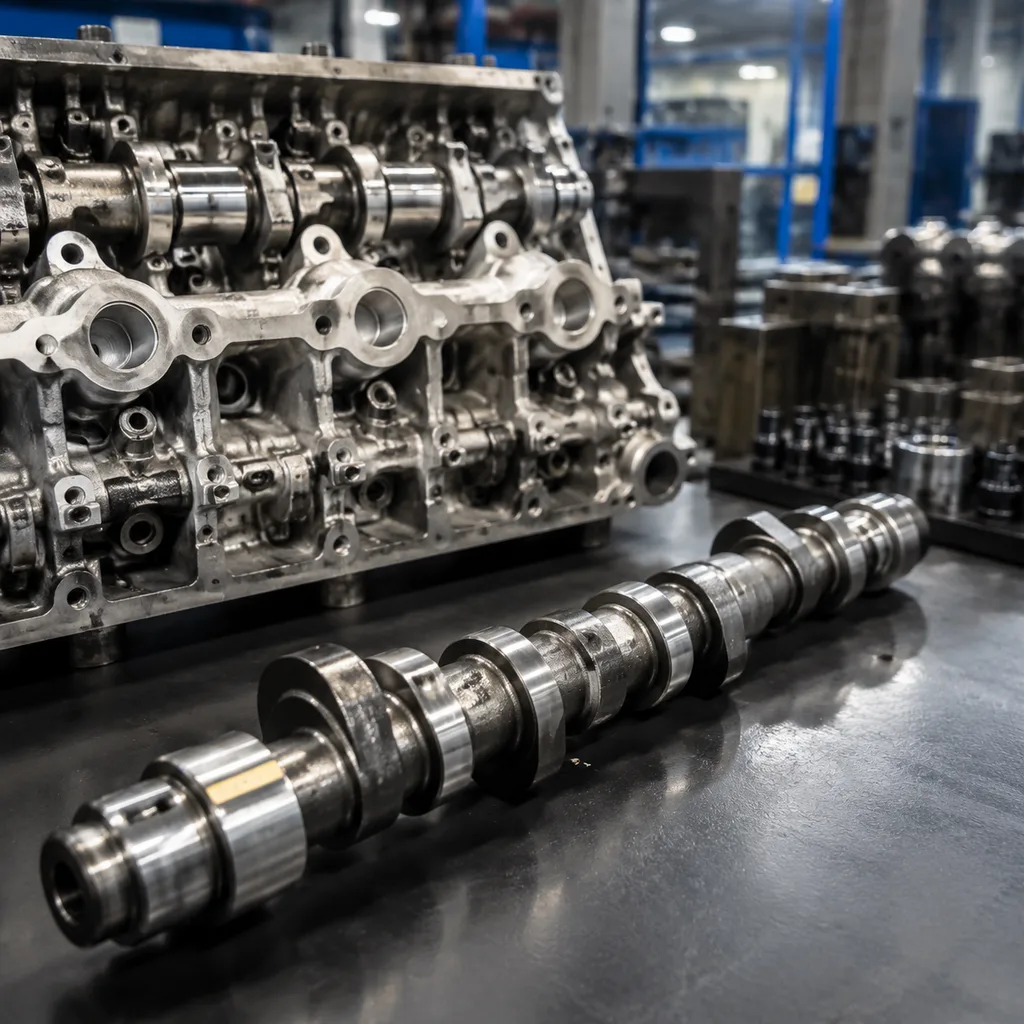
For procurement teams, a camshaft for Isuzu NPR OE equivalent is a specification decision, not a catalog guess. The part has to match the original profile, journal dimensions, hardness, timing relationship, and surface finish closely enough to preserve valve events and wear life. That means buyers should define tolerance bands, confirm the engine code, and require batch-level inspection data before any volume release. Driventus is an independent aftermarket manufacturer; brand names are referenced for fitment only. We supply engine and powertrain components from Taizhou, Zhejiang, with IATF 16949:2016 and ISO 9001:2015 quality control. For Isuzu NPR programmes, the practical aim is dimensional equivalence, stable heat treatment, and repeatable output from pilot lot to production lot. If you source for distribution, fleet service, or remanufacture, the sections below show what to verify before ordering.
Decision rules: what OE equivalent should cover
An OE equivalent camshaft is a replacement part designed to match the original intent within the limits needed for fit, timing, durability, and emissions control. For Isuzu NPR applications, the first decision is engine family. A catalog near-match can still shift cam timing or break valvetrain compatibility.
Use feature-level acceptance, not a vague “looks right” judgment. A practical OE-equivalent definition usually includes:
base circle, lobe lift, and lobe separation within the agreed drawing tolerance
journal diameter, runout, and bearing surface finish within controlled limits
overall length, thrust face geometry, and drive-end details matching the reference part
hardness depth and core material specification consistent with the OE requirement
gear, sprocket, or drive interface where applicable
The buyer’s job is to decide what can vary and what cannot. For example, cosmetic casting marks may be acceptable, but lobe profile, journal size, and thrust location usually are not. Put those boundaries in the inquiry and on the purchase order. If you need related engine parts, see our catalog and engine components.
Where samples fail in practice
A part can fit on the bench and still fail in service. That is the trap. The most common failure modes are not dramatic; they are slow and expensive.
Check item
Typical buyer target
Why it matters
Lobe lift
Match OE drawing or validated sample within the agreed profile tolerance
Controls valve opening and closing
Journal diameter
Measure at multiple points, typically at both ends and mid-span
Confirms bearing fit and oil clearance
Runout
Check on V-blocks or a precision fixture, then record TIR
Prevents vibration and uneven wear
Surface hardness
Confirm case depth and hardness method by lot
Protects lobes and journals
Surface roughness
Inspect critical contact areas
Supports oil film retention
Concentricity
Verify drive and journal alignment
Reduces timing errors
Length and thrust face
Measure overall length and thrust shoulder location
Prevents endplay and assembly issues
</tr></thead><tbody> </tbody></table>Use a written first-article plan. A sample should not be approved because it installs cleanly once; it should be approved because it repeats the measured values that control life, noise, and timing stability. Keep measured results, gauge IDs, and sample photos with the procurement file. If the supplier cannot name the measuring equipment or test method, the sample should stay on hold.
Spec deep-dive: materials, hardness, and traceability
A camshaft for commercial diesel service typically uses cast iron or alloy steel, depending on the original design, production route, and required wear life. What matters to the buyer is not the marketing label. It is whether the supplied part stays consistent from batch to batch and whether the heat treatment produces stable surface hardness at the lobes and journals.
Ask the supplier to document:
chemical composition verification on incoming material, with lot traceability
heat-treatment traceability by lot and furnace cycle where applicable
hardness testing on lobes and journals, with values recorded by sample number
microstructure review when required by the drawing or customer standard
dimensional audit after finishing, before packaging release
functional fit check in the intended head and valvetrain set-up
A useful specification pack should state the material grade, the target hardness range, and the acceptable case depth or induction depth if applicable. If the supplier gives only a generic phrase such as “high quality material,” that is not enough for purchase approval. Where emissions or durability programmes are involved, request evidence of process control aligned with IATF 16949:2016 and ISO 9001:2015. For aftermarket use in regulated markets, ask whether the part materials and coatings are compatible with REACH (EC) No 1907/2006 obligations in your supply chain.
Why source direct from the manufacturer
Sourcing direct from a manufacturer gives buyers tighter control over documentation, batch traceability, and lead time. It also reduces ambiguity when an OE sample is unavailable or when the buyer only has a cross-reference number. The factory can quote against the drawing, a measured sample, or a target specification instead of a loosely described market item.
Driventus supports B2B buyers in aftermarket, OEM, and repair-chain channels. Our quality system is structured for repeatable inspection and document control. If a programme needs a non-standard profile, special packaging, or private-label supply, our custom manufacturing service can support that scope.
For catalogue items, ask for:
drawings or dimensional outlines
inspection report samples
material and heat-treatment declaration
packaging specification
target MOQ, unit price bands, and lead-time window
Commercially, compare three cost drivers together: MOQ, tooling or setup cost, and replenishment lead time. Small initial orders usually carry a higher unit price because setup and QA are spread over fewer pieces. Larger repeat orders often reduce unit cost and may shorten lead time once the process is stable. Request a sample quote, a pilot-lot quote, and a repeat-order quote so you can compare landed cost at different volumes before issuing a blanket PO.
Step-by-step PO setup to reduce fitment risk
The safest purchase order starts with the exact engine code, application year range, and OE cross-reference where available. When search results show multiple options, use a structured review before release.
1. Match the camshaft to the correct cylinder head family. 2. Confirm whether the engine uses hydraulic or mechanical valvetrain components. 3. Verify drive-end details, keying, and thrust control. 4. Compare against a retained OE sample or trusted reference unit. 5. Approve a pilot lot before volume release. 6. Lock the revision level of the drawing or sample before reorder.
To reduce returns, write measurable acceptance language into the PO. Require dimensional data for critical features, hardness results by lot, and packaging that protects journals and lobes from transit damage. If your team buys by application only, add engine code, vehicle year range, and any casting or stamping numbers to the inquiry so the supplier can cross-check fitment before quoting. If you are unsure about interchangeability, send the application data and photos with your inquiry. That shortens technical review and reduces the chance of a wrong-shaft purchase. For direct assistance, request a quote.
Buyer profile: what Driventus can support
Driventus supplies camshafts and adjacent engine components from our Taizhou manufacturing base to distributors, wholesalers, OEM suppliers, and multi-location repair networks. We work with procurement teams that need stable replenishment, documented inspection, and practical OE-equivalent fitment support.
Typical buyer requirements we handle include:
OE-number cross-reference review
sample comparison against customer reference parts
batch inspection records
export packing for mixed-SKU orders
private-label or neutral-label supply
For planning, buyers commonly want three commercial checkpoints: sample lead time, pilot-lot lead time, and repeat-order lead time. If the part is in our regular production program, sample or stock orders may move faster than custom profiles or special packaging requests. MOQ usually depends on whether the item is standard catalog stock, a new tooling request, or a private-label order; higher MOQs generally improve per-piece pricing and consistency in packaging and labeling. Driventus is an independent aftermarket manufacturer; brand names are referenced for fitment only. If your team needs a sample review, a technical quotation, or a programme-level discussion, we can align the part specification with your target market and service interval expectations.
Frequently asked questions
No. It means the replacement is intended to match OE fit and function within the required dimensional and performance limits. It is not an OEM-branded part and should be validated by drawing and sample comparison.
Ask for dimensional data, material declaration, heat-treatment records, hardness results, and a batch inspection report. For regulated supply chains, also ask about process controls under IATF 16949:2016 and ISO 9001:2015.
Request three quotes if possible: sample, pilot lot, and production volume. Compare unit price, setup cost, payment terms, and promised lead time together, because the lowest unit price is not always the lowest landed cost or the fastest replenishment option.
Yes. We support custom manufacturing for B2B buyers that need special profiles, packaging, or private-label supply. Send your application data through the contact page and we will review fitment requirements.
If you are sourcing a camshaft for Isuzu NPR OE equivalent, send your application data and reference sample details for review. Start here: /contact.html