Cylinder Head Wholesale: Sourcing Guide for Buyers
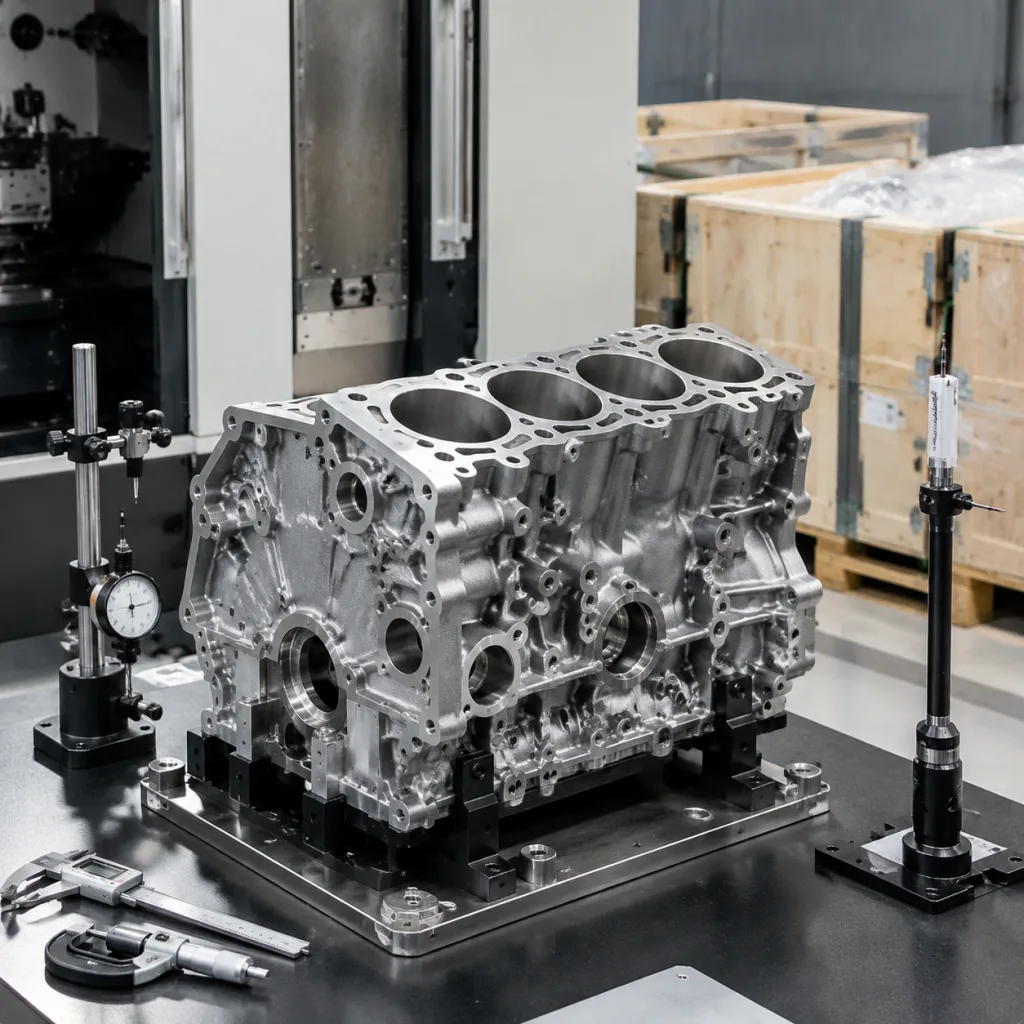
Cylinder head wholesale buying is primarily a sourcing discipline: confirm fitment, material specification, machining quality, and documentation before you commit to volume. For import managers and category buyers, the decision is rarely about one sample part. It is about repeatability across batches, stable lead times, and whether the supplier can support traceability and corrective action when required. Driventus supplies cylinder heads as an independent aftermarket manufacturer from Taizhou, Zhejiang, with exports to 60+ countries and production aligned to IATF 16949:2016 and ISO 9001:2015. Driventus is an independent aftermarket manufacturer; brand names are referenced for fitment only. When evaluating a wholesale offer, buyers should compare OE cross-references, pressure-testing data, valve seat machining, and packaging controls. The sections below outline what procurement teams should verify before moving from enquiry to purchase order.
What wholesale buyers should confirm first
A serious supplier should be able to provide the core documents and declarations that support both commercial review and quality approval:
1. Commercial invoice and packing list 2. Material declaration 3. Dimensional inspection report 4. Pressure test record 5. Certificate to IATF 16949:2016 or ISO 9001:2015 scope, where applicable 6. REACH (EC) No 1907/2006 compliance statement for the relevant market
If a supplier cannot produce these documents quickly, the sourcing risk rises, and the offer should be treated as incomplete rather than ready for approval.
Technical checks that reduce claim rates
Cylinder heads fail for repeatable reasons: poor flatness, valve sealing issues, porosity, or machining drift between batches. Buyers should define acceptance criteria in the purchase specification so that sample approval and final inspection are based on the same standard.
Check item
Common buyer requirement
Why it matters
Deck flatness
Within drawing tolerance, often measured across the full face
Controls head gasket sealing
Pressure test
100% or batch-based, with documented pass/fail
Detects porosity and casting leaks
Valve seat condition
Full contact band and correct concentricity
Affects compression and burn pattern
Guide clearance
Within drawing limit
Reduces oil consumption and valve wear
Surface finish
Consistent machining finish on gasket face
Improves sealing stability
Cleanliness
No chips, media residue, or loose inserts
Prevents first-start damage
</tr></thead><tbody> </tbody></table>If the engine family is used in emissions-sensitive markets, ask whether the part is evaluated against relevant installation and durability expectations linked to ECE R-83 or local vehicle inspection requirements. That does not mean approval by a vehicle manufacturer. It means the part should not introduce avoidable sealing or combustion issues during service replacement.
MOQ, lead time, and batch planning
For cylinder head wholesale programmes, procurement teams usually balance MOQ against SKU breadth. A low MOQ can help with initial market entry or range testing, but it should not come at the expense of machining consistency, packaging integrity, or traceability.
Typical planning questions:
What is the MOQ by part number, and does it change for mixed-model orders?
Are castings held in stock, or are all heads made to order?
What is the standard lead time after PO confirmation?
Can the factory reserve production slots for recurring monthly demand?
Is there a separate lead time for custom porting, sensor bosses, or non-standard valve-train layouts?
If your programme includes multiple references for one engine family, ask for a consolidated shipment plan. That reduces freight cost, simplifies inbound QC, and lowers the chance of partial deliveries. For buyers managing seasonal demand, a rolling forecast is usually more useful than a single large order placed at once.
When custom manufacturing is justified
Not every programme should start with custom tooling. Standard catalogue parts are usually the fastest route for replacement demand and the easiest way to validate market fit. Custom manufacturing makes sense when the buyer needs one or more of the following:
Non-standard combustion chamber volume
Special port geometry for a regional specification
Modified sensor or emissions-related drilling
Private-label packing for a distributor network
A controlled interchange part for multi-location repair groups
If you need a revised casting, machining fixture, or assembly specification, use the custom manufacturing route only after confirming annual volume and validation budget. For most distributors, standard parts from our catalog are the first benchmark. If the application sits within a broader engine programme, the engine components page can help you map related items such as gaskets, valves, and timing components.
Factory audit and quality control expectations
A wholesale supplier should be able to support audit questions from sourcing, quality, and logistics teams. At minimum, review the following:
Process flow from casting to final packing
Incoming inspection for raw material and inserts
CNC machining capability and fixture control
Pressure test station calibration records
Final inspection sampling plan
Nonconformance handling and corrective-action timing
Driventus publishes its quality system so buyers can review certification scope and control points before an audit. For large accounts, a remote document review is usually the first step, followed by sample approval and then production release. If you are comparing suppliers across regions, ask each one to quote the same inspection standard, pallet specification, and label format. Without that alignment, unit-price comparisons are not reliable because the scope of supply is different.
Procurement checklist before you place the order
Use this checklist to close the gap between quotation and shipment:
Confirm OE reference and application code
Match valve count, cam layout, and sensor provisions
Verify material and machining specification
Request a sample and dimensional report
Confirm packaging, carton count, and pallet load
Agree lead time, MOQ, and incoterms
Set rejection criteria for leak test and flatness
Require batch traceability on labels and documents
Define an escalation contact for claims or urgent replacements
For repeat business, the supplier should also be able to discuss forecast-based stocking and replenishment. That is often the difference between a one-off exporter and a stable wholesale partner. If you are building a long-term supply line, document the approved sample and keep it with the purchase specification so future orders can be checked against the same reference.
Frequently asked questions
Ask for OE cross-reference, material specification, flatness tolerance, pressure test records, MOQ, lead time, and packaging details. Also confirm traceability and certification scope before approval.
Yes, if your annual volume and validation budget justify it. Common requests include special ports, sensor bosses, or private-label packing. Standard catalogue parts are usually faster for initial demand.
Driventus supplies aftermarket cylinder heads with documented quality controls, export support, and engineering communication for fitment verification. Review the quality system and request a quote for current availability.
For current availability, technical confirmation, and volume pricing, please use our quote form and send your OE reference, target quantity, and market destination: /contact.html