cylinder head · 2026-05-26

Cylinder Head Ram Manufacturer China: Sourcing Guide

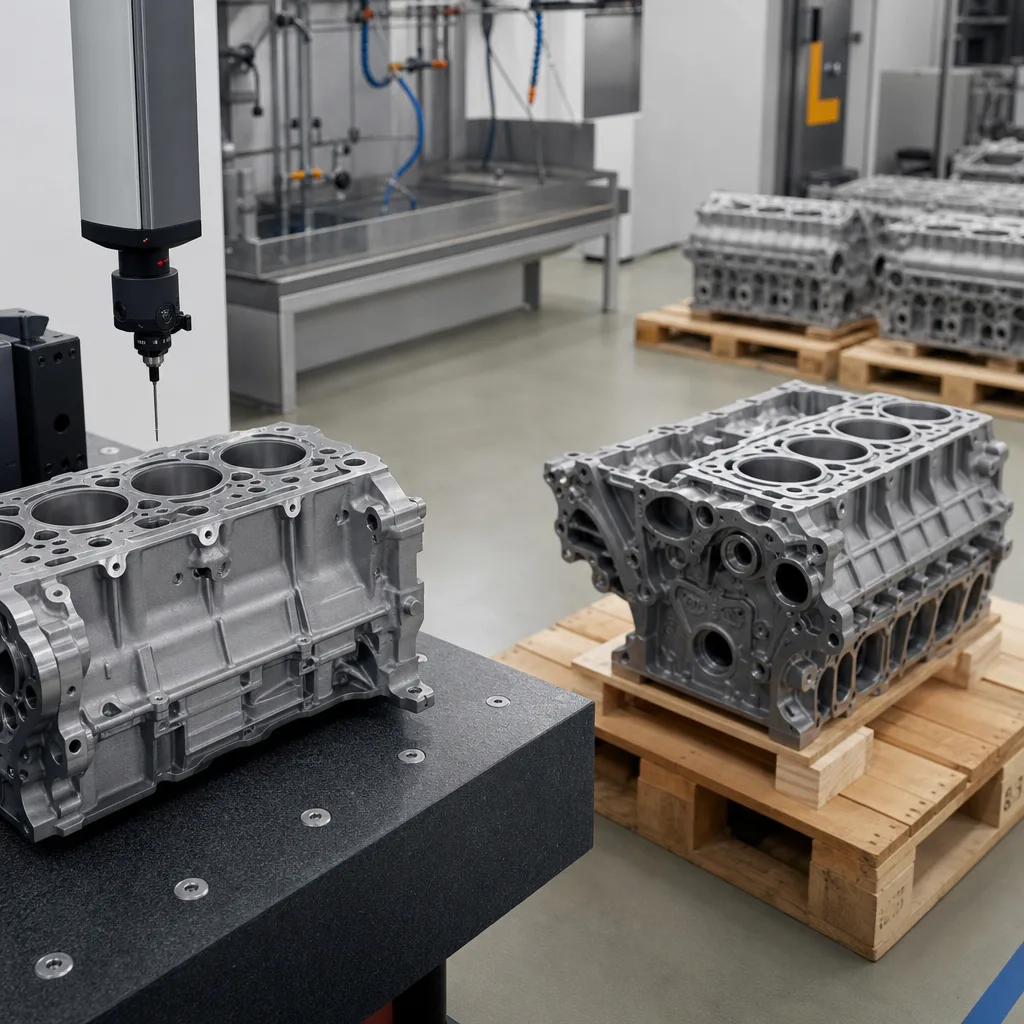
For buyers sourcing a cylinder head from China, the main questions are not about price alone. Procurement teams need dimensional consistency, material traceability, machining capability, and stable lead times. That is especially true for RAM applications, where engine family match, valve seat integrity, cooling passages, and flatness control affect rebuild success and warranty exposure. Driventus supplies cylinder heads for aftermarket distribution, repair chains, and OEM-related programmes from Taizhou, Zhejiang, with production aligned to IATF 16949:2016 and ISO 9001:2015. We support OE-number cross-references for fitment verification only, including formats such as OE 06A107065 when provided by the buyer. Driventus is an independent aftermarket manufacturer; brand names are referenced for fitment only. This article explains how to evaluate a cylinder head RAM manufacturer in China, what technical data to request, and which checks matter before placing a purchase order.

What procurement teams should verify first

A cylinder head purchase should start with fitment control, not with promotional claims. For RAM applications, buyers should confirm engine code, combustion chamber volume, valve count, injector and port layout, cam bearing arrangement, and gasket interface. The same casting family may appear under several OE references, so the buyer should verify the complete application file before release.

Key data to request:

  • Engine code and displacement
  • OE cross-reference, if available
  • Material specification and heat-treatment condition
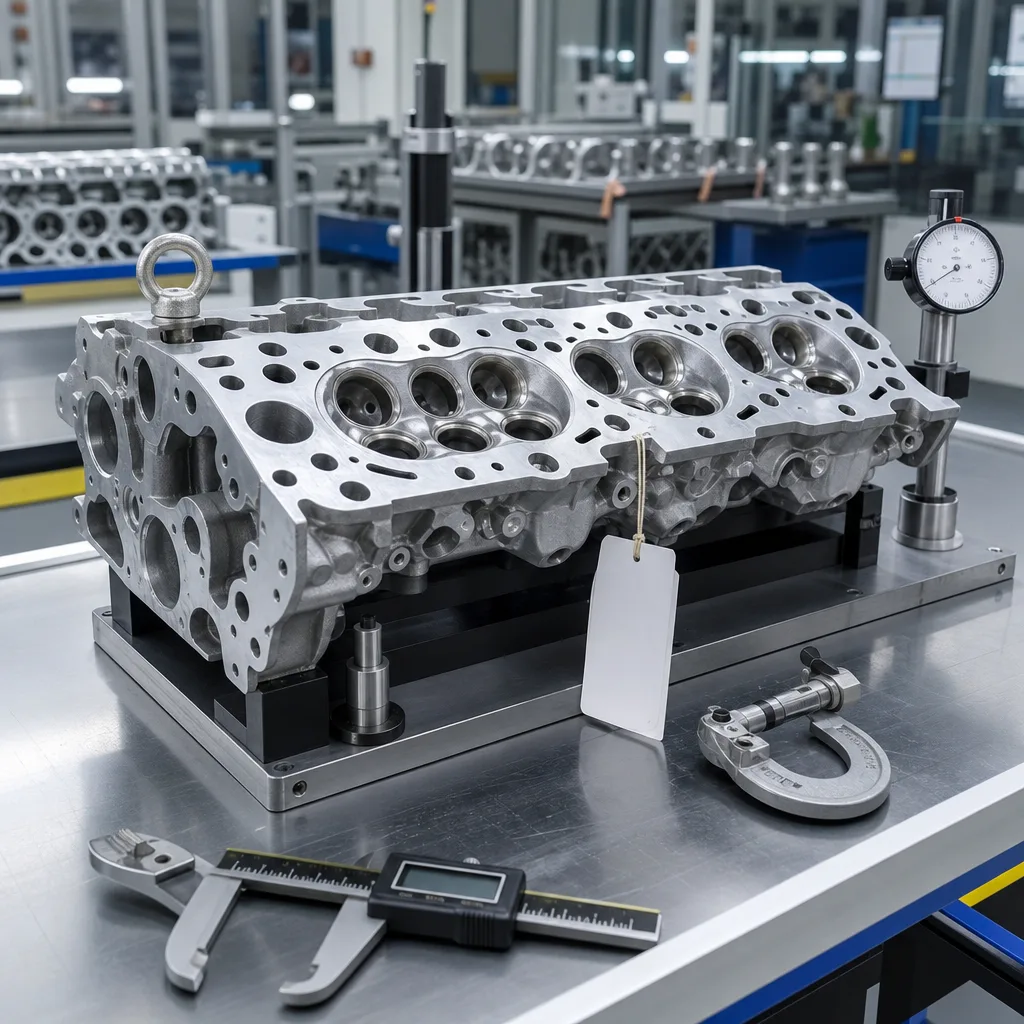
  • Machining tolerances for deck flatness, valve seat concentricity, and guide clearance
  • Pressure test method and acceptance limit
  • Packaging method for export and warehouse handling

If the part is intended for a multi-location repair network, request a dimensional drawing and a first-article report before approval. That reduces the risk of field returns caused by small differences in coolant passages, injector bore depth, or cam cap geometry.

Manufacturing controls that affect field performance

Cylinder heads fail for repeatable reasons: porosity, warpage, cracked bridges, poor seat machining, and unstable valve guide fit. A reliable supplier should control these risks at the foundry, machining, and test stages.

Typical control points

</tr></thead><tbody> </tbody></table>For export buyers, process consistency matters more than one-off sample quality. Ask for control plan records, in-process inspection data, and final test results from current production, not legacy samples.

Standards and documentation for international sourcing

Professional buyers expect document control. A cylinder head supplier should be able to provide inspection records, material traceability, and shipment documents that align with the buyer’s compliance process.

Relevant standards and frameworks include:

  • IATF 16949:2016 for automotive quality management
  • ISO 9001:2015 for documented process control
  • REACH (EC) No 1907/2006 for substance awareness in the EU supply chain
  • ECE R-83 where emissions-related application context is relevant to vehicle testing discussions
  • SAE J2527 when buyers discuss durability and component validation methodology

A complete file usually includes material certificates, inspection reports, packing list, commercial invoice, and part identification. For regulated markets, buyers may also request a declaration of conformity for material content where applicable. If your team needs a supplier audit, review the quality system before RFQ release.

Lead times, MOQ, and order planning

For catalogue items, lead time depends on stock position, machining queue, and export consolidation. For made-to-order cylinder heads, buyers should plan around raw casting availability, machining capacity, and test/packing time.

Practical planning points:

  • MOQ is usually lower for common engine families and higher for niche RAM applications
  • Sample orders should be separated from bulk PO terms
  • Packaging spec should be fixed before mass production
  • Buyers should confirm whether gaskets, valves, and cam hardware are included or sold separately
  • Incoterms and destination port should be stated clearly in the RFQ

A supplier with vertically integrated machining can often shorten the gap between sample approval and production release. That is useful for distributors managing seasonal demand or repair chains with fast replenishment needs. Browse our catalog or the broader engine components range to map related parts before you submit a forecast.

How Driventus supports buyer validation

Driventus manufactures engine and powertrain parts in Taizhou, Zhejiang, with export experience across 60+ countries. For cylinder head programmes, we support customer validation with measured samples, production documentation, and application review before shipment.

Buyer checklist before PO release

1. Confirm engine code and OE reference format 2. Verify whether the head is bare, assembled, or semi-assembled 3. Approve dimensional drawing and critical-to-quality points 4. Request current-production inspection data 5. Align packaging, labelling, and carton count 6. Confirm destination compliance requirements

When a part needs a non-standard finish, extra corrosion protection, or application-specific marking, use custom manufacturing to define the technical scope. Driventus is an independent aftermarket manufacturer; brand names are referenced for fitment only.

Frequently asked questions

Yes. We work from buyer-supplied OE references and application data for fitment verification. Cross-references are used for identification only and do not imply vehicle manufacturer approval.

Typical documents include invoice, packing list, inspection records, and traceability details. We can also align additional paperwork to buyer requirements and destination-market compliance needs.

Yes. Sample and pilot-order workflows are available so buyers can verify fitment, machining, and packaging before releasing a larger purchase order.

If you are comparing suppliers or building an RFQ for a cylinder head programme, send your application details and target volume here: /contact.html

Request a Quote
Control point What to verify Why it matters
Casting qualitySpectrochemical alloy check, porosity control, X-ray or dye penetrant where requiredReduces crack and leak risk
Heat treatmentRecorded cycle and hardness rangeSupports stability after machining
Deck machiningFlatness, surface finish, thickness after final skimProtects head gasket sealing
Valve train machiningSeat width, concentricity, guide clearanceAffects compression and oil consumption
Pressure testingWater jacket test under documented pressureConfirms leak-free coolant passages