Cylinder Head Lexus Wholesale: Sourcing and Supply Guide
For buyers managing cylinder head Lexus wholesale programs, price is only one part of the risk. The harder problems are fitment confirmation, machining consistency, packaging quality, and whether the supplier can support repeat orders without changing casting, tooling, or inspection practice. A reliable source should be able to identify the engine family, define the assembly level, and provide the documents needed for import, warranty handling, and receiving inspection. Driventus is an independent aftermarket manufacturer; brand names are referenced for fitment only. That distinction matters because procurement teams need a supplier that can deliver to specification without making approval claims they cannot support. If you are comparing suppliers across Europe, North America, or Australia, start with engineering data first, then move to MOQ, lead time, and test evidence. The objective is a repeatable supply route that fits your internal quality gate, not a one-off shipment that creates rework at receiving.
What buyers should verify first
Wholesale cylinder head sourcing is not a catalog exercise. For Lexus applications, buyers usually need confirmation of engine family, casting revision, valve count, port layout, sensor bosses, and gasket interface before the first PO. If a sample is available, compare deck height, cam bore condition, coolant jacket geometry, and sealing surfaces against the reference part.
- Engine code and VIN-level fitment notes
- Casting and machining revision
- Bare casting or fully assembled head
- Required valve train parts
- Packaging and label format
- Target MOQ, annual volume, and lead time
For broad sourcing, start with our catalog and narrow the request to the exact engine family before asking for samples. That reduces quoting noise and helps the factory confirm the correct machining route from the start.
How the heads are made and controlled
Most heads for these programs use aluminium alloy castings with hardened valve seat inserts and guide materials selected for thermal stability. The commercial question is less about alloy branding and more about repeatability across casting, machining, pressure integrity, and traceable inspection.
Typical controls buyers should ask for:
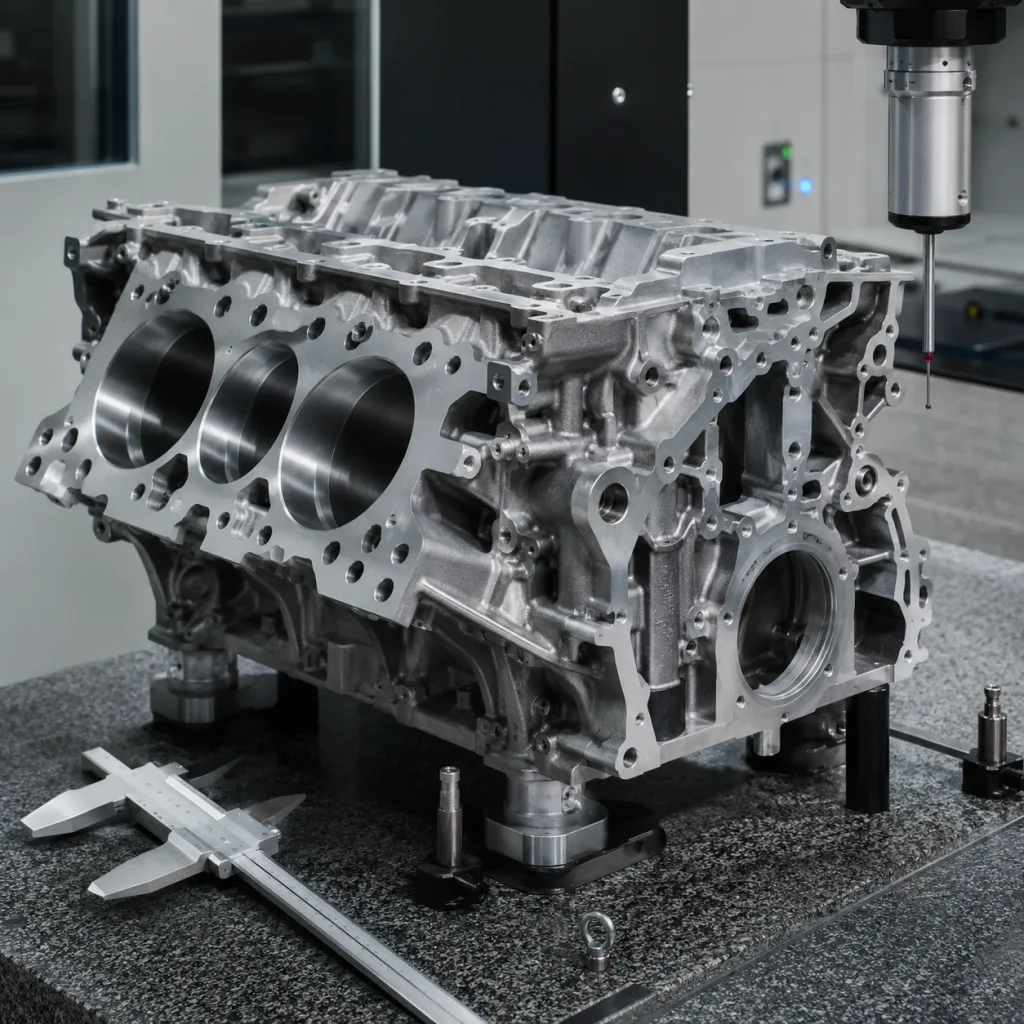
- Deck milling and bolt-hole location checked to drawing
- Valve seat concentricity and guide clearance recorded
- Water-jacket pressure test on every unit or defined lot
- Surface protection for export storage
- Traceability by batch, date code, and final inspection record
Where a part family needs special machining, custom manufacturing can cover additional ports, threaded bosses, or private-label packaging after dimensional approval.
If your program also needs related engine parts, review our catalog so the head order and gasket or cooling-component order can be aligned in one shipment. That often simplifies receiving and reduces split freight costs.
Fitment and replacement validation
The replacement question is simple: does the head match the engine family at the dimensions that matter? Buyers should check combustion chamber consistency, gasket face geometry, valve train layout, cam journal alignment, and the location of all coolant and oil passages. A supplier can offer a visually similar part and still fail at first assembly if one machining datum is off.
Driventus is an independent aftermarket manufacturer; brand names are referenced for fitment only.
| Sourcing route | Best for | Main trade-off |
|---|---|---|
| Bare casting | Rebuilders and machine shops | Lowest unit cost, more local labour |
| Machined head | Distributors and repair chains | Faster installation, higher purchase price |
| Fully assembled head | Turnkey replacement | Highest BOM cost, least prep time |