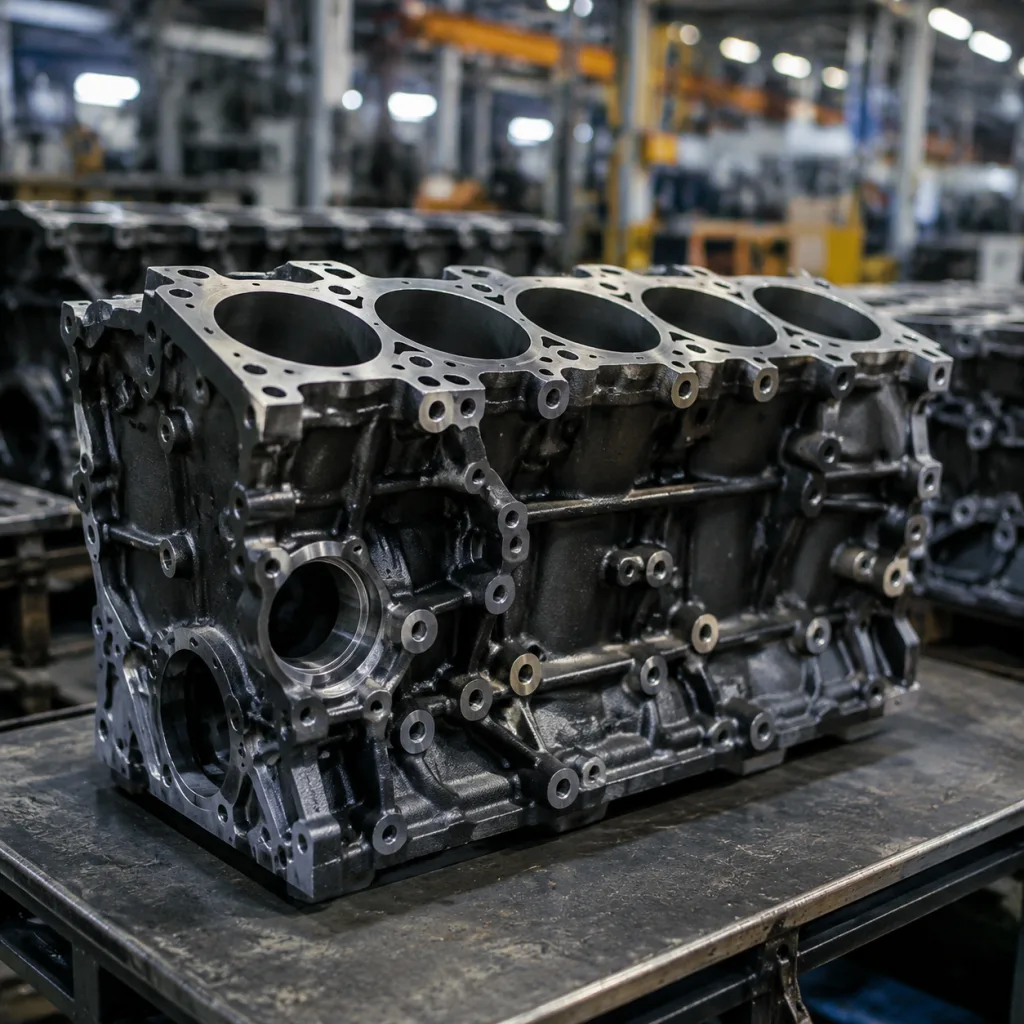
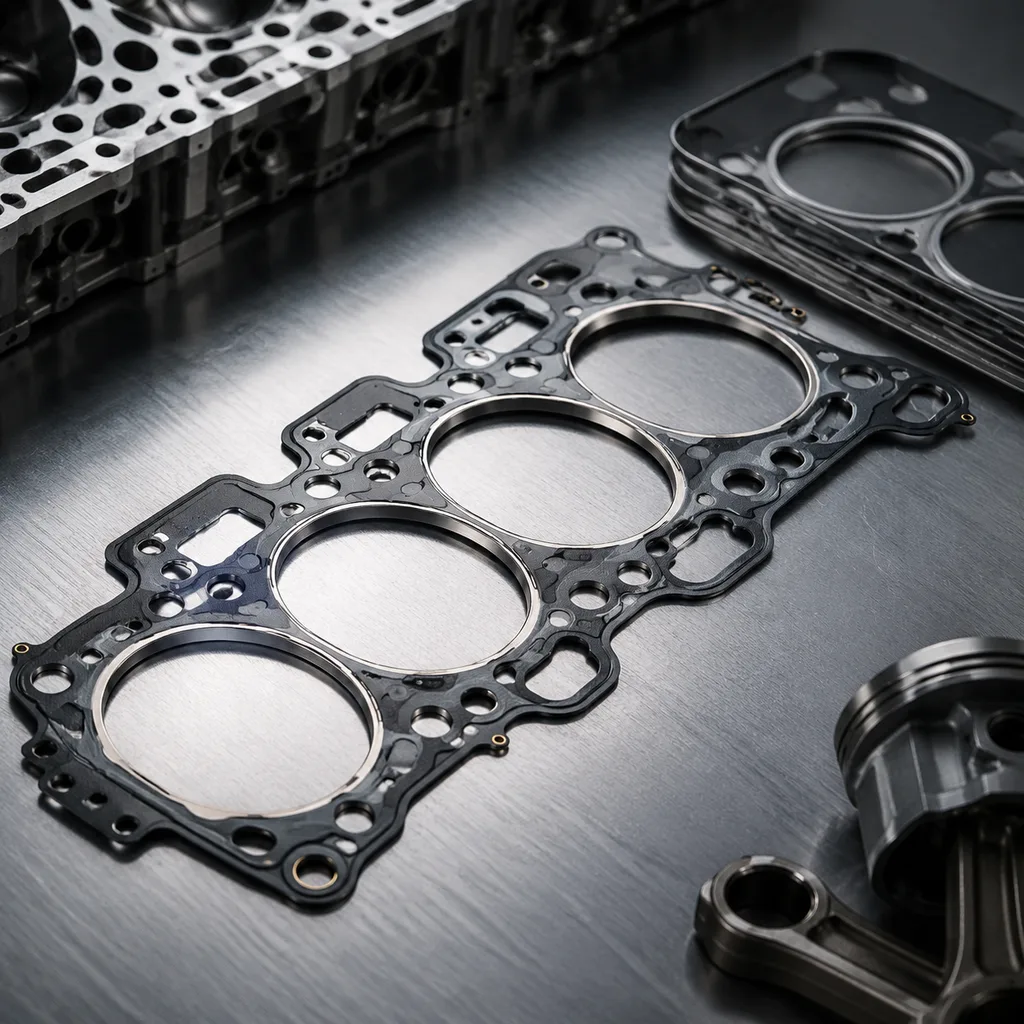
Choosing a cylinder head Dodge supplier is not a catalog exercise. One incorrect port, weak pressure-test record, or carton that collapses in transit can turn a profitable import program into claims administration. Buyers need a source that can hold machining tolerances, separate application variants correctly, document each lot, and ship in a format that matches distributor, repair-chain, or service-channel operations.
Driventus manufactures engine and powertrain components in Taizhou, Zhejiang, and exports to more than 60 countries. Our Dodge-fit cylinder head programs are built for B2B sourcing: defined MOQ, batch traceability, pre-shipment inspection, application matching support, and export documentation. Driventus is an independent aftermarket manufacturer; brand names are used only to describe fitment.
Use this guide as a buyer’s decision tool: where cylinder head programs fail, which specifications belong in the RFQ, how to compare supply formats, what evidence to request during audit, and how to control landed cost before the first shipment leaves the factory.
Start with the decision that prevents most returns: application control
The first supplier test is not price. It is whether the supplier can keep Dodge-fit applications separated with enough precision to prevent returns. Confirm the engine family, fuel type, emission market, model-year range, gasket interface, camshaft layout, valve count, sensor ports, and whether the head is bare, semi-loaded, or assembled. A correct casting with the wrong port or sensor provision is still a failed shipment.
Engineering data control matters just as much. Driventus manages cylinder head drawings, machining programs, inspection plans, and change records under a documented quality system aligned with IATF 16949:2016 and ISO 9001:2015. Those standards do not prove that a specific part fits a specific engine. They do show whether the factory has a framework for process control, corrective action, and traceability.
Treat documentation as part of the part number. A buyer file should define the commercial invoice, packing list, country-of-origin information, material declaration where required, and carton or pallet identification. For EU or UK aftermarket shipments, buyers may request material substance declarations aligned with REACH (EC) No 1907/2006. For Brazil, North America, and Australia, label content and customs data should be agreed before production, not after packing.
Put acceptance numbers into the RFQ. Common buyer requirements include deck flatness within 0.05 mm across the sealing surface, valve-seat concentricity within 0.03 mm TIR, valve-guide-to-stem clearance within 0.020-0.045 mm for intake and 0.025-0.055 mm for exhaust, and pressure-test holding at 0.5-1.0 bar for 2-3 minutes without visible leakage. Final tolerances depend on the engine family, but numeric acceptance limits remove ambiguity and shorten sample approval.
Choose the supply format by risk, not by habit
Cylinder heads can be sourced in several formats. The best option depends on the buyer’s assembly capability, warranty model, and landed-cost target—not simply on the lowest ex-works price.
Spring load, valve sealing, assembly torque records
Private-label program
Agreed packaging, labels, batch codes
Distributor-ready inventory
Artwork control, barcode accuracy, pallet plan
</tr></thead><tbody> </tbody></table>A distributor with local assembly skill may prefer bare heads and keep margin in-house. A repair-chain program may choose assembled heads to reduce installation time and branch-level variation. A private-label importer may care most about carton strength, barcode accuracy, and clean application identification.
Buyers can review related engine components through our catalog or the engine product range at /products/engine-components.html. If a project requires a casting revision, alternate material, dedicated packaging, or a special machining datum, Driventus can evaluate custom manufacturing after drawing review and sample confirmation.
MOQ follows complexity. Common aftermarket references may support pilot orders by SKU and shipment batch. Special machining or new tooling requires higher MOQ because fixtures, inspection programming, and casting allocation must be amortised.
In practical terms, stocked references often start at 50-200 pieces per SKU for a pilot run. Mixed-SKU consolidated orders may target 300-800 pieces across a container-friendly release. Custom-machined or newly tooled heads commonly move into the 500-1,000 piece first-order range, depending on cavity count, alloy, and packaging complexity. Ask quotations to separate sample cost, tooling amortisation, and production price; otherwise, a low unit price can hide the true program cost.
Spec deep-dive: the dimensions that separate a usable head from a claim
Do not approve a cylinder head program from photos and price alone. The RFQ should define measurable characteristics and the evidence required for approval. For Dodge-fit cylinder heads, sourcing engineers commonly check:
Deck flatness measured after final machining.
Combustion chamber volume consistency by cavity.
Valve-seat angle and concentricity.
Valve-guide inner diameter and guide-to-stem clearance.
Cam bore alignment where applicable.
Thread quality for spark plug, injector, manifold, and sensor ports.
Coolant and oil passage cleanliness.
Pressure testing for water-jacket sealing.
Surface roughness of gasket interfaces.
Casting identification and batch traceability.
Material requirements should be written in engineering language. Avoid vague phrases such as “heavy duty.” For aluminium applications, specify alloy, hardness range, porosity limits, and heat-treatment condition where required. For cast iron applications, define tensile properties and machining allowances.
Be precise about standards. ECE R-83 relates to vehicle pollutant emissions. SAE J2527 is a brake dynamometer test procedure, not a cylinder head validation standard. Incorrect standard references create weak procurement files and invite false compliance claims.
Make the machining spec operational. Buyers often request a 45° valve-seat angle with 30°/60° throat and top cuts where applicable, seat width around 1.2-1.8 mm for intake and 1.5-2.1 mm for exhaust unless the application requires otherwise, and valve-guide protrusion or installed height within ±0.10 mm. For heads with cam journals, journal size tolerance is commonly around ±0.01-0.02 mm, with alignment within 0.02-0.04 mm depending on architecture. Exact values must be agreed by part number, but the presence of numbers turns a quote into a controllable technical offer.
Build the timeline backwards from the stockout date
A supplier’s lead time only helps if it is broken into stages. For a cylinder head Dodge supplier evaluation, separate sample timing, production timing, inspection timing, and freight timing. That is how buyers avoid last-minute air freight and empty shelves.
A workable sourcing sequence looks like this:
1. RFQ review: application data, target annual volume, packaging, compliance needs, and destination market. 2. Sample confirmation: dimensional report, pressure-test record, and visual inspection. 3. Pilot order: limited batch to verify installation feedback, carton durability, and claims handling. 4. Mass production: agreed monthly or quarterly release schedule. 5. Pre-shipment inspection: AQL plan, critical-dimension checks, and packaging verification. 6. Export shipment: carton marks, pallet dimensions, HS code review, and customs documentation.
Existing references are usually faster than new tooling or non-standard machining programs. Build Chinese public holidays, port congestion, and internal approval time into the schedule. For distributors serving several branches, a rolling forecast is more reliable than urgent spot orders. Driventus can quote by full container load, mixed-engine-component shipment, or consolidated pallet order depending on project scale.
Lead time should be quoted as a range. Standard stocked references may ship in 15-30 days after order confirmation. Semi-loaded or assembled builds often need 30-45 days. New tooling or first-article approval can extend the timeline to 45-90 days, especially when sample sign-off, revised packaging, or added validation is required. Freight then adds its own window: about 3-7 days by air for urgent samples and 20-40 days by sea depending on port pair and transshipment. Ask the supplier to state lead time from PO release, deposit receipt, and approved sample separately.
The RFQ should also state forecast volume, Incoterms, destination port, target packaging, inspection level, and whether the buyer requires market exclusivity. Clear inputs produce useful quotations. Vague requests produce numbers that will be renegotiated later.
Price logic deserves the same discipline. A strong quotation separates base unit price, tooling or fixture charges, packaging cost, and additional inspection charges for special testing or photo reports. If pallets, barcode labels, or test records are excluded, the lower head price may not be the lower landed cost. Compare price per approved unit delivered to destination, not just factory-gate price.
Audit scenario: what to ask when the certificate looks fine
A certificate scan is a starting point, not supplier approval. The real question is whether process controls are active on the shop floor. For cylinder head programs, useful evidence includes control plans, process flow charts, gauge calibration records, pressure-test logs, nonconforming-product procedures, and corrective-action examples.
Driventus supports structured factory audits for qualified B2B buyers. Remote audits can cover certificate review, production process overview, inspection equipment, packaging method, and traceability demonstration. On-site audits can be arranged according to project stage and visitor schedule.
Request evidence such as:
Valid IATF 16949:2016 and ISO 9001:2015 certification scope.
Incoming casting inspection procedure.
CNC machining control plan and tool-life rules.
Final dimensional inspection report template.
Leak or pressure-test parameters.
Cleaning and anti-corrosion process.
Packaging drop or transport simulation method where applicable.
Complaint handling and 8D corrective-action process.
Then test the system with a scenario: a batch fails pressure test after final machining. What happens next? The supplier should be able to show containment, segregation, root-cause review, corrective action, and closure verification. Ask for one recent example of each. Also verify how gauges are calibrated, how often pressure-test equipment is checked, and whether first-piece, in-process, and final inspection are recorded by lot number.
Traceability is the difference between a controlled issue and a market-wide recall. If the supplier can connect casting heat, machining lot, inspection record, and shipment carton, the claim can be contained. If the answer is only “quality assured,” the buyer is carrying unnecessary risk.
No supplier should claim vehicle manufacturer approval unless formal approval exists for that specific program. Driventus is an independent aftermarket manufacturer; brand names are referenced for fitment only.
RFQ Q&A: how to make suppliers quote the same program
What should the RFQ define first? Start with the engineering baseline: engine application, market destination, supply format, inspection documents, sample approval method, and acceptance values for critical dimensions. Add OE part-number cross-references only where they are relevant to your internal mapping; for example, do not include an unrelated OE 06A107065 reference unless it actually supports the buyer’s application file.
How should packaging be specified? Define carton strength, pallet height, label fields, barcode format, batch identification, and whether vehicle manufacturer logos are prohibited. For private-label distributors, packaging artwork should be controlled by revision. For repair chains, carton labels should make application identification simple without creating trademark risk. For OEM or Tier-1 service projects, engineering change control and PPAP-style documentation may be requested depending on the buyer’s internal procedure.
How do you compare price without being misled? Ask every source to quote the same configuration and documentation package. Then request pricing at three tiers: pilot quantity, annual forecast quantity, and container-load quantity. A pilot run may carry higher setup cost. A repeat order should reflect stable tooling and predictable packing. If one supplier provides only a single price, it is harder to judge whether the program is commercially sustainable.
What inventory model belongs in the RFQ? Tie lead-time commitments to how the program will be replenished. If the range is built around high runners, the supplier may hold finished-goods safety stock. If it is a mixed-application catalog program, a blanket order with scheduled releases may work better. The RFQ should state whether the supplier is expected to keep finished goods inventory, maintain raw casting reserves, or build only against release. Each model affects cash flow, availability, and unit price.
Which cost items are often missed? Tooling amortisation, sample charges, special inspection reports, pallet requirements, barcode labels, export documentation, and packaging artwork control. The lowest unit price becomes expensive when it creates return handling, repacking, missing documents, or air-freight recovery shipments.
Use one RFQ template for all candidate suppliers. That makes the comparison objective and prevents late negotiation over items that should have been specified at the start.
Frequently asked questions
Send engine application, model-year range, required configuration, estimated annual volume, destination market, packaging needs, and any OE cross-reference used in your system. Photos or samples help when the application has multiple variants. Add acceptance numbers for flatness, seat concentricity, guide clearance, and pressure test so the quote matches your technical standard.
Yes. For qualified B2B programs, Driventus can support agreed carton design, label data, barcode fields, pallet plans, and batch identification. Artwork and label revisions should be approved before mass production. Buyers can also request revision control, carton-drop testing, or pallet-height limits as part of the packaging spec.
No. Driventus is an independent aftermarket manufacturer; brand names are referenced for fitment only. Any project-specific approval must be reviewed against formal documents for that program.
If you are qualifying a cylinder head Dodge supplier for distribution, service-chain, or private-label supply, share your application list, target volume, and documentation requirements. You can [request a quote](/contact.html).