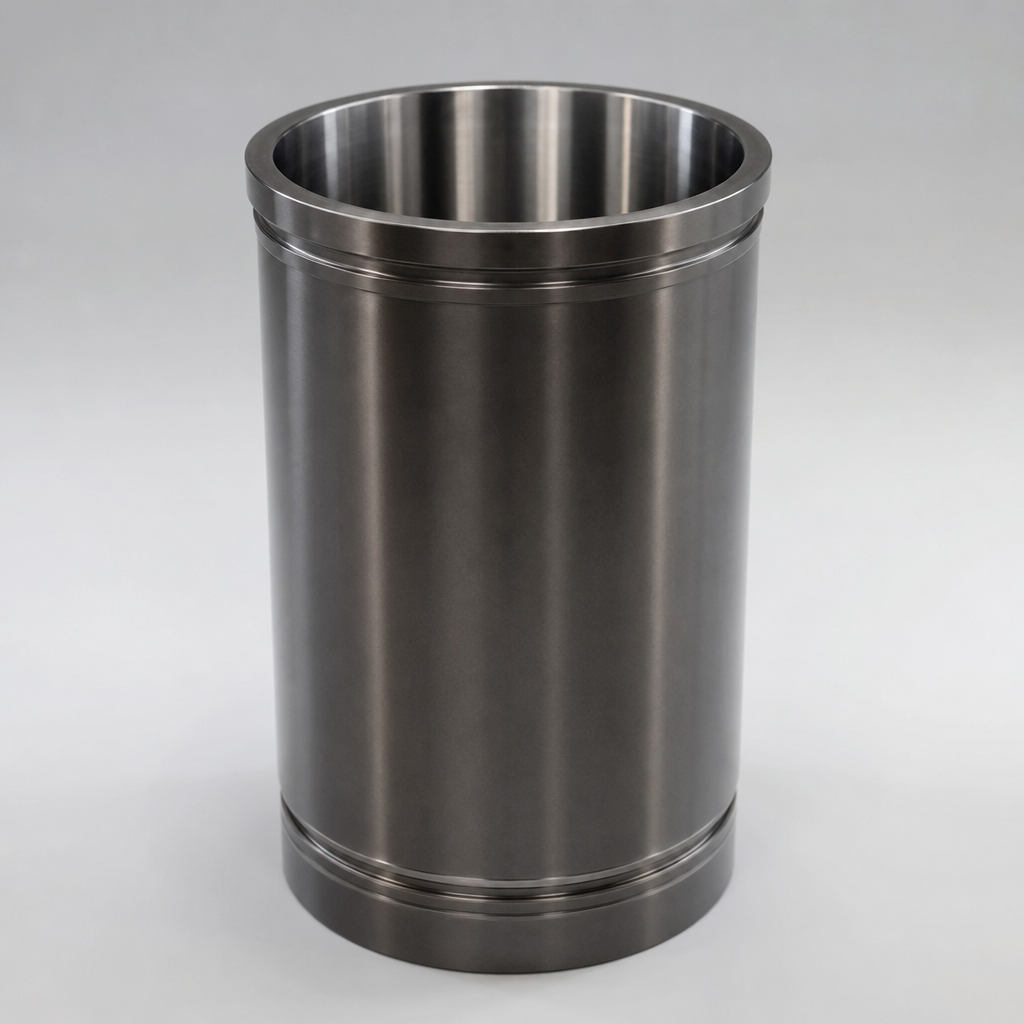
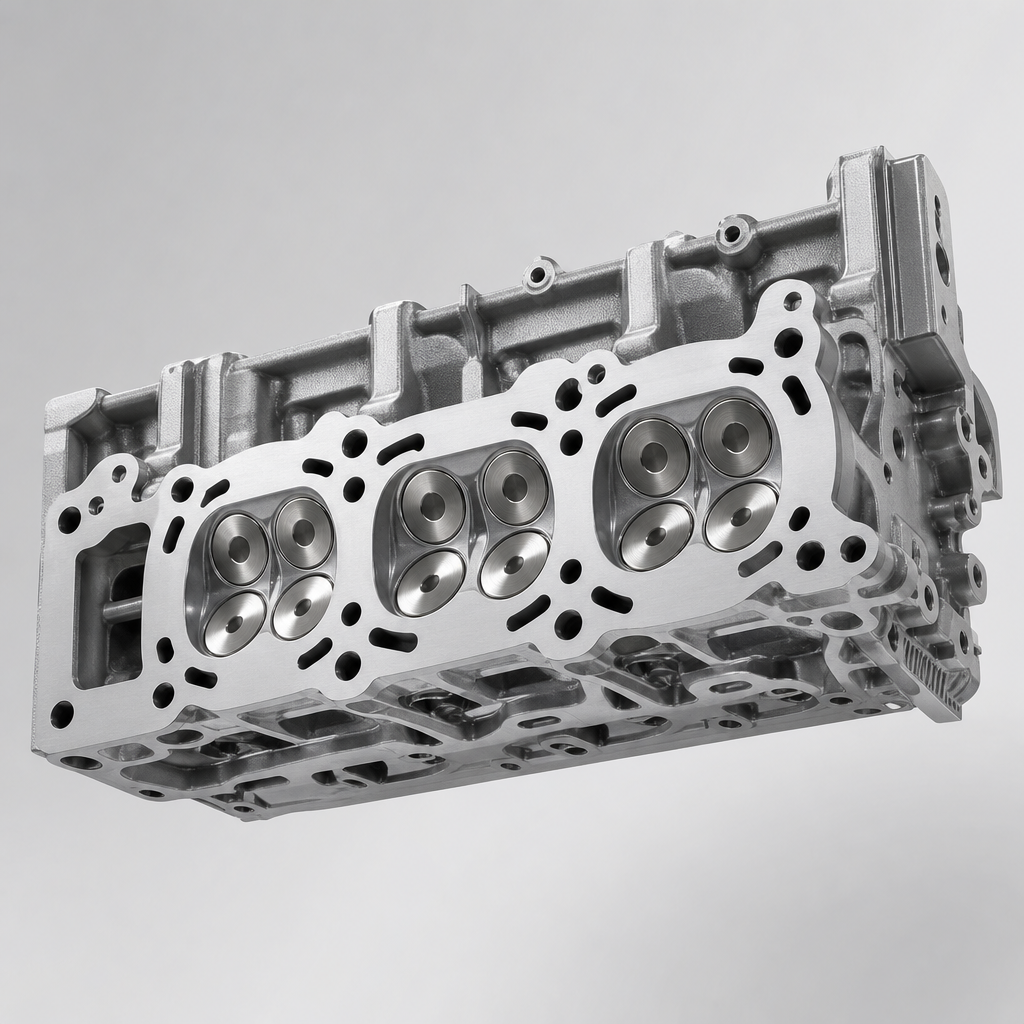
Selecting a cylinder head Alfa Romeo supplier is a fitment, machining, and supply-control decision, not a search for the closest-looking casting. The head must match the engine code, gasket interface, combustion chamber, valve train, coolant and oil circuits, sensor bosses, and mounting geometry inside agreed tolerances. A small mismatch can become a workshop delay, a return, or a repeated catalogue error.
For B2B buyers, the real test is whether the supplier can prove repeatability: inspection records, pressure-test discipline, stable MOQ and lead time, protected export packing, and clean documentation for repeat orders. Driventus supplies engine and powertrain components from Taizhou, Zhejiang, with production controls aligned to IATF 16949:2016 and ISO 9001:2015. Driventus is an independent aftermarket manufacturer; Alfa Romeo and other brand names are referenced only for fitment identification.
Use this guide to structure RFQs, challenge weak supplier claims, compare inspection evidence, and define the commercial terms that keep cylinder head sourcing predictable across EU, UK, US, Canada, Australia, and Brazil programmes.
Start With the Buying Decision, Not the Catalogue Page
A cylinder head order should begin with one question: what has to be controlled so the part installs correctly and repeats across future shipments? For Alfa Romeo applications, that answer usually reaches beyond the part number. Casting quality, machining datum control, valve-seat work, pressure testing, packaging, and batch traceability all affect whether the shipment performs in the field.
A useful sourcing decision separates three needs:
Fitment certainty: engine-code confirmation, gasket match, port layout, sensor bosses, mounting points, and valve train configuration
Manufacturing repeatability: controlled casting, machining, flatness, thread quality, seat and guide geometry, and leak-test results
Supply execution: MOQ, lead time, carton and pallet design, labels, export paperwork, and replenishment planning
For procurement teams, a qualified supplier should be able to discuss the full control chain. Typical requirements include aluminium A356/AlSi7Mg or equivalent where specified, deck flatness often controlled around 0.03-0.05 mm depending on drawing and head length, coolant and oil circuit pressure testing commonly at 0.3-0.6 MPa by customer specification, and traceability by batch, lot, heat, machining date, or production date.
Driventus treats cylinder head sourcing as a supply-control task. A serious cylinder head Alfa Romeo supplier should quote by application, check OE-style reference data where available, and state what is inspected before shipment. Visual similarity is not enough. Port shape, unused bosses, valve geometry, and gasket passages can change between engine versions that look almost identical in a catalogue image.
RFQ Checklist: Data That Prevents the First Bad Order
A strong RFQ forces the technical risk into the open before price negotiations start. If the supplier cannot answer these points, the buyer is already carrying the risk.
Minimum technical data to request
Item
What to confirm
Material
Aluminium alloy grade or cast iron grade, heat treatment, hardness range, and whether chemical composition reports are available
Valve train
SOHC/DOHC layout, valve count, seat and guide specification, valve stem diameter, and spring installed-height reference
Combustion chamber
Volume range in cc, chamber geometry, valve clearance considerations, and allowed chamber-to-chamber variation
Deck face
Flatness tolerance, surface finish Ra target, milling or grinding process, and minimum deck thickness
Coolant/oil passages
Port geometry, core shift control, plug installation method, and leak-testing pressure and hold time
Machined bores
Valve guide ID, cam bore alignment, thread checks, dowel locations, and datum control
Weight
Gross and net weight per piece plus carton and pallet dimensions for freight planning
Packaging
Individual foam or molded protection, VCI or bagging where required, palletisation, corrosion control, and external labelling
</tr></thead><tbody> </tbody></table>Ask for records, not assurances. Practical RFQ targets may include deck flatness to 0.05 mm or tighter where the drawing requires it, gasket-face surface finish around Ra 0.8-1.6, pressure testing with no visible bubbles or decay beyond the agreed limit, and 100% thread gauge checks on claim-prone mounting points.
The common failure is a head that appears correct but fails during installation because of valve-seat geometry, cam-bore alignment, thread position, or coolant sealing. Suppliers working with IATF 16949:2016 and ISO 9001:2015 aligned controls should be able to explain the control plan in plain terms: what is checked during machining, what is checked at final inspection, which results are recorded, and how nonconforming parts are contained.
Fitment Failure Modes Unique to Alfa Romeo Programmes
Alfa Romeo cylinder head sourcing depends on exact engine-family identification. Model name and model year are not enough. A single model line may carry different heads by engine code, emissions package, valve train layout, production period, or destination market.
The main failure modes are predictable:
Matching by vehicle model instead of engine code
Accepting an OE-style reference without checking the casting number or gasket pattern
Missing drilled versus blank sensor and accessory bosses
Overlooking EGR, secondary-air, or emissions-related port differences
Assuming intake and exhaust flange patterns are unchanged across versions
Ignoring valve size, spring specification, tappet type, or cam profile compatibility
Approving a head before checking dowel position, bolt-hole layout, and coolant or oil passage alignment
When application data is incomplete, the right supplier stops and validates. Guessing creates returns, chargebacks, delayed workshop jobs, and catalogue errors that repeat order after order. A disciplined cylinder head Alfa Romeo supplier will ask for photos, OE markings, casting numbers, gasket references, and, where needed, a sample or dimensional report.
For new-to-range or high-value references, approve at least one physical benchmark before bulk production. Check the gasket, manifolds, valve cover, sensor locations, accessory mounting points, bolt pattern, and coolant/oil passages together. Driventus can support application mapping for catalogue-based purchasing and custom verification for larger programmes. For part-family browsing, use our catalog and the engine-component overview engine components.
Factory Audit: What to Watch on the Production Floor
A cylinder head audit should test repeatability. Machine count matters less than fixtures, datum control, inspection habits, rework rules, and traceability. A plant can look capable and still produce unstable output if these controls are loose.
Audit the points that change field performance
1. Incoming casting inspection and material control, including chemical composition, hardness, porosity screening, and heat number traceability where applicable 2. Machining fixture repeatability and datum management, with fixture wear checks and first-off approval after setup 3. Seat and guide installation control, including interference fit, insertion depth, concentricity, and pull or retention checks by plan 4. Pressure testing procedure and acceptance criteria, including test pressure, hold time, medium, fixture sealing points, and retest rules 5. Deck surface finish and flatness monitoring, with CMM, straightedge/feeler, or surface-plate method defined 6. Thread, boss, dowel, and cam-bore inspection, including go/no-go gauges and alignment checks 7. Final inspection, labelling, batch records, and lot traceability back to machining and test results 8. Export packaging, drop-handling protection, pallet stacking limit, humidity control, and corrosion prevention
Ask how rejects are segregated. Ask who authorises rework. Ask how lot identity survives washing, final inspection, packing, and warehouse staging. These questions show whether the system is real.
Review the quality system documentation, including inspection checkpoints, corrective-action flow, gauge calibration status, and available records from previous lots. Confirm whether first-piece, patrol, and final inspection are recorded separately. For example, 100% pressure testing may sit beside sampling-based CMM inspection under the agreed control plan.
For programme work, confirm whether the supplier can build against customer samples, drawings, or a clean specification. Where volume justifies it, custom manufacturing is often the stronger route because it fixes machining targets, inspection standards, packing format, and change control before production starts.
Commercial Terms That Can Break an Otherwise Good Part
The cheapest cylinder head is not the lowest-risk buy. A competitive quote can still fail if the lead time slips, the cartons collapse, the labelling confuses receiving, or repeat orders drift from the approved sample.
Build the commercial review around operating cost, not only unit price:
MOQ by part number, engine family, or mixed order; common aftermarket MOQs may run 20-50 pieces per reference, while new casting or machining setups can require higher commitments
Standard lead time by production state and order size; stocked or repeat references may ship in 2-4 weeks, while new references often require 45-75 days after sample or drawing confirmation
Sample approval time for new references, including first article machining, pressure test, dimensional report, and buyer review
Spare sample retention for claims handling and future comparison, normally one approved sample or retained inspection record per production lot
Carton, pallet, and container loading method, with target carton weight, pallet height, and stacking limit defined before order release
Labelling, barcode, and warehouse identification requirements, including part number, batch number, quantity, gross/net weight, and country-of-origin data where required
Export documentation for EU, UK, US, Canada, Australia, and Brazil destinations
Replenishment rhythm for distributor or repair-chain stock planning, such as monthly, quarterly, or container-consolidated releases
Price changes usually come from alloy cost, machining cycle time, valve-seat and guide content, pressure-test requirements, packaging specification, and order quantity. Mixed orders can improve freight efficiency, but they do not always reduce MOQ if each reference needs separate setup and inspection.
A supplier serving distributors and repair networks should be able to quote a repeatable replenishment plan, not only a one-off shipment. If the business case depends on mixed loading across multiple engine families, raise it early. It may reduce freight cost, simplify warehouse receiving, and prevent unnecessary line-item variation. Driventus works with B2B buyers on volume, programme, and catalogue supply. For commercial enquiries, request a quote.
Spec Deep-Dive: Material, Machining, and Validation Evidence
Cylinder head performance sits at the intersection of metallurgy, machining accuracy, sealing integrity, and inspection discipline. Treating the head as a simple casting is how sourcing teams miss the risks that later become claims.
Common validation expectations
Pressure test for coolant and oil integrity, with pressure, hold time, and acceptance limit written into the order or control plan
Surface flatness verification after final machining, often checked across length, width, and diagonal paths
Valve seat and guide installation inspection, including seat runout, guide bore ID, guide protrusion, and valve contact pattern where supplied assembled
Cam-bore alignment and critical bore measurement where applicable, using CMM, bore gauge, or dedicated checking fixture
Thread and boss checking for manifold, sensor, cover, and accessory interfaces, with 100% go/no-go checks on claim-prone threads
Dimensional verification against drawing, OE benchmark, or approved sample, including datum locations and gasket-interface geometry
Corrosion-control packing for sea freight and warehouse storage, including dry carton, bagging, desiccant, or VCI where the programme requires it
Batch records that connect inspection results to shipped goods
A typical route includes incoming casting inspection, rough machining, heat-treatment or ageing verification where applicable, finish machining, seat and guide work, washing, pressure testing, final measurement, rust or corrosion prevention for inserts, and protected packing. For assembled heads, define the valve components, spring installed height, stem seal type, and whether the unit is supplied bare, semi-assembled, or fully assembled.
Published standards may apply by programme. REACH (EC) No 1907/2006 can matter for EU chemical compliance. Surface durability or appearance testing may reference methods such as SAE J2527 when a customer specification requires it. ECE R-83 can be relevant in related emissions discussions, but a supplier should not claim regulatory approval for the cylinder head itself unless that approval exists and is documented.
Driventus documents what is tested and what sits outside the agreed inspection scope. That distinction helps buyers set incoming inspection plans, handle claims, and avoid assuming validation that was never part of the order.
Supplier Comparison Scorecard: Evidence Beats Sales Language
Do not compare cylinder head suppliers by brochure claims. Compare the evidence they return against the same RFQ.
Supplier criterion
Strong signal
Weak signal
Application data
Engine-code level cross-reference with gasket, casting, and OE-style reference check
Model-only matching
Inspection
Flatness, pressure, bore, thread, and traceability records tied to batch number
Generic “checked before shipping” language
Quality management
IATF 16949:2016 / ISO 9001:2015 aligned controls with named process owners and calibration records
No named system or unclear process ownership
Engineering support
Drawing, sample, benchmark, first-article report, and change-control support
Quote-only response with limited technical review
Commercial fit
Clear MOQ, lead time, price validity, sample cost, and replenishment plan
Vague availability or changing terms
Export handling
Packing, paperwork, labelling, pallet plan, and lot identification defined
Mixed cartons or inconsistent shipment records
</tr></thead><tbody> </tbody></table>Use the grid before discussing the final price. Fitment and inspection should carry at least as much weight as unit cost. One incorrect 100-piece shipment can erase the saving from several good orders once freight, repacking, workshop labour, credits, and customer delays are counted.
Ask each supplier to return the same RFQ form: drawing revision or sample basis, test pressure, quoted MOQ, lead time, payment term, packing size, batch traceability, and price validity period. The better supplier is the one that reduces returns, speeds approval, keeps ERP and warehouse data clean, and repeats the same result after the first shipment.
Scenario: Building a Repeatable Programme With Driventus
A buyer sourcing Alfa Romeo-related cylinder heads usually needs one of three paths. The right path depends on certainty of application data, annual demand, and how much control the buyer needs over packing, labels, and inspection records.
Driventus can support:
Standard references for aftermarket distribution, quoted by engine code, OE-style reference, and destination market
Batch-controlled supply for multi-location repair networks, with lot labels and retained production records
Drawing-based development for OEM and Tier-1 programmes, including sample review, first-article checks, and defined change control
Sample or benchmark-based verification for selected applications, including gasket, port, boss, and mounting comparison
Custom packaging and labelling for channel-specific requirements, including carton marks, barcode labels, pallet labels, and private-label formats where agreed
Export support for buyers managing regional documentation and warehouse intake
For a controlled quotation, send the engine code, OE reference if known, photos of the old head and casting marks, required bare or assembled configuration, target annual demand, first order quantity, destination port or country, and any packing or labelling standard. Driventus can then confirm whether the part is available as an existing reference, needs sample verification, or should be handled as a custom programme.
Driventus supplies engine and powertrain components from Taizhou, Zhejiang, with export experience across 60+ countries. Driventus is an independent aftermarket manufacturer; brand names are referenced for fitment only. That keeps the discussion on fitment data, process control, inspection scope, and logistics readiness rather than unsupported brand claims.
Frequently asked questions
Yes, where the application data is available and verified. Cross-reference should be confirmed by engine code, casting detail, gasket pattern, sensor and boss locations, and dimensional match. Brand names are used for fitment only.
Driventus operates with controls aligned to IATF 16949:2016 and ISO 9001:2015. The exact inspection scope depends on the programme, part family, and customer requirements, but typical controls include pressure testing, flatness checks, thread gauges, and batch traceability.
Yes. Packaging, labelling, carton configuration, pallet format, barcode information, and corrosion-control method can be defined during sourcing so the supply format fits distributor, warehouse, or repair-chain requirements.
Send the engine code, OE reference if known, photos of casting marks and gasket face, target quantity, destination market, required configuration, and any dimensional or packaging notes. That is enough to start a controlled quotation.
For a technical quote or application check, send your requirements through [request a quote](/contact.html). We will respond with the data needed to confirm fitment, inspection scope, MOQ, lead time, packaging, and supply terms.