Cylinder Liner vs Glyco Alternative: Buyer Comparison
A cylinder liner vs Glyco alternative decision should not start with brand language. It should start with the engine block, the machining state, and the evidence behind the part. For rebuilders and aftermarket buyers, the wrong liner can still look correct in a catalogue: the flange may sit slightly high, the OD step may not match the block, the bore may need a different finishing allowance, or the material may wear differently after installation. Driventus supplies cylinder liners for aftermarket distribution, rebuild programmes, and industrial engine applications, with production aligned to IATF 16949:2016 and ISO 9001:2015 requirements. Driventus is an independent aftermarket manufacturer; brand names are referenced for fitment only. This guide gives procurement teams a practical framework for comparing a direct cylinder liner with a Glyco-style alternative on fit, metallurgy, tolerance control, validation, MOQ, price structure, lead time, and repeat-order risk.
Start With the Real Buying Question
The comparison is not “brand or no brand.” It is whether the replacement will assemble, seal, machine, wear, and reorder predictably.
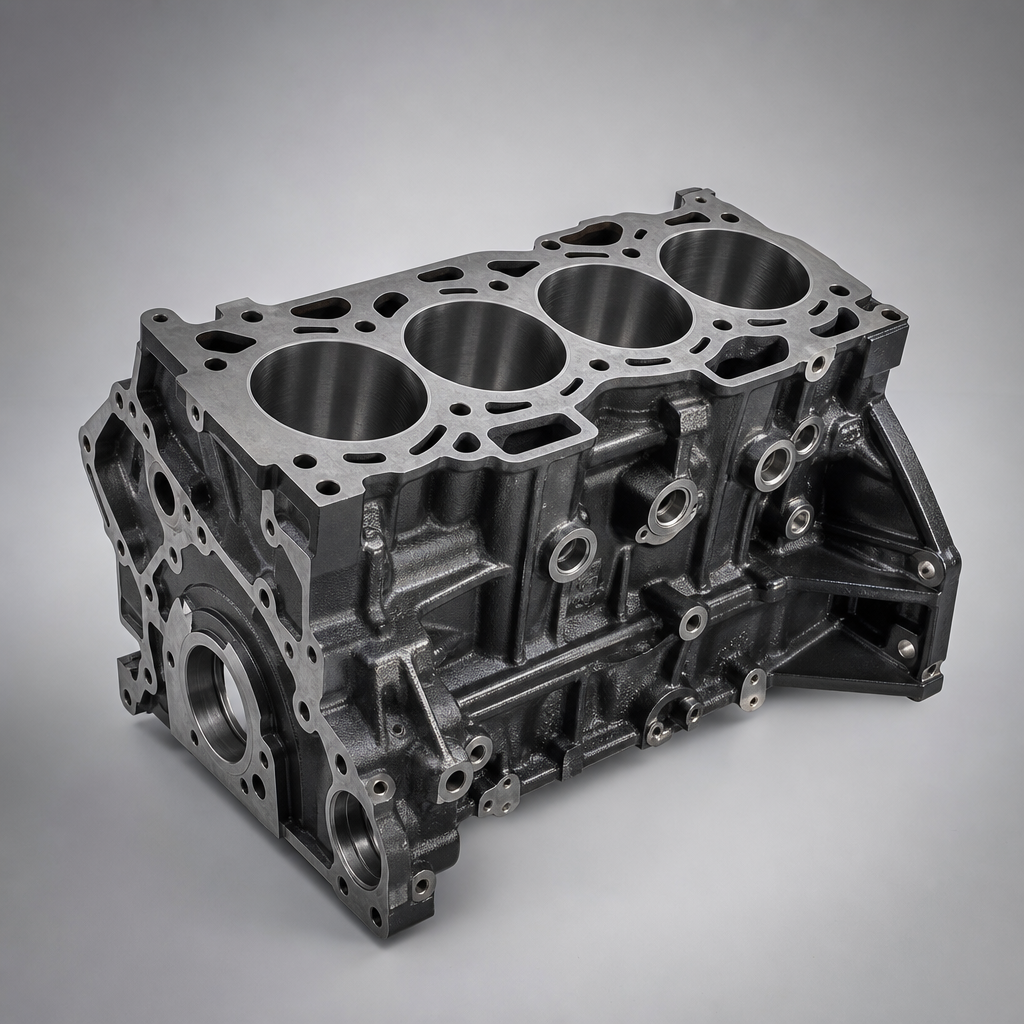
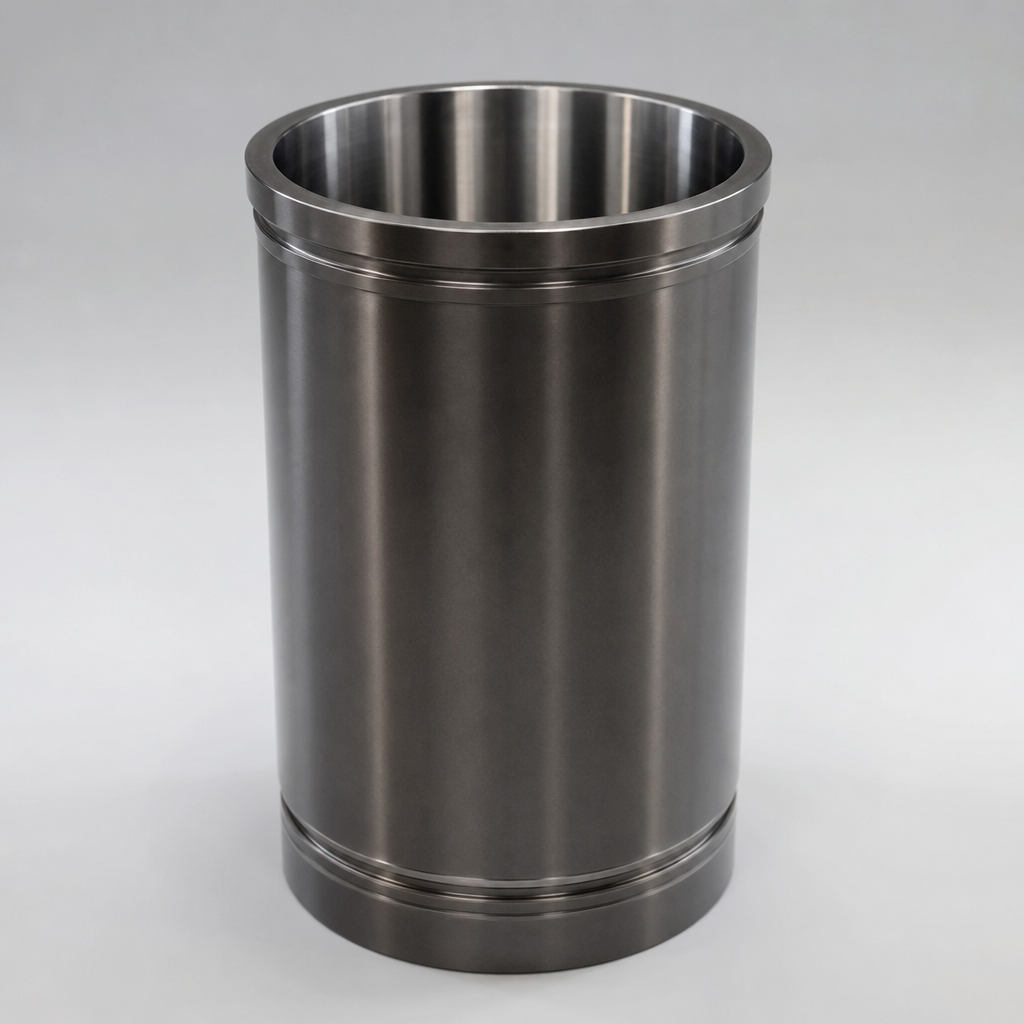
A cylinder liner is the replaceable or service-machined wear surface inside the engine block. A Glyco alternative is normally a replacement positioned against a recognised OE or OE-supplier reference. That reference can help catalogue lookup, but it does not prove dimensional equivalence by itself.
Procurement should reduce the question to five checks:
Does the liner match bore diameter, flange height, outer diameter, step geometry, and length within the drawing tolerance?
Is the part intended for a wet, dry, flanged, slip-fit, press-fit, rough-machined, semi-finished, or finish-ready application?
Are hardness, roundness, cylindricity, wall thickness, and surface finish controlled by lot?
Can the supplier document traceability, batch inspection, and cross-reference logic?
Is the quote based on existing tooling, a modified drawing, or a new casting and machining route?
If those answers are vague, the part has not passed the procurement test. The stronger source is the one that can show repeatable dimensions, stable metallurgy, and clear application mapping, including OE 06A107065-style references where the engine family requires them.
For a useful RFQ, send the OE number, sample photos, liner type, target annual volume, required machining state, and any incoming inspection limits already used by your team. That lets the supplier separate a stock cross-reference from an engineered alternative before price is treated as final.
Direct Liner or Glyco Alternative: What Actually Changes
Buyer criterion
Direct cylinder liner
Glyco alternative
Application focus
Engine rebuild and service replacement by block family or drawing
Replacement against an established OE-supplier-style reference
Fit control
Built around block family, drawing, and machining specification
Usually sold around a named cross-reference or catalogue match
Material options
Grey cast iron, alloyed cast iron, or centrifugally cast variants
Often selected to reflect the original functional intent
Typical RFQ input
Drawing, sample, OE number, annual volume, machining state
Material certificates, dimensional reports, batch traceability
Cross-reference sheet, dimensional proof, traceability records
MOQ logic
Lower if existing tooling and raw casting are available
Lower if the cross-reference already exists in production
Price logic
Driven by material, casting route, machining allowance, inspection level, and packing
Driven by the same costs plus catalogue validation and substitution risk
Lead-time logic
Stock or repeat items can be faster; new tooling adds time
Fast only when the mapped reference is already validated
Buyer risk
Lower when engineering data is complete
Lower only when the reference mapping is verified
</tr></thead><tbody> </tbody></table>A Glyco alternative is not automatically the safer part. A direct liner is not automatically a lower-grade substitute. The decision turns on measurable compatibility, inspection evidence, and supply reliability.
Price should be read the same way. Prototype and sample runs carry higher unit cost because setup, inspection, and material handling are spread across fewer pieces. Small MOQs absorb changeover and checking time. Stable repeat orders reduce cost through casting batches, machining flow, packing standardisation, and freight consolidation.
The cheapest quote is usually only useful after the engineering basis is equal.
Dimension Failure Modes That Create Returns
Most liner problems trace back to a small set of uncontrolled features. They do not always show up during visual inspection. They appear when the machinist checks fit, when the block is assembled, or when the engine is already in service.
Critical dimensions include:
Inner diameter tolerance and remaining machining allowance, separated into rough, semi-finished, and finish-ready states
Outer diameter and interference or slip-fit requirement, including stepped OD zones
Flange thickness, flange OD, seating height, and chamfer condition
Overall length, shoulder position, and deck protrusion target where applicable
Wall thickness consistency, especially on thin-wall dry liners
Roundness and cylindricity after machining
Surface roughness on the bore, flange underside, OD sealing zones, and seating faces
A flange that is slightly wrong can affect seating. An OD step that is copied from the wrong variant can create installation resistance or poor support. A rough-machined liner quoted as semi-finished can push unexpected work into the rebuild shop. A finish-ready liner with unclear honing data can fail the incoming inspection plan even if the catalogue reference looks right.
A practical control plan usually includes 100% visual inspection, sample dimensional inspection by lot, hardness sampling, and bore/OD measurement at top, middle, and bottom positions at 90-degree intervals. Bore and OD limits may be set in hundredths of a millimetre, while roundness and cylindricity are often tighter on the final machined surface than on a blank.
The drawing decides the tolerance. The RFQ should never say only “standard size” or “same as OE” without numeric limits.
Also check for porosity, scoring, edge damage, corrosion, flange nicks, and visible casting defects. If the supplier cannot confirm whether the liner is rough, semi-finished, or finish-ready, the part is not ready for approval.
Material and Process: Where Two Similar Liners Diverge
Two liners can share a catalogue reference and still behave differently in the engine. Material structure, casting method, stress relief, machining sequence, and surface preparation all affect wear, distortion, and repeatability.
Most cylinder liners use pearlitic grey cast iron or alloyed cast iron because these materials offer stable wear behaviour, good machinability, and predictable thermal response. Alloying elements may include chromium, molybdenum, nickel, copper, or phosphorus depending on duty cycle and wear requirement. Some applications use centrifugal casting to improve density, reduce inclusions, and support more consistent wall properties.
A Glyco alternative may be attractive when the market expects a replacement tied to a known OE-supplier reference. Even then, the target is the functional requirement, not the name. Buyers should request:
Chemical composition range, not only a generic “cast iron” description
Hardness range after heat treatment or in the as-cast state, with the test method stated
Casting route, such as static casting or centrifugal casting
Machining sequence, including stress relief, rough turning, finish turning, boring, honing, grinding, and deburring where applicable
Surface treatment, coating, phosphate, anti-rust oil, or dry protective packing, if applicable
Traceability back to batch, melt, or heat number
The process sequence matters. Unstable casting structure can move during machining. Excessive allowance variation can create inconsistent finishing time. Poor flange seating control can turn a correct-looking liner into a warranty risk.
Confirm whether honing is supplied with a specified cross-hatch and roughness range, or whether final honing is left to the engine builder. Driventus produces engine and powertrain components under controlled manufacturing and inspection systems, supporting repeatable supply across shipments, warehouses, and regional distribution programmes.
Approval Evidence: The Documents That Separate Claims From Control
A verbal fit claim is not enough for replacement approval. The approval pack should let receiving, engineering, and warranty teams see what was supplied and how it was controlled.
Useful evidence normally includes dimensional reports, material certificates, visual inspection records, and a controlled inspection plan. Buyers should also ask how the supplier’s process aligns with recognised quality and regulatory requirements for the target market.
Relevant references include:
IATF 16949:2016 for automotive quality management discipline
ISO 9001:2015 for documented process control
REACH (EC) No 1907/2006 for restricted substance awareness in the EU supply chain
Programme-level compliance records when the liner is supplied into a wider emissions-sensitive repair or rebuild package, while recognising that the liner itself is a mechanical component
A practical approval pack should include the drawing revision, cross-reference list, material certificate, first article inspection report, control plan, packaging specification, and batch traceability format. For higher-risk programmes, buyers can add PPAP-style documentation, capability data for critical dimensions, retained samples, and an agreed change-notification rule before material, tooling, process, or production site changes.
For road-going diesel and petrol applications, some customers also map adjacent component validation against standards such as ECE R-83 or SAE J2527 when the wider programme requires environmental durability evidence. That does not mean every liner is certified to those standards by default. It means the buyer should expect the same discipline used in adjacent engine component programmes: controlled drawings, inspection evidence, material traceability, and documented change control.
Scenario: Choose a Direct Cylinder Liner When Engineering Data Leads
A direct cylinder liner is often the cleaner purchase when your team already has the engineering basis and does not need a named alternative label for sales, stock coding, or catalogue continuity.
This fits buyers such as:
Rebuild shops with in-house metrology
Distributors serving several engine variants
Industrial engine programmes that need one common specification across markets
Repair chains that stock by OE cross-reference rather than by brand lineage
In this scenario, the decision is driven by dimensional agreement, supply stability, and packaging integrity. The part can be identified by application, drawing, and measurements instead of legacy supplier branding. That can reduce warehouse confusion, especially when several references point to similar but not identical liners.
The commercial logic is also easier to audit. Existing direct-liner programmes can often be quoted against a standard MOQ tied to one machining batch or export carton configuration. New or modified specifications should separate sample cost, tooling cost, unit price, inspection cost, and freight method.
For low-volume service parts, a higher unit price on a smaller controlled batch may be better than forcing a high MOQ that sits in inventory for years. For fast-moving rebuild items, consolidated repeat orders usually deliver the best landed cost.
Scenario: Choose a Glyco Alternative When the Market Buys by Reference
A Glyco alternative makes sense when the reference is already embedded in the market and the buyer needs a substitute that fits the existing catalogue structure.
This is common in:
European aftermarket distribution
Engine rebuilding networks with established cross-reference tables
Multi-branch operations that reorder by legacy supplier code
The benefit is operational. Sales teams, warehouse staff, and counter personnel can keep using a familiar reference structure. That only works if the supplier proves equivalence on the measurable features.
Treat the cross-reference as the starting point, not the approval. Ask for the OE number, the Glyco-style reference, engine code or block family, dimensional comparison, and known supersessions. Where the market uses multiple catalogue numbers for one engine family, require a fitment matrix showing which references are interchangeable and which are not.
This prevents a low-price offer from creating returns caused by flange height, OD step, or machining-state differences. A brand-compatible description with weak dimensional confirmation is not a shortcut. It is a liability.
Before approving either option, confirm the following:
1. OE or application reference, including any OE 06A107065-style cross-reference where relevant. 2. Liner type: dry, wet, rough-machined, semi-finished, or finish-ready. 3. Material grade, casting method, and any alloying or heat-treatment requirement. 4. Critical dimensions with numeric tolerance bands, including bore, OD, flange, length, wall thickness, and step geometry. 5. Surface finish requirement on bore, flange, OD sealing areas, and seating faces. 6. Inspection records for hardness, roundness, cylindricity, concentricity, wall thickness, and visual defects. 7. Packaging method to prevent corrosion, flange damage, edge chipping, and mixed-part shipments. 8. Lead time, MOQ, production lot traceability, repeat-order controls, and change-notification rules. 9. Price basis: sample price, production unit price, tooling charge, inspection requirement, packing, Incoterms, and freight mode. 10. Approval route: sample inspection, first article report, pilot order, then repeat production release.
For mixed fleets or regional distribution, keep one master specification sheet per engine family and require the supplier to match that sheet on every repeat order. It reduces receiving disputes, gives warehouse teams a clear reference, and makes warranty review faster when a claim needs dimensional evidence.
Lead-time planning should be explicit. Stock or repeat-order liners may be available on a shorter cycle. New drawings, new tooling, or special material can add weeks for casting, machining, inspection, packing, and export booking.
A buyer comparing cylinder liner vs Glyco alternative options should compare landed cost and release timing, not unit price alone.
How Driventus Keeps the Programme Controlled After Approval
Driventus supplies cylinder liners and related engine components to distributors, OEM and Tier-1 supply chains, and repair networks in more than 60 export markets. The value for buyers is not only the part itself. It is the ability to source against stable specifications, request controlled documentation, and consolidate purchasing across adjacent engine parts when the programme requires it.
A typical sourcing flow starts with the buyer’s OE number, sample, drawing, or current supplier reference. Driventus can review the application, confirm the likely liner type and machining state, check whether an existing specification is available, and define the RFQ basis before production pricing is finalised.
For new or modified items, the programme can move through drawing review, sample confirmation, first article inspection, pilot order, and repeat-order release. That structure helps buyers control MOQ, tooling exposure, lead time, and warranty risk before the part enters regular distribution.
Related engine families can be reviewed in our engine components range. For buyers handling programme launches, private label development, or market-specific substitutions, the request flow can be aligned to the drawing, sample, or cross-reference already used internally. That keeps engineering sign-off, purchasing, receiving inspection, and warehouse coding aligned from the first order through repeat supply.
Driventus is an independent aftermarket manufacturer; brand names are referenced for fitment only.
Frequently asked questions
Not automatically. It should be treated as a replacement based on fitment and measurable specification, not as an endorsed OE part. Verify dimensions, material, cross-reference logic, machining state, and inspection data before approval.
Start with bore size, outer diameter, flange height, overall length, liner type, machining state, and required allowance for boring or honing. Those features determine assembly fit, sealing position, and final machining control.
Yes. Buyers can request dimensional reports, traceability details, material certificates, and quality documentation aligned with IATF 16949:2016 and ISO 9001:2015 controlled processes.
Yes. For engine families that need a non-standard size, coating, material requirement, machining state, or packaging specification, use the custom manufacturing path so the part matches the target specification.
For application review, cross-reference validation, or a quotation on liner supply, use our contact form here: /contact.html