Crankshaft Vauxhall Manufacturer China: Buyer Sourcing Guide
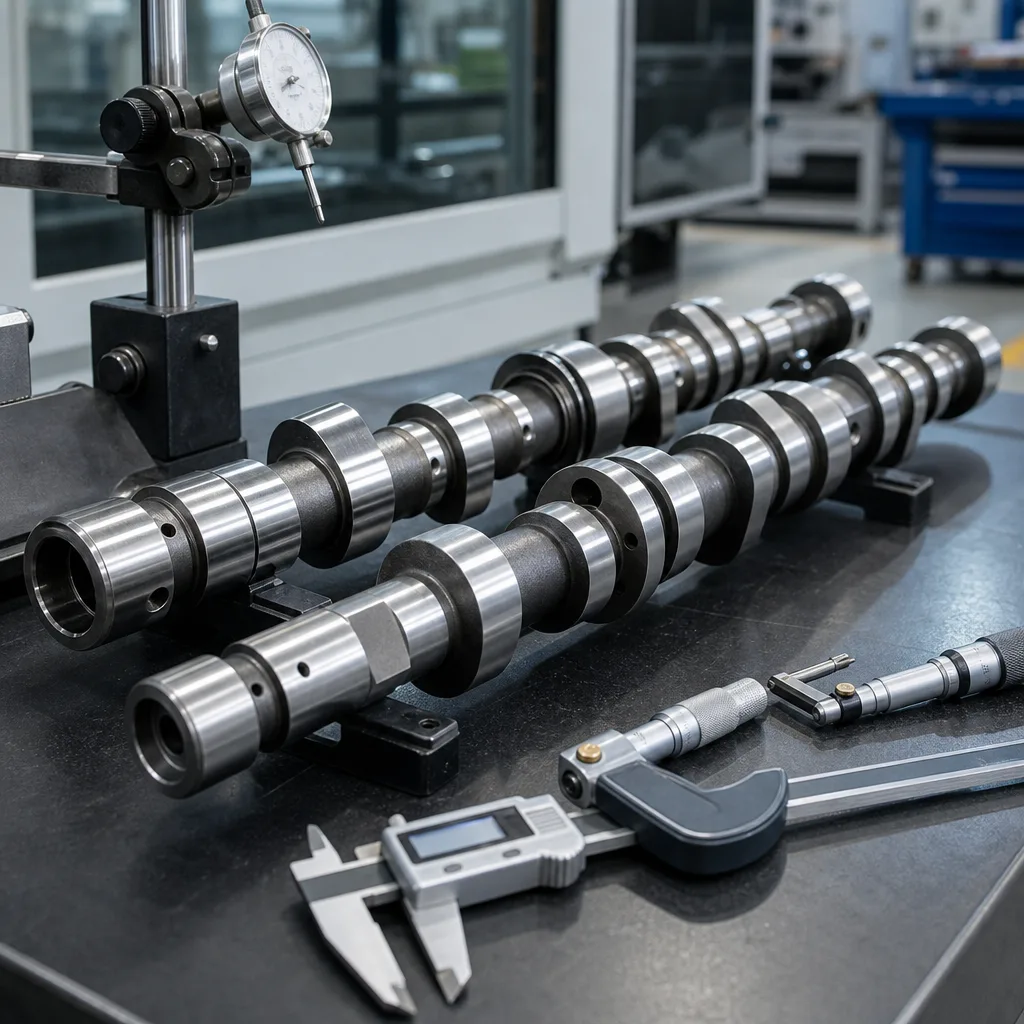
For procurement teams comparing a Vauxhall crankshaft supplier in China, the main question is repeatability. A crankshaft has little room for interpretation: journal size, runout, balance, fillet finish, and oil-hole layout all affect fit and service life. That is why buyers in the UK, EU, US, Canada, Australia, and Brazil usually ask for more than a price list. They want OE cross-reference control, inspection records, packaging discipline, and a supplier that can support both catalog stock and non-catalog programmes. Driventus serves aftermarket distributors, OEM / Tier-1 suppliers, and multi-location repair chains. Driventus is an independent aftermarket manufacturer; brand names are referenced for fitment only. In this guide, we explain what to verify before sending an RFQ, how quality is controlled, and when custom manufacturing is the better option.
What buyers should expect from a sourcing partner
A buyer looking for a Vauxhall crankshaft supplier in China should start with supply control, not only unit price. The practical risk is interchangeability: small changes in journal diameter, thrust width, oil-hole position, or counterweight mass can create returns, warranty claims, or line stoppage.
For B2B programmes, the useful checks are simple:
- Batch repeatability across the same drawing revision
- Traceable material and heat-treatment records
- Packing that protects journals, thrust faces, and keyways
- Export documentation that matches the buyer's receiving process
- Support for sample approval before volume release
Review our catalog for current engine-component coverage, or use our engine components page when you need to map adjacent part families. If your purchase is tied to a specific OE reference, send the number, engine code, and sample requirement with the RFQ rather than assuming fitment from vehicle badge alone.
Technical checks before you send an RFQ
The fastest quote comes from a complete technical brief. For crankshafts, that brief should define the same points a machinist or quality engineer would inspect on the bench.
- Material grade and forging or casting route
- Main and rod journal diameters
- Fillet radius and chamfer control
- Total indicated runout limit
- Dynamic balance target
- Surface finish on journal and thrust faces
- Oil-drill cleanliness and burr control
- Any sensor, gear, or pulley-drive features
If the request includes a buyer-supplied OE cross-reference such as OE 06A107065, we verify the drawing, sample shaft, and measured critical dimensions before we quote. That avoids false equivalence between parts that look similar in a catalogue but differ in balance, thrust geometry, or front-drive layout.
For replacement projects, the safest rule is to validate against a physical sample and a dimension sheet, not a photo. Where the application is sensitive, we also recommend agreeing the acceptance limit for journal taper, ovality, and assembled runout before the first batch is released.
Quality controls and published standards
Driventus production and inspection work to IATF 16949:2016 and ISO 9001:2015. Those systems matter because crankshafts fail for measurable reasons: hardening variation, imbalance, journal wear, machining drift, or contamination in oil passages.
Our quality system is built around incoming material verification, in-process dimensional checks, CMM inspection, magnetic particle inspection on critical batches, hardness testing, cleaning control, and final dynamic balance verification. For export programmes, we can provide traceability records and, where requested, material declarations aligned with REACH (EC) No 1907/2006.
That documentation is useful to procurement teams that need a stable audit trail for receiving, customer claims, and supplier scorecards. It also makes it easier to compare one production lot with the next when you are replenishing stock across multiple warehouses.
Supply models for distributors and repair networks
Different buyers need different commercial structures. The right choice depends on inventory risk, technical control, and how stable the application is.
| Supply model | Best fit | Validation step | Commercial profile |
|---|---|---|---|
| Stock replacement | Fast-moving catalog demand | Dimensional check against sample | Lowest setup burden, shortest replenishment cycle |
| OE-matched batch | Repeat programme for a known reference | First article inspection and balance report | Good for distributors and repair chains |
| Custom manufacturing | Non-catalog engines, private label, packaging changes | Drawing review, sample approval, tooling sign-off | Highest engineering effort, best for long-term programmes |